
The Sticker Shock: Base Price vs. Code-Compliant Reality
When homeowners begin researching the cost of installing electrical outlet projects, they are often met with misleadingly low estimates. A quick internet search might suggest that adding a new receptacle costs between $65 and $150. However, these baseline figures rarely account for the strict mandates outlined in the National Electrical Code (NEC). As a DIY knowledge hub, we see countless forum posts from frustrated homeowners whose local inspectors failed their work, or whose licensed electricians quoted $350+ for what seemed like a simple wall plug installation.
The reality of modern electrical work is that the NEC is not just a set of safety suggestions; it is a legally enforceable baseline that fundamentally alters material selection, labor time, and circuit architecture. According to the National Fire Protection Association (NFPA), the NEC is updated every three years to address emerging fire and shock hazards. In 2026, the cumulative effect of recent code cycles means that installing a single outlet often requires panel upgrades, specialized breakers, and precise box sizing. Let us break down the exact code requirements that drive the true cost of your installation.
4 NEC Mandates That Drive Up Installation Costs
1. GFCI and AFCI Protection (NEC 210.8 & 210.12)
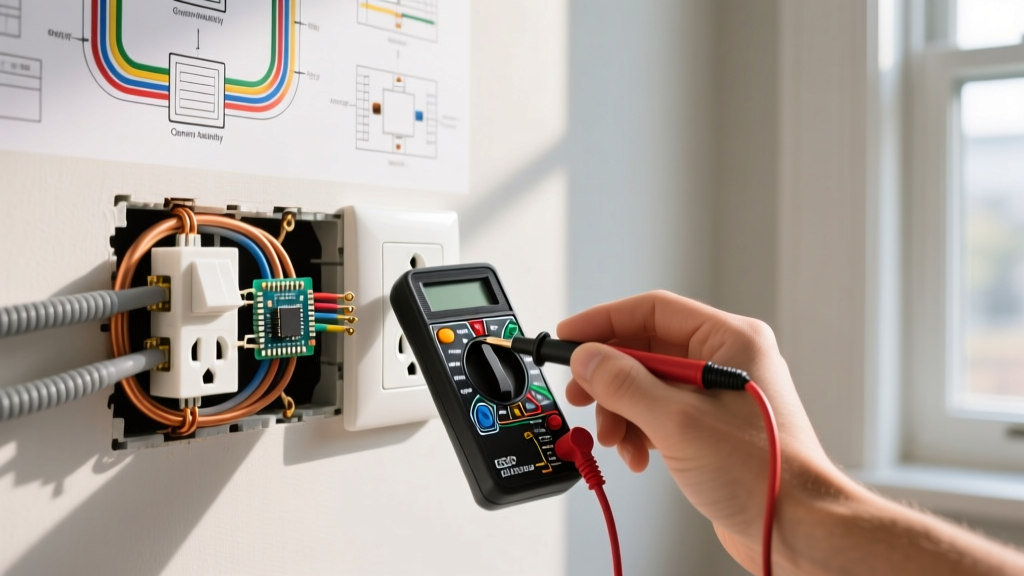
Gone are the days when a standard $6 thermal-magnetic breaker was sufficient for new residential circuits. The NEC now requires Ground Fault Circuit Interrupter (GFCI) protection in all wet and damp locations (kitchens, bathrooms, garages, exteriors) and Arc Fault Circuit Interrupter (AFCI) protection in virtually all living spaces (bedrooms, living rooms, hallways, closets).
- Material Cost Impact: A standard 20A single-pole breaker costs about $6 to $10. A 20A Dual-Function (CAFCI/GFCI) breaker, such as the Eaton BR220DF or Square D HOM220DF, costs between $55 and $75. If your new outlet requires a dedicated circuit, this single code requirement increases material costs by $50+ before labor is even factored in.
- Labor Cost Impact: Troubleshooting AFCI nuisance tripping on older wiring can add 1 to 2 hours of diagnostic labor ($85 to $150 per hour) if the electrician must isolate neutral faults or shared neutrals in multi-wire branch circuits (MWBC).
Code Callout: The U.S. Consumer Product Safety Commission (CPSC) notes that AFCI technology prevents over 50% of electrical fires caused by arcing faults. While the upfront cost is higher, the CPSC electrical safety data confirms that bypassing these breakers to save money is a severe life-safety risk and an immediate code violation.
2. Tamper-Resistant (TR) Receptacles (NEC 406.12)
Under NEC 406.12, all 15A and 20A, 125V and 250V non-locking receptacles installed in dwelling units must be listed as Tamper-Resistant (TR). These receptacles feature internal spring-loaded shutters that only open when equal pressure is applied to both slots simultaneously, preventing children from inserting foreign objects.
Cost Impact: The financial impact here is minimal but non-zero. A standard commercial-grade receptacle (e.g., Leviton 5320-W) costs around $1.50. Its TR equivalent (Leviton T5320-W) costs roughly $3.50 to $4.50. While an extra $3 per outlet seems trivial, it is a mandatory line item that inspectors actively verify. Installing standard receptacles will result in a failed rough-in or final inspection, forcing you to purchase new devices and pay for a re-inspection fee.
3. Box Fill and Sizing Calculations (NEC 314.16)
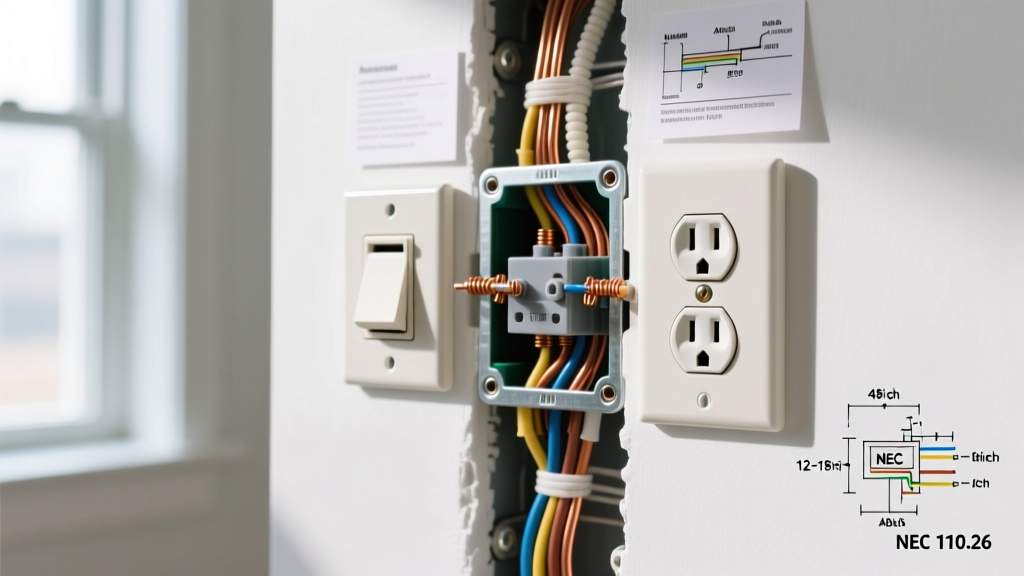
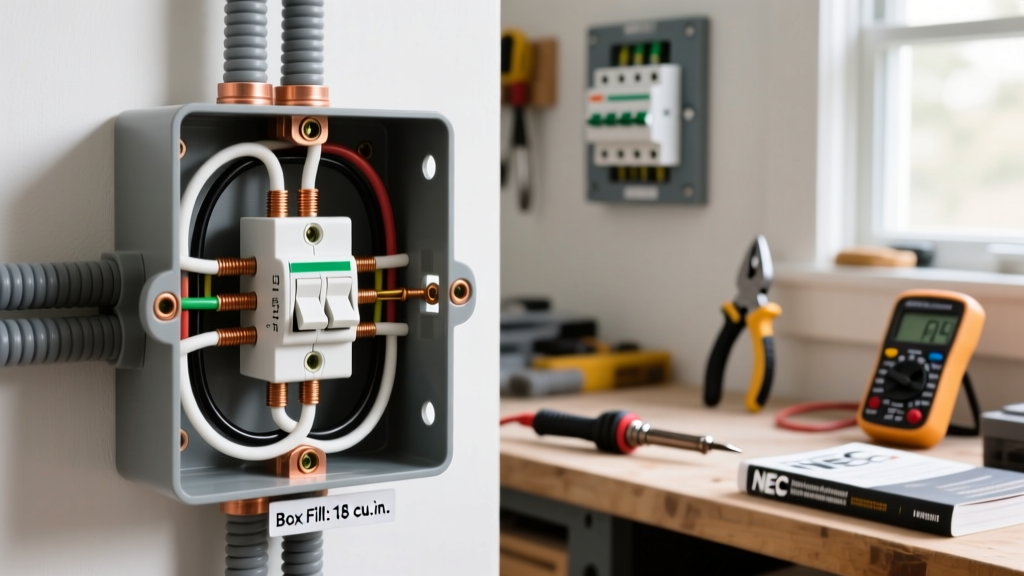
One of the most frequently overlooked factors in the cost of installing electrical outlet projects is junction box volume. NEC 314.16 dictates strict cubic-inch requirements based on the number and gauge of conductors, clamps, and devices entering the box. Each 12 AWG wire counts as 2.25 cubic inches; each 14 AWG wire counts as 2.0 cubic inches.
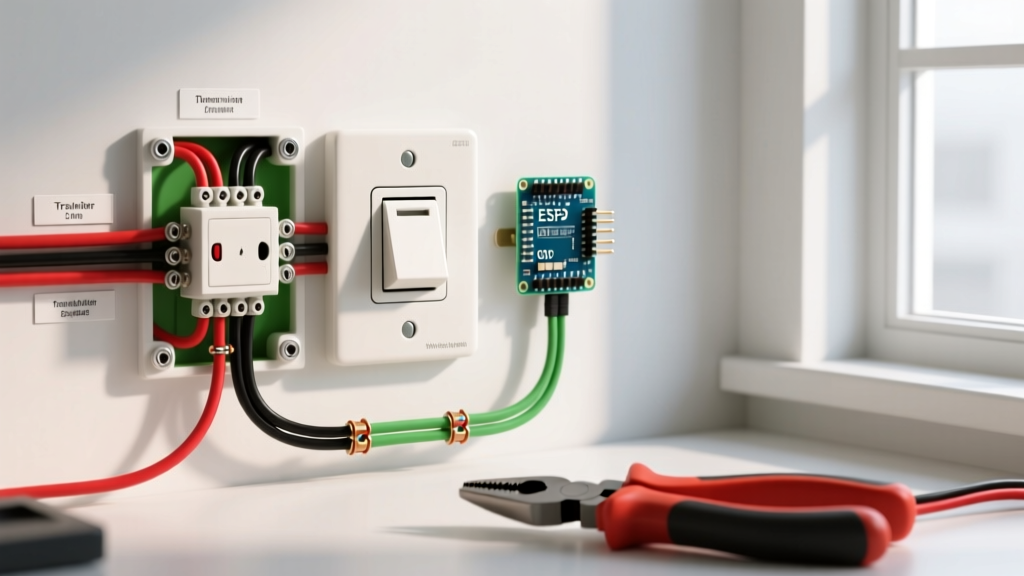
The Smart Home Edge Case: If you are installing a smart receptacle (like an Eve Energy or Kasa built-in smart plug) or a USB-C charging receptacle, the physical depth of the device's internal electronics is significantly larger than a standard duplex outlet. A standard 18-cubic-inch single-gang box often lacks the physical volume to safely house the device and the required wire bends. Upgrading to a 22-cubic-inch or 24-cubic-inch deep box requires cutting new drywall, installing a new old-work box, and patching/painting the surrounding wall. This drywall remediation alone can add $100 to $200 to your total project cost.
4. Equipment Grounding Conductor (EGC) Requirements (NEC 250.118)
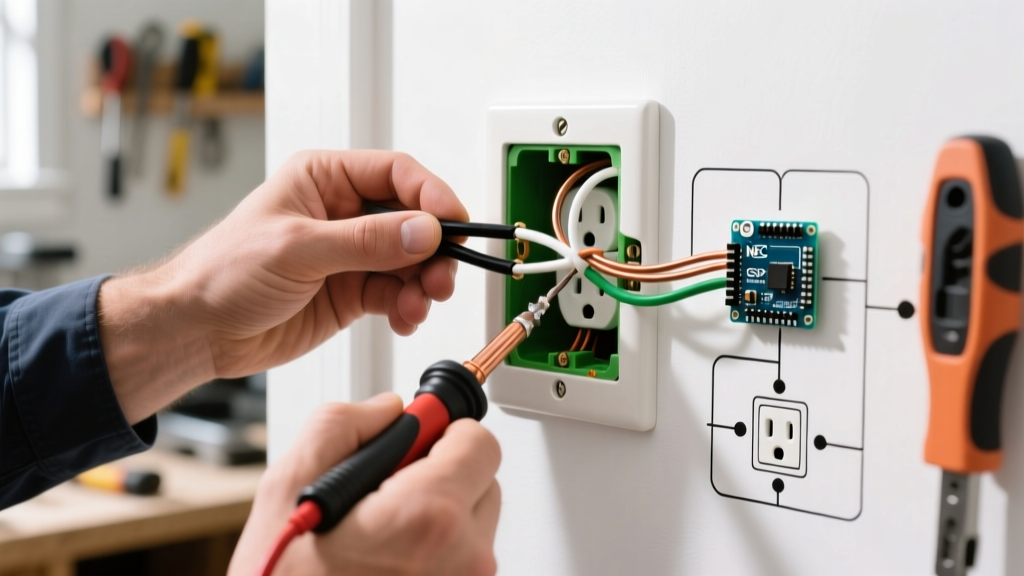
When replacing an old, ungrounded 2-prong outlet with a modern 3-prong receptacle, the NEC requires an Equipment Grounding Conductor (EGC). You cannot simply swap the device and leave the ground screw empty.
The GFCI Loophole vs. True Grounding: NEC 406.4(D)(2) allows you to install a GFCI receptacle on an ungrounded circuit, provided it is labeled 'No Equipment Ground.' While this is legal and provides shock protection, it does not provide a true ground path. Surge protectors and sensitive AV equipment require a true ground to function correctly. Running a new 12 AWG or 10 AWG copper ground wire back to the panel or to a qualifying grounding electrode system requires extensive labor, fishing wires through finished walls, and potentially opening up ceiling cavities, drastically increasing the labor portion of your invoice.
Cost Breakdown Matrix: Standard vs. Code-Heavy Scenarios
To understand how these variables affect your budget, review the 2026 pricing matrix below. Labor rates are based on a national average of $95 to $145 per hour for licensed, insured electricians.
| Installation Scenario | Code Triggers | Est. Materials | Est. Labor | Total Est. Cost |
|---|---|---|---|---|
| Simple Like-for-Like Swap (Existing grounded circuit) | TR Receptacle (406.12) | $5 - $15 | $95 - $145 (1 hr min) | $100 - $160 |
| New Outlet on Existing 15A/20A Circuit (Living Room) | AFCI Breaker, TR, Box Fill | $65 - $85 | $190 - $290 (2 hrs) | $255 - $375 |
| New Dedicated 20A Circuit (Kitchen/Garage) | Dual-Function CAFCI/GFCI, 12 AWG Wire, TR | $110 - $150 | $380 - $580 (4 hrs) | $490 - $730 |
| Ungrounded 2-Prong to 3-Prong (True Ground Run) | EGC Routing, Drywall repair, Panel termination | $40 - $70 | $475 - $725 (5+ hrs) | $515 - $795 |
Hidden Code Costs: Nail Plates and Routing Rules
When running new Romex (NM-B) cable to a new outlet location, electricians must drill through wooden studs. NEC 300.4(A)(1) mandates that if the edge of the bored hole is less than 1.25 inches from the edge of the stud, a steel nail plate must be installed to prevent drywall screws or nails from piercing the wire later.
While a steel nail plate costs only $1.50, the labor to locate the stud, drill the hole, measure the setback, and screw in the plate adds incremental time. Furthermore, NEC 334.30 requires NM cable to be secured within 8 inches of the box and at intervals not exceeding 4.5 feet. In finished walls where stapling is impossible, electricians must use specialized fishing tools, flexible drill bits, and sometimes even remove baseboards to ensure the cable is properly supported and protected, all of which bill out at standard hourly rates.
Permitting and Inspection Fees
Any new circuit, panel modification, or extensive rewiring requires a local municipal permit. Permit fees vary wildly by jurisdiction but typically range from $50 to $150 for a standard residential electrical permit. This fee covers the cost of a city or county inspector visiting your home to verify that the box fill, breaker sizing, wire gauge, and grounding all meet the current NEC cycle adopted by your state. Skipping the permit to save $100 is a false economy; it can void your homeowner's insurance policy in the event of an electrical fire and create massive legal liabilities during a future home sale.
Expert Troubleshooting: When an Electrician Fails the Rough-In
Even professionals make mistakes that inflate the final cost of installing electrical outlet projects due to code violations. Common rough-in failures include:
- Overcrowded Boxes: Failing to account for the internal clamps of plastic old-work boxes, which count toward box fill calculations. This results in the inspector forcing the electrician to rip out the box and install a larger one.
- Improper AFCI Neutral Pigtailing: When installing an AFCI breaker, the circuit neutral must land on the breaker's neutral terminal, not the panel's neutral bar. Failing to do this causes immediate tripping and requires re-terminating the panel.
- Missing Weather-Resistant (WR) Ratings: Outdoor receptacles must not only be GFCI protected but also listed as Weather-Resistant (WR) and fitted with extra-duty in-use covers (NEC 406.9). Standard indoor TR receptacles installed outside will fail inspection and degrade rapidly due to UV and moisture exposure.
Conclusion
When budgeting for electrical work, the base cost of the receptacle itself is virtually irrelevant. The true cost of installing electrical outlet configurations is dictated by the rigorous safety architecture mandated by the NEC. From dual-function arc-fault breakers and tamper-resistant shutters to precise box-fill calculations and true equipment grounding, these code requirements ensure your home is protected from fire and shock hazards. Always hire licensed professionals who pull permits and build to the current code cycle, ensuring your investment is safe, legal, and insurable.