
Understanding the Type E France Electrical Outlet
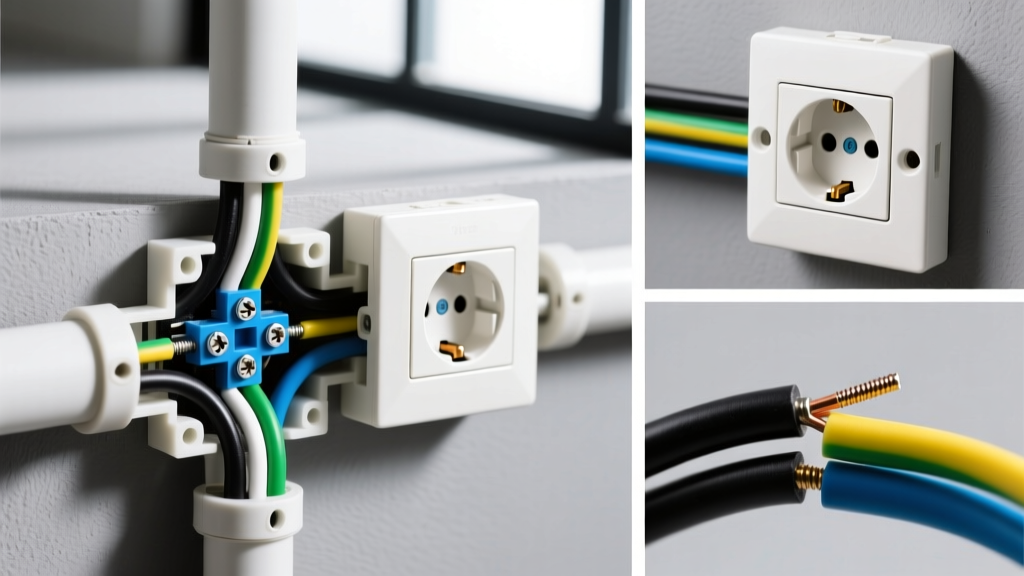
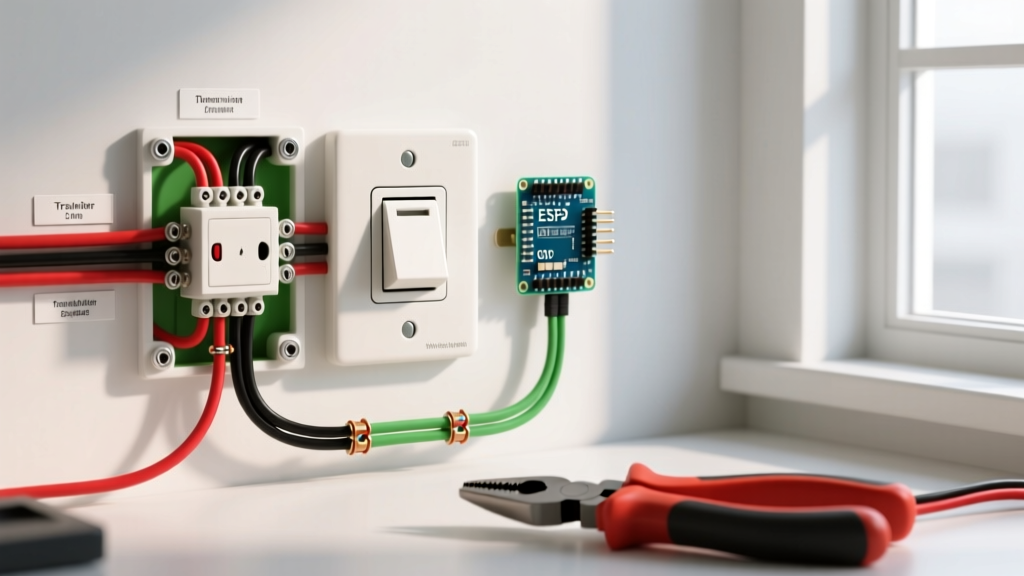
When planning an electrical installation or renovation in France, understanding the specific hardware and governing codes is non-negotiable for safety and compliance. The standard france electrical outlet is the Type E socket (officially designated as CEE 7/5). Unlike the German Schuko (Type F) which uses side earthing clips, the French Type E features a protruding male earth pin built directly into the socket face. This design mates with the CEE 7/6 plug, which has a corresponding female earth aperture.
Operating on a 230V / 50Hz alternating current supply, these circuits are heavily regulated by the NF C 15-100 standard—the French equivalent of the US National Electrical Code (NEC). As of the latest 2026 enforcement guidelines, inspectors and the French Government Public Service Portal strictly mandate adherence to NF C 15-100 for all new builds and major renovations to pass the mandatory diagnostic électrique required during property sales.
Physical Anatomy and CEE 7/5 Specifications
- Voltage & Frequency: 230V nominal, 50Hz single-phase.
- Current Rating: Standard circuits are rated for 16A or 20A maximum.
- Earthing Mechanism: Male 4.8mm diameter earth pin protruding from the socket, ensuring the ground connection is established before the live/neutral pins make contact.
- Child Safety: All modern Type E sockets sold in France must feature integrated internal shutters that only open when simultaneous, equal pressure is applied to both phase and neutral holes.
NF C 15-100 Code Compliance: Circuit & Wiring Rules
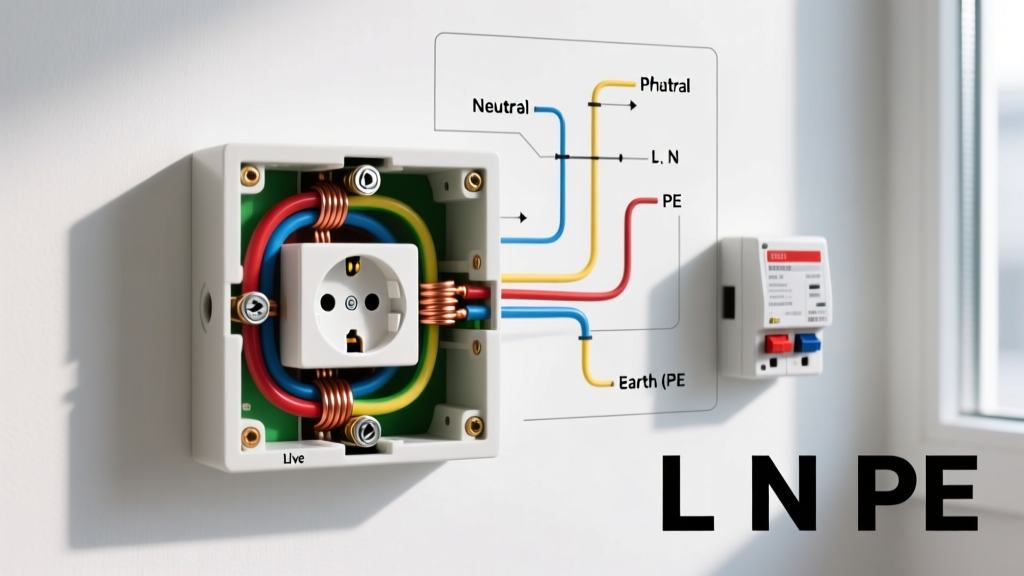
The NF C 15-100 standard dictates exact wire gauges, circuit breaker limits, and the maximum number of sockets permitted per circuit. Overloading a single circuit or using undersized copper wire is a primary cause of residential electrical fires. According to harmonized European color codes enforced by CENELEC, French wiring requires Brown, Black, or Red for Phase (Line), Light Blue for Neutral, and Green/Yellow striped for Earth.
Wiring Matrix: Wire Gauge vs. Breaker Size
The standard strictly limits the practice of 'repique' (daisy-chaining sockets). Below is the compliance matrix for standard 230V circuits:
| Circuit Application | Min. Copper Wire Size | Max Breaker Rating | Max Sockets Per Circuit |
|---|---|---|---|
| General Use (Lighting/Small Appliances) | 1.5 mm² | 16A | 8 outlets |
| General Use (Heavy Load Areas) | 2.5 mm² | 20A | 12 outlets |
| Dedicated (Washing Machine/Dishwasher) | 2.5 mm² | 20A | 1 dedicated outlet |
| Dedicated (Electric Oven) | 2.5 mm² | 20A | 1 dedicated outlet |
| Dedicated (Induction Hob/Cooktop) | 6.0 mm² | 32A | 1 dedicated outlet |
Note: When counting sockets, a block of 3 or 4 sockets placed side-by-side in a single multi-gang frame counts as only ONE socket toward your circuit limit.
Mandatory Safety Protections: RCDs & Earthing
You cannot install a france electrical outlet on a circuit protected solely by a standard miniature circuit breaker (MCB). The NF C 15-100 requires all socket circuits to be protected by a 30mA Residual Current Device (RCD), known in France as an interrupteur différentiel.
⚠️ CRITICAL SAFETY RULE: A 30mA RCD monitors the balance of current between the phase and neutral wires. If a leakage to earth exceeding 30 milliamps is detected (e.g., a human touching a live component), the RCD trips in under 30 milliseconds, preventing lethal electrocution.
Type AC vs. Type A RCDs
Electrical panels in France must utilize specific RCD types depending on the connected loads:
- Type AC (Alternating Current): Used for general lighting and standard living room/bedroom socket circuits. Protects against standard AC leakage.
- Type A (Pulsating DC): Mandatory for circuits feeding washing machines, electric hobs, and EV chargers. These appliances contain rectifiers that can produce pulsating DC leakage, which would blind a standard Type AC RCD and prevent it from tripping.
Room-by-Room Minimum Outlet Requirements
To prevent the dangerous use of extension cords and power strips, the NF C 15-100 establishes strict minimums for the number of france electrical outlets per room. Furthermore, installation height is regulated: standard 16A/20A sockets must have their center mounted at least 5 cm above the finished floor, while 32A cooker sockets must be mounted at least 12 cm above the floor.
Living Areas & Bedrooms
- Living Room (Séjour): Minimum 5 sockets. If the room exceeds 28m², additional sockets are required based on the perimeter.
- Bedrooms (Chambres): Minimum 3 sockets per room, ideally distributed to allow for bedside and desk usage.
- Hallways & Corridors: Minimum 1 socket for any passage wider than 4m².
Kitchen Specifications
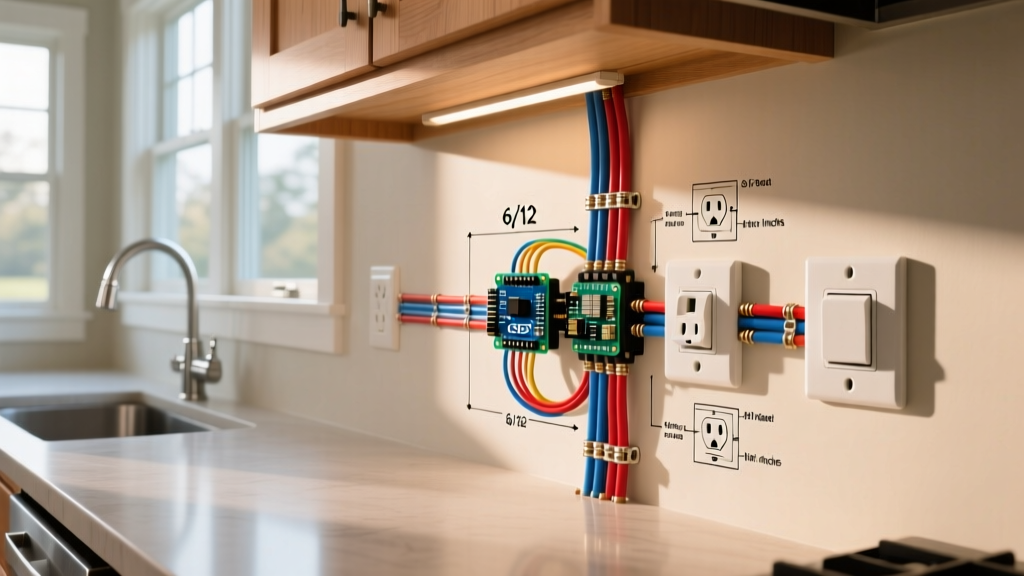
The kitchen requires a minimum of 6 sockets. Crucially, at least 4 of these must be positioned above the worktop for small appliances. None of these worktop sockets may be mounted directly above the sink or the hob. Dedicated circuits for the oven, dishwasher, and washing machine must be physically separate from the general worktop socket circuits.
Bathroom Safety Zones (Volumes 0, 1, and 2)
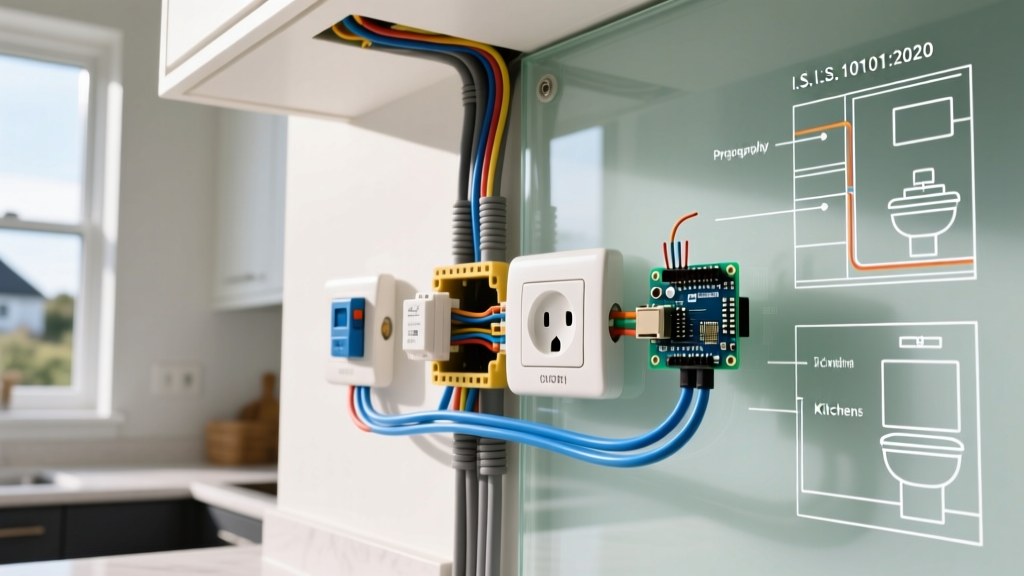
Water and electricity are a lethal combination. The French code divides the bathroom into strict 'Volumes' to dictate where a france electrical outlet can be installed. Detailed guidelines on these zones are maintained by the International Electrotechnical Commission (IEC) and adapted locally via NF C 15-100.
Defining the Volumes
- Volume 0 (Inside the tub/shower basin): IPX7 required. Absolutely no sockets or switches permitted. Only 12V SELV lighting specifically rated for submersion is allowed.
- Volume 1 (Directly above the tub/shower up to 2.25m): IPX4 required. No standard sockets permitted. Only water heater controls or specific IPX4-rated pull-cord switches may be installed.
- Volume 2 (60cm lateral radius from Volume 1, up to 2.25m): IPX4 required. Standard sockets are generally prohibited here UNLESS they are powered by a 30mA RCD, an isolating transformer, or are specialized IP44 shaver sockets conforming to IEC 61558-2-5.
- Outside Volumes: Standard Type E sockets may be installed, provided the circuit is protected by a 30mA RCD.
Supplementary Equipotential Bonding (Liaison Équipotentielle)
In French bathrooms, it is mandatory to connect all extraneous conductive parts (metal water pipes, metal shower trays, metal window frames, and the earth pins of any sockets outside the volumes) using a minimum 2.5 mm² bare copper wire. This ensures that if a fault occurs, no voltage potential can exist between two touchable metal surfaces, eliminating the risk of shock even if an RCD fails.
Common Installation Mistakes to Avoid
When retrofitting older French properties (which often feature obsolete, ungrounded, or aluminum wiring), DIYers and uncertified contractors frequently make code-violating errors:
- Using Type F (Schuko) Sockets: While a Type F socket will physically accept a French plug, it lacks the male earth pin. If a user plugs in a device with a female earth receptacle that relies on the pin for alignment and grounding, the device will be ungrounded, creating a severe shock hazard.
- Bypassing the 30mA RCD: Connecting new sockets directly to the main busbar without passing through an interrupteur différentiel. This will result in an automatic fail during a property diagnostic inspection.
- Improper Wire Stripping: Exposing too much bare copper outside the terminal block of the socket. The NF C 15-100 mandates that insulation must sit flush with the terminal to prevent arc faults and short circuits inside the drywall backbox.
- Mixing Wire Gauges: Running a 2.5 mm² wire from the panel but stepping down to a 1.5 mm² wire to daisy-chain the final two sockets on a 20A breaker. The breaker will not trip at 19A, but the 1.5 mm² wire will overheat and melt.
Frequently Asked Questions
Can I use a UK or US appliance in a France electrical outlet?
Physically, you will need a plug adapter to convert your Type G (UK) or Type A/B (US) plug to the CEE 7/6 standard. Electrically, UK appliances (230V) will work perfectly. However, US appliances (110V) will be destroyed and pose a fire risk unless you use a heavy-duty step-down voltage transformer. Always check the appliance's power supply label for 'INPUT: 100-240V'—modern laptop and phone chargers are dual-voltage and only require a physical adapter.
Are USB-integrated Type E sockets legal in France?
Yes, provided they carry the NF or CE certification mark and the internal USB transformer does not compromise the physical isolation between the 230V AC side and the 5V DC side. They must still be installed on a circuit protected by a 30mA RCD.