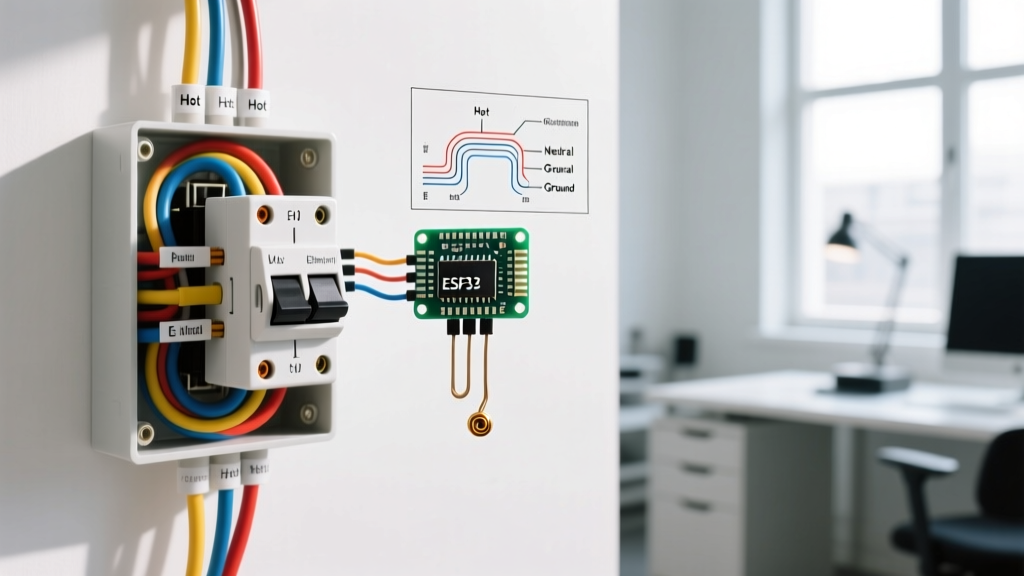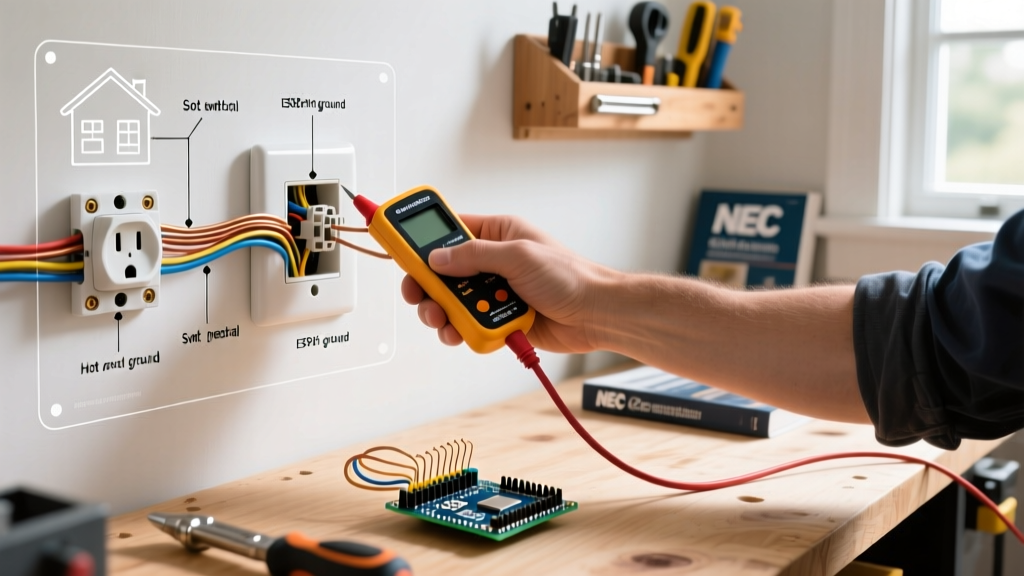

The Hidden Dangers of Unpermitted Outlet Work
Electrical receptacles are the most frequently used components in any residential or commercial wiring system. Yet, they are often the site of critical safety failures. According to the U.S. Consumer Product Safety Commission (CPSC), electrical receptacles are involved in over 5,300 home fires annually, causing millions in property damage and dozens of fatalities. When you need to add, replace, or upgrade receptacles, hiring qualified electrical outlet installers is not merely a matter of convenience—it is a critical life-safety decision.
While a general handyman might offer to swap out a broken duplex receptacle for a low flat rate, the National Electrical Code (NEC) has evolved significantly. Modern code compliance requires a deep understanding of arc-fault protection, ground-fault circuit interrupter (GFCI) expansion, and precise torque specifications. This guide details exactly what to look for when vetting electrical outlet installers to ensure your home remains safe, insured, and fully compliant with the latest NEC standards.
Why Licensing and Insurance Are Non-Negotiable
When searching for electrical outlet installers, the first filter must be state or local licensing. A licensed electrician has passed rigorous examinations covering NEC theory, local amendments, and practical safety applications. More importantly, licensed professionals carry general liability insurance and workers' compensation.
If an unlicensed installer miswires a 240V NEMA 14-50 outlet for an EV charger and it subsequently causes a garage fire, your homeowner's insurance provider may deny the claim due to unpermitted, unlicensed work. The Electrical Safety Foundation International (ESFI) strongly advises homeowners to always verify a contractor's license number through the local state licensing board before any work begins.
Permitting: The Mark of a Professional
Professional electrical outlet installers will pull a local electrical permit for any new circuit, panel upgrade, or high-amperage receptacle installation. The permit process ensures that a third-party municipal inspector will verify the work against the local building code. Beware of any contractor who suggests skipping the permit to 'save you money'—this is a massive red flag that usually indicates an intent to cut corners on materials or safety protocols.
NEC Code Requirements Your Installer Must Know
The NEC is updated every three years, and local jurisdictions adopt these codes on varying schedules. A master-level installer will be fluent in the latest requirements. Here are the critical code sections your installer must adhere to:
1. Tamper-Resistant (TR) Receptacles (NEC 406.12)
All 15A and 20A, 125V and 250V non-locking receptacles in dwelling units must be tamper-resistant. TR receptacles feature internal shutter mechanisms that prevent children from inserting foreign objects into the slots. Professional installers will use high-quality TR models like the Leviton T5262 or Hubbell HBL5262. If an installer attempts to use standard, non-TR receptacles in a living space, they are violating code and compromising child safety.
2. Expanded GFCI Protection (NEC 210.8)
Ground-Fault Circuit Interrupter protection is no longer limited to just bathrooms and kitchens. Recent NEC cycles have expanded GFCI requirements to include crawl spaces, unfinished basements, garages, and outdoor outlets. Professional electrical outlet installers will ensure that any replacement or new installation in these zones utilizes either a GFCI receptacle (like the Pass & Seymour 2097TRW) or a GFCI circuit breaker.
3. Torque Specifications (NEC 110.14(D))
This is the most overlooked code requirement by amateur installers. NEC 110.14(D) mandates that all terminations must be tightened to the manufacturer's specified torque using a calibrated torque tool. Loose connections cause arcing and heat buildup, while over-tightened connections can strip the brass terminal threads or shear the wire. A professional installer will carry a calibrated torque screwdriver (such as the Klein Tools 610-8) and tighten standard brass terminal screws to exactly 14 in-lbs, as specified by most UL-listed receptacle manufacturers.
2026 Cost Breakdown: What to Expect
Pricing for electrical outlet installers varies by region, the complexity of the job, and the materials required. Below is a realistic pricing matrix for professional, permitted, and code-compliant installations in 2026.
| Installation Type | Materials & Labor Cost Range | Timeframe | Code Considerations |
|---|---|---|---|
| Standard 15A/20A Duplex Swap | $125 - $225 per outlet | 30 - 45 mins | TR requirement, side-wiring only |
| 2-Prong to 3-Prong GFCI Upgrade | $250 - $450 per circuit | 1 - 2 hours | NEC 406.4(D)(4) 'No Equipment Ground' labeling |
| New 20A Dedicated Circuit (Kitchen) | $400 - $800 | 3 - 5 hours | 12 AWG wire, 20A breaker, GFCI protection |
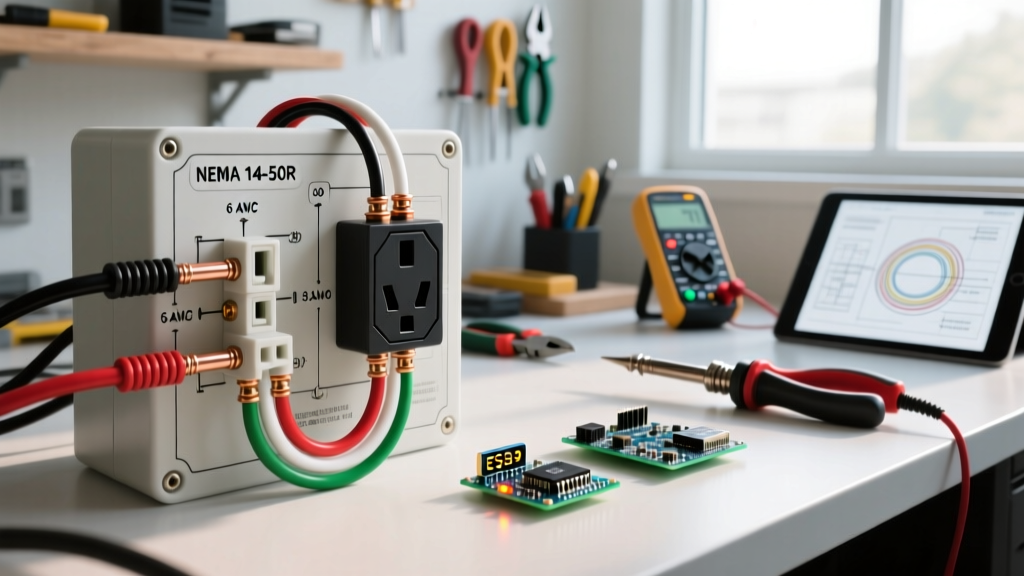
| 240V NEMA 14-50 EV Charger Outlet | $600 - $1,800+ | 4 - 8 hours | 6 AWG Copper, 50A breaker, torque specs |
| Aluminum Wire Remediation (Pigtail) | $45 - $85 per connection | Varies | AlumiConn or COPALUM connectors required |
Note: Journeyman electricians typically charge between $85 and $130 per hour, while Master Electricians or specialized contractors may charge $120 to $180 per hour. Always request a detailed, line-item quote.
Critical Red Flags: When to Walk Away
Not all individuals who claim to be electrical outlet installers possess the requisite expertise. Protect your property by walking away if you observe any of the following practices:
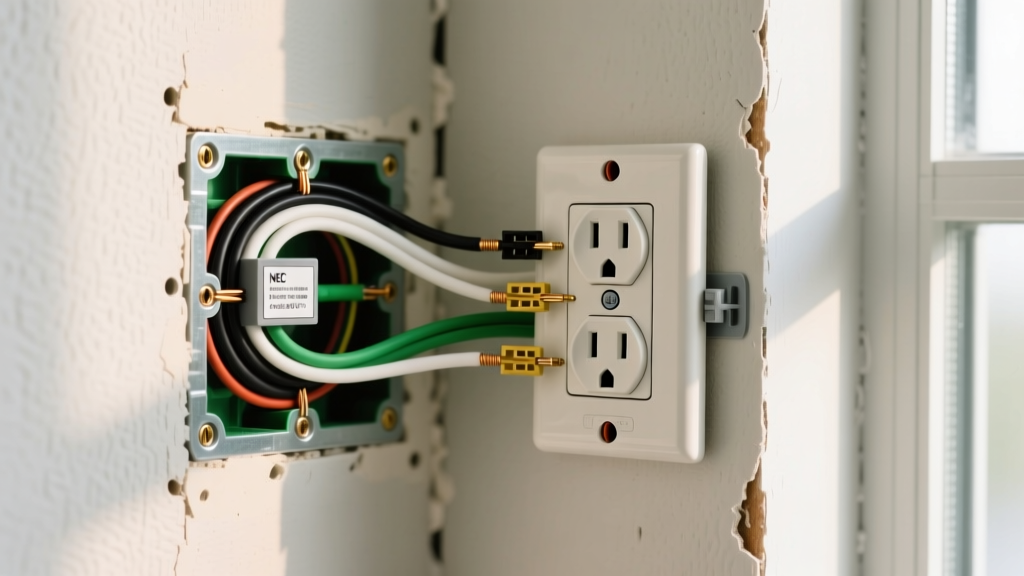
- Backstabbing (Push-In Connectors): Amateurs often use the quick-insert holes on the back of a receptacle. These spring-loaded connections are notorious for loosening over time due to thermal expansion and contraction, leading to high-resistance faults. Professionals exclusively use the side-screw terminals or approved lever-nuts (like WAGO 221 series) inside the junction box.
- Ignoring Aluminum Wiring Protocols: If your home was built between 1965 and 1972, it may have single-strand aluminum branch wiring. Connecting copper receptacles directly to aluminum wire causes galvanic corrosion and fires. Proper installers will use UL-listed AlumiConn lug connectors or the proprietary COPALUM crimping system. The CPSC explicitly warns against relying solely on standard purple twist-on wire nuts for aluminum-to-copper pigtailing.
- Over-fusing Circuits: Installing a 20A receptacle on a 15A breaker, or worse, placing a 15A standard receptacle on a 20A circuit without a 20A-rated duplex device, violates NEC 210.21(B). A competent installer will map your panel and verify breaker-to-receptacle ampacity ratings before touching a wire.
- Cash-Only, No-Receipt Deals: This guarantees no permit, no warranty, and no insurance coverage if a fire occurs.
Specialized High-Load Installations: The EV Factor
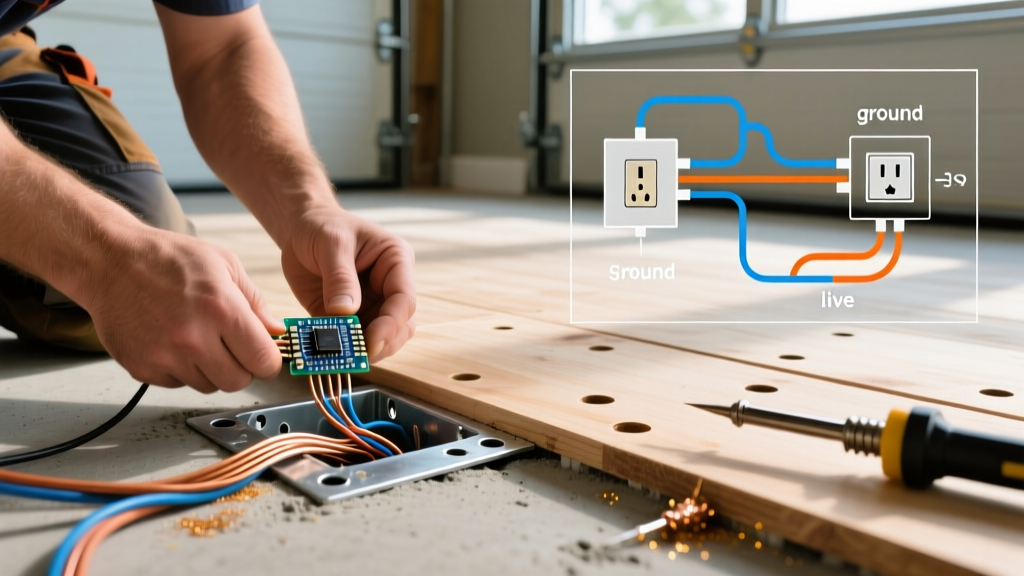
The rise of electric vehicles has drastically changed the scope of work for modern electrical outlet installers. Installing a NEMA 14-50 receptacle for Level 2 EV charging is not a simple swap. It requires a dedicated 50A, 240V circuit.
Expert Insight: Many DIYers and unlicensed handymen wire a NEMA 14-50 outlet using 6 AWG Romex (NM-B) and fail to support the cable properly, or they neglect to torque the heavy-duty lugs to the required 40-50 in-lbs. The National Fire Protection Association (NFPA) notes that thermal imaging of poorly installed EV outlets frequently reveals dangerous heat buildup at the terminal lugs. Always hire an installer who uses THHN wire in flexible metallic conduit (FMC) or EMT for exposed garage runs, and who verifies the panel's continuous load capacity (NEC 220.87) before adding a 40A continuous EV draw.
Questions to Ask Before Signing the Contract
To ensure you are hiring top-tier electrical outlet installers, ask these specific technical questions during the estimation phase:
- 'Will you be pulling a municipal permit and scheduling a rough-in and final inspection?'
- 'Do you use a calibrated torque screwdriver for all terminal terminations as required by NEC 110.14(D)?'
- 'How do you handle neutral and ground bar separations in subpanels if we are adding a new circuit?' (A correct answer will confirm that neutrals and grounds must remain isolated in all subpanels).
- 'What brand of commercial or spec-grade receptacles do you install?' (Look for answers like Hubbell, Bryant, Leviton, or Pass & Seymour. Avoid big-box generic brands).
Final Thoughts on Safety and Compliance
The electrical receptacles in your walls are the gateway between high-voltage utility power and your family. Cutting corners by hiring unlicensed handymen or attempting complex panel-to-outlet runs without proper code knowledge is a risk that outweighs any short-term financial savings. By prioritizing licensed, insured, and code-literate electrical outlet installers, you ensure that your home's electrical infrastructure remains robust, efficient, and safe for decades to come.