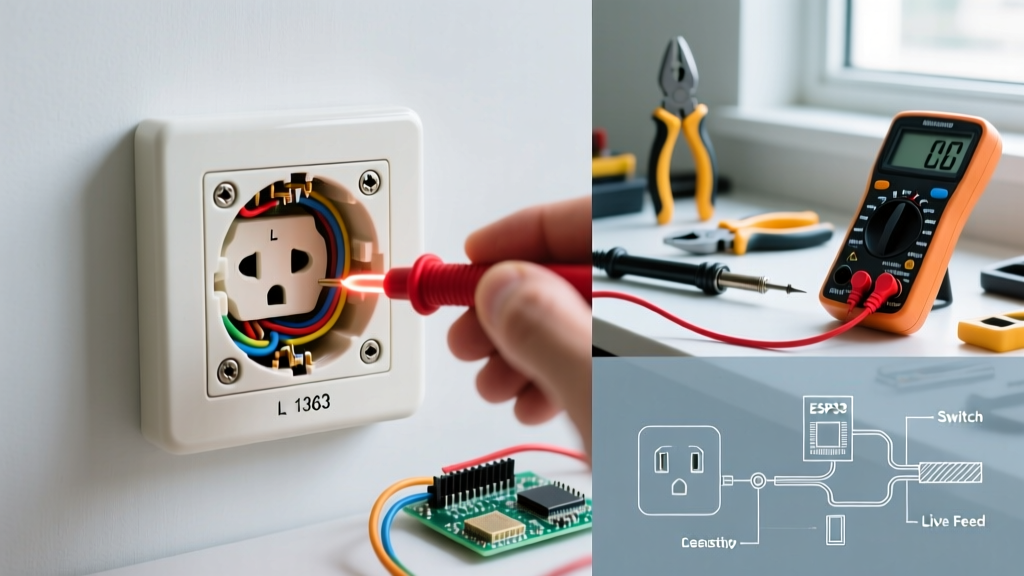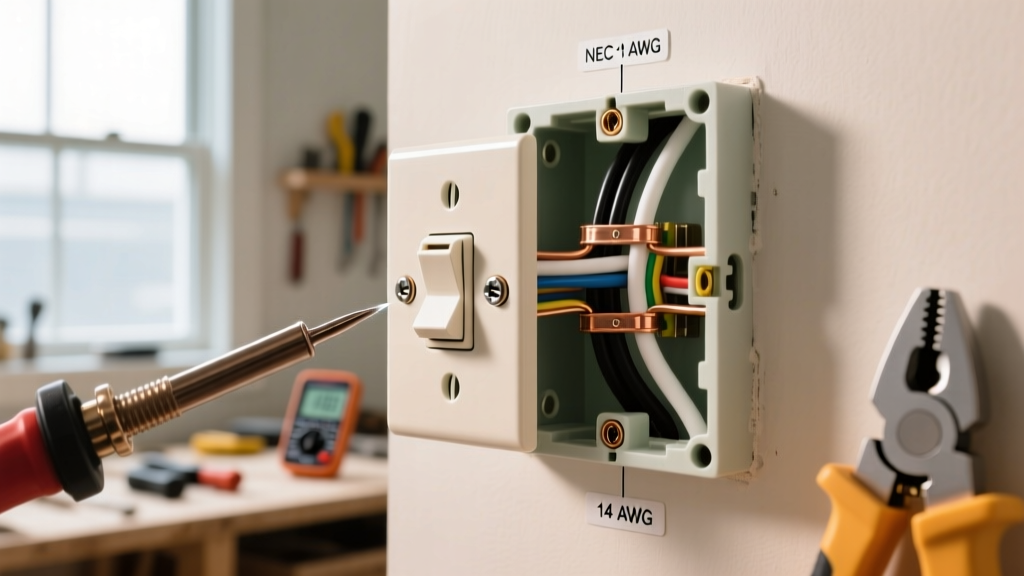

Understanding the Type I China Electric Outlet Standard
If you are an expatriate, a DIY enthusiast building an international cabin, or an electrical apprentice working on a cross-border project, understanding how to wire a china electric outlet is a critical skill. Unlike the NEMA 1-15 or 5-15 standards common in North America, China utilizes the Type I plug and socket system, governed by the national standards GB 1002 (plug dimensions) and GB 2099.1 (socket requirements). The standard residential voltage is 220V AC at 50Hz, which demands strict adherence to safety protocols and proper wire gauging.
According to the International Electrotechnical Commission (IEC), the Type I standard is also used in Australia and New Zealand (AS/NZS 3112), but the Chinese GB standard features distinct dimensional tolerances and specific earthing requirements that make adapters and direct swaps potentially hazardous if not respected. In this 2026 beginner tutorial, we will walk through the exact installation of a standard 10A and 16A combination wall socket, specifically using the highly popular Bull (公牛) G07 Series, which remains a market leader in China for its flame-retardant PC materials and robust brass contacts.
10A vs. 16A: Knowing Your Receptacle Requirements
Before stripping any wires, you must identify whether your circuit requires a 10A or 16A outlet. In Chinese residential wiring, these two are physically incompatible to prevent overloading standard lighting and general-purpose circuits with high-draw appliances.
| Specification | 10A Standard Socket (General Use) | 16A Heavy-Duty Socket (AC Units) |
|---|---|---|
| Application | TVs, lamps, phone chargers, small appliances | Air conditioners, heavy water heaters |
| Wire Gauge (BV Copper) | 2.5 mm² (Min) | 4.0 mm² (Mandatory) |
| Breaker Size (MCB/RCBO) | C16 (16 Amp) | C20 or C25 (20-25 Amp) |
| Pin Spacing & Width | Standard GB 1002 spacing | Wider, thicker pins (Incompatible with 10A) |
| Max Continuous Load | 2,200 Watts | 3,520 Watts |
As of 2026, most modern Chinese apartments utilize dual-function sockets (like the Bull G07 10A/16A combo) in utility rooms, but dedicated 16A circuits are still strictly required for split-system air conditioning units. For a deeper dive into global plug variations, the World Standards Type I guide provides excellent visual comparisons of pin geometries.
Tools and Materials Required
To ensure a professional, code-compliant installation, gather the following specific tools and materials. Do not substitute solid BV wire with stranded BVR wire for standard wall receptacles unless using proper ferrule crimps, as stranded wire can fray and cause high-resistance connections in standard screw terminals.
- Receptacle: Bull G07 Series 10A/16A Dual Socket (Approx. $3 - $5 USD)
- Wire: 2.5 mm² BV (Solid Copper) for 10A; 4.0 mm² BV for 16A. Brands like Panda or Chint are industry standards.
- Wire Strippers: Precision strippers calibrated for 2.5 mm² and 4.0 mm² to avoid nicking the copper core.
- Screwdrivers: Phillips #2 and a flathead, ideally a torque screwdriver set to 0.5 N·m for terminal screws.
- Voltage Tester: Non-contact voltage tester (NCVT) and a digital multimeter.
- Socket Tester: A Type I specific RCD/RCBO socket tester to verify polarity and earth continuity post-installation.
Step-by-Step Wiring Tutorial
Safety is paramount. Ensure the main distribution board (DB) breaker is locked out and tagged out (LOTO) before beginning. Verify the circuit is dead using your multimeter.
Step 1: Understand the Chinese Wiring Mnemonic
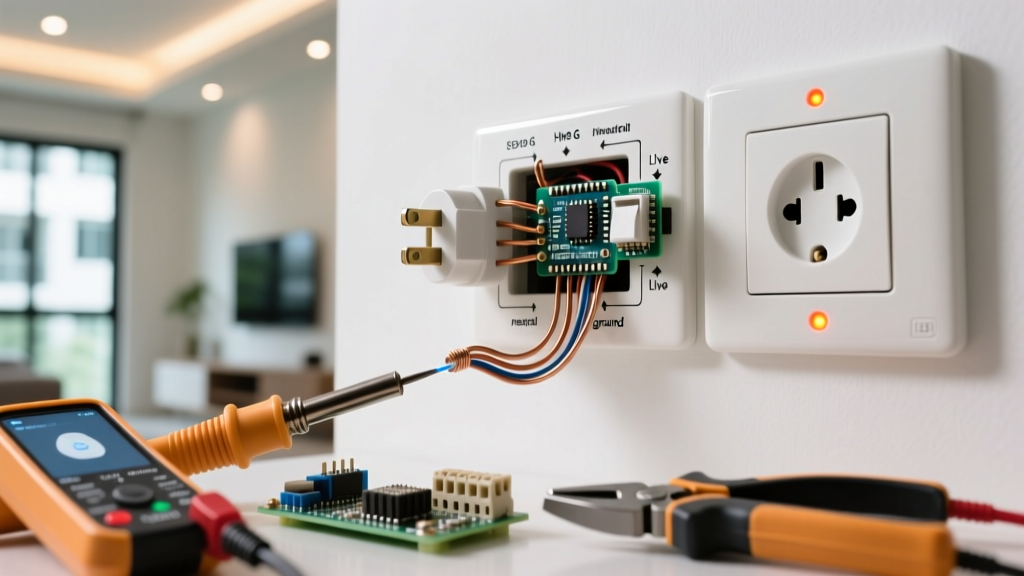
In China, electricians rely on a strict mnemonic for single-phase 220V socket wiring: 左零右火上地 (Zuo Ling, You Huo, Shang Di). This translates directly to:
Left Neutral (N), Right Live (L), Top Earth (E/PE).
While alternating current technically flows both ways, maintaining this standardized polarity is critical for the internal switching mechanisms of modern appliances and for ensuring that integrated RCBOs trip correctly during a fault.
Step 2: Prepare the Wires
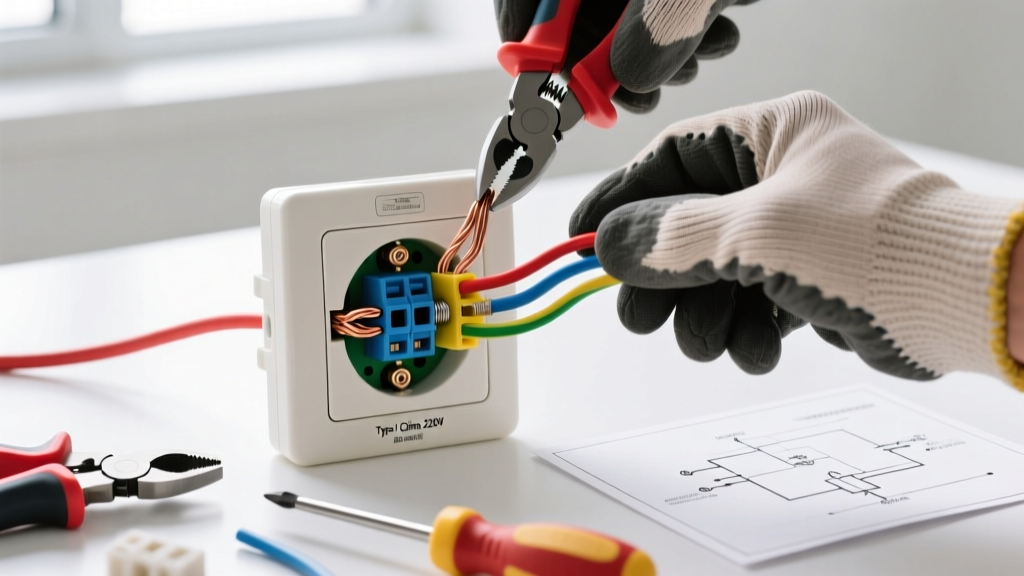
Using your precision wire strippers, remove exactly 10mm to 12mm of insulation from the ends of the Live, Neutral, and Earth wires. Stripping too little will result in the insulation being clamped under the terminal screw, causing a high-resistance joint and a potential fire hazard. Stripping too much will leave exposed copper outside the terminal block, posing a severe shock risk. For detailed international color code references, consult the Electrical Technology wiring guide, but remember that standard modern Chinese color codes are: Live = Brown or Red, Neutral = Blue or Black, and Earth = Yellow/Green stripe.
Step 3: Connect to the Bull G07 Terminals
- Earth (E/PE): Insert the Yellow/Green wire into the top terminal marked with the earth symbol (⏚) or 'E'. Tighten the screw to 0.5 N·m. Give the wire a firm tug to ensure it is seated.
- Neutral (N): Insert the Blue wire into the left terminal marked 'N'. Tighten securely.
- Live (L): Insert the Brown/Red wire into the right terminal marked 'L'. Tighten securely.
Pro-Tip for 16A Terminals: If you are wiring the dedicated 16A top socket on a combo unit, ensure you are using the separate, larger terminal block specifically designated for the 16A circuit. Never daisy-chain a 16A load through a 10A terminal block.
Step 4: Mounting and Dressing the Wires
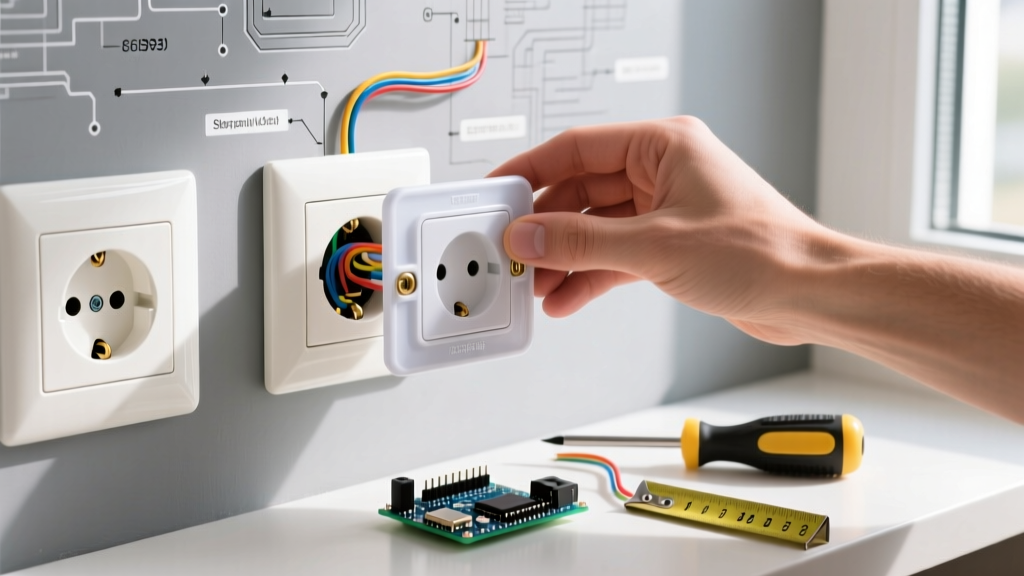
Carefully fold the wires into the standard 86mm x 86mm steel or PVC backbox. Chinese backboxes are typically 50mm deep. To prevent stress on the terminal connections, create a gentle 'S' curve or accordion fold with the stiff BV copper wire. Avoid sharp 90-degree bends directly behind the socket yoke, as this can push the yoke outward and crack the faceplate over time. Secure the socket to the backbox using the provided M4 machine screws, ensuring the faceplate sits perfectly flush against the wall without warping.
Testing and Commissioning
Never skip the testing phase. Once the socket is mounted and the breaker is turned back on at the distribution board, follow this sequence:
- Visual Inspection: Ensure no copper is visible outside the terminal housings.
- Voltage Check: Use a multimeter to measure between L and N. You should read between 215V and 235V AC. Measure between L and E (should also read ~220V) and N to E (should read < 2V).
- Polarity & RCD Test: Plug in your Type I socket tester. The LED indicator matrix should show 'Correct Wiring'. Press the RCD test button on the tester; the circuit breaker should trip within 30 milliseconds if an RCBO is installed, confirming the earth path is continuous and functional.
Common Beginner Mistakes to Avoid
- Reverse Polarity: Swapping Live and Neutral. While the appliance might still turn on, the internal fuse of the appliance will now be on the neutral side, leaving the appliance energized even if the fuse blows.
- Undersized Wiring for 16A: Using 2.5 mm² wire on a 16A air conditioner circuit. Under continuous summer load, 2.5 mm² wire will overheat inside the conduit, degrading the PVC insulation and risking a short circuit.
- Missing Earth Bonding: In older Chinese buildings, earth wires were sometimes omitted or improperly bonded at the main panel. Always verify earth continuity back to the main distribution board ground busbar before energizing the circuit. If no earth is present, you must install a dedicated earth rod or pull a new earth wire; do not simply leave the earth terminal empty.
Frequently Asked Questions
Can I use a US NEMA 5-15 outlet in China?
No. The physical plug shapes are entirely different, and the US standard is designed for 120V/60Hz. Plugging a 120V appliance into a 220V Chinese outlet without a step-down transformer will instantly destroy the appliance and create a fire hazard.
Are smart sockets compatible with standard Chinese backboxes?
Yes, as of 2026, most smart sockets (like those from Xiaomi or Aqara) are designed to fit the standard 86x86mm backbox. However, smart sockets require a neutral wire at the switch/outlet location to power their internal Wi-Fi/Zigbee radios. Ensure your backbox contains a neutral wire before purchasing a smart receptacle.
What is the standard height for wall outlets in China?
According to the GB 50303 electrical construction acceptance code, standard general-purpose outlets are typically installed 300mm (approx. 12 inches) from the finished floor. Kitchen counter outlets are usually placed 1100mm to 1300mm from the floor, while air conditioner 16A outlets are mounted near the ceiling, typically 2200mm from the floor.