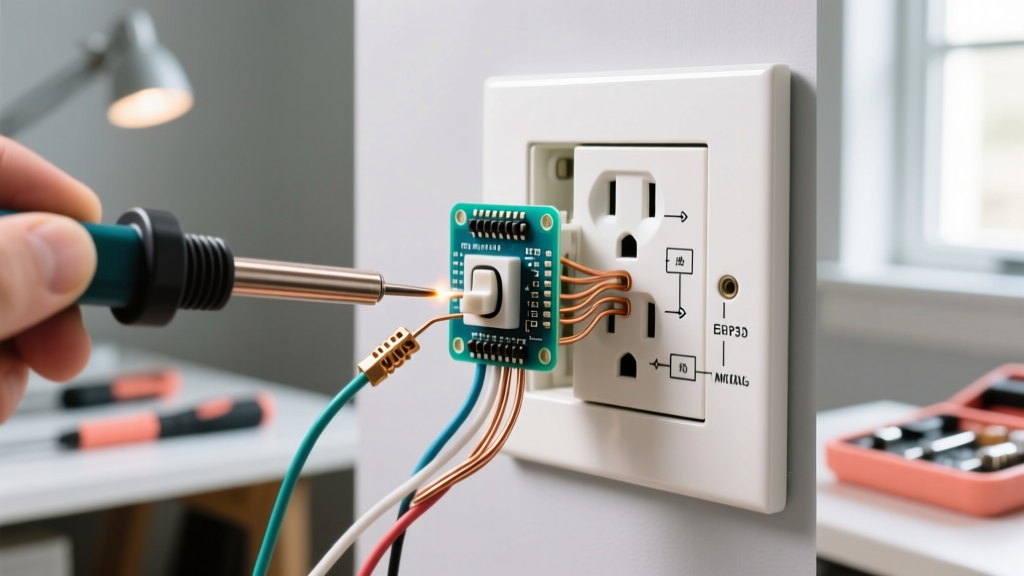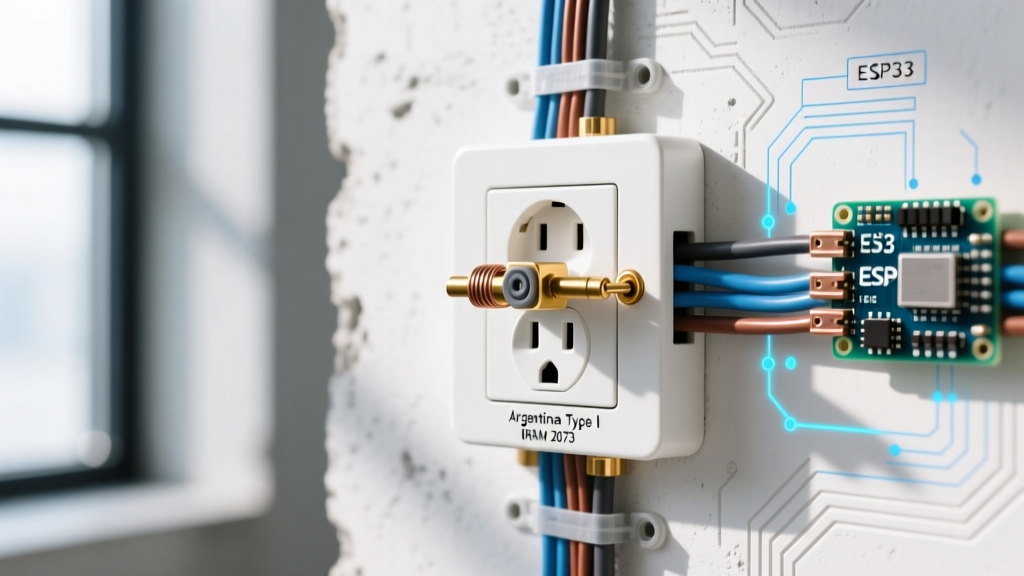

Introduction to the Argentina Electrical Outlet Type
When designing, upgrading, or troubleshooting residential and commercial electrical systems in Argentina, understanding the local receptacle standards is not just a matter of physical compatibility—it is a strict legal and safety requirement. The argentina electrical outlet type is globally classified as Type I, sharing physical similarities with Australian (AS/NZS 3112) and Chinese (GB 1002) standards. However, in Argentina, the manufacturing, testing, and installation of these outlets are governed by a distinct set of local codes, primarily IRAM 2073 for the physical hardware and AEA 90364 for the installation wiring rules.
Operating on a nominal 220V supply voltage and 50Hz frequency, the Argentine grid requires precise adherence to conductor sizing, overcurrent protection, and grounding protocols. This guide serves as a comprehensive code requirement explainer for electricians, DIY enthusiasts, and international contractors working within Argentine jurisdiction, detailing the exact specifications, safety mandates, and common failure modes associated with Type I receptacles.
IRAM 2073: The Hardware Standard for Type I Outlets
The Instituto Argentino de Normalización y Certificación (IRAM) dictates the physical dimensions, material tolerances, and thermal testing protocols for all plugs and sockets sold in the country. Under IRAM 2073, the Argentina electrical outlet type features three flat, rectangular pins arranged in a triangular pattern. The two power pins are angled at exactly 30 degrees from the vertical, while the grounding pin is positioned vertically at the top or bottom (depending on the specific orientation of the installation, though ground-up is standard practice for safety).
According to data verified by the International Electrotechnical Commission (IEC), Type I configurations are designed to prevent cross-insertion with other global plug types. However, IRAM 2073 introduces a critical bifurcation in the Argentine market: the 10-Ampere and 16-Ampere variants. Unlike some regions that use a single 15A/16A standard for all general-purpose receptacles, Argentina maintains both, and confusing the two is a leading cause of residential electrical fires.
10A vs. 16A Type I Receptacles: A Technical Comparison
The physical difference between the 10A and 16A outlets lies in the thickness and width of the plug pins, which in turn dictates the internal contact geometry of the receptacle. A 16A plug physically cannot be inserted into a standard 10A socket, preventing circuit overloads. Below is a structural comparison based on IRAM specifications:
| Specification | 10A IRAM 2073 Outlet | 16A IRAM 2073 Outlet |
|---|---|---|
| Pin Dimensions (Line/Neutral) | 6.35 mm x 1.6 mm | 6.35 mm x 2.4 mm (Thicker) |
| Ground Pin Dimensions | 6.35 mm x 1.6 mm | 6.35 mm x 2.4 mm (Thicker) |
| Maximum Continuous Load | 2200W (at 220V) | 3520W (at 220V) |
| Required Wire Gauge (Copper) | 1.5 mm² (Minimum) | 2.5 mm² (Mandatory) |
| Standard Breaker Sizing | C10 (10A MCB) | C16 (16A MCB) |
| Typical Application | Lighting circuits, low-draw electronics | Kitchen appliances, HVAC, general power |
AEA 90364: Mandatory Installation and Safety Codes
While IRAM governs the physical outlet, the Asociación Electrotécnica Argentina (AEA) publishes the Reglamento de Instalaciones Eléctricas en Inmuebles (AEA 90364), which is the definitive electrical code for installation practices. If you are wiring an Argentina electrical outlet type, compliance with AEA 90364 is mandatory for passing municipal inspections and ensuring life safety.
Mandatory RCD Protection (Disyuntor Diferencial)
Under AEA 90364, all socket-outlet circuits rated up to 32A must be protected by a Residual Current Device (RCD), known locally as a disyuntor diferencial. The code strictly mandates a maximum residual operating current of 30 milliamperes (30mA) for general-purpose receptacles. This ensures that in the event of a ground fault or human contact with a live conductor, the circuit will trip in less than 40 milliseconds, preventing lethal ventricular fibrillation.
Code Warning: Installing a 16A Type I receptacle on a circuit protected only by a thermal-magnetic breaker (llave térmica) without a 30mA RCD is a direct violation of AEA 90364 and poses a severe electrocution hazard. The RCD must be installed upstream in the main distribution board (tablero seccional).
Grounding Requirements (PAT - Puesta a Tierra)
The vertical grounding pin on the Argentina electrical outlet type is not optional; it must be connected to a verified PAT system. AEA 90364 requires that every residential building feature a dedicated grounding electrode system (typically a copper-clad steel rod, or jabalina, driven at least 3 meters into the earth).
The grounding conductor (green/yellow) must be continuous from the main grounding busbar to the receptacle's earth terminal. Splicing the ground wire behind the outlet yoke using wire nuts is prohibited; the grounding conductor must either loop through the outlet's grounding screw or be pigtailed using approved crimp connectors inside the backbox. The total resistance of the PAT system must be low enough to ensure the 30mA RCD trips before touch voltages exceed 24V AC in wet areas or 50V AC in dry areas.
Wiring Color Codes and Conductor Sizing
Argentina strictly follows the IEC 60446 color code harmonization for AC power circuits. When terminating a Type I receptacle, electricians must adhere to the following color assignments to prevent catastrophic reverse-polarity or ground-fault conditions:
- Phase / Line (Fase): Brown (Marrón). Connected to the right-side angled pin when facing the receptacle with the ground pin at the top.
- Neutral (Neutro): Light Blue (Celeste). Connected to the left-side angled pin.
- Protective Earth (Tierra): Green-and-Yellow striped (Verde/Amarillo). Connected to the vertical top pin.
For 16A circuits utilizing 2.5 mm² copper conductors, the AEA code mandates that the voltage drop from the main switchboard to the furthest receptacle on the branch circuit must not exceed 3%. In long residential runs, this frequently requires upsizing the conductor to 4.0 mm² to maintain code compliance and prevent thermal degradation of the outlet's internal brass contacts.
Common Installation Failure Modes and Edge Cases
As an electrical knowledge hub, we frequently analyze field failures related to the Argentina electrical outlet type. Below are the most common edge cases and code violations encountered in the wild:
- Backstabbing vs. Screw Termination: While some cheap, non-IRAM-certified imported outlets feature push-in backstab connectors, AEA best practices and rigorous electricians dictate using the screw-terminal yoke. Backstab connections on 16A loads (like space heaters or microwaves) frequently suffer from high-resistance contact degradation, leading to melted polycarbonate faceplates.
- Traveler Adapter Overheating: International travelers often use universal adapters to plug Type F (Schuko) or Type B (NEMA) plugs into Argentine Type I sockets. Because universal adapters often lack the precise 30-degree pin geometry required by IRAM 2073, the contact surface area is drastically reduced. Running a 1500W hair dryer through a universal adapter in a Type I socket routinely causes the adapter pins to arc and melt the receptacle fascia.
- Neutral-Ground Bonding at the Receptacle: A severe violation occurs when DIYers bond the neutral and ground terminals at the outlet to 'fix' a tripping RCD. This creates parallel neutral paths, causing the 30mA RCD to detect an imbalance and trip immediately, or worse, energize the grounding system if the neutral is lost upstream.
For more detailed physical dimensions and global compatibility matrices regarding Type I configurations, the World Standards electricity guide provides excellent visual references for pin spacing and insertion angles.
Frequently Asked Questions (FAQ)
Can I install a 16A Type I outlet on a 10A circuit breaker?
While physically possible to wire a 16A receptacle onto a 1.5 mm² wire protected by a C10 breaker, it is considered poor practice and violates the spirit of AEA 90364 regarding circuit identification. The breaker must protect the weakest link in the circuit. If a 16A outlet is installed, the branch circuit should be wired with 2.5 mm² cable and protected by a C16 breaker to allow the receptacle to operate at its rated capacity safely.
Are Australian Type I plugs fully compatible with Argentine outlets?
Physically, Australian (AS/NZS 3112) and Argentine (IRAM 2073) plugs are nearly identical and will fit into each other's sockets. However, there is a critical electrical difference: Australia operates on 230V/50Hz, while Argentina operates on 220V/50Hz. While most modern switching power supplies (laptops, phone chargers) handle 100-240V seamlessly, purely resistive Australian appliances (like kettles or hair dryers) designed strictly for 230V may run slightly cooler or draw marginally different currents in Argentina. Always verify the appliance's voltage rating plate before use.
Do I need a special permit to replace a damaged Type I outlet in my home?
Under Argentine municipal regulations, minor repairs like-for-like replacement of a single damaged receptacle by a homeowner generally do not require a new Certificado de Aptitud Ambiental y Seguridad Eléctrica. However, if you are extending the circuit, adding new outlets, or upgrading the distribution board, you must hire an Instalador Electricista Matriculado (Licensed Electrical Installer) who will stamp the AEA compliance forms and submit them to the local energy distributor (e.g., Edenor, Edesur, or EPEC) for approval.