
The Hidden Wiring Fault: Why Ants Invade Outlets
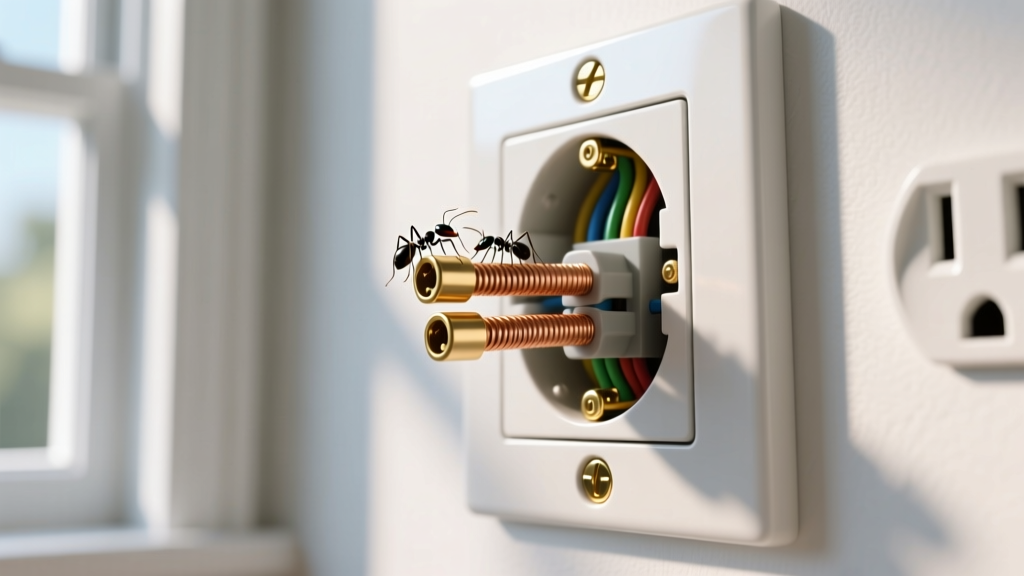
Discovering ants coming out of electrical outlet covers is more than a mere pest control nuisance; it is often a glaring diagnostic indicator of an underlying electrical wiring fault. While it seems counterintuitive that insects would seek out high-voltage environments, specific species—most notably the Tawny Crazy Ant (Nylanderia fulva) and Carpenter Ants (Camponotus)—are biologically drawn to the micro-climates created by failing electrical connections.
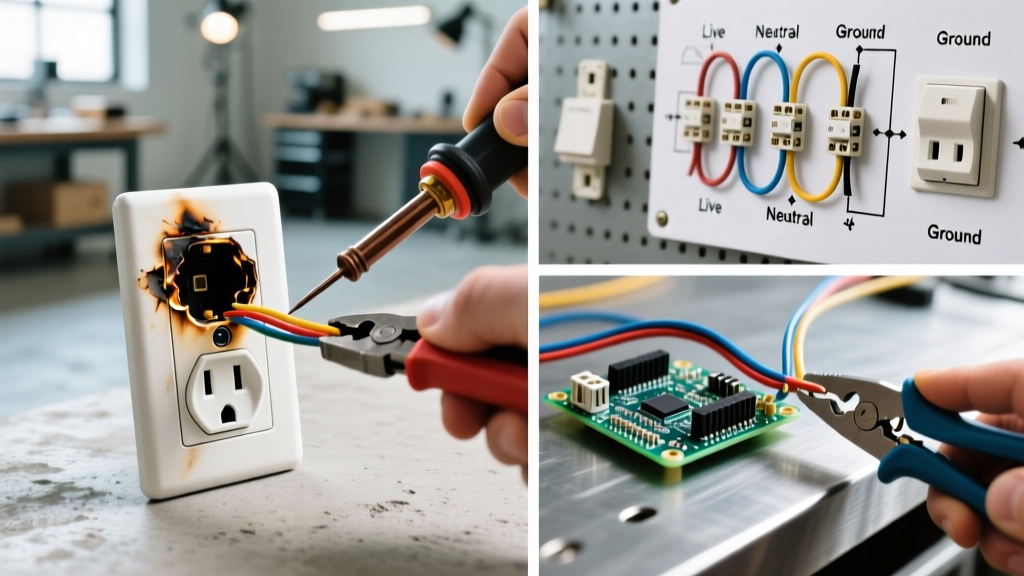
From a wiring diagram perspective, the root cause usually traces back to high-resistance connections. When a 15A or 20A receptacle is wired using push-in backstab connectors rather than screw terminals, the internal spring-loaded contacts degrade over time. This degradation increases electrical resistance. According to Joule's first law (I²R heating), even a minor increase in resistance on a 120V circuit carrying a 12A continuous load will generate localized, radiant heat. This infrared signature mimics the thermal profile of decaying wood or sun-baked soil, inadvertently attracting foraging ants seeking warmth for their colony.
Furthermore, the National Pest Management Association notes that crazy ants are specifically attracted to electrical fields and can cause short circuits by bridging contacts, leading to a cascade of outlet failures.
Diagnostic Heat Mapping: Before You Remove the Cover
Before you unscrew the faceplate and risk a swarm, you must verify if the outlet is operating at unsafe temperatures. Use an infrared (IR) thermometer (such as the Klein Tools IR1) to scan the faceplate.
| Faceplate Temperature (°F) | Delta-T (Over Ambient) | Diagnostic Conclusion & Action Required |
|---|---|---|
| 68°F - 74°F | < 5°F | Normal operation. Ants are likely foraging for moisture or using the wall void as a standard highway. |
| 75°F - 89°F | 5°F - 20°F | Mild resistance heating. Backstabbed connections are degrading. Schedule rewiring and baiting. |
| 90°F - 115°F | 20°F - 45°F | Critical Fault. Severe arcing or high resistance. Immediate fire hazard. Kill breaker immediately. |
| > 115°F | > 45°F | Imminent Failure. Insulation melting. Do not touch faceplate. Cut power at the main panel. |
Wiring Diagram Reference: The Heat-Free 15A/20A Configuration
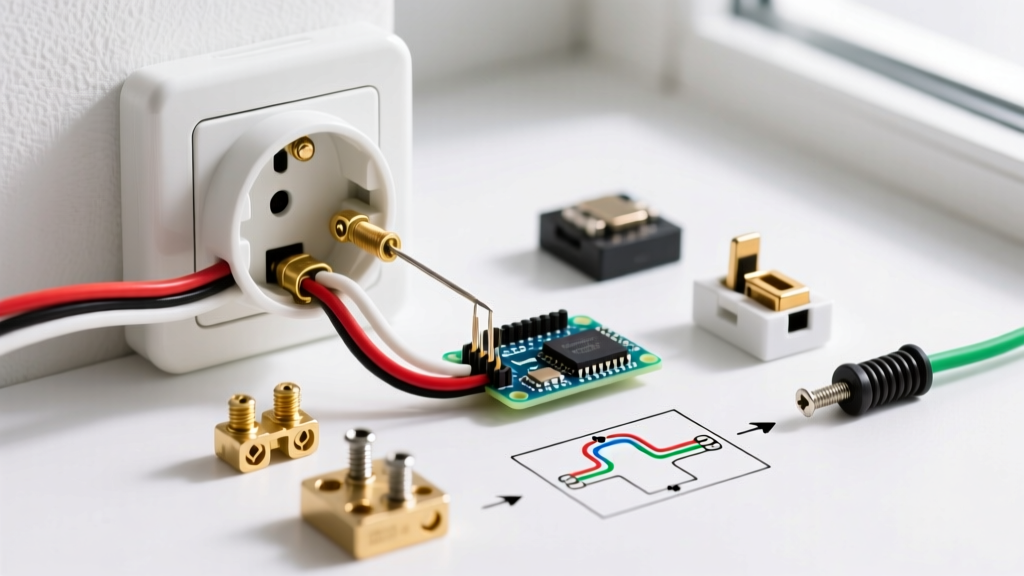
To permanently eliminate the thermal beacon drawing ants to your receptacle, the wiring must be upgraded to a low-resistance, high-integrity configuration. The following text-based wiring diagram reference outlines the NEC-compliant method for terminating a standard 120V duplex receptacle to prevent heat buildup.
Standard Low-Resistance Termination Schematic
- Line (Hot) In: 12 AWG or 14 AWG Black wire stripped to exactly 3/4 inch. Formed into a clockwise shepherd's hook and terminated under the brass line screw.
- Load (Hot) Out: Pigtailing is mandatory for downstream devices. Use a 6-inch 12 AWG black pigtail joined via a WAGO 221 lever nut or IDEAL 3M copper crimp to the downstream black wire. The pigtail terminates under the second brass screw.
- Neutral In & Out: Identical clockwise shepherd's hook termination on the silver screws. Never daisy-chain neutrals by wrapping two wires under one screw.
- Ground (EGC): Bare copper or green wire terminated to the green grounding screw. If using a metal junction box, a grounding pigtail must also bond to the box via a 10-32 green grounding screw.
Crucial Torque Specification: Modern electrical codes and manufacturer specifications require terminal screws to be tightened to exactly 14 in-lbs to 16 in-lbs for standard 15A/20A receptacles. Under-torquing causes the exact micro-arcing and heat generation that attracts ants. Use a calibrated torque screwdriver (e.g., Klein Tools 61014) for every termination.
Step-by-Step Remediation: Pest Control Meets Electrical Code
Addressing ants coming out of electrical outlet covers requires a dual-disciplinary approach. You must eradicate the colony without compromising the dielectric integrity of the electrical box.
Phase 1: Safe Eradication (The Zero-Liquid Rule)
Never use aerosol sprays (like Raid) or liquid foams inside an electrical junction box. These liquids contain conductive propellants and water bases that will cause an immediate phase-to-ground fault or arc flash when the breaker is turned back on. The EPA guidelines on safe pest control heavily caution against applying liquid pesticides near energized equipment.
- Turn off the circuit breaker and verify zero voltage with a non-contact voltage tester (NCVT) and a multimeter.
- Remove the faceplate and inspect the box. Use a shop-vac with a crevice tool to gently remove dead ants, frass (ant debris), and dirt that could cause short circuits.
- Apply a dry, non-conductive granular bait just outside the exterior wall corresponding to the outlet, or use a specialized gel bait like Advance Carpenter Ant Bait applied to a small piece of cardboard resting on the bottom of the junction box (away from all wire terminals).
- Allow 72 hours for the foraging ants to carry the bait back to the colony.
Phase 2: Rewiring to NEC Standards
Once the ant activity has ceased, address the wiring fault.
- Extract the receptacle from the box. Inspect the wire insulation. If the PVC jacket is brittle, discolored (brown/black), or melted, you must cut back the damaged wire and splice in new THHN wire using a WAGO lever connector, provided you have enough slack in the box.
- Strip the wires using a precision wire stripper (avoiding nicking the copper conductor, which creates a new hot-spot).
- Terminate the wires using the screw-terminal method outlined in the Wiring Diagram Reference above. Discard the use of backstabbed push-in holes entirely.
- Torque all terminal screws to 14 in-lbs.
Phase 3: Physical Exclusion and Sealing
To prevent future colonies from using the wall void as an entry point from the exterior brick veneer or siding, you must seal the junction box.
- Internal Sealing: Pack the gaps around the Romex/NM-B cables entering the back of the junction box with duct seal putty (e.g., Gardner Bender DS-110). Duct seal is non-conductive, non-hardening, and completely blocks insect entry while allowing for future wire pulling.
- Faceplate Gasketing: Install a Seal-a-Wire SW-1000 or equivalent closed-cell foam outlet gasket behind the faceplate. This creates an airtight seal against the drywall, preventing interior foraging ants from accessing the wall cavity through the receptacle cutout.
- Exterior Weatherproofing: If the outlet is on an exterior wall, apply a bead of exterior-grade acoustic sealant or silicone caulk around the exterior siding where the wall plate meets the building envelope.
Edge Case Troubleshooting
GFCI Tripping Due to Ant Debris
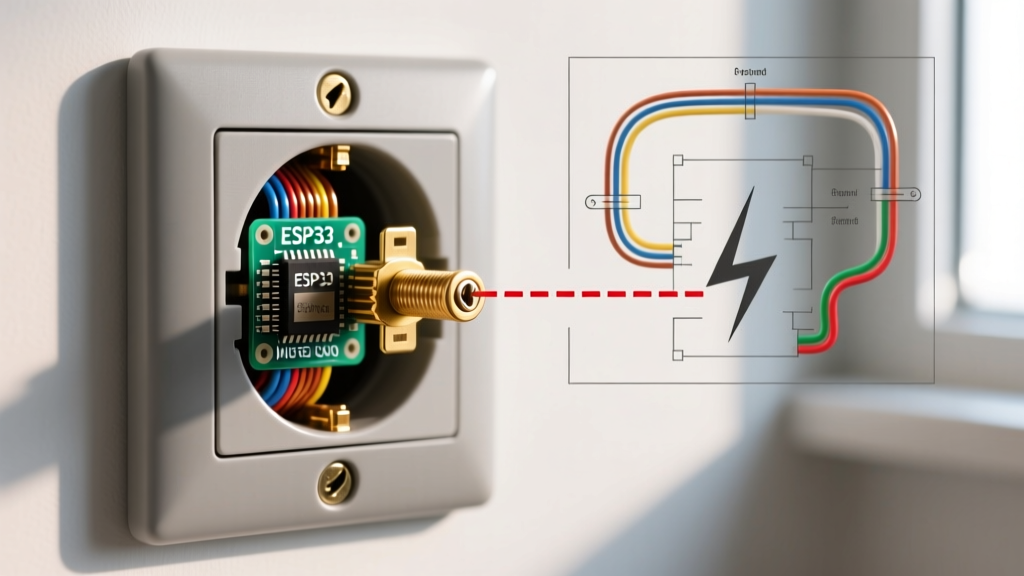
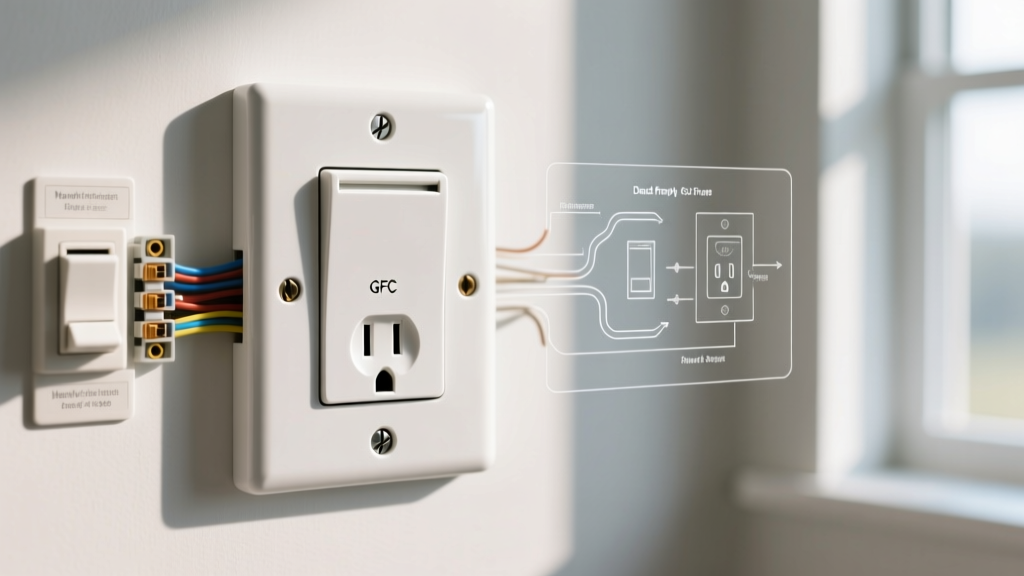
If you are experiencing nuisance tripping on a GFCI outlet alongside an ant infestation, the issue is likely conductive debris. Ants carry soil, moisture, and formic acid. When this debris accumulates across the internal PCB (Printed Circuit Board) of the GFCI sensor, it creates a micro-leakage current to ground. If this leakage exceeds the 4mA to 6mA threshold, the GFCI will trip. Fix: GFCI units are sealed and cannot be safely cleaned internally. The unit must be replaced with a new, UL-listed 20A GFCI receptacle (e.g., Leviton AFGF1-W), and the box must be sealed with duct seal.
Main Panel Swarms
If you find ants coming out of the main electrical panel rather than a standard outlet, the stakes are exponentially higher. The National Fire Protection Association (NFPA) identifies pest intrusion in main panels as a leading cause of residential electrical fires due to the high fault current available at the bus bars. Do not attempt DIY pest control inside a main panel. The bus bars remain energized even when the main breaker is off. You must hire a licensed electrician to safely de-energize the panel, clean the bus bars, and apply a dielectric pest-blocking compound.
Summary of Materials and Estimated Costs (2026 Pricing)
| Material / Tool | Specific Product Recommendation | Estimated Cost |
|---|---|---|
| Torque Screwdriver | Klein Tools 61014 (14 in-lbs) | $45 - $55 |
| Outlet Gasket | Seal-a-Wire SW-1000 Foam Gasket | $1.50 - $3.00 each |
| Duct Seal Putty | Gardner Bender DS-110 (1 lb) | $6.00 - $8.00 |
| Dry Ant Bait | Advance Carpenter Ant Bait Granules | $18.00 - $24.00 |
| Wire Connectors | WAGO 221 Lever Nuts (Assorted) | $12.00 / box |
By treating the pest issue as a symptom of a thermal wiring fault, you not only eliminate the ants coming out of your electrical outlet but also upgrade your home's electrical safety profile to modern standards, preventing potential arc-fault fires and ensuring long-term circuit reliability.