
The True Cost of Adding an Electrical Outlet in 2026
When homeowners and DIYers ask, how much to add an electrical outlet, the answer is rarely a single flat rate. The final price tag depends heavily on your wall construction, the distance to your electrical panel, and whether you are tapping into an existing circuit or running a dedicated home run. In 2026, fluctuations in copper pricing and updated National Electrical Code (NEC) mandates for AFCI/GFCI protection have shifted the baseline costs for both DIYers and licensed electricians.
This comprehensive tool and material guide breaks down the exact expenses you will face, from the cost of Southwire Romex per foot to the specialized fish tapes required for finished drywall. Whether you are adding a receptacle for a home office or installing a GFCI in a bathroom, understanding these material and labor variables is critical for accurate budgeting.
2026 Cost Breakdown Matrix: DIY vs. Professional
Before purchasing materials, it is essential to understand the financial scope of your project. Below is a comparative matrix detailing average 2026 costs based on project complexity.
| Project Scope | DIY Material Cost | Professional Labor & Materials | Timeframe |
|---|---|---|---|
| Simple Tap (Existing Circuit, Drywall) | $25 - $60 | $175 - $250 | 1 - 3 Hours |
| New Circuit Run (Up to 50 ft) | $120 - $210 | $450 - $850 | 4 - 8 Hours |
| GFCI/AFCI Upgrade + Outlet | $45 - $90 | $250 - $400 | 2 - 4 Hours |
| Masonry/Brick Wall Installation | $60 - $150 | $500 - $1,200+ | 1 - 2 Days |
Note: Professional labor rates in 2026 average between $85 and $150 per hour, depending on your metropolitan area and the electrician's licensing tier.
Material Guide: Wire, Receptacles, and Boxes
To accurately calculate how much to add an electrical outlet, you must itemize the core components. Skimping on materials to save a few dollars is a severe safety hazard and a direct violation of electrical codes.
1. Non-Metallic (NM) Cable
The backbone of your installation is the NM-B cable, commonly known by the brand name Romex. In 2026, copper prices remain a significant factor in your budget.
- 14/2 NM-B (15-Amp Circuits): Ideal for standard living rooms and bedrooms. Expect to pay approximately $0.55 to $0.65 per foot. A 250-foot spool costs around $135.
- 12/2 NM-B (20-Amp Circuits): Mandatory for kitchens, bathrooms, and heavy-load areas. Prices range from $0.75 to $0.90 per foot. A 250-foot spool costs roughly $190.
Critical Code Warning: Never use 14 AWG wire on a 20-amp breaker. The breaker will not trip before the 14-gauge wire overheats, creating a severe fire hazard. Always match the wire gauge to the breaker amperage.
2. Receptacles and Outlets
Standard receptacles are no longer just simple pass-through devices. The National Fire Protection Association (NFPA) mandates Tamper-Resistant (TR) technology in almost all residential applications to prevent childhood shock injuries.
- Standard 15A TR Receptacle: The Leviton Decora 15A (Model R52-T52-R) is an industry standard, costing about $2.80 per unit.
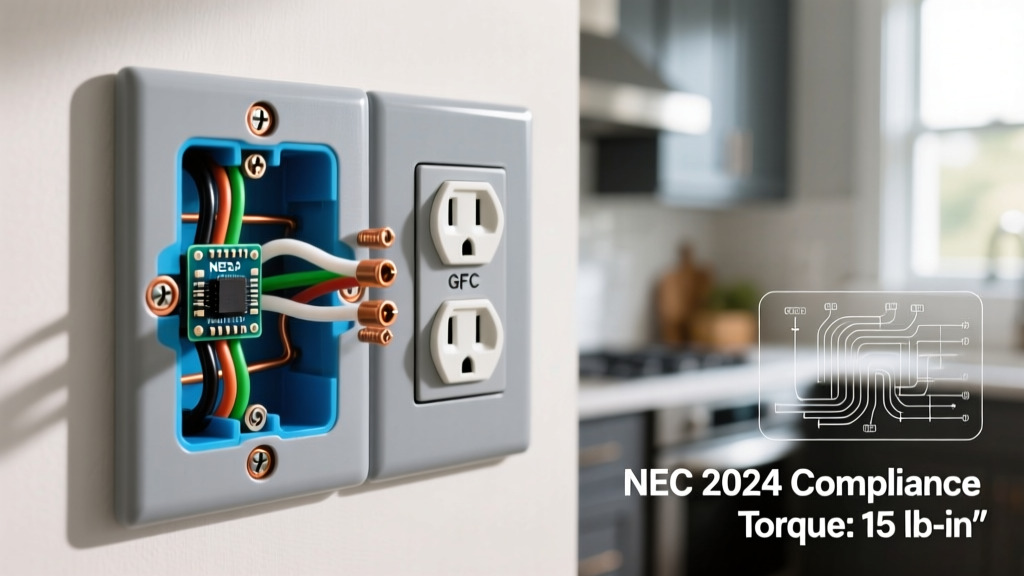
- 20A GFCI Receptacle: Required within 6 feet of water sources. The Eaton 20A Self-Test GFCI (Model GFNT2-W) retails for $24.00. Self-testing models automatically check for ground fault protection every 3 seconds, a massive upgrade over older manual-test models.
- AFCI Receptacles: If your panel lacks AFCI breakers, you can use an AFCI receptacle at the first outlet in the circuit to protect downstream devices. Expect to pay $32.00 to $45.00 per unit.
3. Electrical Boxes
For retrofitting into existing drywall, you need "old work" (remodel) boxes. The Carlon 1-Gang Old Work Box (Model B114R) features flip-out wings that clamp securely to 1/2-inch drywall and costs just $1.20. If you are drilling into masonry or exterior siding, you will need a weatherproof while-in-use cover and a cast-metal or PVC exterior box, pushing the box cost to $15.00 - $25.00.
The Essential Tool Arsenal
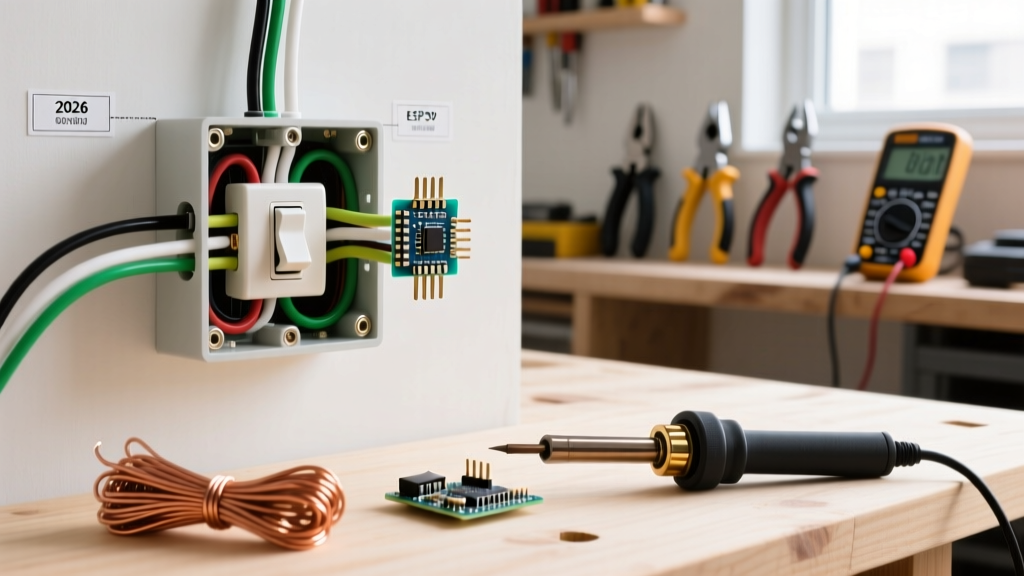
Labor costs can be entirely eliminated if you possess the right tools and the confidence to use them. According to the U.S. Consumer Product Safety Commission (CPSC), using properly rated testing equipment is the single most important factor in preventing DIY electrocution.
Must-Have Diagnostic & Prep Tools
- Non-Contact Voltage Tester: The Klein Tools NCVT-2 Dual Range Voltage Tester ($35.00) detects both standard 120V and low-voltage doorbell/thermostat wiring. Never rely on a cheap, unbranded tester from a discount bin.
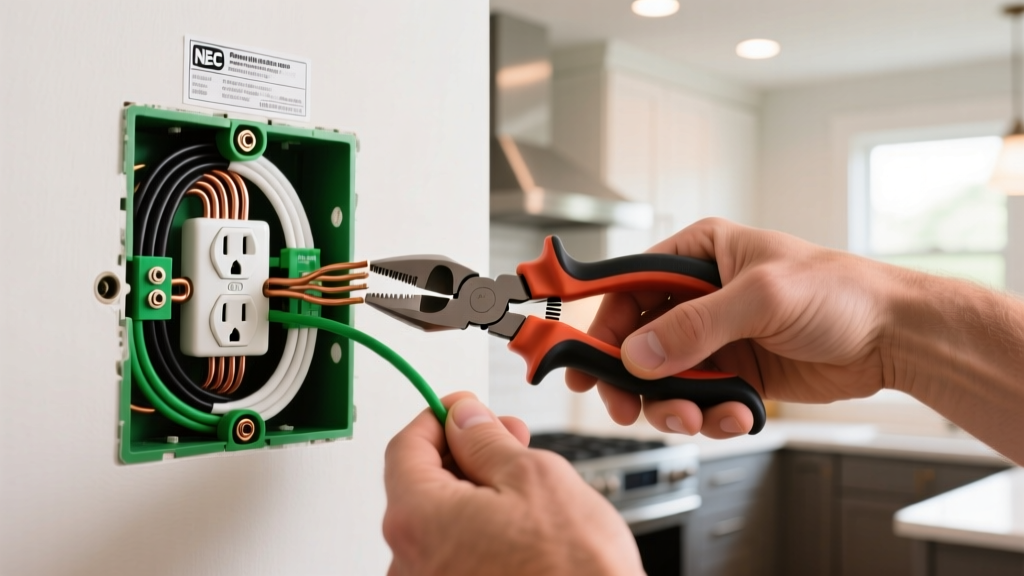
- Wire Strippers: The Klein Tools 11055 Wire Stripper ($28.00) cleanly strips 10-18 AWG solid and stranded wire without nicking the copper conductor, which can create hot spots.
- Receptacle Tester: The Gardner Bender GFI-3501 ($12.00) plugs into the finished outlet to verify correct wiring polarity and tests the GFCI trip mechanism.
Fishing and Routing Tools
If you are running wire through finished walls, the physical labor of fishing the cable dictates your timeline.
- Fish Tapes: A 50-foot steel fish tape ($45.00) is standard, but for walls packed with insulation, a Klein Tools Flex-Rod Set ($65.00) allows you to navigate around fire blocks and HVAC ducts.
- Drywall Saw: A sharp, stab-style drywall saw like the Stanley FatMax ($15.00) is required for cutting precise openings for your old-work boxes.
- Rotary Tool: For cutting through exterior siding or plaster, a Dremel 4000 with a multipurpose cutting bit ($70.00) saves hours of manual labor.
NEC Code Compliance and Permit Fees
When calculating how much to add an electrical outlet, DIYers frequently forget to factor in local permit costs. While tapping into an existing circuit for a simple replacement rarely requires a permit, running a new circuit or adding outlets in kitchens and bathrooms almost always does.
Permit and Inspection Costs
In most municipalities, an electrical permit for a single circuit addition costs between $50 and $150. This fee covers the plan review and the mandatory rough-in and final inspections. Skipping this step can result in fines, voided home insurance policies, and severe complications when selling your home.
2026 NEC Mandates to Remember
The NEC is updated every three years, and local jurisdictions adopt these codes on varying timelines. As of 2026, the following rules heavily impact material costs:
- AFCI Protection (NEC Article 210.12): Almost all 120V, single-phase, 15- and 20-amp branch circuits supplying bedrooms, living rooms, and closets must have Arc-Fault Circuit Interrupter protection. If your panel does not have AFCI breakers, you must install an AFCI receptacle at the first outlet in the chain.
- GFCI Protection (NEC Article 210.8): Ground-Fault protection is required in bathrooms, garages, outdoors, crawl spaces, and within 6 feet of any sink. The expansion of GFCI requirements in recent code cycles means you are more likely to need a $24 GFCI receptacle than a $3 standard one.
Hidden Costs and Edge Cases
Budgeting for the wire and outlet is only half the battle. Be prepared for these common hidden expenses:
- Drywall Repair and Paint: Fishing wire often results in minor drywall damage. Budget $50 to $150 for patching compounds, mesh tape, and color-matched paint, or factor in a handyman's hourly rate.
- Panel Upgrades: If your electrical panel is at full capacity (no open breaker slots) or is an obsolete model like a Federal Pacific or Zinsco panel, you cannot legally or safely add a new circuit. A panel upgrade costs between $1,500 and $3,500.
- Asbestos Abatement: In homes built before 1980, drilling into floor tiles or pipe insulation to run wire may disturb asbestos. Testing kits cost $40, but professional remediation can halt a project and add thousands to the budget.
Frequently Asked Questions
Can I add an outlet without running new wire to the panel?
Yes, this is called "tapping" an existing circuit. You can extend a circuit from an existing nearby outlet, provided the current circuit is not already near its maximum load capacity (typically 1,440 watts for a 15-amp circuit on continuous load) and the existing wiring is in good condition. This keeps the cost under $60.
Do I need a permit to replace an existing outlet?
Generally, no. Like-for-like replacements of damaged or outdated receptacles do not require a permit in most jurisdictions. However, upgrading a standard outlet to a GFCI in a wet area, or adding a brand-new outlet where one did not exist, usually requires a permit and inspection.
Why did my electrician quote $600 for a single outlet?
If the electrician needs to run a new dedicated circuit from a basement panel up through a finished two-story wall, cut through fire blocks, fish the wire blindly, and patch the drywall access holes, the labor hours easily justify a $600 to $800 quote. You are paying for the complexity of the wire routing, not just the plastic receptacle.