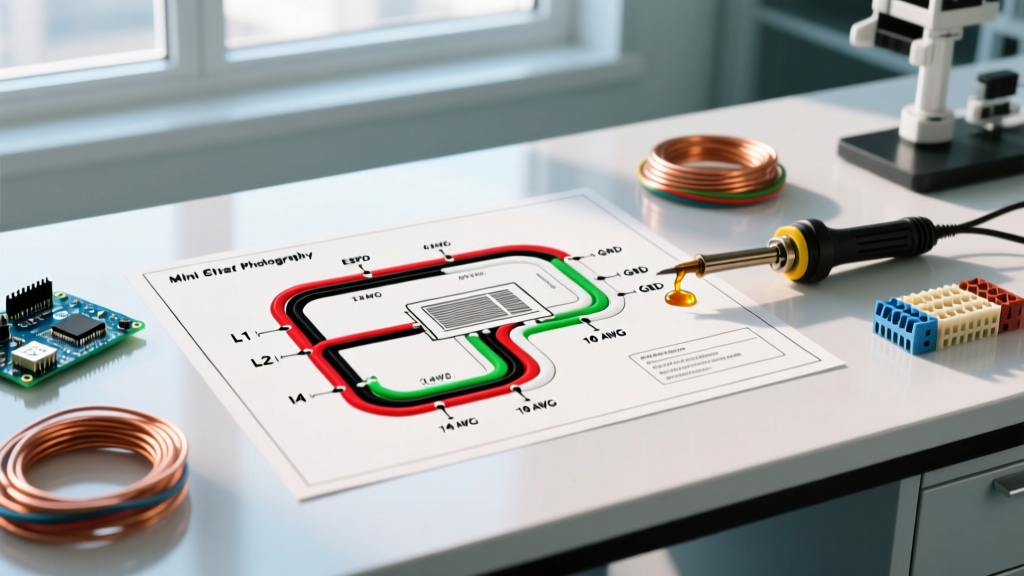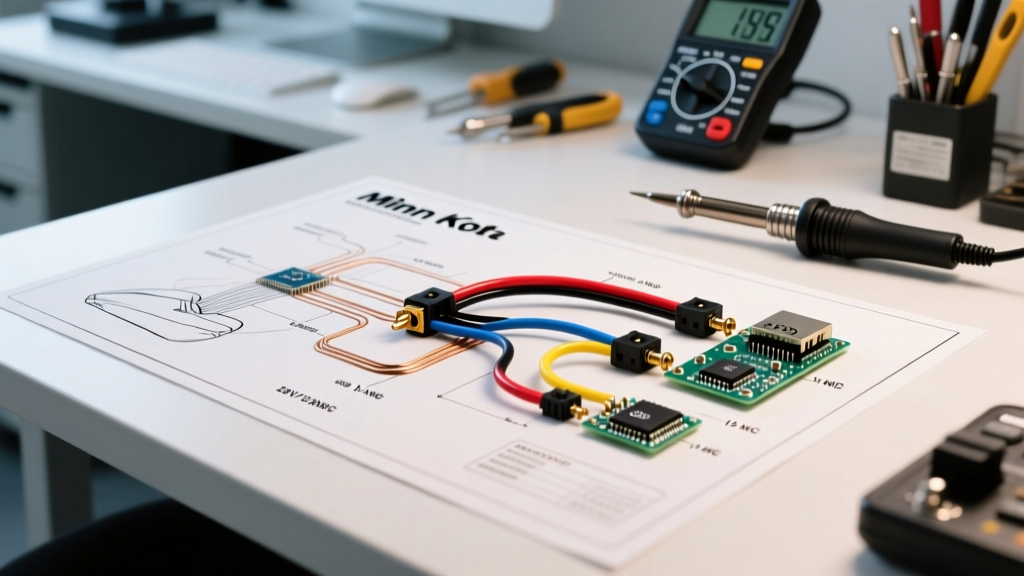

The Anatomy of a 24-Volt Minn Kota System
When powering larger bass boats, pontoons, or heavy aluminum rigs in 2026, a standard 12-volt electrical system simply cannot deliver the sustained thrust and runtime required for tournament fishing or heavy currents. This is where a 24-volt configuration becomes essential. Whether you are rigging a Minn Kota Terrova 112, a foot-pedal Ultrex 112, or a reliable Maxxum 105, understanding the wiring diagram for Minn Kota 24 volt setups is the difference between a flawless day on the water and being stranded with a dead battery bank.
A 24-volt system does not use a single 24V battery. Instead, it wires two 12V deep-cycle marine batteries (typically Group 27 or Group 31 AGM or Lithium) in series. This configuration doubles the voltage to 24V while maintaining the same amp-hour (Ah) capacity as a single battery. According to the American Boat and Yacht Council (ABYC), proper series wiring requires meticulous attention to terminal torque, wire gauge, and overcurrent protection to prevent thermal runaway or voltage drop.
Essential Wiring Diagram Specifications
Before cutting and crimping wire, you must select the correct gauge and circuit protection. Using undersized wire for a 24V Minn Kota motor results in severe voltage drop, which forces the motor to draw excess amperage to compensate, leading to melted plugs and tripped breakers. As of 2026, high-quality tinned marine wire (like Ancor or GS Power) costs approximately $2.50 to $3.20 per foot for 4 AWG, making it a critical but worthwhile investment.
| Motor Thrust (24V) | Max Amp Draw | Wire Run (Under 15 ft) | Wire Run (15 - 22 ft) | Breaker Size |
|---|---|---|---|---|
| 70 lb (e.g., PowerDrive) | 42 Amps | 6 AWG | 4 AWG | 50A Resettable |
| 80 lb (e.g., Maxxum/Terrova) | 56 Amps | 6 AWG | 4 AWG | 60A Resettable |
| 112 lb (e.g., Ultrex/Terrova) | 52 Amps* | 4 AWG | 2 AWG | 60A Resettable |
*Note: Modern 112 lb brushless and high-efficiency brushed motors draw less peak amperage than older 80 lb models due to advanced digital maximizer technology, but thicker wire is still recommended to eliminate voltage drop over long runs.
Troubleshooting With the Diagram: A Step-by-Step Flow
When your Minn Kota motor stutters, loses power, or fails to deploy, the wiring diagram is your roadmap. Grab a digital multimeter (DMM) and follow this diagnostic sequence to isolate the fault.
Step 1: Verify Resting Bank Voltage
Set your DMM to DC Volts. Place the black probe on Battery 1's negative terminal (the system ground) and the red probe on Battery 2's positive terminal (the 24V hot). A fully charged 24V AGM bank should read between 25.4V and 25.8V. If you read ~12.7V, your series jumper is disconnected or broken, and you are only reading one battery.
Step 2: Test the Series Jumper Under Load
The series jumper is the short, heavy-gauge wire connecting Battery 1 Positive to Battery 2 Negative. Switch your DMM to the millivolt (mV) setting. Have a partner engage the trolling motor on the water (or lift it and spin the prop safely on land). Place one probe on each end of the jumper cable. A healthy jumper will show a voltage drop of less than 0.1V (100mV). If you see a drop of 0.5V or higher, the jumper is corroded, undersized, or the terminal crimps are failing.
Step 3: Voltage Drop Across the MKR-19 Plug
The Minn Kota MKR-19 quick-connect plug (retailing around $35-$45) is a notorious failure point. With the motor running under load, test the voltage at the battery receptacle, then test the voltage at the motor-side plug. If the receptacle reads 24.5V but the motor side reads 22.0V, you have a 2.5V drop across the plug. This resistance generates intense heat, often melting the plastic housing. Clean the brass pins with contact cleaner and apply dielectric grease, or replace the plug entirely.
Common 24V Failure Modes & Edge Cases
Based on marine electrical diagnostics, here are the most frequent edge cases that standard wiring diagrams fail to warn you about:
- The "Phantom" 12V Draw: This is a classic rigging error. If a boater wires a 12V livewell pump, bilge, or depth finder to the "top" battery (Battery 2) instead of a dedicated 12V bus bar, that accessory will drain Battery 2 while the motor is off. When you start the 24V motor, the unbalanced bank will cause Battery 1 to overwork, leading to premature failure. Fix: Always use a DC-DC converter or a dedicated 12V starting battery for 12V accessories.
- Breaker Nuisance Tripping in Weeds: If your 60A breaker trips constantly in heavy vegetation, do not upgrade to an 80A breaker. The breaker is protecting your wire. If you push 80A through 6 AWG wire, the insulation will melt. Instead, clear the prop or upgrade your wire gauge to handle higher transient spikes.
- Lithium BMS Cut-off: If using 12V Lithium batteries in series, a hard strike or sudden prop jam can cause a massive amperage spike. If the spike exceeds the BMS limit (often 100A-150A), the battery will shut off instantly to protect itself, killing the motor. Ensure your lithium batteries are rated for high-amp marine trolling applications (e.g., Dakota Lithium or Ionic).
Integrating the On-Board Charger
A major advantage of modern Minn Kota 24V wiring diagrams is the integration of onboard chargers like the Minn Kota MK 215D (2-bank, 15A per bank) or the MK 345D (3-bank). Older marine guides suggested you must disconnect the 24V series jumper before charging. This is no longer true.
Modern Minn Kota digital chargers feature independent, isolated charging banks. You wire Bank 1 to Battery 1 and Bank 2 to Battery 2. The charger's internal circuitry automatically recognizes the series configuration and balances the charge safely without requiring you to unbolt the jumper cable. Always route the charger's AC power cord away from the DC battery cables to prevent electromagnetic interference, and ensure the inline AC fuse is mounted within 7 inches of the shore power inlet, per BoatUS and ABYC E-11 standards.
Frequently Asked Questions
Can I use automotive wire instead of marine tinned wire?
No. Automotive wire is untinned and will rapidly oxidize (turn green/black) in a marine environment, increasing resistance and causing voltage drop. Always use Type 3 UL-listed marine tinned copper wire.
What torque spec should I use on the battery terminals?
For standard 3/8-inch stainless steel battery studs, the recommended torque is 120 in-lbs (10 ft-lbs). Overtightening can strip the lead threads on AGM batteries, while undertightening causes arcing and heat.
My 24V motor runs slow, but the batteries read 25V. What is wrong?
Voltage at rest does not equal voltage under load. Perform a load test. If the voltage drops below 22V immediately upon engaging the motor, you likely have a bad cell in one of the 12V batteries or severe corrosion hidden inside the heat-shrink tubing of your main crimps.