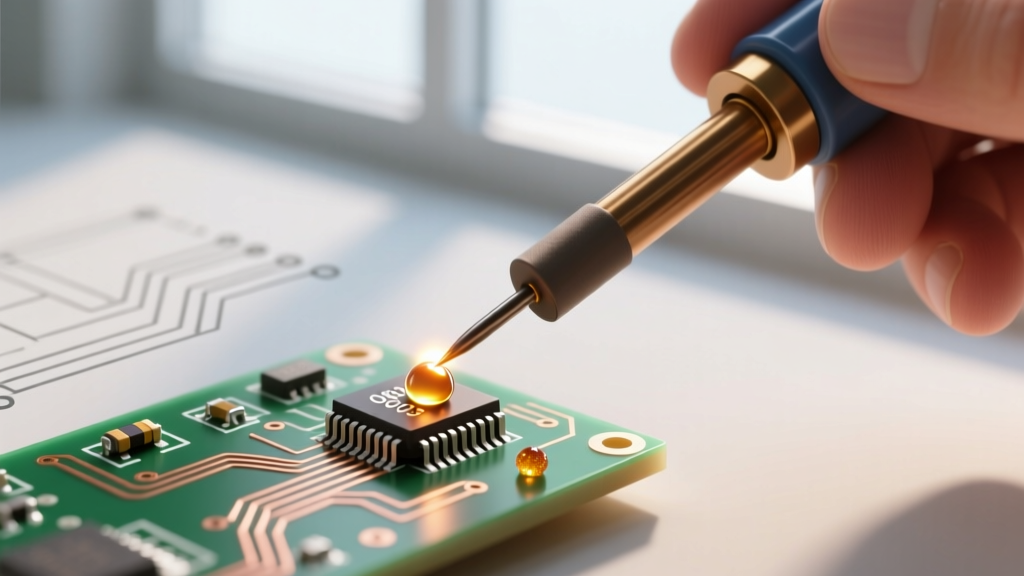

The 450°C Divide: Defining Soldering Versus Brazing
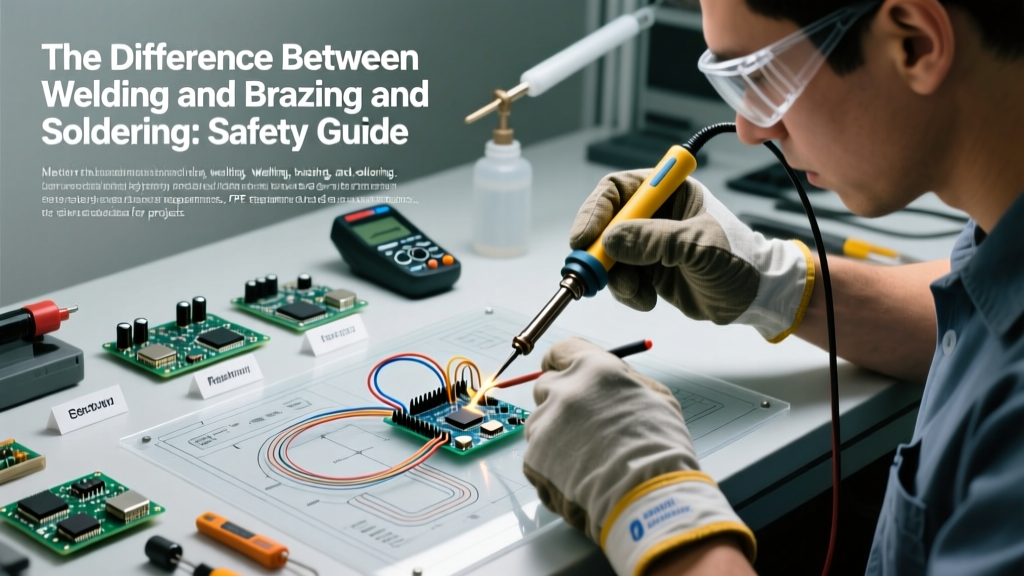
When fabricating metal assemblies or repairing electrical systems, understanding the thermodynamic boundary between joining processes is critical. According to the American Welding Society (AWS), the definitive threshold that separates these two capillary-based joining methods is 450°C (842°F). Below this temperature, the process is classified as soldering; above it, you are brazing. In both techniques, the base metals do not melt. Instead, a lower-melting-point filler metal is drawn into the joint via capillary action. However, the tool pairing, metallurgical requirements, and mechanical outcomes of soldering versus brazing diverge drastically.
As of 2026, the electronics and HVAC industries have seen significant advancements in localized induction heating and precision thermal profiling, yet the fundamental physics of wetting and capillary draw remain unchanged. Choosing the wrong heat source or filler alloy results in catastrophic joint failure, ranging from brittle intermetallic fractures in PCBs to catastrophic pressure leaks in refrigeration lines.
Core Comparison Matrix: Soldering vs. Brazing
Before selecting your heat tool, evaluate the joint requirements against this technical matrix.
| Parameter | Soft Soldering | Silver Brazing |
|---|---|---|
| Temperature Range | 180°C – 400°C (356°F – 752°F) | 600°C – 850°C (1112°F – 1562°F) |
| Typical Tensile Strength | 15 – 45 MPa | 200 – 500+ MPa |
| Primary Heat Tools | Conductive irons, hot air, IR reflow | Oxy-acetylene, MAP-Pro torches, induction |
| Base Metal Impact | Negligible thermal distortion | Risk of annealing (loss of temper) |
| Primary Applications | PCBs, microelectronics, light sheet metal | HVAC, structural copper, heavy steel, aerospace |
Tool & Technique Pairing: Soldering Workflows
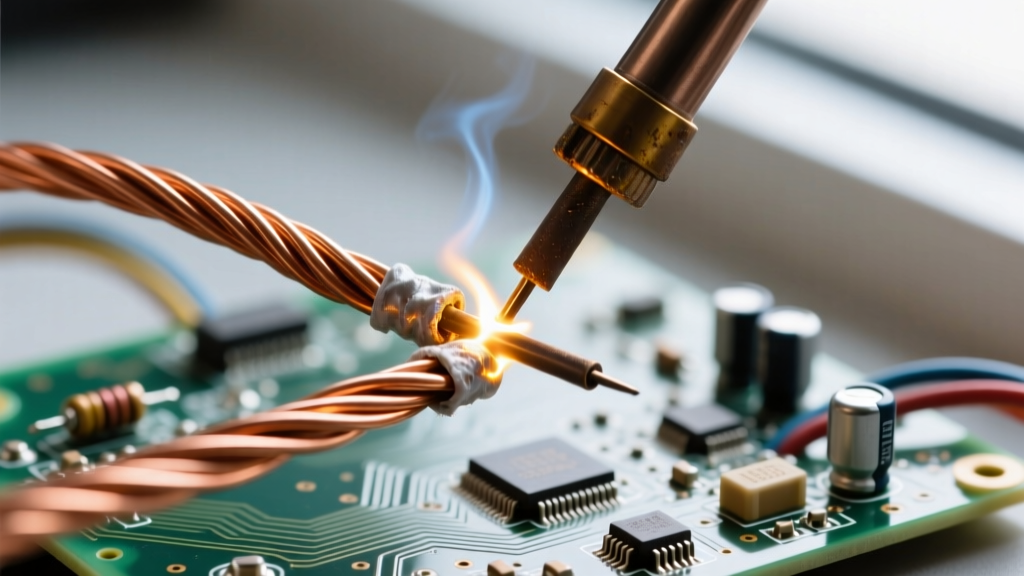
Soldering relies on precise, localized heat transfer to achieve wetting without exceeding the thermal degradation limits of the base material (e.g., the glass transition temperature, Tg, of FR-4 PCB laminates, typically around 130°C–170°C).
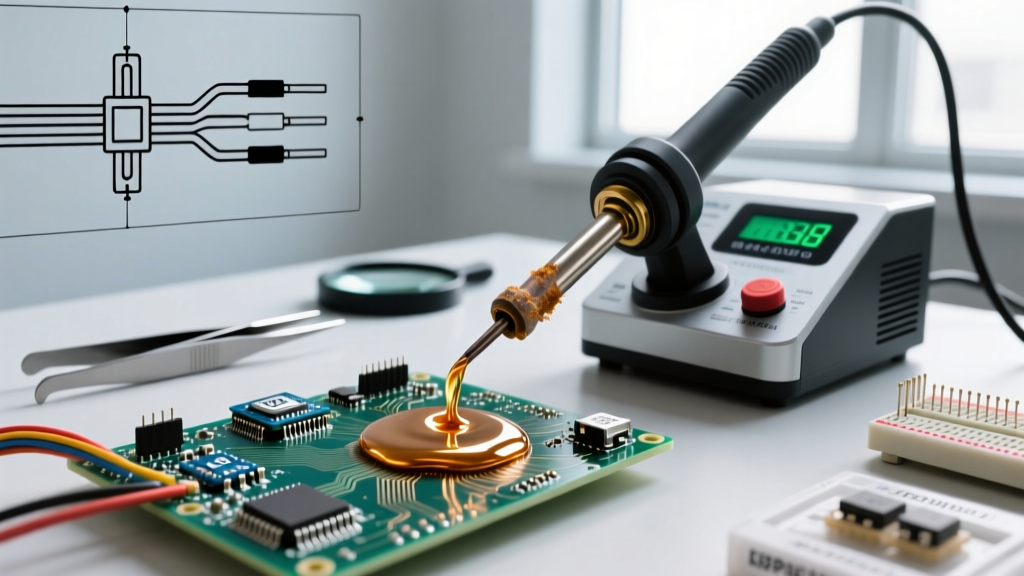
Conductive Soldering Stations
For through-hole and heavy-gauge wire connections, thermal mass matching is your primary technique. The Hakko FX-888D (retailing around $110) remains an industry staple for its rapid thermal recovery, utilizing a T18 series chisel tip to maximize surface contact. For higher thermal mass joints like 10 AWG battery tabs, the Weller WE1010NA ($165) paired with an ETA or RT4 tip provides the 70W active power delivery needed to prevent cold joints.
Expert Technique: Never use the tip as a heat 'bridge' by melting solder on the iron and transferring it to the joint. Apply the bare, fluxed tip directly to the intersection of the pad and the lead, count to two seconds to equalize thermal mass, and then feed the solder wire into the joint, not the iron.
Convective and IR Tools for SMD
Surface-mount technology requires uniform heating to prevent tombstoning. The Quick 861DW hot air rework station is the standard for localized convective heating. When pairing this tool with SAC305 (Sn96.5/Ag3.0/Cu0.5) paste, set the airflow to 40% and the temperature to 360°C at the nozzle. The actual joint will profile through the 217°C liquidus phase safely due to convective heat loss.
Tool & Technique Pairing: Brazing Workflows
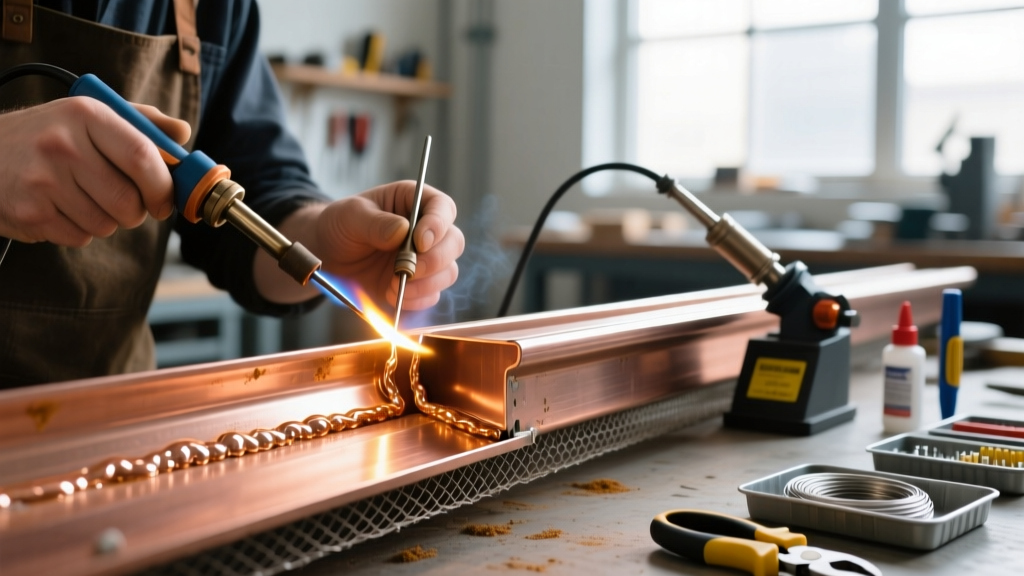
Brazing requires aggressive, high-BTU heat delivery. The technique focuses on pre-heating the entire assembly to near the filler's melting point before introducing the alloy, ensuring the capillary draw is sustained throughout the joint depth. The Copper Development Association (CDA) emphasizes that uneven heating is the leading cause of flux inclusion and voided braze joints in plumbing and HVAC.
Combustion Torches
For field HVAC and copper pipe joining, the Bernzomatic TS8000 ($70) triggered torch paired with a MAP-Pro cylinder is the standard pairing. MAP-Pro burns at approximately 1,980°C (3,600°F), providing the intense, localized cone required to bring 1/2-inch Type L copper pipe to the 650°C required for BCuP-5 filler.
For precision brazing on smaller, delicate assemblies like jewelry or refrigeration capillary tubes, the Smith Little Torch ($350) using an Oxy-Acetylene mix is mandatory. The #3 or #4 welding tip allows for a pinpoint flame envelope that prevents melting the thin base metal while achieving the necessary capillary flow.
Induction Brazing Systems
In high-volume 2026 manufacturing environments, flame brazing is being replaced by localized induction systems like the Ambrell EasyHeat series. Induction pairs perfectly with pre-formed braze alloy rings. The alternating magnetic field induces eddy currents directly within the ferrous or copper base metal, heating it from the inside out. This eliminates soot, reduces flux usage by up to 60%, and guarantees repeatable thermal profiles.
Metallurgy: Matching Filler and Flux
The debate of soldering versus brazing is ultimately settled by the metallurgical environment of the joint.
- Soldering Alloys: For general electronics, Sn63/Pb37 (eutectic, 183°C melt) remains unmatched for its lack of a plastic phase, preventing joint disturbance during cooling. For RoHS-compliant environments, SAC305 (217°C–220°C melt) is standard, though it requires higher tip temperatures and is prone to tin whisker growth over extended timeframes.
- Soldering Fluxes: IPC J-STD-004B classifies rosin-based fluxes by activity. Use ROL0 (Rosin, Low activity, no halides) for consumer electronics where cleaning is impossible, and ROL1 or water-soluble OA (Organic Acid) fluxes for high-reliability aerospace joints that will undergo ultrasonic cleaning.
- Brazing Alloys: For copper-to-copper joints, BCuP-5 (15% Silver, melting range 643°C–802°C) is 'self-fluxing' due to its phosphorus content, which reduces copper oxides in situ. However, BCuP alloys must never be used on ferrous metals or nickel alloys, as the phosphorus forms brittle intermetallic phosphides that will shatter under mechanical stress.
- Brazing Fluxes: When brazing steel or using silver alloys like BAg-8 (72% Silver, no phosphorus), a white, borax-based paste flux (conforming to AWS A5.31 Type FB3) is required to dissolve refractory oxides at temperatures above 600°C.
Failure Modes and Edge Cases
Understanding how joints fail separates novices from master technicians.
Soldering Failure Modes
Pad Lift and Measles: Applying a 400°C iron to a standard FR-4 board for more than 4 seconds can exceed the laminate's Tg and decomposition temperature (Td). This causes the epoxy to delaminate (measles) or the copper pad to detach entirely (pad lift). Always use a thermocouple-profiling approach when working on multi-layer boards with heavy internal ground planes that act as heat sinks.
Brazing Failure Modes
Annealing and Grain Growth: When brazing structural copper or brass, lingering with an oxy-acetylene torch above 700°C for too long will anneal the base metal. The copper loses its work-hardened temper, becoming soft and susceptible to vibration-induced fatigue cracking. The technique requires a sweeping, continuous motion to achieve the braze temperature without soaking the surrounding metal.
Soot Inclusion: Using a fuel-rich (reducing) flame with a standard propane torch can embed unburned carbon (soot) into the molten braze pool. This creates microscopic voids that will inevitably leak under high-pressure refrigerant testing. Always adjust the torch to a neutral or slightly oxidizing flame when brazing.
Expert Decision Framework
Use this rapid framework to dictate your process on the shop floor:
- Is the joint electrical or structural? If purely electrical and low current (<30A), solder with SAC305. If structural, load-bearing, or subject to high vibration, braze with BAg or BCuP.
- What is the base metal? Aluminum cannot be easily brazed with standard torches without specialized fluxes and alloys like AlumiBraze; it is usually soldered with ultrasonic tools or specific zinc-based solders. Copper and steel are prime candidates for silver brazing.
- What are the thermal limits of adjacent components? If the assembly contains elastomeric O-rings, plastic insulation, or sensitive semiconductor junctions within 2 inches of the joint, the radiant heat of brazing will destroy them. Soldering, or mechanical crimping, must be utilized.