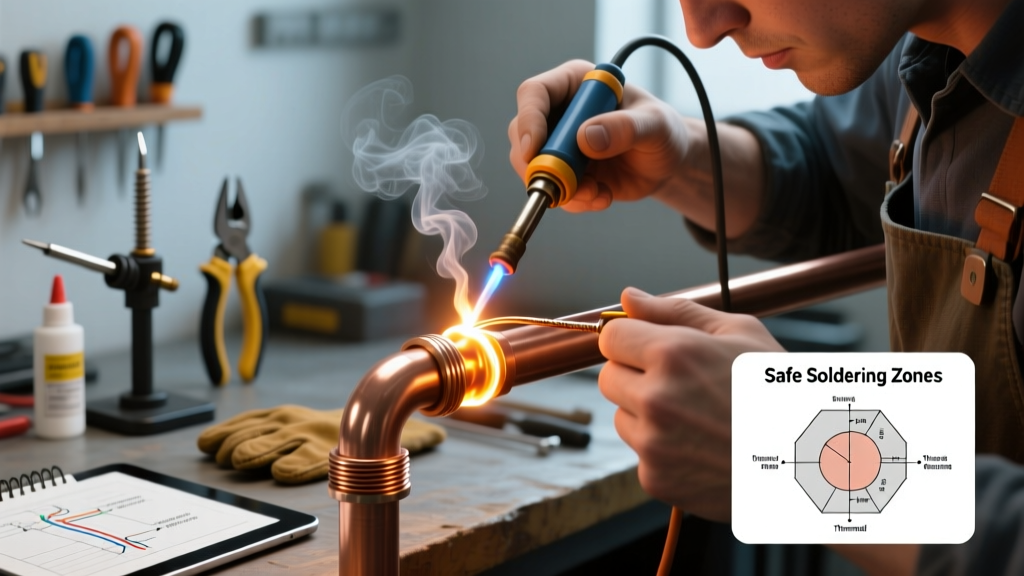

The Thermal Reality: Why Soldering Copper Pipe Causes Fires
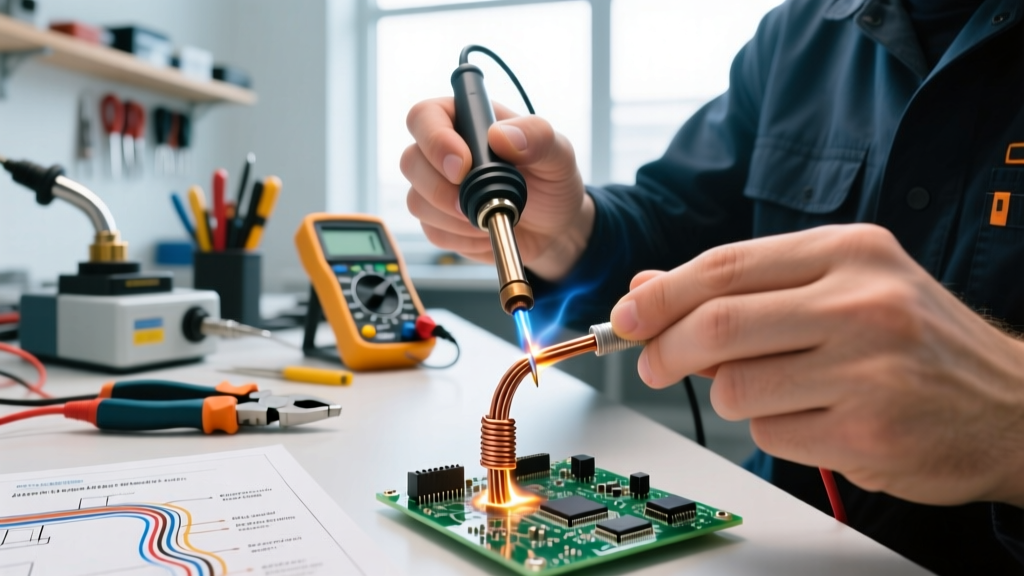
Soldering copper pipe—often referred to as 'sweating'—is a foundational plumbing skill, but it introduces extreme, localized heat into residential and commercial structures. When using a MAP-Pro torch, the flame temperature can exceed 3,730°F (2,054°C). Because copper is an exceptional thermal conductor (approximately 401 W/m·K), heat travels rapidly along the pipe. If you are soldering a joint just six inches away from a wooden wall stud, the copper can transfer enough thermal energy to ignite the wood in under three minutes.
According to the NFPA 51B Standard for Fire Prevention During Hot Work, plumbing and HVAC hot work are leading contributors to structural fires in concealed spaces. In 2026, with homes built tighter and utilizing more engineered lumber (which can ignite differently than solid sawn lumber), strict adherence to safety protocols is non-negotiable. This guide outlines the professional best practices, gear, and techniques required for soldering copper pipe safely and effectively.
Mandatory Safety Gear & Workspace Preparation
Before striking a spark, your personal protective equipment (PPE) and fire suppression tools must be staged. Do not rely on a distant kitchen fire extinguisher. The following table outlines the professional-grade safety gear required for residential and commercial copper soldering.
| Item | Recommended Spec / Model | Est. Cost (2026) | Purpose & Safety Function |
|---|---|---|---|
| Fire Extinguisher | Kidde Pro 210 (4-A:60-B:C) | $65 - $85 | Immediate suppression of Class A (wood/paper) and Class B/C fires. Must be within 10 feet of the hot work zone. |
| Heat Shield Cloth | Silicone-Coated Fiberglass (1500°F rated) | $20 - $35 | Wraps around pipes near studs or joists to reflect radiant heat and block sparks. |
| Welding Gloves | Wells Lamont 124L (Cowhide) | $18 - $25 | Protects hands from radiant heat, accidental pipe contact, and molten solder splatter. |
| Safety Glasses | ANSI Z87.1+ Wraparound | $12 - $20 | Prevents flux spatter and UV/IR glare from the torch flame from damaging eyes. |
Torch & Gas Selection: Propane vs. MAP-Pro
Choosing the right heat source is critical for both safety and joint integrity. Using a torch that is too small forces you to hold the flame on the joint longer, increasing the risk of overheating the surrounding structure. Using a torch that is too large can melt the copper or instantly vaporize the flux.
- Standard Propane (e.g., Bernzomatic ST2200): Burns at roughly 3,600°F. Ideal for 1/2-inch copper pipe in open, unobstructed areas. It provides a softer, wider flame that is forgiving for beginners.
- MAP-Pro (e.g., Bernzomatic TS8000): Burns at roughly 3,730°F. Essential for 3/4-inch to 1.5-inch pipes, or when working in cold environments. The higher BTU output allows you to heat the fitting quickly and remove the torch, minimizing thermal bleed into the walls.
Pro Tip: Always use a self-igniting torch head. Fumbling with a separate flint striker while holding a pressurized gas cylinder in a cramped crawl space is a severe safety hazard.
The 'Dry Pipe' Imperative & The Bread Trick
You cannot solder a copper pipe that contains water. Even a few drops of residual moisture will boil when heated, creating steam pressure inside the sealed fitting. This steam will literally blow the molten solder out of the capillary gap before it can solidify, resulting in a guaranteed leak.
Always shut off the main water supply and open the highest and lowest fixtures in the house to drain the lines. However, in multi-story homes or complex manifolds, gravity often leaves a slow drip at the joint you are trying to sweat.
The Plumber's Bread Trick: If a pipe refuses to stop weeping, take a piece of plain white bread (crusts removed, no seeds or wheat grains) and tightly wad it into the pipe upstream of the joint. The bread acts as a temporary dam, absorbing the drip and allowing you to solder a perfectly dry joint. Once the pipe cools and the water is turned back on, the bread dissolves into a harmless slurry. Crucial: Remove the aerators from all downstream faucets before turning the water back on to prevent the bread slurry from clogging the screens.
Step-by-Step Fire Prevention Workflow
Follow this exact sequence to ensure structural safety when soldering copper pipe near combustible materials:
- The 3-Foot Clearance Rule: Remove all insulation, sawdust, and debris within a 3-foot radius of the joint. If working inside a wall cavity, pull back fiberglass or rockwool insulation at least 12 inches in all directions.
- Deploy Heat Sinks: Wrap a damp (not dripping) cotton rag around the pipe between the joint and the nearest wooden stud. As the heat travels down the copper, the water in the rag absorbs the thermal energy (latent heat of vaporization), keeping the pipe below the 212°F boiling point and protecting the wood.
- Apply Flux Sparingly: Use a brush to apply a thin, even layer of lead-free, water-soluble flux (e.g., LA-CO Regular) inside the fitting and outside the pipe. Excess flux will boil and spit when heated, creating a burn hazard and leaving corrosive residue.
- Heat the Fitting, Not the Solder: Apply the flame to the fitting (the female hub), not the pipe or the solder wire. Move the flame in a circular motion to distribute heat evenly.
- Test with Solder: After 3 to 5 seconds, touch the lead-free solder wire (e.g., Oatey Safe-Flo 95/5 Tin-Antimony) to the opposite side of the joint. If the flux bubbles and the solder instantly wicks into the joint via capillary action, the temperature is correct (approx. 452°F - 464°F).
- Wipe and Cool: Remove the heat. Wipe the joint with a dry rag to remove excess flux and smooth the solder bead. Allow it to cool naturally for 60 seconds before touching.
Troubleshooting: Identifying and Preventing Joint Failures
Even with perfect safety protocols, poor technique leads to plumbing failures. Understanding the chemistry and physics of the joint prevents costly callbacks and water damage.
- Burnt Flux (Acidic Corrosion): If you overheat the joint, the petrolatum or acid-based flux will carbonize, turning black and crusty. This destroys the flux's ability to prevent oxidation and leaves an acidic residue that will eat through the copper, causing pinhole leaks within 6 to 12 months. Fix: If the flux burns, you must disassemble the joint, re-clean with emery cloth, and start over.
- Cold Joints: If the solder beads up on the outside of the fitting rather than wicking inside, the joint was not hot enough, or the copper was not cleaned to bare, shiny metal. A cold joint lacks structural integrity and will fail under standard municipal water pressure (typically 60-80 PSI).
- Lead Contamination: Under the EPA's Safe Drinking Water Act guidelines, plumbing solder must be completely lead-free (containing less than 0.2% lead). Never use 60/40 tin-lead electronics solder for plumbing. Always verify the spool is labeled 'Lead-Free' and 'NSF Approved' for potable water.
Post-Soldering Protocol: The 30-Minute Watch
The most dangerous time for a structure fire is often after the torch is turned off. Smoldering wood studs or ignited dust inside a wall cavity can take 20 to 45 minutes to develop into an open flame. Professional plumbers adhere to the '30-Minute Watch' protocol.
After completing all soldering in a concealed space, remain on-site for at least 30 minutes. For ultimate peace of mind, modern professionals utilize smartphone-attached thermal imaging cameras (such as the FLIR One Pro, priced around $240 in 2026). Scanning the wall cavity with a thermal camera allows you to visually confirm that the ambient temperature of the surrounding wood has dropped below 120°F and that no hidden ember hotspots remain.
By respecting the thermal properties of copper, utilizing the correct MAP-Pro equipment, and strictly enforcing fire watch protocols, you can solder copper pipe with the speed and confidence of a master plumber while maintaining absolute structural safety.
Additional Resources
For comprehensive guidelines on fire suppression equipment placement during hot work, refer to the NFPA Consumer Fire Extinguisher Guide. Always ensure your local municipal plumbing codes align with your soldering alloy and flux selections before pressurizing a new system.