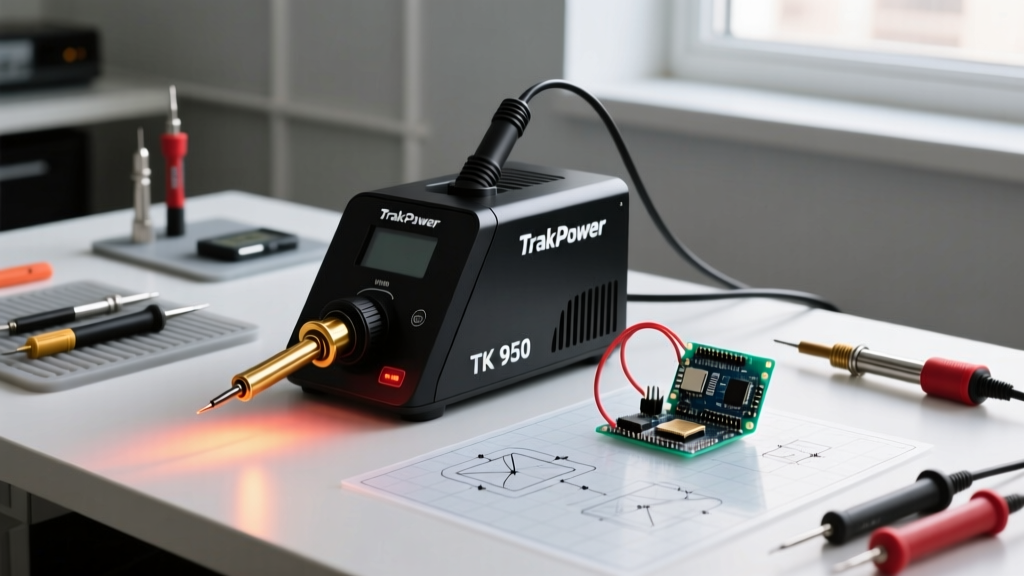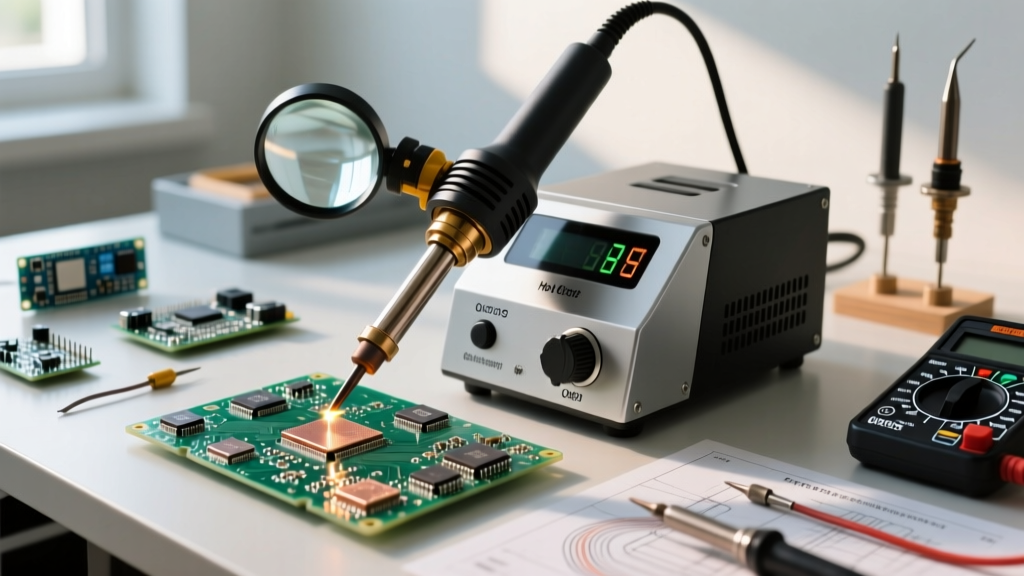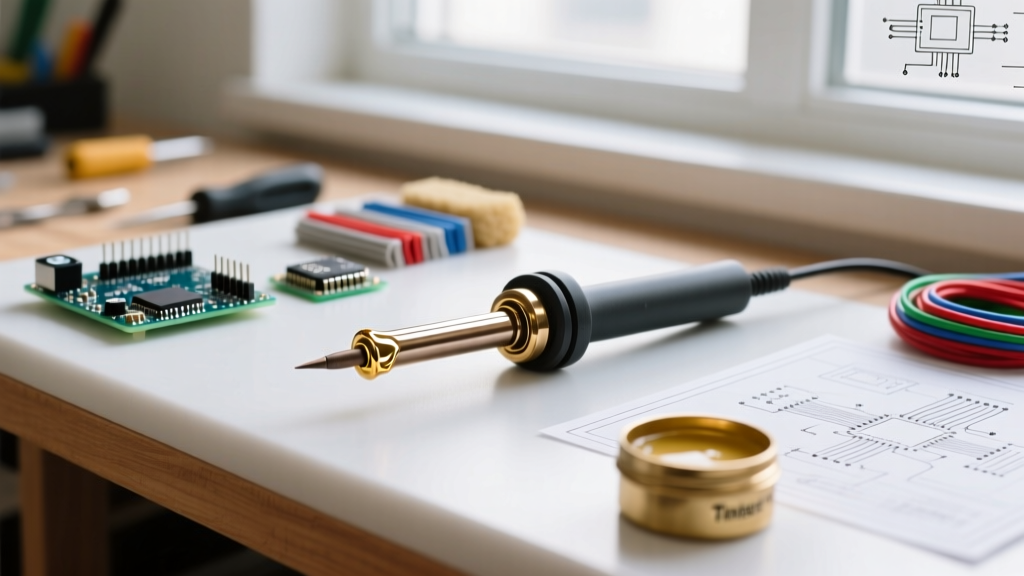

The Great Workshop Debate: Can You Cross-Use Them?
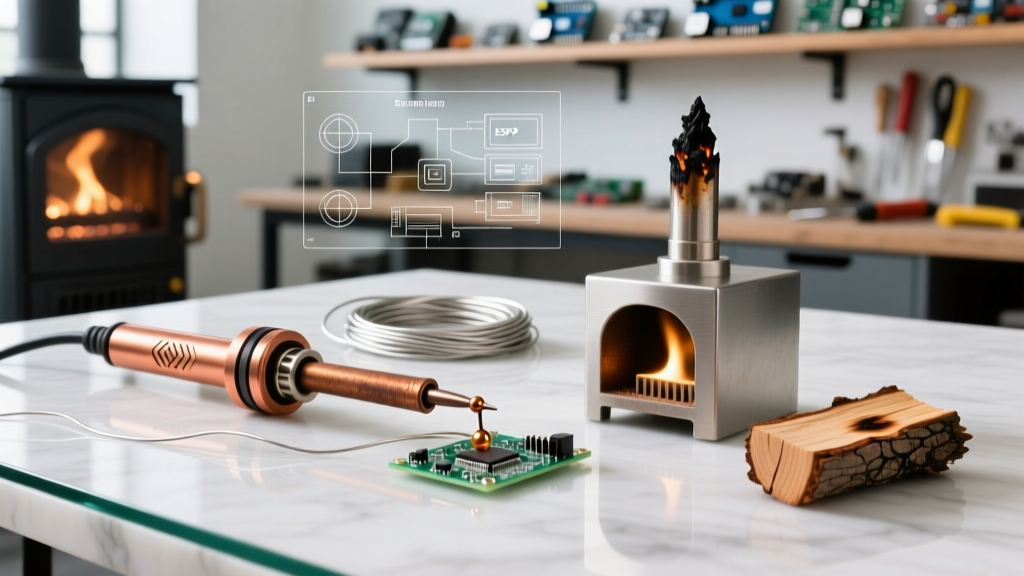
A frequent question among DIY enthusiasts, crafters, and beginner electronics hobbyists is whether a wood burner and a soldering iron are interchangeable. The short answer is an emphatic no. While both tools feature a heated metal wand connected to a power source, their internal engineering, tip metallurgy, and thermal dynamics are designed for entirely different physical processes. Confusing a wood burner vs soldering iron scenario often leads to ruined equipment, cold solder joints, and severe frustration.
In this comprehensive guide, we break down the exact metallurgical differences, the catastrophic failure modes of cross-usage, and our expert 2026 buying recommendations for both disciplines.
Thermal Dynamics and Tip Metallurgy
To understand why these tools cannot be swapped, you must look at how heat is transferred and what the tips are actually made of.
Soldering Irons: Engineered for Thermal Transfer
Soldering irons are designed to melt metal alloys (solder) and facilitate a metallurgical bond between components and copper pads. According to the IPC-J-STD-001 soldering standards, achieving a reliable intermetallic connection requires precise temperature control and high thermal mass.
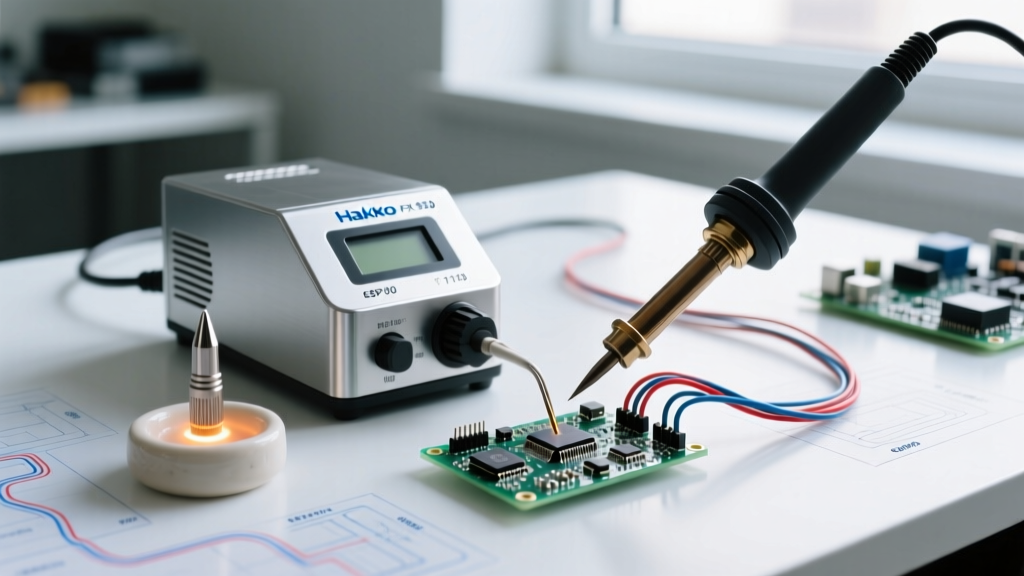
- Tip Composition: Modern soldering tips (like the Hakko T18 or Weller RT series) feature a solid copper core for rapid heat transfer, plated with a micro-thin layer of iron (usually 0.1mm to 0.5mm) to prevent the solder from dissolving the copper. This iron layer is highly susceptible to mechanical abrasion.
- Operating Temperatures: Typically range from 300°C to 400°C (572°F to 752°F) for lead-free SAC305 alloys.
- Flux Dependency: Soldering requires chemical flux (rosin or organic acids) to strip oxidation from the tip and the workpiece during heating.
Wood Burners (Pyrography Pens): Engineered for Surface Carbonization
Wood burning, or pyrography, relies on scorching organic cellulose and lignin. As highlighted in Popular Woodworking's pyrography techniques guide, the artist requires rapid temperature fluctuations and specialized tip shapes to create gradients, shading, and deep burns.
- Tip Composition: Most professional wood burner pens use Nichrome (Nickel-Chromium) wire or solid brass/steel nibs. Nichrome heats up via electrical resistance and is designed to withstand extreme surface temperatures without melting.
- Operating Temperatures: Can range from 200°C (392°F) for light shading up to 600°C+ (1112°F+) for deep, rapid scorching on hardwoods.
- Abrasion Tolerance: Pyrography tips are dragged across rough wood grain, requiring materials that do not rely on delicate micro-plating.
Feature Comparison Matrix
| Feature | Soldering Iron / Station | Wood Burner (Pyrography Pen) |
|---|---|---|
| Primary Purpose | Joining metals via molten alloy | Carbonizing organic surfaces (wood, leather) |
| Tip Material | Iron-plated copper core | Nichrome wire, solid brass, or steel |
| Thermal Mass | High (required to heat copper ground planes) | Low to Medium (surface-level heat transfer) |
| Temperature Range | 200°C - 450°C (392°F - 842°F) | 200°C - 650°C+ (392°F - 1200°F+) |
| Sensor Feedback | Ceramic thermocouple inside the tip | Transformer voltage control (wire pens) |
Catastrophic Failure Modes: What Happens When You Cross-Use?
Attempting to use a soldering iron for wood burning, or a wood burner for electronics, will almost always result in permanent tool damage. Here is the exact metallurgical breakdown of why this happens.
Using a Soldering Iron on Wood
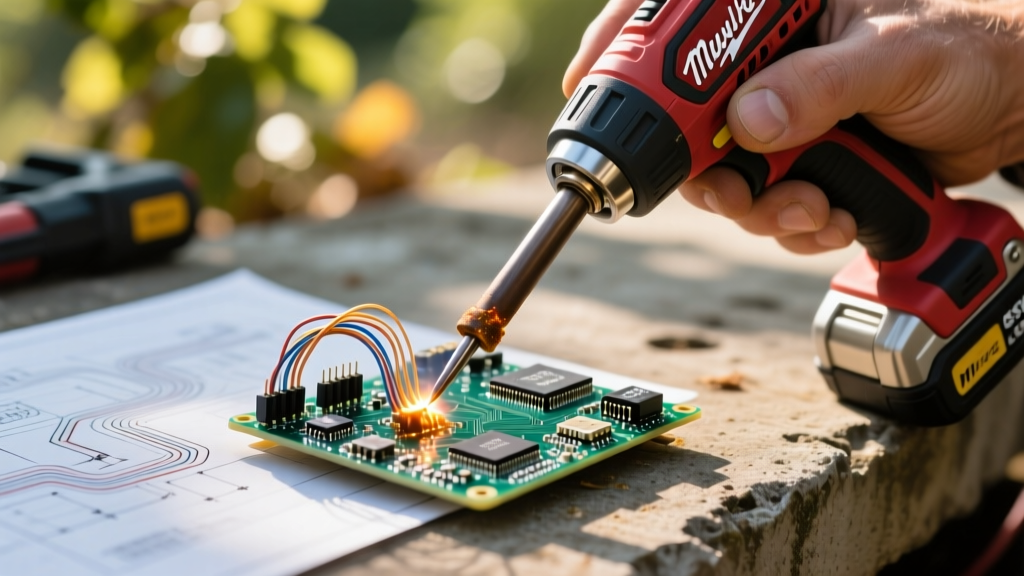
If you take a standard Weller or Hakko soldering iron and drag it across a piece of oak or pine, you will destroy the tip in a matter of minutes. Wood grain acts as a mild abrasive. This mechanical friction strips away the 0.1mm iron plating, exposing the soft copper core underneath. Once exposed, the copper rapidly oxidizes at high temperatures and pits. Furthermore, because wood burning does not use chemical flux, the iron plating that remains will quickly develop a thick layer of black oxide, rendering the tip completely non-wetting for future electronics work. A $12 replacement tip becomes trash.
Using a Wood Burner on Electronics (PCBs)
Conversely, using a Nichrome wire pyrography pen to solder a drone PCB or Arduino header is equally destructive. When molten tin/lead or lead-free solder and rosin flux come into contact with red-hot Nichrome wire, a rapid chemical and metallurgical reaction occurs. The flux corrodes the wire, and the solder alloys with the chromium, creating a brittle intermetallic compound. The wire tip will snap under the slightest mechanical pressure. Additionally, wire pens lack the thermal mass required to push heat through a multilayer PCB's copper ground planes, resulting in catastrophic cold solder joints that will fail in the field.
2026 Buying Guide: Top Picks for Both Disciplines
Whether you are building a custom mechanical keyboard or crafting a pyrography portrait, buying a dedicated tool is mandatory. Here are our top recommendations for the current market.
Best Soldering Stations for Electronics
As noted in Digi-Key's technical guide on soldering stations, modern ceramic heaters offer vastly superior thermal recovery compared to older mica-based elements.
- Hakko FX-888D (~$115): The undisputed workhorse of the DIY electronics bench. It features a digital interface, rapid thermal recovery, and uses the widely available T18 tip series. Perfect for through-hole and general SMD work.
- Pine64 Pinecil V2 (~$26): A revolutionary smart iron powered by a RISC-V chip. It runs on USB-C Power Delivery (up to 65W) and supports custom firmware (IronOS). It is the ultimate portable soldering iron for field repairs and drone builders in 2026.
- Weller WE1010NA (~$115): Features a massive 70W heating element and heavy-duty ET tips, making it ideal for soldering thick 12AWG-14AWG wires in automotive or RC battery applications.
Best Wood Burners for Pyrography
- Razertip Dual Burner System (~$185): The gold standard for professional pyrographers. It uses a specialized low-voltage, high-current transformer to heat Nichrome wire pens with zero lag. The interchangeable pens allow for everything from micro-shading to heavy background fills.
- Colwood Detailer (~$160): Known for its incredibly precise digital temperature control and ergonomic pen handles that prevent hand fatigue during 6-hour shading sessions on basswood.
- Walnut Hollow Professional (~$45): A solid entry-level variable-temperature iron with a solid brass tip. While not a wire-nib system, it is an excellent budget choice for leather crafting and basic wood scorching.
The "Dual-Purpose" Tool Myth
You may encounter tools marketed as "Versa-Temp" or "Craft Irons" that claim to do both soldering and wood burning by simply swapping the tip. Avoid these for any serious work. These tools use basic rheostat-based voltage dimmers rather than active thermal feedback sensors. They cannot maintain the strict temperature tolerances required for reliable IPC-compliant electronics soldering, nor do they offer the rapid heat-dumping required for smooth pyrography shading. They are the definition of a jack-of-all-trades and master of none.
Expert Tip: If you are a maker who frequently switches between building electronics enclosures (wood/acrylic) and soldering the internal PCBs, maintain two completely separate workspaces. Cross-contamination of wood dust onto a soldering iron tip or electronic flux onto a wood-burning pen will degrade both tools rapidly.
Frequently Asked Questions (FAQ)
Can I use a butane soldering iron for wood burning?
While a butane iron (like the Portasol Pro 125) can scorch wood in a pinch, the open flame and massive, unregulated heat output make it incredibly difficult to control shading gradients. You will likely end up with deep, uneven gouges rather than smooth artistic burns. Stick to electric variable-temperature pyrography pens.
Why does my soldering iron tip turn black when I touch wood?
The black residue is a combination of carbonized wood cellulose and oxidized iron plating. Because wood lacks the chemical flux found in solder wire, the high heat causes the tip's protective iron layer to instantly oxidize. Once this black crust forms, molten solder will no longer adhere to the tip (a condition known as "dewetting").
Are laser engravers replacing wood burners?
Diode lasers (like the xTool D1 Pro or Ortur Laser Master) have taken over the market for repetitive designs and text. However, hand-held pyrography pens remain the superior tool for organic, freehand artistic shading, depth manipulation, and working on 3D contoured surfaces where a flatbed laser cannot focus.