
The Core Soldering Iron Tip Types: A Comparison Matrix
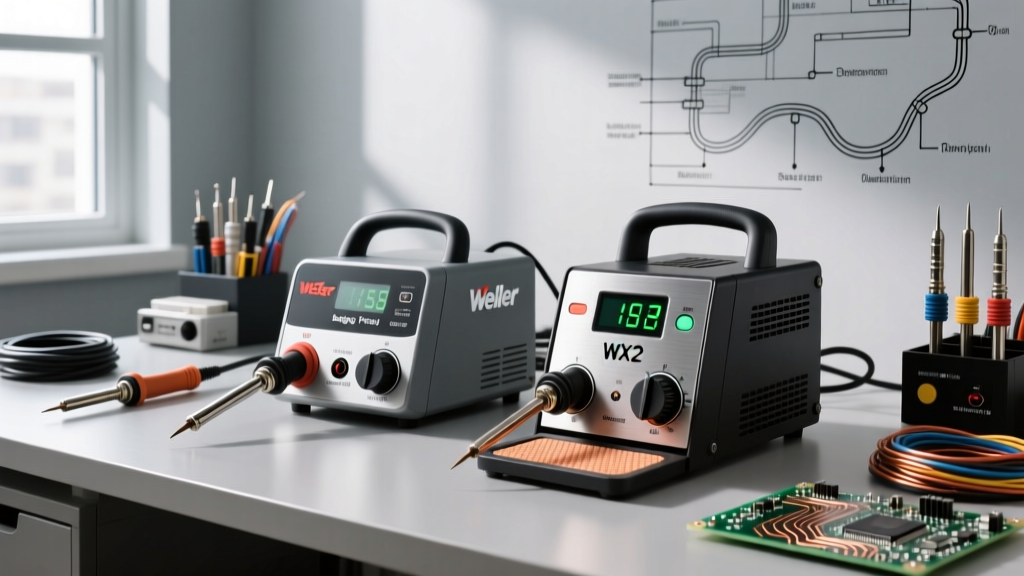
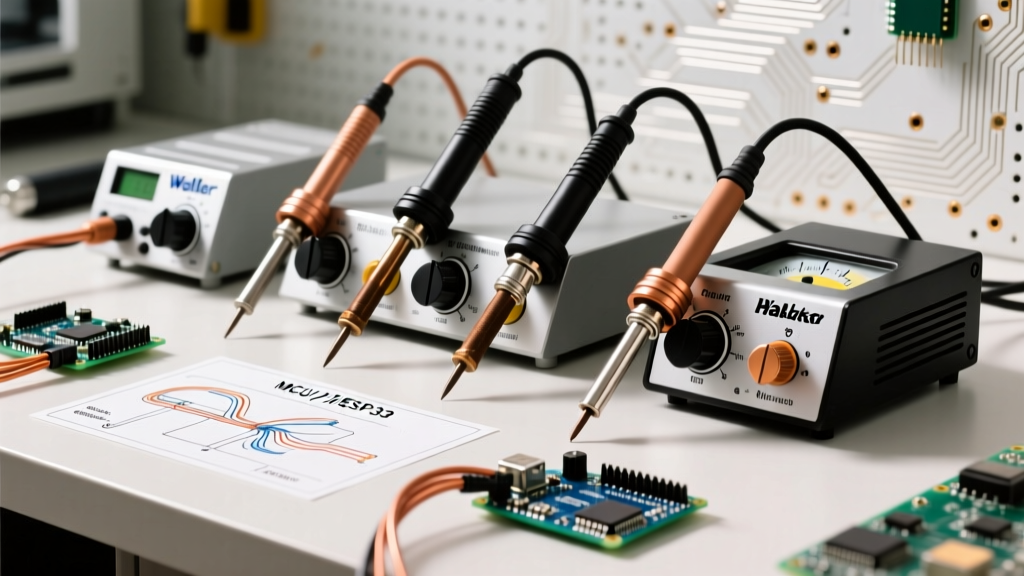
When building or repairing electronics, the soldering iron station on your desk is only half the equation. The actual point of contact—the soldering iron tip—dictates your thermal transfer efficiency, joint quality, and workflow speed. Many beginners mistakenly believe that a needle-sharp tip offers the most precision, only to struggle with cold joints on ground planes due to poor thermal mass. Understanding the geometry and metallurgy of different soldering iron tip types is the fastest way to elevate your soldering from amateur to professional grade.
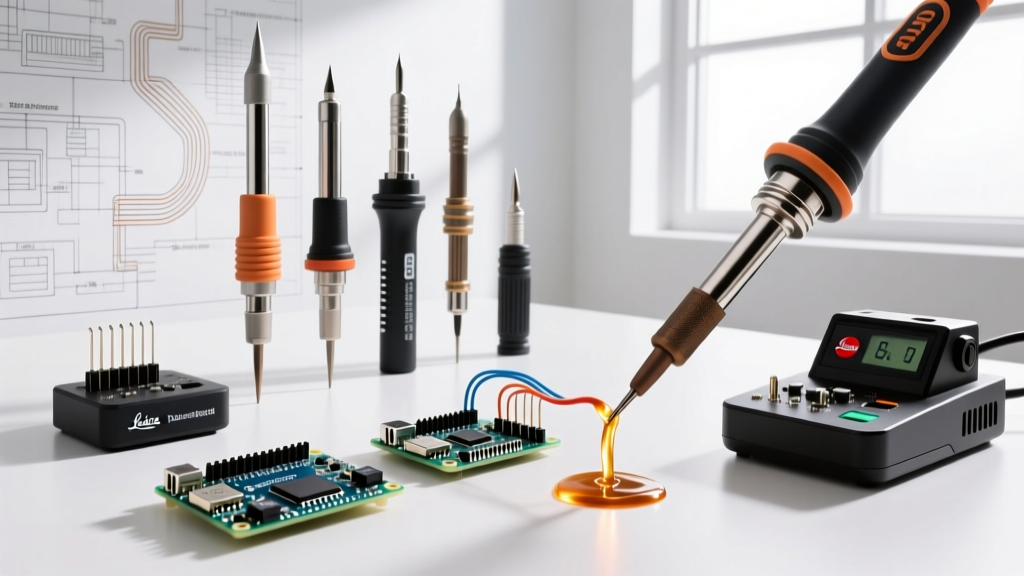
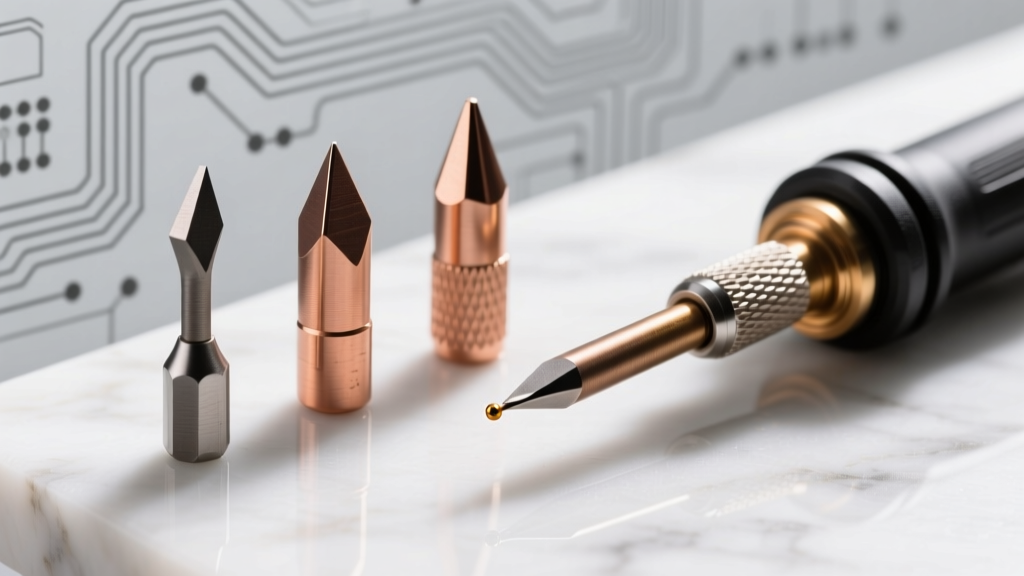
Below is a structural breakdown of the primary tip geometries available on the market today, categorized by their physical profile and optimal use cases.
| Tip Geometry | Common Designation | Best Application | Thermal Mass | Skill Level |
|---|---|---|---|---|
| Chisel (D-Series) | T18-D24, RTW2 | Through-hole, 0805/0603 SMD, general wiring | High | Beginner to Pro |
| Conical (B/I-Series) | T18-B, RT1 | Fine-pitch SMD, micro-soldering, tight spaces | Low | Advanced |
| Bevel / Hoof (C-Series) | T18-C3, TS-B2 | Drag soldering, large pads, wire tinning | Medium-High | Intermediate |
| Knife (K-Series) | T18-K, TS-K | Drag soldering, cutting plastic, precise SMD | Medium | Intermediate |
| Mini-Wave (J-Series) | T18-J02 | 0402/0201 SMD components, dense boards | Low-Medium | Advanced |
Deep Dive: Reviewing Specific Tip Series
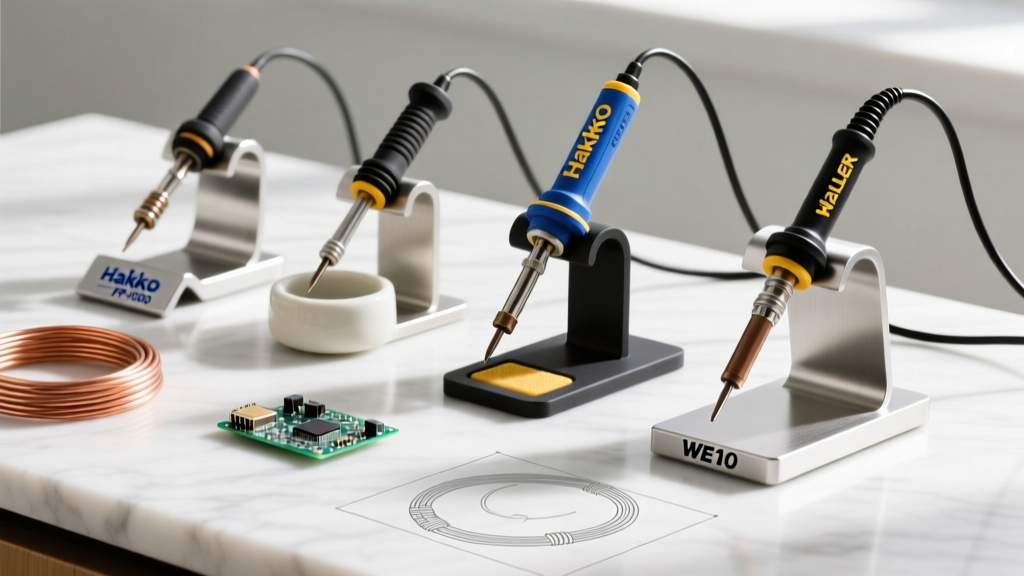
To provide actionable buying advice, we have evaluated the three most dominant tip ecosystems in the electronics repair and DIY space. Pricing and availability reflect current market conditions.
1. Hakko T18 Series (The Industry Standard)
The Hakko T18 series remains the gold standard for traditional ceramic heater stations like the Hakko FX-888D. These tips feature a copper core plated with iron, nickel, and chrome. Top Pick: The T18-D24 (2.4mm Chisel) is the ultimate workhorse. Priced around $9.99, it offers enough surface area to solder a 14 AWG wire to a large terminal, yet the 2.4mm edge is narrow enough for standard 0805 surface-mount resistors. Failure Note: The T18 series is susceptible to iron plating dissolution if left dry at high temperatures. Always tin the tip before powering down.
2. Weller RT & RTW Series (Precision & Heavy Duty)
Weller's RT series utilizes a revolutionary active heating design where the heating element and thermocouple are integrated directly into the tip itself, rather than the handpiece. This results in near-instant thermal recovery. Top Pick: The RT1 (0.8mm Conical) at $11.50 is unmatched for micro-soldering 0.4mm pitch QFP chips. For heavier work, the RTW2 (2.2mm Chisel) at $14.00 provides massive thermal delivery for multilayer PCB ground planes. The premium pricing is justified by the sub-second heat recovery, which prevents the operator from having to increase the station temperature to compensate for thermal lag.
3. Pine64 Pinecil V2 Tips (The Budget King)
The open-source Pinecil V2 has disrupted the market, and its proprietary TS100-compatible tips are incredibly affordable. Top Pick: The TS-B2 (2mm Bevel/Hoof) costs a mere $3.95. The concave 'hoof' shape acts like a tiny solder reservoir, making it exceptionally easy to drag-solder SOIC-8 chips or tin stranded wires without bridging adjacent pads. While the metallurgy and iron plating thickness do not quite match Weller's premium RT series, the cost-to-performance ratio makes them the undisputed choice for hobbyists and students.
Thermal Mass vs. Surface Area: The Physics of Tip Selection
A common point of failure for beginners is selecting a tip based solely on its physical size relative to the component, ignoring the physics of thermal transfer. According to the SparkFun Through-Hole Soldering Guide, heat transfer is a function of both temperature differential and contact surface area.
Expert Insight: A needle-sharp conical tip touching a large copper ground plane will transfer heat exclusively through its microscopic point of contact. The thermal mass of the tip's point is instantly overwhelmed by the PCB's thermal dissipation, resulting in a cold, dull joint. A wide chisel tip laid flat against the same pad maximizes surface area, transferring heat efficiently without requiring the station to be cranked to damaging temperatures.
Actionable Rule: Always choose the largest, widest tip that will physically fit onto your target pads without bridging to adjacent components. A 2.4mm chisel will solder a tiny 0603 capacitor much faster and more reliably than a 0.4mm needle tip, provided you have a steady hand.
Material & Coating Failures: How to Avoid Destroying Your Tips
Modern soldering iron tips are not solid metal; they are complex metallurgical sandwiches. The core is highly conductive copper, but copper dissolves rapidly in molten solder. To protect it, manufacturers electroplate the working end with a layer of iron. IPC J-STD-001, the premier industry standard for soldered electrical assemblies, strictly outlines the necessity of proper tip maintenance to prevent oxidation and plating degradation.
With the industry's shift toward lead-free alloys like SAC305 (Sn-Ag-Cu), tip erosion has accelerated. Lead-free solders are highly corrosive to iron plating and require higher operating temperatures (typically 320°C to 350°C, compared to 300°C for Sn63/Pb37). If you exceed 380°C, the iron plating dissolves rapidly, exposing the copper core, which will pit and hollow out within hours.
- The 'Dry Tip' Failure Mode: Leaving a tinned tip exposed to air at 350°C causes the flux to burn off and the solder to oxidize into a black, crusty layer. This oxide layer acts as a thermal insulator. Never scrape a dry tip with steel wool or sandpaper; you will strip the iron plating instantly.
- The Correct Cleaning Method: Use damp (not soaking wet) cellulose sponges or brass wire tip cleaners. Wipe the tip, apply fresh solder immediately, and repeat. The NASA-STD-8739.3 Workmanship Standard heavily emphasizes proper tip tinning to ensure reliable thermal transfer in mission-critical assemblies.
Buying Decision Framework
Use this step-by-step checklist to purchase the exact soldering iron tip types you need for your specific workflow:
- Identify Your Primary Solder Alloy: If using 63/37 leaded solder, standard iron-plated tips will last years. If using SAC305 lead-free, invest in premium tips (like Weller RT) with thicker iron plating to resist corrosion.
- Audit Your Component Density: For 90% of through-hole and standard SMD (0805 and larger) work, buy a 2.0mm to 2.5mm Chisel tip. For fine-pitch ICs, add a 0.8mm Conical or 1.5mm Knife tip to your cart.
- Match the Tip to the Station's Wattage: If you are using a low-wattage portable iron (like a 65W USB-C Pinecil), avoid massive 4.0mm chisel tips. The heater cannot replenish the thermal mass fast enough, leading to frustrating thermal lag. Stick to medium-mass tips for sub-100W stations.
- Buy Genuine Parts: The market is flooded with $1.50 counterfeit Hakko T18 tips. These fakes use inferior steel plating that flakes off after a single use, ruining your PCB pads with metallic debris. Always buy from authorized distributors like Mouser, Digi-Key, or directly from the manufacturer.
Expert FAQ
Can I use a plumbing soldering tip for electronics?
No. Plumbing tips (often solid copper or heavy brass) are designed for massive thermal loads on 1/2-inch copper pipes using corrosive, acid-based fluxes. Using plumbing tips or acid flux on a PCB will destroy the copper traces and cause severe electrochemical migration (short circuits) over time. Stick to electronics-specific, iron-plated tips and rosin-based (RMA/No-Clean) flux.
Why does my solder ball up and roll off the tip?
This is a classic symptom of tip oxidation. The iron plating has reacted with oxygen, creating a non-wettable surface. Turn the station down to 250°C, apply a generous amount of rosin-core solder and a blob of tack flux, and gently rub the tip in the molten pool on a brass sponge until the shiny silver tinning returns. If the underlying iron is pitted, the tip must be replaced.
What is the best tip for drag soldering SMD ICs?
The Knife (K-Series) or Bevel/Hoof (C-Series) tips are optimal for drag soldering. The flat, angled edge of a knife tip allows you to drag a continuous wave of molten solder across the fine pins of a QFP or SOIC chip, while the sharp point of the knife can be used to carefully wick away bridges using solder braid. Refer to the IPC J-STD-001 guidelines for acceptable solder fillet profiles when drag soldering.