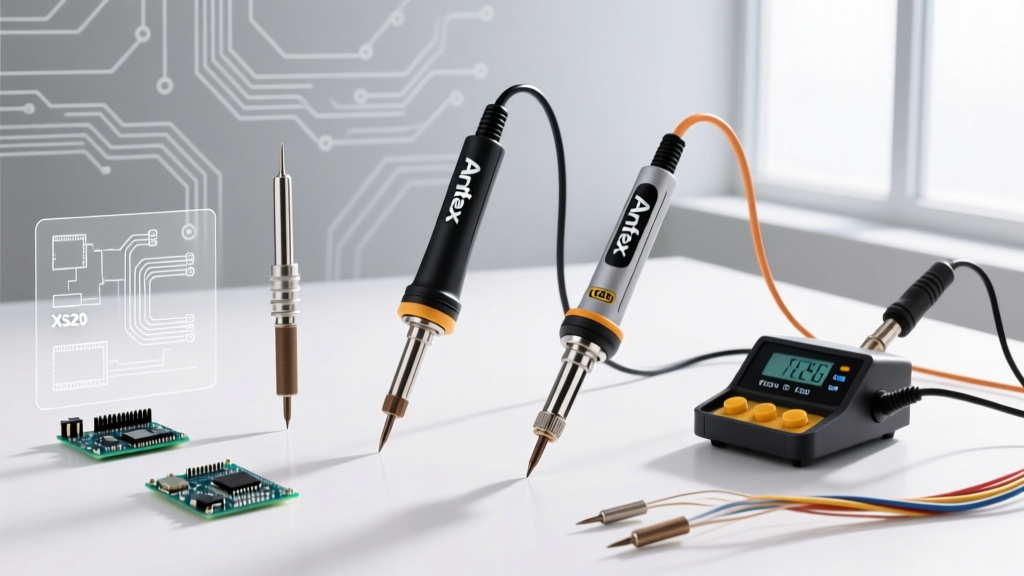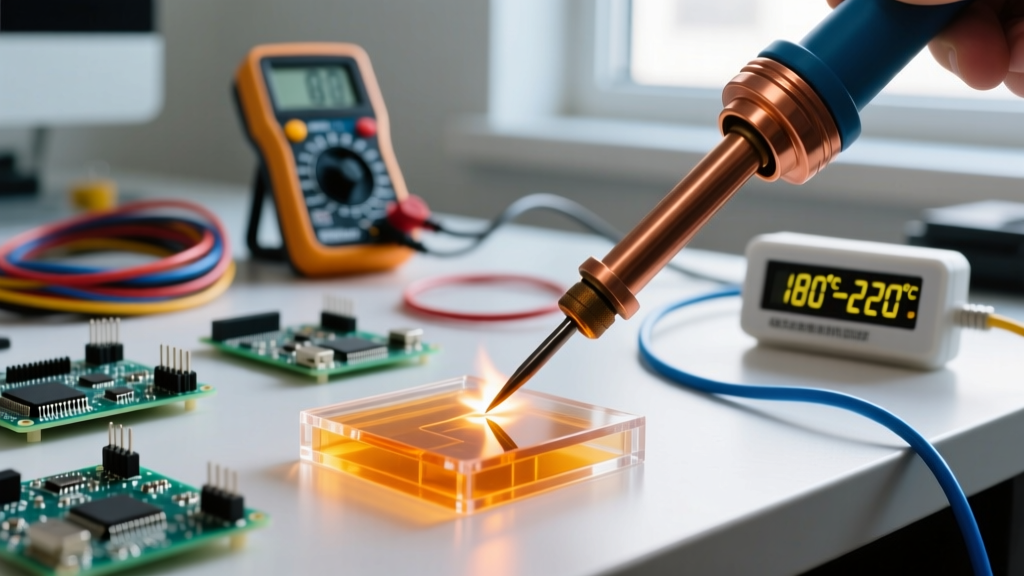

The Physics of Soldering Iron Tip Geometries
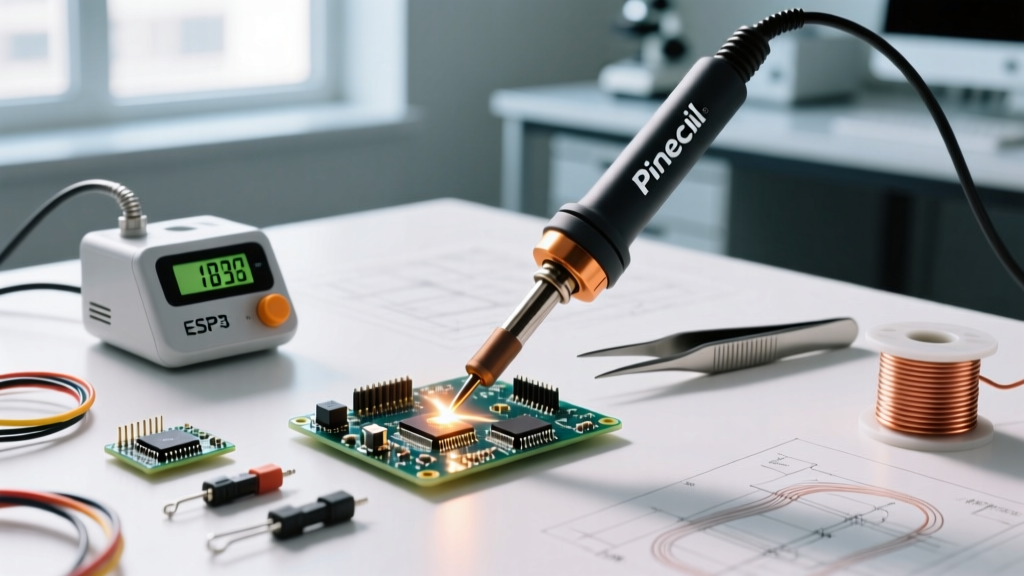
Selecting the correct soldering iron tip is arguably the most critical variable in achieving reliable, IPC-compliant solder joints. Many hobbyists and even seasoned technicians fall into the trap of cranking up the temperature on a micro-tip to compensate for poor thermal transfer, leading to flux burnout, pad delamination, and premature tip death. According to the IPC-J-STD-001 standard for soldered electrical connections, proper wetting and fillet formation rely heavily on maintaining the correct thermal mass at the point of contact, not just the dial temperature on the station.
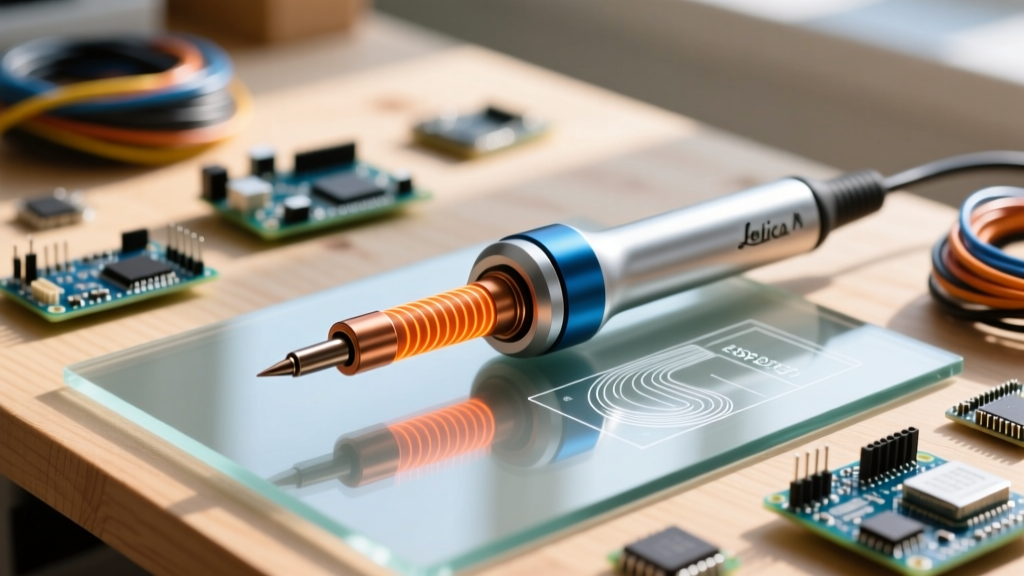
Modern soldering tips are complex metallurgical sandwiches. The core is typically high-purity copper, chosen for its exceptional thermal conductivity (approximately 400 W/m·K). This core is plated with a layer of iron (approx. 80 W/m·K) to resist erosion from molten tin-lead or lead-free alloys, followed by a microscopic layer of chromium to prevent solder from creeping up the barrel, and finally a pre-tinned coating. Understanding how different shapes manipulate this thermal transfer is the key to mastering the various types of soldering iron tips available on the market today.
Core Tip Shapes: A Thermal Profile Comparison
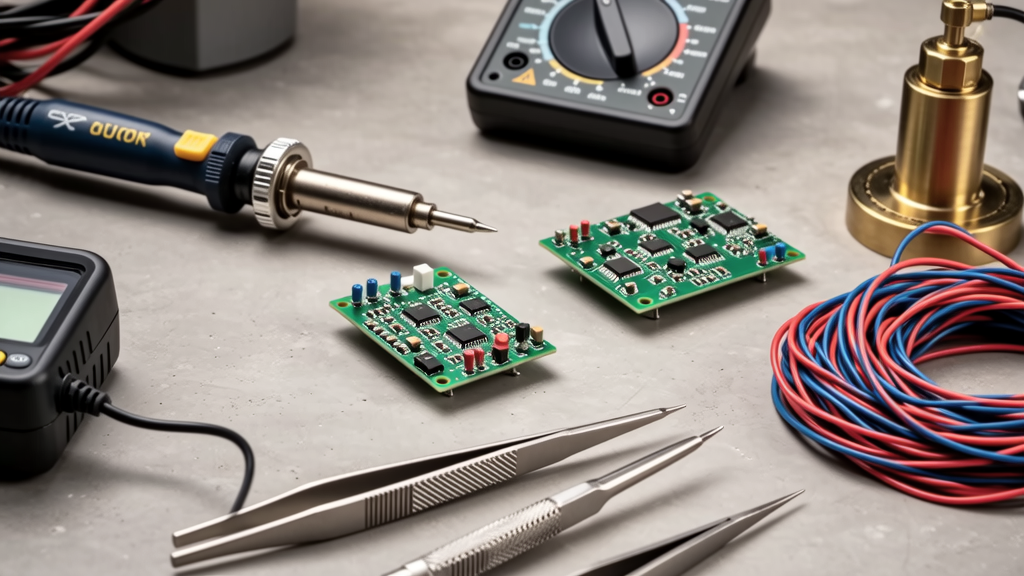
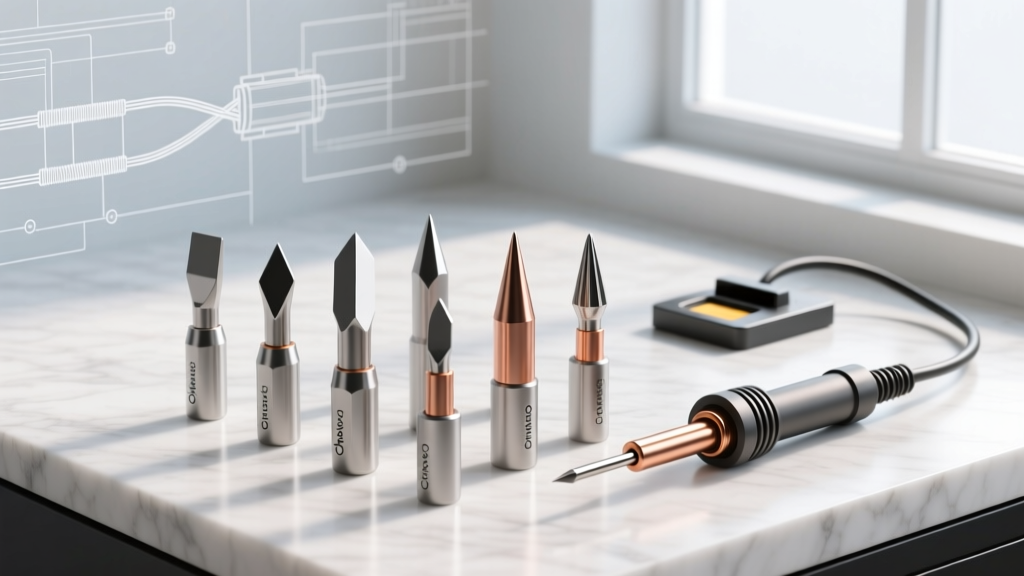
Manufacturers like Hakko, Weller, and JBC Tools use standardized alphanumeric codes to denote tip geometry. Below is a comparative matrix of the primary shapes and their ideal use cases in 2026.
| Geometry | Common Designation | Surface Area Contact | Thermal Mass | Ideal Application | Example Model & Price |
|---|---|---|---|---|---|
| Chisel | D-Series / SL | High (Flat plane) | High | Through-hole, 0805 SMD, ground planes | Hakko T18-D24 (~$9) |
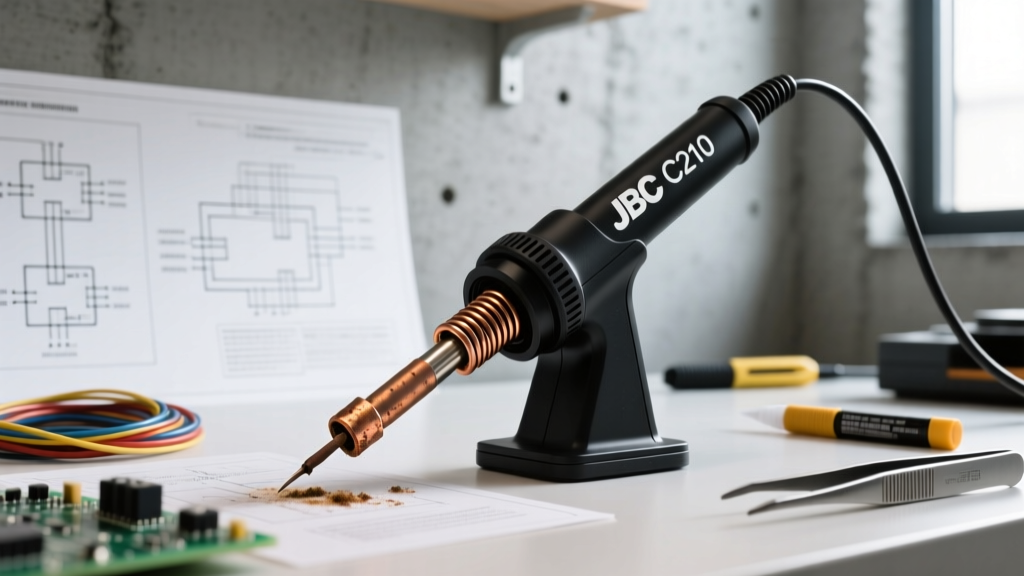
| Conical | B-Series / I | Very Low (Point) | Low | Fine-pitch ICs, 0201 SMD (with caution) | JBC C210-105 (~$48) |
| Bevel | C-Series / BL | Medium (Angled flat) | Medium | Drag soldering, SOIC/SOP ICs | Weller RT3 (~$12) |
| Hoof/Spoon | BL / W-Series | Medium (Concave) | Medium-High | THT rework, wire tinning, drag soldering | Hakko T18-C2 (~$10) |
| Knife | K-Series | Variable (Edge/Point) | Medium | THT removal, corner cleaning, bridging | Weller RTW110 (~$22) |
Chisel Tips (D-Series / SL): The Undisputed Workhorse
The chisel tip is the default choice for 80% of general-purpose electronics work. By presenting a flat, elongated surface area to the solder joint, chisel tips maximize thermal transfer efficiency. A 2.4mm chisel tip (such as the Hakko T18-D24 or Weller RT4) allows you to run your station at a lower, safer temperature—typically 320°C to 340°C for lead-free SAC305 alloys—while maintaining rapid thermal recovery. This is crucial when soldering components connected to internal ground planes, which act as massive heat sinks. The flat edge bridges the pad and the lead simultaneously, ensuring the solder wets both surfaces evenly before the flux core vaporizes.
Conical and Micro-Conical (B-Series / I): The Precision Trap
Novices often assume that a needle-sharp conical tip is best for microscopic surface-mount work. In reality, standard conical tips suffer from severe thermal bottlenecking. The tiny point of contact cannot transfer heat fast enough to overcome the thermal mass of the pad and component lead. However, ultra-premium micro-conical tips integrated with active cartridge heaters, like the JBC C210-105 (0.1mm tip diameter), bypass this issue. Because the heating element is situated millimeters from the tip apex, thermal recovery is near-instantaneous, allowing for precise soldering of 01005 and 0201 components without cranking the temperature past 350°C.
Bevel and Hoof (C-Series / BL): The Drag Soldering Specialists
Bevel tips are cut at an angle, typically between 30 and 60 degrees. This geometry is specifically engineered for drag soldering multi-pin surface-mount ICs, such as SOP, SOIC, and TQFP packages. The angled face holds a small reservoir of molten solder, which flows smoothly across the pins as you pull the iron along the row. Hoof or spoon tips feature a concave depression that holds even more solder, making them exceptional for tinning thick wire gauges (12 AWG to 18 AWG) or reflowing large through-hole connectors where solder volume is necessary.
Matching Tip Plating and Heater Technology
When evaluating the types of soldering iron tips, you must also consider the heater integration. Traditional stations like the classic Hakko FX-888D use a ceramic heater encased in an aluminum sleeve, over which a hollow tip slides. This creates an air gap and a mechanical joint that inherently slows thermal transfer.
In contrast, modern active-tip cartridge systems—pioneered by JBC and heavily adopted by Weller's WX and RT series—embed the heating element and thermocouple directly inside the tip shaft. This reduces the distance between the heat source and the work surface to under 3 millimeters. For high-density mixed-technology boards in 2026, investing in a station that supports active cartridge tips is highly recommended over legacy sleeve-based systems, despite the higher per-tip cost ($40-$50 vs. $8-$12).
The 2026 Application Buying Matrix
Use this decision framework to select the exact tip profile based on your primary workload:
- Micro-SMD (01005, 0201, 0402) & Fine-Pitch BGAs: Select a micro-conical or ultra-fine blade tip. Recommendation: JBC C210-105 or Pace 1130-0008-P1. Budget $40+ per tip.
- Standard SMD (0603, 0805) & General THT: Select a medium chisel (1.5mm to 2.4mm). Recommendation: Hakko T18-D16 or Weller RT1. Budget $8-$15 per tip.
- Heavy Ground Planes, XT60 Connectors, & 10 AWG Wire: Select a massive chisel or wide hoof tip with maximum thermal mass. Recommendation: Weller RTW110 or Hakko T18-KR. Budget $15-$25 per tip.
- SOP/SOIC IC Drag Soldering: Select a 45-degree bevel or mini-hoof. Recommendation: Hakko T18-C2 or Weller RT3. Budget $10-$12 per tip.
Failure Modes and Preservation Protocols
Even the most expensive JBC or Weller tip will fail prematurely if subjected to thermal abuse or improper cleaning. The three primary failure modes are:
- Oxidation: Leaving a tip bare and hot causes the iron plating to oxidize, creating a black, non-wettable crust. Always coat the tip with a thick layer of rosin-core solder before turning the station off.
- Pitting and Erosion: Using highly active, acidic fluxes (like plumbing flux or certain no-clean variants) can eat through the iron plating, exposing the copper core, which rapidly dissolves into the solder pool.
- Thermal Fatigue: Repeatedly quenching a 400°C tip in a soaking wet cellulose sponge causes micro-fractures in the iron plating due to extreme thermal shock.
Expert Maintenance Protocol: Ditch the wet sponge. Use dry brass wire wool (like the Hakko 599B) for routine cleaning. It removes oxidation without dropping the tip temperature, preserving the iron plating and maintaining your station's thermal recovery profile.
Frequently Asked Questions
Can I use a conical tip for large ground planes if I turn the heat up to 450°C?
No. While 450°C might eventually melt the solder, this extreme temperature will instantly vaporize the flux core, leading to cold, grainy, and brittle solder joints that fail IPC visual inspection criteria. Furthermore, sustained temperatures above 400°C will rapidly degrade the tip's iron plating and risk delaminating the copper pads from the FR4 fiberglass substrate. Always increase thermal mass (tip size), not temperature, when dealing with ground planes.
Are lead-free soldering tips different from leaded tips?
Physically, the geometries are identical, but the metallurgical demands are different. Lead-free alloys like SAC305 require higher melting temperatures (217°C vs 183°C for Sn63/Pb37) and are significantly more aggressive to iron plating. If you exclusively solder with lead-free alloys, look for tips specifically designated with 'LF' or heavy-duty iron plating, and expect to replace your tips 30% to 50% more frequently than you would with leaded solder.
How do I safely remove a seized tip from an older station?
Never use pliers on a hot or even warm tip; you will crush the thin copper core or crack the ceramic heater. Allow the station to cool completely. Apply a few drops of penetrating oil (like WD-40) to the joint where the tip meets the heating element shaft. Let it sit for 15 minutes, then gently twist the tip by hand using a silicone jar opener pad for grip. If it remains stuck, the internal oxidation has fused the metals, and the heating element may need replacement.