
The Short Answer: Maximum vs. Working Temperatures
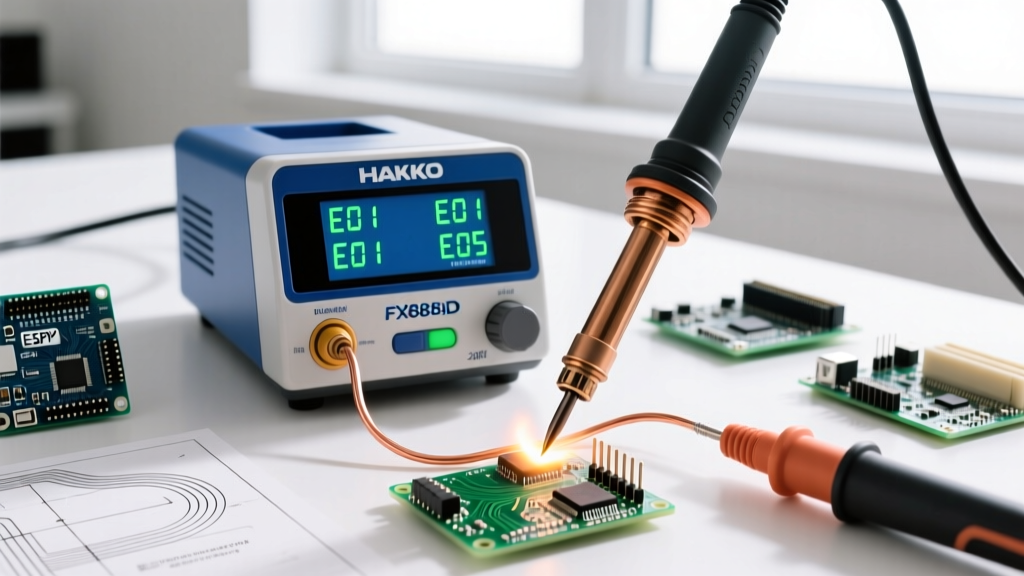
When makers and engineers ask, 'how hot do soldering irons get,' they are usually conflating two entirely different metrics: the maximum dial temperature and the optimal working temperature. Most modern temperature-controlled soldering stations, such as the Hakko FX-888D or Weller WE1010NA, can reach maximum dial settings between 450°C (842°F) and 480°C (896°F). However, setting your station to its maximum limit is almost never the correct approach for electronics work.
For standard 63/37 tin-lead (Sn/Pb) solder, the melting point is 183°C (361°F). The ideal working temperature is typically 260°C to 315°C (500°F to 600°F)—roughly 80°C to 130°C above the liquidus point. Pushing your iron to 450°C will not make the solder melt faster; instead, it will instantly vaporize the rosin flux core, oxidize your copper tip in seconds, and risk delaminating the copper pads on your PCB.
How Hot Do Soldering Irons Get by Station Class?
The maximum temperature a soldering iron can achieve depends heavily on its heating element design, thermocouple placement, and firmware limits. Below is a breakdown of maximum temperature capabilities across different tiers of soldering equipment available in 2026.
| Station Class | Example Models (2026) | Max Temp Capability | Wattage & Thermal Recovery | Price Range |
|---|---|---|---|---|
| Entry-Level / Portable | Pinecil V2, FNIRSI HS-01 | 450°C (842°F) | 65W (PD) / Fast recovery | $25 - $45 |
| Mid-Range Benchtop | Hakko FX-888D, Weller WE1010NA | 480°C (896°F) | 70W / Moderate recovery | $110 - $140 |
| Professional / Advanced | JBC CD-2BQE, Pace ADS200 | 450°C (842°F) | 130W+ / Instantaneous recovery | $450 - $650+ |
| Ungrounded / Mains Irons | Generic 60W Hardware Store Irons | Unregulated (Up to 500°C+) | 40W-60W / Poor recovery | $10 - $20 |
Note: Ungrounded mains irons lack thermocouples. Their tips will continuously heat up to their thermal equilibrium point, often exceeding 500°C (932°F) when left idle, which destroys the tip's iron plating.
The Thermodynamics of Soldering: Why Wattage Dictates Real Heat
A common misconception among beginners is that a higher temperature setting compensates for a lack of wattage when soldering large ground planes. This is fundamentally incorrect. To understand how hot soldering irons get under load, you must understand thermal mass and thermal recovery.
When a 350°C iron tip touches a massive copper ground plane on a motherboard, heat transfers from the tip to the board. If the station only outputs 40 watts (like older analog stations), the thermal energy is depleted faster than the heating element can replenish it. The tip temperature might be set to 350°C, but the actual contact temperature drops to 200°C, causing a cold solder joint.
Expert Tip: The Wattage Multiplier Rule
Instead of turning a 70W Hakko FX-888D up to 450°C to solder a thick wire, keep the temperature at 350°C and switch to a tip with higher thermal mass (e.g., moving from a conical B-tip to a bevel C4 or chisel D-tip). A larger tip holds more thermal energy and transfers it faster without requiring extreme temperatures. According to the NASA Workmanship Standards for soldering, maintaining the correct thermal profile without exceeding material limits is critical for aerospace and high-reliability electronics.
Optimal Temperature Profiles for Common Solder Alloys
To determine exactly how hot your soldering iron should get for a specific job, you must reference the liquidus (melting) point of your solder alloy and add the necessary thermal offset for heat dissipation.
| Solder Alloy | Composition | Melting Point (Liquidus) | Ideal Iron Temp Setting | Primary Use Case |
|---|---|---|---|---|
| Tin-Lead Eutectic | Sn63 / Pb37 | 183°C (361°F) | 300°C - 320°C (572°F - 608°F) | General DIY, prototyping, repair |
| Lead-Free SAC | SAC305 (Sn96.5/Ag3/Cu0.5) | 217°C (423°F) | 340°C - 360°C (644°F - 680°F) | RoHS-compliant commercial manufacturing |
| High-Temp Lead-Free | Sn95 / Sb5 | 235°C (455°F) | 370°C - 390°C (698°F - 734°F) | High-temp environments, automotive |
| Low-Temp Bismuth | Sn42 / Bi57 / Ag1 | 138°C (280°F) | 220°C - 250°C (428°F - 482°F) | Heat-sensitive components, step-soldering |
Calibration and Thermal Offset: The Hidden Variable
Even if your digital display reads 350°C, the actual tip temperature might be 330°C or 370°C. This discrepancy is known as thermal offset, and it occurs due to the physical distance between the internal thermocouple and the very end of the tip. High-end stations like the Pace ADS200 or JBC systems feature advanced calibration menus that allow technicians to input a specific offset value measured by a high-precision tip thermometer (such as the Hakko FG-100). For professional rework labs adhering to IPC J-STD-001 standards, regular calibration is mandatory to ensure the thermal profile remains within the strict tolerances required for aerospace and medical electronics.
Expert Tips: Preventing Thermal Damage and Tip Degradation
Knowing how hot soldering irons get is only half the battle; managing that heat to preserve your equipment is where expertise comes in. The most common failure mode for soldering tips is iron plating dissolution and oxidation.
The 400°C Tip-Killer Threshold
Most high-quality soldering tips (like those from Hakko, Weller, or JBC) consist of a copper core plated with iron to prevent solder dissolution, and then coated with a micro-layer of chrome to prevent oxidation. When you operate your station above 400°C (752°F) for extended periods, the flux chemicals become highly corrosive to the iron plating. Furthermore, the rosin flux carbonizes instantly, creating a black, insulating crust on the tip that prevents heat transfer. If you must use high heat for heavy-gauge wires, always clean the tip with damp brass wool immediately after the joint is made, and re-tin it with fresh solder before placing it back in the holder.
Real-World Troubleshooting: When Your Iron is Hot Enough but Solder Won't Flow
If your digital readout says 350°C, but the solder is balling up and refusing to wet the pad, do not increase the temperature. The issue is almost always a lack of thermal transfer, not a lack of maximum heat.
- Oxidized Pads: The copper pad has oxidized. Apply a small amount of liquid flux (like Amtech or Chip Quik) to break down the oxidation before applying the iron.
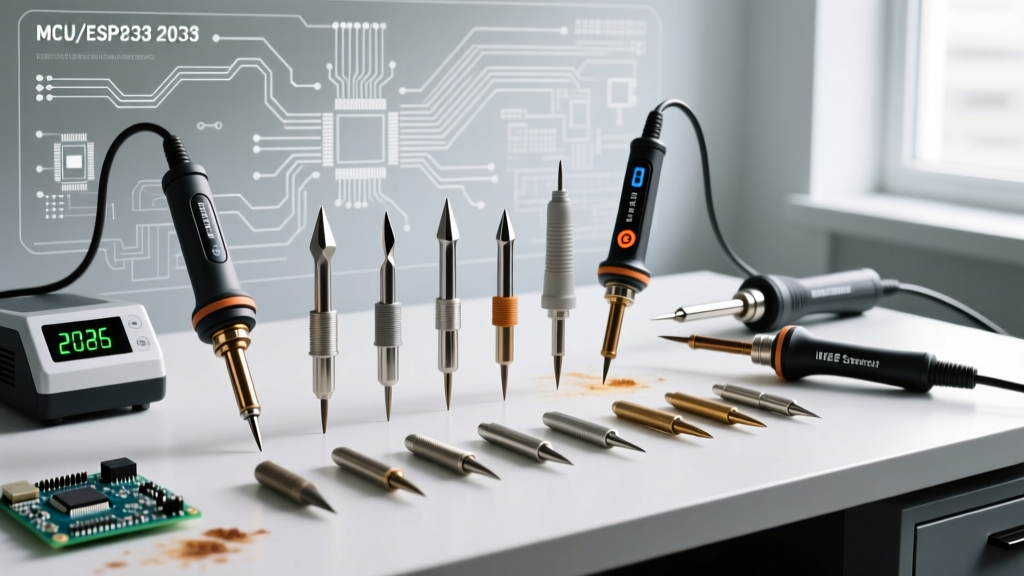
- Wrong Tip Geometry: A needle-like conical tip has very low thermal mass. Switch to a flat chisel tip to maximize the surface area contact with the pad and pin.
- Thermal Sinking: If you are soldering a capacitor leg near a thick ground plane, the board is acting as a heat sink. Use a station with active thermal sensing (like the Weller WX1012 or JBC) which detects the temperature drop and injects maximum wattage to compensate.
For a deeper dive into proper wetting techniques and flux chemistry, the Adafruit Guide to Excellent Soldering provides excellent visual references for identifying cold joints caused by improper heat management.
Frequently Asked Questions (FAQ)
Can a soldering iron melt glass or aluminum?
No. Standard electronics soldering irons max out around 480°C (896°F). Aluminum melts at 660°C (1220°F), and glass requires temperatures exceeding 1000°C. However, a 480°C iron can easily scorch wood, melt most plastics, and cause severe third-degree burns upon brief skin contact03°C (896°F) and 480°C (896°F).
Does higher wattage mean a hotter iron?
No. Wattage dictates how fast the iron can recover heat, not its maximum temperature. A 130W JBC station and a 40W Hakko station can both be set to exactly 350°C. The JBC will simply maintain that 350°C much more effectively when touching a large, heat-absorbing copper plane.