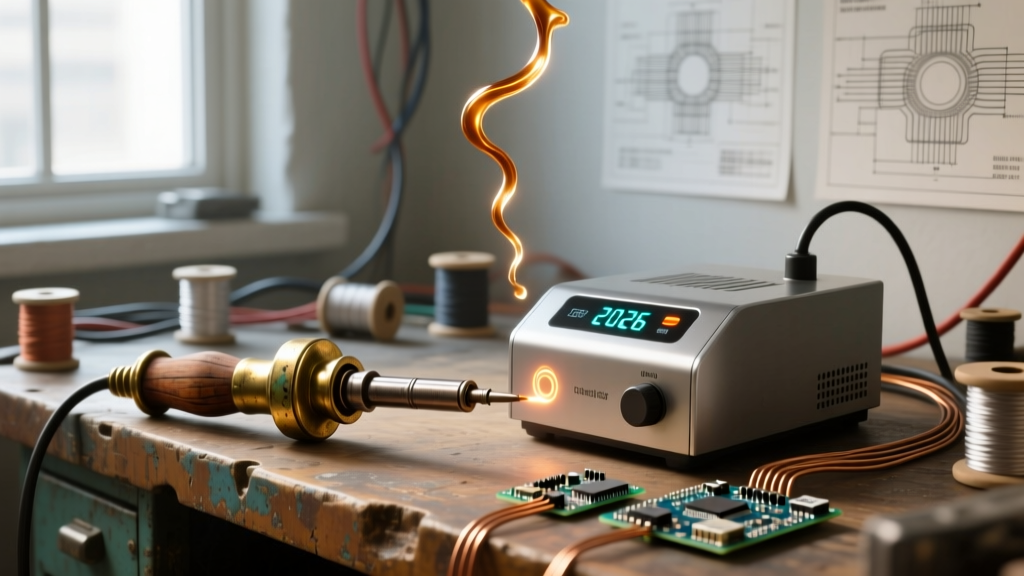

The resurgence of vintage electronics restoration, stained glass artistry, and heavy-gauge audio wiring has brought the antique soldering iron back into modern workshop discussions. Characterized by their massive pure-copper tips, wooden handles, and reliance on external blowtorches or furnaces for heating, these tools dominated the first half of the 20th century. But how does a 1940s Wahl or American Beauty copper iron compare to a 2026 ceramic-core digital station like the Hakko FX-951 or Weller WX1 when applied to modern electronics and metallurgy?
This comprehensive thermal and metallurgical comparison strips away the nostalgia to examine the physics, oxidation rates, and practical limitations of antique soldering tools versus contemporary precision stations.
The Physics of the Antique Soldering Iron: Thermal Mass vs. Recovery
The defining characteristic of an antique soldering iron is its immense thermal mass. Vintage irons typically feature solid, forged copper tips weighing between 1.0 and 2.5 pounds. According to data from the Copper Development Association, pure copper boasts an exceptional thermal conductivity of approximately 398 W/m·K and a specific heat capacity of 0.385 J/g·°C.
When heated to 350°C via a propane torch, a 1.5 lb (680g) copper tip stores roughly 92,000 Joules of thermal energy. This allows the antique iron to solder massive grounding lugs or thick copper plumbing without a drop in tip temperature. However, this same thermal mass becomes a severe liability on modern printed circuit boards (PCBs).
Modern Ceramic Core Thermodynamics
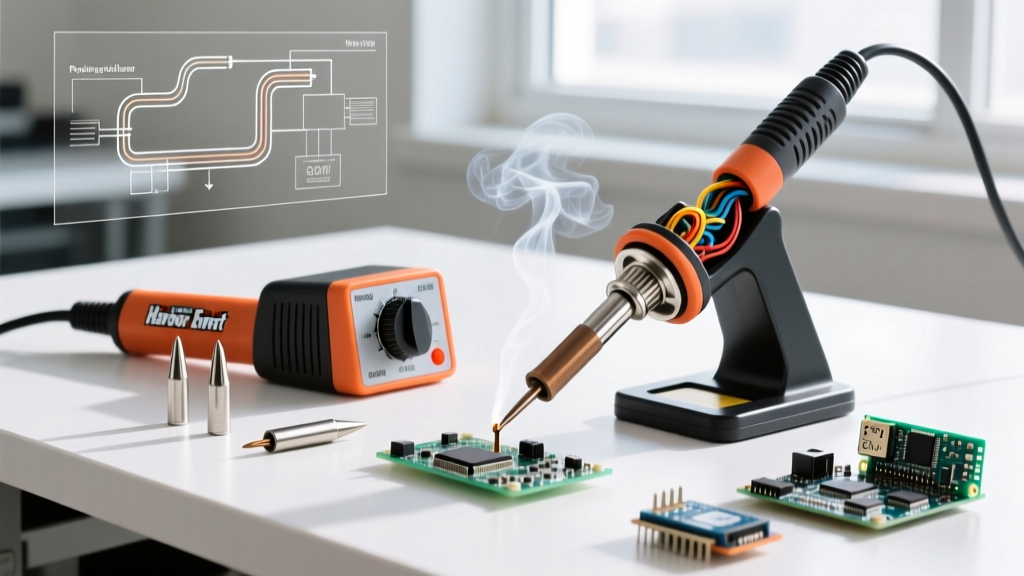
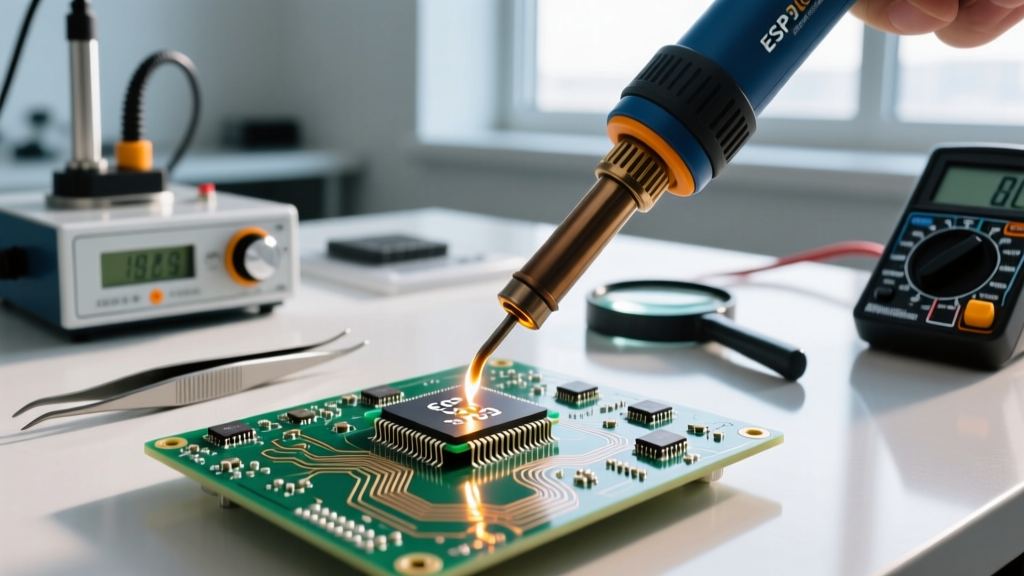
In contrast, 2026's premier soldering stations utilize composite tips. A modern Hakko T18 or Weller RT tip features a copper core for heat transfer, but it is encased in an iron plating and chrome flash to prevent dissolution. The heater is a high-wattage ceramic element (70W to 200W) embedded directly inside the tip or separated by a micro-gap. While the thermal mass is drastically lower (often under 15 grams), the thermal recovery rate is governed by active PID (Proportional-Integral-Derivative) controllers that pulse energy in milliseconds.
| Metric | Antique Torch-Heated Iron (Pure Copper) | Modern Ceramic Station (e.g., Hakko FX-951) |
|---|---|---|
| Tip Mass | 450g - 1,100g (Solid Copper) | 8g - 15g (Iron-Plated Core) |
| Thermal Conductivity (Tip Surface) | ~398 W/m·K | ~80 W/m·K (Iron Plating) |
| Heat Source | External Torch / Furnace | Internal 72W Ceramic Element |
| Temperature Control | None (Visual/Experience Based) | Digital PID (±2°C Accuracy) |
| Recovery Time (Post-Joint) | N/A (Requires Torch Reheat) | < 2 Seconds |
Tool Comparison Matrix: Vintage Copper vs. 2026 Ceramic Core
To understand the operational differences, we must compare the antique soldering iron against current industry benchmarks used in professional rework and assembly environments.
| Feature | 1940s American Beauty (Antique) | Hakko FX-951 (Modern Standard) | Weller WX1 (High-End 2026) |
|---|---|---|---|
| Max Output Power | Infinite (Torch Dependent) | 72 Watts | 200 Watts |
| Ideal Alloy | Sn60/Pb40 (183°C Melt) | SAC305 / Sn63/Pb37 | SAC305 / Sn63/Pb37 |
| Tip Lifespan | Weeks (Requires Filing) | Months (If maintained) | Months (Micro-heater) |
| ESD Safety | None (Un-grounded) | Grounded / ESD Safe | Grounded / ESD Safe |
| Best Application | Stained Glass, Heavy Lugs | General PCB, Through-Hole | Micro-SMD, Heavy Ground Planes |
Metallurgy and Oxidation: The Hidden Cost of Vintage Tools
The most critical failure mode of the antique soldering iron in modern electronics is tip dissolution and oxidation. Pure copper is highly reactive with molten tin. When a solid copper tip is exposed to molten Sn60/Pb40 solder at 350°C, the tin actively leaches the copper into the solder pool, creating intermetallic compounds (IMCs) like Cu6Sn5.
The Filing Cycle
Historically, technicians using antique irons had to keep a metal file on their workbench. Every few hours, the pitted, oxidized copper tip had to be removed, filed back to a clean geometry, and re-tinned. Modern iron-plated tips completely eliminate this issue; the iron layer acts as a sacrificial barrier that tin does not dissolve at standard operating temperatures.
The Lead-Free Solder Problem
If you attempt to use an antique soldering iron with modern lead-free alloys like SAC305 (Sn96.5/Ag3.0/Cu0.5), the results are catastrophic. SAC305 requires working temperatures between 350°C and 380°C. At these elevated temperatures, the dissolution rate of pure copper into the molten solder accelerates exponentially. An antique copper tip can be entirely eaten away and rendered useless in a single afternoon of heavy lead-free soldering.
PCB Damage and Thermal Shock Risks
Modern FR-4 fiberglass PCBs have a Glass Transition Temperature (Tg) typically ranging from 130°C to 170°C. Exceeding this temperature for prolonged periods causes the laminate to soften, leading to pad lifting, barrel cracking in vias, and delamination.
'Thermal damage to printed wiring boards is often irreversible. The application of excessive thermal mass without active temperature regulation violates core reliability principles for high-density interconnects.' — Adapted from the NASA-STD-8739.3 Workmanship Standard for soldered electrical assemblies.
Because an antique soldering iron cannot actively regulate its temperature, it relies entirely on the operator's timing. Leaving a 1.5 lb copper tip on a 14-AWG through-hole pad for just three seconds too long can transfer enough joules to push the localized board temperature past 200°C, blistering the solder mask and destroying the pad's adhesion to the substrate. Modern stations compliant with IPC J-STD-001 requirements utilize micro-tips that confine thermal transfer strictly to the joint, protecting adjacent sensitive components.
Practical Application: When to Actually Use an Antique Iron Today
Despite their unsuitability for modern PCBs and microelectronics, the antique soldering iron remains an unparalleled tool for specific high-thermal-demand applications in 2026:
- Stained Glass Assembly: Copper foil and lead came require massive amounts of 60/40 solder. The thermal mass of a vintage copper iron allows for long, continuous, glassy solder beads without stopping to wait for a ceramic heater to recover.
- Heavy-Gauge Audio Wiring: When soldering 4-AWG or larger oxygen-free copper (OFC) speaker cables to massive brass binding posts, a modern 70W iron will suffer from thermal steal (the wire acts as a heatsink). A torch-heated antique iron provides the raw joules needed to wet the joint instantly.
- Historical Restoration: For museum-grade restoration of 1930s radios or early automotive wiring harnesses, using period-accurate tools and Sn60/Pb40 rosin-core solder maintains the historical integrity of the artifact.
Maintenance Protocol for Vintage Copper
If you choose to integrate an antique soldering iron into your workflow, strict maintenance is required:
- Heat Control: Use a temperature-indicating paste (like Tempilstik) rated for 315°C (600°F) to ensure you do not overheat the copper, which accelerates oxidation.
- Flux Selection: Use a high-activity, water-soluble or heavy rosin flux to combat the rapid oxidation of the bare copper surface.
- Re-tinning: Never leave the tip bare. Immediately after use, apply a thick layer of SAC305 or 60/40 solder to cap the tip and prevent ambient moisture from causing green copper carbonate corrosion.
Verdict: Museum Piece or Workshop Workhorse?
The antique soldering iron is a marvel of early 20th-century metallurgy, leveraging the raw thermal conductivity of solid copper to overcome the lack of electrical heating elements. However, in the context of 2026's electronics landscape, it is fundamentally incompatible with modern PCBs, lead-free environmental directives, and ESD-sensitive semiconductors.
For stained glass artists, heavy-duty plumbing, and historical restorers, the antique iron remains a vital, heavy-duty workhorse. But for anyone building, repairing, or reworking modern electronics, a digitally regulated ceramic-core station is not just a convenience—it is a strict requirement for joint reliability and board survival.