
The Enduring Appeal of the Soldering Station 702L Architecture
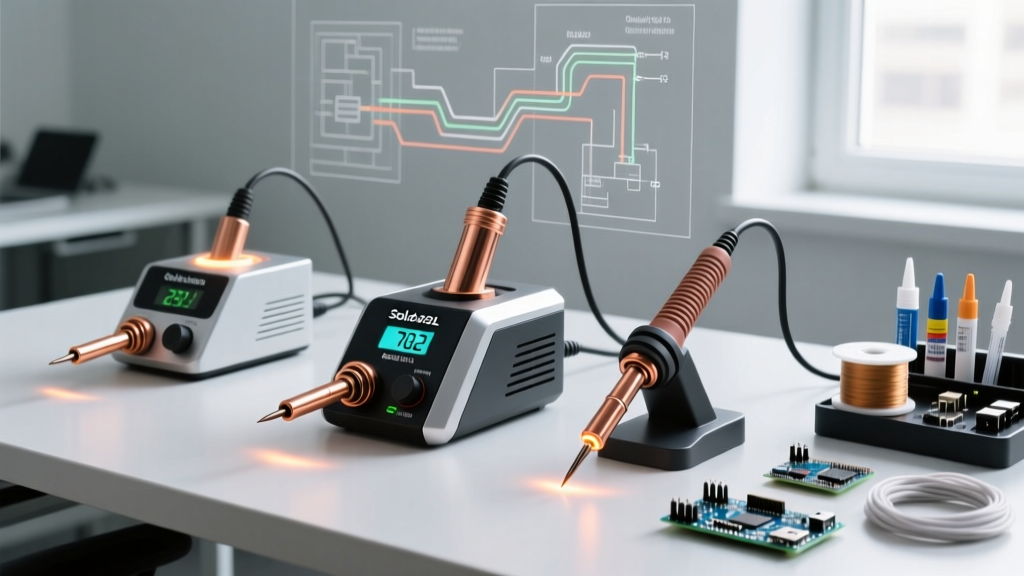
When outfitting a home lab, university makerspace, or entry-level repair bench on a strict budget, the soldering station 702L (most notably manufactured by Yihua and its various OEM partners) remains a ubiquitous fixture in 2026. Combining a 50W temperature-controlled soldering iron with a 700W hot air rework station into a single chassis, the 702L architecture offers a compelling entry point into surface-mount device (SMD) rework and through-hole prototyping. However, as component densities increase and leadless packages like QFNs and BGAs become standard even in hobbyist microcontrollers, understanding the physical limitations of the 702L platform is critical.
In this comprehensive bench review, we dissect the real-world thermal performance, airflow mechanics, and electrostatic discharge (ESD) safety profile of the 702L. Furthermore, we stack it against modern mid-tier alternatives to help you decide whether to repair, upgrade, or replace your current setup.
2026 Comparison Matrix: 702L vs. Market Alternatives
Before diving into the teardown and thermal analysis, it is essential to contextualize the 702L against its direct successors and professional alternatives. The table below outlines the core specifications and current market pricing for the most common bench configurations.
| Feature / Model | Yihua 702L (Baseline) | Yihua 8786D (Upgraded) | Quick 857DW+ (Prosumer) |
|---|---|---|---|
| Iron Wattage | 50W (Ceramic Heater) | 50W (Ceramic Heater) | 75W (Ceramic Heater) |
| Hot Air Wattage | 700W | 700W | 700W |
| Air Pump Type | Diaphragm (Base Unit) | Diaphragm (Base Unit) | Brushless Fan (Handpiece) |
| Temperature Stability | ± 5°C (No-load) | ± 3°C (No-load) | ± 1°C (PID Controlled) |
| ESD Grounding | Simulated / Floating | Simulated / Floating | True Earth Ground |
| Avg. Price (2026) | $55 - $65 USD | $70 - $85 USD | $160 - $180 USD |
Deep Dive: Thermal Recovery and the 900M Tip Ecosystem
The soldering iron included with the 702L utilizes the widely cloned 900M series tip ecosystem. Unlike premium stations that use integrated cartridge tips (where the heating element, thermocouple, and tip are a single solid unit), the 702L uses a composite sleeve design. The ceramic heating element protrudes from the handpiece, and the hollow copper tip slides over it.
The Air Gap Thermal Lag
This sleeve design inherently creates a microscopic air gap between the heater and the tip. Air is a poor thermal conductor. When you drag a 900M-T-K (knife) tip across a dense ground plane on a 4-layer PCB, the tip temperature drops rapidly. Because of the thermal lag caused by the air gap, the station's internal TRIAC takes an extra 1.5 to 2.0 seconds to detect the voltage drop in the thermocouple and pulse the heater. According to the guidelines outlined in IPC J-STD-001 requirements for soldering electrical and electronic assemblies, prolonged dwell times on a pad can lead to copper delamination and thermal damage to the PCB substrate.
Actionable Workaround: When soldering heavy ground planes with the 702L, do not simply crank the temperature dial to 450°C, which will oxidize the tip plating. Instead, set the station to 360°C, apply a generous amount of high-tack flux (such as Amtech NC-559-V2-TF), and use a wider chisel tip (900M-T-D24) to maximize surface contact area and thermal mass.
Airflow Mechanics: The Diaphragm Pump Reality
The hot air rework function of the 702L is powered by a diaphragm pump located inside the main chassis, which pushes air through a flexible silicone hose to the handpiece. While this keeps the handpiece lightweight, it introduces two distinct bench annoyances:
- Acoustic Vibration: The diaphragm pump generates a low-frequency hum and vibrates the main unit. On lightweight metal workbenches, this can cause small SMD components (like 0402 resistors) to 'walk' off your workspace if they are resting near the station.
- Hose Stiffening: Over 18 to 24 months of regular use, the combination of ambient heat and mechanical vibration causes the plasticizers in the silicone hose to break down. The hose becomes rigid, making precise SMD rework frustrating. Replacing the hose with a high-temperature PTFE-lined silicone tube is a mandatory $15 maintenance upgrade for long-term 702L owners.
In contrast, the Quick 857DW+ utilizes a brushless micro-fan inside the handpiece itself. This eliminates the hose stiffness issue, reduces acoustic noise to a whisper, and allows for instant airflow adjustments without the pneumatic delay inherent to diaphragm pumps.
The ESD Grounding Caveat: Protecting Your Microcontrollers
Perhaps the most critical limitation of the budget soldering station 702L architecture is its approach to Electrostatic Discharge (ESD) protection. The 702L typically ships with a standard 2-prong AC power cord. While the front panel features a banana jack labeled 'ESD Ground,' this jack is usually tied only to the DC ground of the internal transformer, which is floating relative to true earth ground.
Expert Warning: If you are repairing sensitive RF modules, bare ESP32-S3 boards, or handling unprotected CMOS logic gates, a floating ground can allow static accumulation on the iron tip. Proper bench safety requires adherence to the ANSI/ESD S20.20 standard, which mandates a verified path to earth ground with a resistance of less than 1.0 x 10^9 ohms.
How to Fix the 702L ESD Flaw: You must manually bond the ESD banana jack on the front of the 702L to a verified earth-grounded point on your bench mat or a dedicated grounding rod. Never trust the factory 2-prong cord to protect a $30 FPGA development board from a catastrophic gate punch-through.
Common Failure Modes & Bench Maintenance
Having serviced dozens of 702-series stations in our lab, we have identified three predictable failure points that occur between years two and four of ownership:
- Hot Air Microswitch Arcing: The switch inside the hot air gun handle that activates the heater is a cheap mechanical microswitch. Because the 700W heating element is an inductive load, turning the gun off creates a voltage spike (inductive kickback). Without a flyback diode or snubber circuit on the PCB, this arc slowly pits the switch contacts until the gun fails to turn on. Fix: Solder a 0.1µF X2 safety capacitor across the switch terminals.
- Heater Element Oxidation: Leaving the iron in the holster at 400°C+ for extended periods causes the ceramic heater rod to oxidize and snap when you attempt to change a tip. Always utilize the station's digital sleep mode (if equipped on your specific 702L variant) or manually dial down to 150°C when not actively soldering.
- Potentiometer Drift: The analog dials used for temperature and airflow control rely on cheap carbon-track potentiometers. Flux fumes and dust ingress cause 'dead spots' where the temperature jumps erratically. Cleaning the pots with anhydrous isopropyl alcohol and contact cleaner restores smooth operation.
When to Upgrade: Moving Beyond the 702L
As noted in SparkFun's soldering tutorials and general industry best practices, the tool must match the task. The 702L is an exceptional choice for through-hole kits, basic wire harnesses, and large-pitch SMD connectors (like 2.54mm headers and barrel jacks). However, you must upgrade to a true PID-controlled, cartridge-based station (like a Hakko FX-951 or a genuine Quick 203H) if your daily workflow involves:
- Drag-soldering 0.5mm pitch TQFP-100 microcontrollers.
- Reworking multi-layer motherboards with heavy internal copper pours that act as massive heat sinks.
- Handling highly static-sensitive millimeter-wave radar sensors or aerospace-grade telemetry boards.
Final Verdict for 2026
The soldering station 702L remains the undisputed king of the sub-$70 category. It provides 80% of the functionality of a professional lab setup for 20% of the cost. By understanding its thermal lag characteristics, manually addressing the ESD grounding flaws, and performing preventative maintenance on the internal microswitches, you can easily extract a decade of reliable service from this platform. For hobbyists, students, and general appliance repair technicians, the 702L is a highly recommended baseline investment. For advanced micro-soldering and high-density PCB rework, allocate your budget toward a brushless hot-air system and integrated cartridge iron.