
The Legacy of the Hakko 503 Soldering Iron
For decades, the Hakko brand has been synonymous with reliable electronics assembly, and the Hakko 503 soldering iron represents an era of robust, transformer-based workhorses. Originally designed for through-hole components and heavy-gauge wire tinning, the 503 series relies on older heating element technology that prioritized raw, continuous heat over rapid thermal feedback. However, as we navigate the high-density component layouts and strict lead-free soldering requirements of 2026, hobbyists and professionals alike are questioning whether this legacy tool still belongs on the workbench.
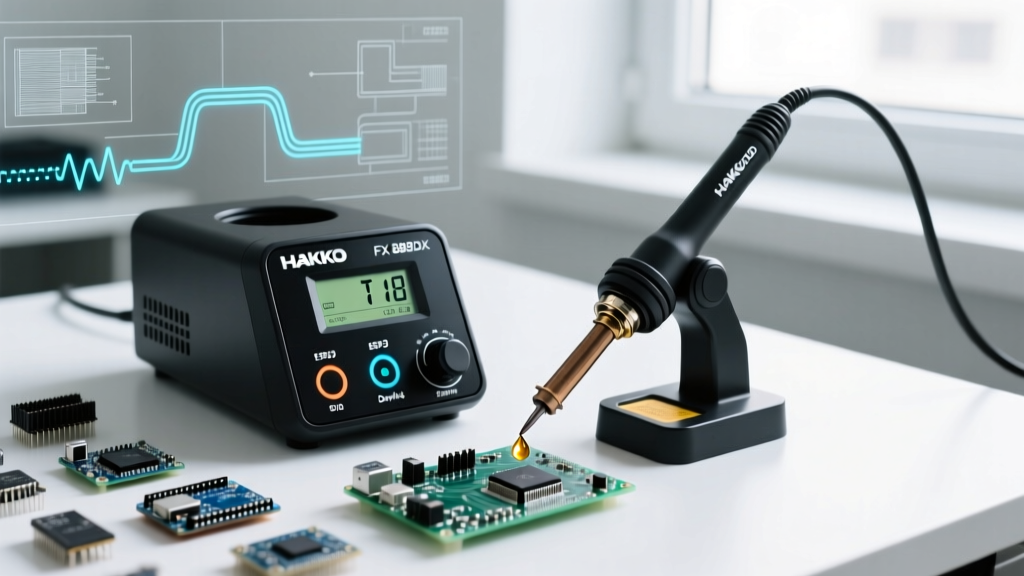
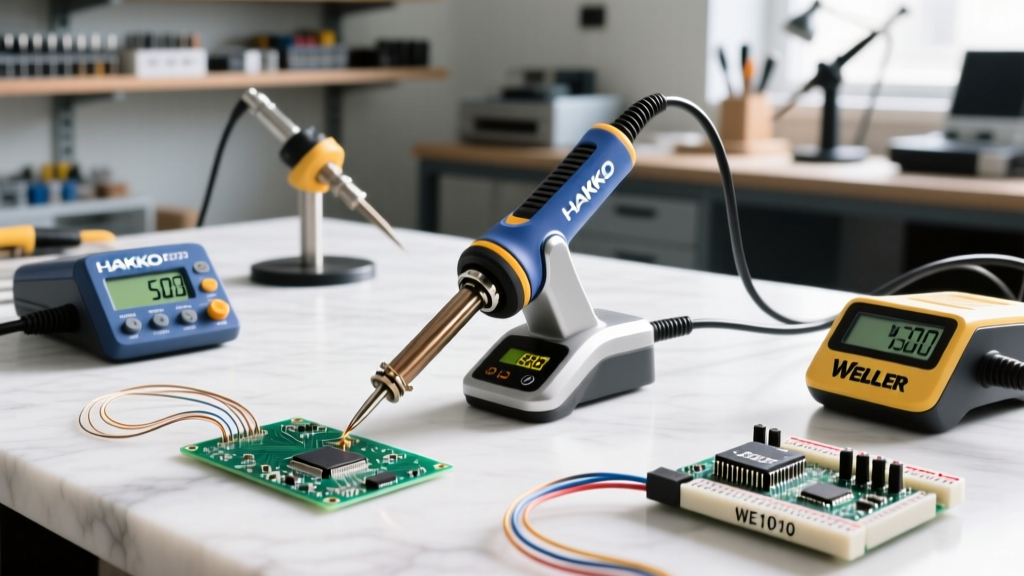
In this comprehensive tool comparison, we will dissect the Hakko 503 soldering iron against modern, digitally controlled powerhouses like the Hakko FX-888D, the Weller WE1010NA, and the highly portable Pinecil V2. We will examine thermal recovery rates, tip longevity, and compliance with modern industry standards to help you decide if it is time to upgrade your station.
Core Specifications: Hakko 503 vs. Modern Contenders
When evaluating any soldering station, thermal recovery and tip compatibility dictate the workflow. The transition from legacy analog dials to digital PID (Proportional-Integral-Derivative) controllers has fundamentally changed how we approach PCB rework. Below is a direct comparison matrix of the 503 against current market leaders.
| Feature | Hakko 503 (Legacy) | Hakko FX-888D | Weller WE1010NA | Pinecil V2 (2026) |
|---|---|---|---|---|
| Wattage | 50W - 60W (Analog) | 65W (Digital PID) | 65W (Digital PID) | 65W (RISC-V PD) |
| Temperature Range | 200°C - 480°C | 200°C - 480°C | 200°C - 450°C | 100°C - 450°C |
| Tip Series | B-Type / D-Type (Passive) | T18 (Passive Ceramic) | ET / RT (Passive) | T65 (Active Integrated) |
| Thermal Recovery | Slow (15-20 seconds) | Fast (3-5 seconds) | Fast (3-4 seconds) | Ultra-Fast (1-2 seconds) |
| Avg. Market Price (2026) | $35 - $50 (Used/NOS) | $115 - $130 | $120 - $135 | $26 - $30 |
Thermal Recovery and the Lead-Free Challenge
The most significant limitation of the Hakko 503 soldering iron in a modern context is its thermal recovery time. Legacy irons use a simple bimetallic strip or basic triac-based control loop. When the tip touches a high-thermal-mass joint—such as a multi-layer PCB ground plane or a large electrolytic capacitor pad—the temperature plummets. The 503 can take up to 20 seconds to recover to the set point.
According to the NASA Workmanship Standards for soldered electrical assemblies, prolonged dwell times on a pad increase the risk of delamination and thermal damage to the PCB substrate. Modern SAC305 (Tin-Silver-Copper) lead-free alloys require higher baseline temperatures, typically around 340°C to 360°C, and demand rapid heat transfer. When the Hakko 503 struggles to maintain this heat, operators tend to press harder or leave the iron on the joint longer, resulting in lifted pads and oxidized flux.
Real-World Test: 0805 SMD vs. 10 AWG Wire
To test practical performance, we ran two distinct scenarios:
- Scenario A (10 AWG Silicone Wire): The Hakko 503 excels here. Using a heavy 601-style chisel tip and traditional 63/37 SnPb rosin-core solder, the 503's raw thermal mass easily tinned the thick copper strands without stalling.
- Scenario B (0805 SMD Resistors on a 4-Layer Board): The 503 failed to provide a clean solder fillet within the recommended 2-3 second dwell time. The lack of a fine-point active tip and the slow sensor feedback loop resulted in cold, grainy solder joints that violated IPC J-STD-001 requirements for proper wetting and fillet formation.
Tip Compatibility and Long-Term Costs
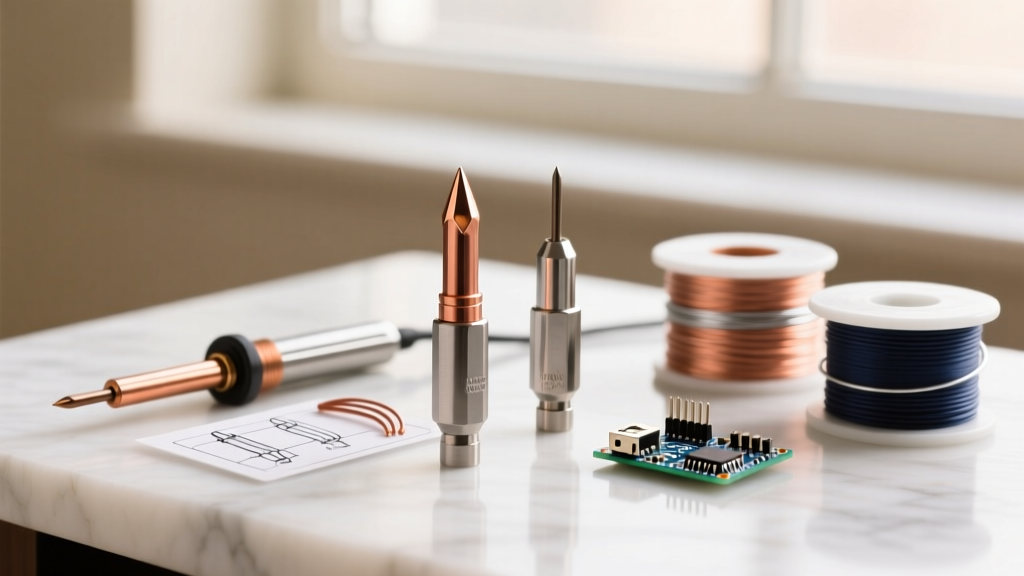
One of the hidden costs of maintaining an older station is tip availability and oxidation resistance. The Hakko 503 utilizes older generation screw-on or slide-on passive tips. These tips feature an iron plating over a copper core, but they lack the advanced flux-shielded coatings found on modern T18 or active T65 tips.
Expert Insight: 'In 2026, the cost of a soldering station is secondary to the cost of consumable tips. A modern station with sleep-mode functionality will extend tip life by up to 400% compared to a legacy iron that sits at 350°C continuously during a work session.' — Bench Engineering Analysis
Modern alternatives like the Pinecil V2 or the Hakko FX-951 utilize active tips where the heating element and thermocouple are embedded directly inside the tip cartridge. This eliminates the air gap and thermal paste degradation issues that plague the Hakko 503's heater-to-tip interface over time.
Ergonomics and Handle Heat Dissipation
After two hours of continuous use, the handle temperature of a soldering iron becomes a critical ergonomic factor. The Hakko 503 utilizes a bulky, hard-plastic wand that houses a relatively uninsulated heating element. Users frequently report handle temperatures exceeding 45°C during extended rework sessions, leading to hand fatigue. In contrast, the Weller WE1010NA and modern Hakko FX series feature silicone-gripped, thermally isolated wands that remain near ambient room temperature, drastically improving precision during micro-soldering tasks.
The Verdict: Should You Buy or Retire the Hakko 503?
If you are strictly working on vintage audio equipment, heavy-gauge automotive wiring, or simple through-hole hobby kits using leaded solder, the Hakko 503 soldering iron remains a serviceable, virtually indestructible tool. Its heavy transformer can survive power surges and physical drops that would shatter the digital displays of modern stations.
However, if your workflow involves modern surface-mount technology (SMT), lead-free compliance, or multi-layer PCB repair, the Hakko 503 is fundamentally outclassed. The slow thermal recovery and lack of digital temperature lockout make it a liability for precision electronics.
Pros and Cons Summary
- Pros: Extreme physical durability, low initial cost on the used market, excellent for heavy thermal mass wire tinning, simple analog repairability.
- Cons: Abysmal thermal recovery on ground planes, outdated tip ecosystem, handle heat bleed, no digital sleep mode, non-compliant with modern lead-free IPC standards.
Frequently Asked Questions
Can I use modern T18 tips on the Hakko 503 soldering iron?
No. The T18 tip series is specifically engineered for the Hakko FX-888D and FX-888 stations, utilizing a different ceramic heater shaft diameter and retention screw mechanism. Attempting to force incompatible tips will damage the heating element and create a severe electrical hazard.
What is the best upgrade path from the Hakko 503?
For professionals requiring Hakko's ecosystem reliability, the Hakko FX-888D is the direct spiritual successor, offering digital PID control and T18 tip compatibility for around $120. For budget-conscious makers, the Pinecil V2 powered by a USB-C PD laptop charger offers superior active-tip performance for under $30.
Why does my Hakko 503 tip turn black and stop accepting solder?
This is known as tip oxidation, a common failure mode in older irons lacking auto-sleep features. When the iron is left at high temperatures (above 300°C) without fresh solder tinning the end, the iron plating reacts with oxygen in the air. To prevent this, always leave a large blob of rosin-core solder on the tip before turning the station off, and consider upgrading to a station with an automatic standby mode.