
The Reality of the "DeWalt Soldering Gun" in the Field
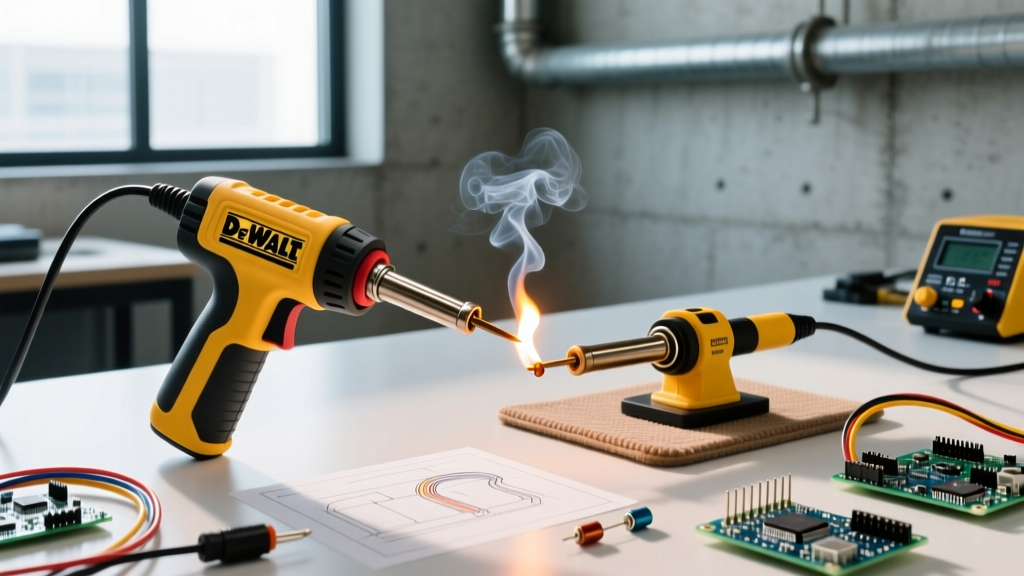
When electricians, HVAC technicians, and field engineers search for a DeWalt soldering gun, they are typically looking for a heavy-duty, high-wattage tool capable of handling thick gauge wires and robust mechanical joints. However, navigating the brand's actual product lineup requires some clarification. While DeWalt dominates the 20V MAX cordless power tool ecosystem, their direct footprint in traditional AC transformer-based soldering guns is minimal. Instead, tradesmen relying on DeWalt gear typically utilize the DeWalt Cordless Butane Soldering Iron for remote field splices, or they pair their DeWalt toolboxes with heavy-duty AC soldering guns (like the iconic Weller D550 or 9400 series) for bench and service-truck work.
In this 2026 guide, we will break down the exact troubleshooting steps, failure modes, and maintenance protocols for both DeWalt's butane-powered field irons and the heavy-duty AC transformer soldering guns that professionals use alongside their DeWalt gear. Proper maintenance ensures your tools meet the thermal profiles required by modern electrical standards.
Tool Matrix: Butane Field Irons vs. AC Transformer Guns
| Feature | DeWalt Cordless Butane Iron | Heavy-Duty AC Soldering Gun (100W+) |
|---|---|---|
| Power Source | Internal Butane Reservoir / Catalytic Heater | 120V AC Mains / Step-Down Transformer |
| Heat-Up Time | 15 - 30 seconds | Instant (Trigger-activated) |
| Primary Use Case | Remote splices, HVAC controls, off-grid repairs | Heavy gauge wire, chassis grounding, bench work |
| Common Failure Mode | Catalytic element clogging, vapor lock | Tip oxidation, trigger switch arcing |
| Typical Replacement Cost | $18 - $25 (Tip/Heater Assembly) | $12 - $15 (Copper Tip), $30 (Switch) |
Step-by-Step Troubleshooting: DeWalt Butane & Cordless Irons
Field soldering tools that rely on butane and catalytic heating elements are incredibly sensitive to fuel purity and mechanical shock. If your DeWalt-branded or equivalent cordless butane iron is failing in the field, follow these diagnostic steps.
- Symptom: Tool Clicks but Won't Ignite (Vapor Lock)
The Fix: Air trapped in the butane reservoir creates a vapor lock, preventing liquid fuel from reaching the catalytic heater. Hold the tool upside down. Using a small flathead screwdriver or a specialized purge tool, press the fill valve to release trapped air until you hear a steady hiss of liquid butane. Pro Tip: Always use 5X refined butane. Cheap, unrefined butane contains oils that carbonize and permanently clog the micro-jets inside the catalytic assembly. - Symptom: Low Heat Output / Tip Won't Melt 60/40 Solder
The Fix: The catalytic element (the mesh screen inside the tip shroud) has degraded or is coated in carbon buildup. Remove the tip and inspect the ceramic and mesh assembly. If it is blackened, it must be replaced. Attempting to scrape the catalytic mesh will destroy the platinum/palladium coating required for the exothermic reaction. Order a replacement tip/heater assembly (typically $18-$24). - Symptom: Flint Wheel Spins Freely
The Fix: The flint has worn down, or the spring tension on the striker has failed. Unscrew the flint housing cap, clear out any brass shavings, and insert a new 2mm x 5mm ferrocerium flint. Ensure the spring is seated correctly before tightening the cap back down.
Diagnosing Heavy-Duty AC Soldering Guns
For heavy electrical work, a traditional 100W to 250W AC transformer soldering gun is the undisputed king. These tools operate on a simple principle: a step-down transformer converts 120V AC mains into a very low voltage (typically 0.1V to 0.2V) at massive amperage (100A+), passing directly through the copper tip. Here is how to troubleshoot the most common AC gun failures.
Multimeter Diagnostics for Transformer Windings
Before assuming your soldering gun is dead, use a digital multimeter (DMM) to isolate the fault. Ensure the tool is unplugged.
- Primary Winding Test: Set your DMM to resistance (Ohms). Place probes on the AC plug prongs. With the trigger depressed, you should read between 10 and 30 Ohms. An "OL" (Open Loop) reading indicates a broken primary wire or a failed trigger switch.
- Secondary Winding & Tip Test: Place one probe on the left tip nut and the right probe on the right tip nut. The resistance should be incredibly low—typically less than 0.5 Ohms. If you read high resistance, the issue is almost always oxidized contact shoulders on the copper tip or loose mounting nuts.
- Trigger Switch Arcing: If the tool works intermittently or the trigger feels "mushy," the internal microswitch contacts have pitted from high-current arcing. Open the ABS housing (usually 4-6 Phillips or Torx screws) and inspect the switch. If the contacts are blackened, replace the switch assembly rather than attempting to file the contacts, as this alters the gap tolerance and creates a fire hazard.
Expert Warning on Tip Torque: A massive mistake field techs make is over-tightening the soldering gun tip nuts with pliers. This strips the soft copper threads and cracks the secondary winding bus bars. Tighten the tip nuts to exactly 1.2 Nm (approx. 10 in-lbs) using a nut driver. The electrical contact relies on surface area and cleanliness, not brute clamping force.
Tip Maintenance and Thermal Shock Prevention
According to the IPC J-STD-001 requirements for soldered electrical assemblies, proper thermal management and wetting are critical for reliable joints. A poorly maintained tip will cause cold solder joints and pad lifting.
- The "Keep it Tinned" Rule: Never leave an AC soldering gun plugged in and resting on a bench without a fresh blob of rosin-core solder covering the working end. This sacrificial layer prevents ambient oxygen from oxidizing the copper and iron plating.
- Avoid Thermal Shock: Never quench a hot soldering tip in water or a wet sponge. The rapid temperature drop causes micro-fractures in the iron plating, leading to pitting and rapid degradation. Use a dry brass wire sponge for cleaning.
- Flux Fume Safety: When re-tinning or working with activated rosin (RA) fluxes, ensure adequate ventilation. As outlined by OSHA's Hazard Communication Standard, repeated exposure to colophony (rosin) fumes can cause occupational asthma and contact dermatitis. Always use a localized fume extractor in enclosed service trucks.
Preventative Maintenance Schedule & Cost Breakdown (2026)
Implementing a strict maintenance schedule extends the lifespan of your field soldering tools by years. Below is the recommended service interval for professional use.
| Maintenance Task | Interval | Estimated Cost | Tools Required |
|---|---|---|---|
| Purge Butane Valve (Field Iron) | Every 3 Months | $0 | Small Flathead Screwdriver |
| Replace Catalytic Tip Assembly | Annually or upon failure | $18 - $25 | Needle-nose pliers, wrench |
| Clean AC Gun Tip Shoulders | Every 30 Days | $0 | Scotch-Brite pad, isopropyl alcohol |
| Replace AC Gun Copper Tip | Every 6 Months | $12 - $15 | 1/4" Nut driver |
| Inspect/Replace Trigger Switch | Every 2 Years | $25 - $35 | Screwdriver set, soldering iron |
Frequently Asked Questions
Can I use my DeWalt 20V MAX Heat Gun for desoldering?
While DeWalt's 20V MAX cordless heat guns (like the DCE530) are excellent for heat-shrink tubing and paint stripping, they are not precision desoldering tools. The airflow and broad thermal profile make it difficult to target specific PCB pads without risking thermal damage to adjacent surface-mount components. For desoldering, a dedicated hot air rework station with precision nozzles is required.
Why does my AC soldering gun tip turn black instantly?
Instant blackening is caused by oxidation due to excessive heat or using acid-core plumbing solder on electrical tools. Acid fluxes will eat through the iron plating on standard soldering tips in minutes. Always use 60/40 or 63/37 rosin-core solder for electrical work. For plumbing, use a dedicated, un-plated solid copper tip and a separate tool to avoid cross-contamination.
Where can I find official technical bulletins for heavy-duty soldering guns?
For deep-dive schematics and transformer care, referencing Weller's technical guidelines and authorized service center manuals provides the most accurate torque specs and wiring diagrams for traditional AC soldering guns used in the trades.