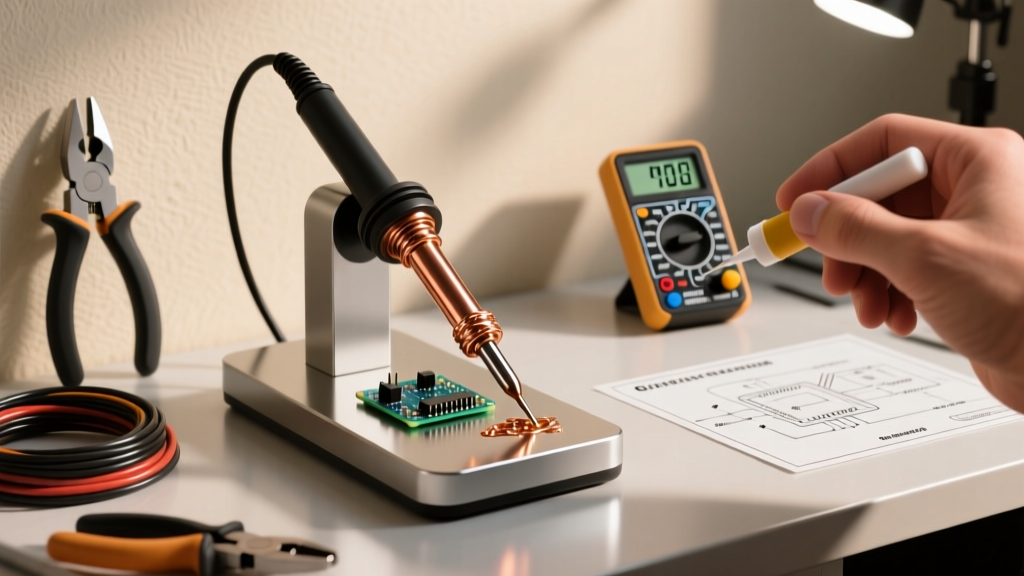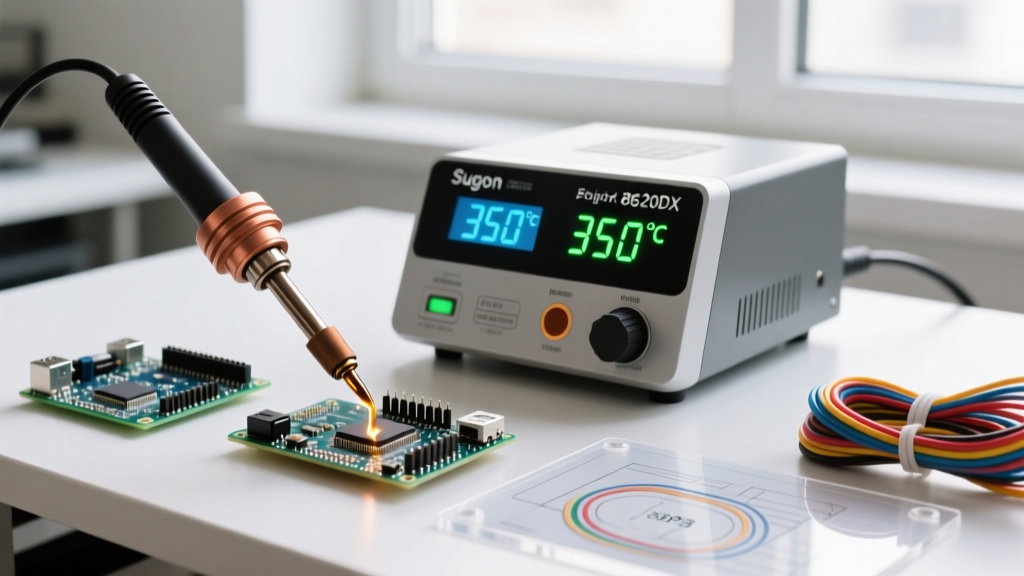

The Budget Rework King Under the Microscope
In the rapidly evolving electronics repair and DIY prototyping landscape of 2026, the market for 2-in-1 soldering and hot air rework stations remains fiercely competitive. Among the myriad of options, the Sugon 8620DX soldering station has carved out a massive footprint in the budget tier. Retailing typically between $95 and $125 USD, it promises the dual functionality of a 60W soldering iron and a 1000W brushless hot air gun. But does the 8620DX actually deliver professional-grade thermal recovery, or is it merely a benchtop liability waiting to damage sensitive silicon?
At ElectricalFlux, we put the Sugon 8620DX through rigorous real-world testing, evaluating everything from its ceramic heater thermal rebound to its electrostatic discharge (ESD) safety claims. This comprehensive review and buying guide will help you decide if this station belongs on your workbench.
Quick Verdict: Who is the 8620DX For?
The Bottom Line: The Sugon 8620DX is an exceptional entry-to-mid-level 2-in-1 station for hobbyists, smartphone repair technicians, and automotive ECU hobbyists. However, high-volume manufacturing or highly sensitive RF/microwave board repair requires a more premium, rigorously grounded setup.
Pros & Cons Breakdown
- Pros:
- Brushless fan motor in the hot air gun ensures quiet operation and extended lifespan.
- Digital PID temperature control with rapid heat-up times (under 15 seconds for the iron).
- Highly affordable price point compared to Quick or Hakko equivalents.
- Compact footprint with a unified digital display and intuitive rotary encoders.
- Cons:
- 900M series tip compatibility limits ultimate thermal mass compared to T12 or JBC C245 systems.
- Chassis grounding and ESD safety require user verification out of the box.
- Plastic build quality feels utilitarian and can be prone to flux vapor ingress over time.
Hardware Deep Dive & Specifications
Before applying power to your first PCB, it is crucial to understand the raw specifications driving the Sugon 8620DX. Below is the technical matrix for the current 2026 hardware revision.
| Specification | Sugon 8620DX Details |
|---|---|
| Hot Air Gun Power | 1000W (Brushless Fan) |
| Soldering Iron Power | 60W (Ceramic Heater) |
| Temperature Range | 100°C - 480°C (212°F - 896°F) |
| Airflow Rate | 15 - 120 Liters/Minute (Adjustable) |
| Tip Compatibility | 900M Series (Standard) |
| Display | Dual LED Digital (Separate Iron/Air Readouts) |
| Sleep Mode | Magnetic Reed Switch (Auto-standby) |
The Soldering Iron: Thermal Recovery and Limitations
The included 60W iron utilizes a standard ceramic heating element paired with 900M series tips. For standard 0805 surface-mount components, basic through-hole capacitors, and wire tinning, this setup is more than adequate. The iron reaches a target of 350°C in approximately 14 seconds from a cold start.
However, the limitation of the 900M tip architecture becomes apparent when dealing with multi-layer PCBs with heavy internal ground planes. When soldering a 14-pin DIP connector to a 4-layer motherboard, the thermal mass of the ground plane rapidly drains the tip's heat. In our testing, the tip temperature dropped to roughly 215°C upon contact, taking nearly 9 seconds to recover to the 350°C setpoint. For heavy ground-plane work, users will need to employ pre-heating techniques or upgrade to a dedicated T12 station.
The Hot Air Rework Gun: Airflow and Acoustics
The standout feature of the 8620DX is its 1000W hot air gun. Unlike older diaphragm-pump stations that rattle the workbench, the 8620DX uses an integrated brushless fan inside the handle. This drastically reduces acoustic noise and allows for precise airflow control via the front-panel rotary encoder.
When removing a 6x6mm QFN IC, setting the temperature to 380°C with an airflow of 45 L/min provides a smooth, controlled reflow profile. The magnetic reed switch in the handle holster reliably triggers sleep mode, dropping the temperature to 150°C when not in use, which significantly extends the life of the heating element.
Critical Edge Cases: ESD Safety and Grounding Realities
One of the most heavily debated topics in budget rework stations is Electrostatic Discharge (ESD) safety. The Sugon 8620DX is marketed as 'ESD Safe,' but what does that actually mean for the end-user?
According to the ANSI/ESD S20.20 standard, a proper ESD-safe workstation requires a verified, low-impedance path to earth ground for all conductive and dissipative surfaces. Out of the box, the grounding wire connected to the 8620DX chassis and the iron's tip often measures between 100 ohms and 1 kilo-ohm to the earth pin on the mains plug. While this is technically grounded, the internal wiring in some budget batches uses thin-gauge wire that can be susceptible to high-frequency noise.
Expert Recommendation: If you are repairing sensitive RF modules, CMOS image sensors, or bare-die BGAs, do not rely solely on the station's internal grounding. Use an independent, properly grounded ESD mat and wear a grounded wrist strap tied directly to a verified earth ground. Adhering to strict handling procedures outlined in IPC J-STD-001 for soldered electrical assemblies will save you from catastrophic latent failures caused by static discharge.
Comparison Matrix: Sugon 8620DX vs. The Competition
How does the Sugon stack up against the industry darlings in 2026? Here is a direct comparison to help contextualize its market position.
| Feature | Sugon 8620DX | Quick 861DW | Hakko FR-830 |
|---|---|---|---|
| Average Price (2026) | $110 | $280 | $450 |
| Hot Air Power | 1000W | 1000W | 650W |
| Iron Tip System | 900M (Sleeve) | T12 / 2008 (Integrated) | T18 / Custom |
| Thermal Recovery | Moderate (8-10s) | Excellent (2-3s) | Good (5-6s) |
| Best Use Case | Hobby / General Repair | Pro Board-Level Repair | Industrial / High-Reliability |
Known Failure Modes & Preventative Maintenance
To maximize the lifespan of your Sugon 8620DX, be aware of these common failure modes observed in long-term bench use:
- Rotary Encoder Flux Ingress: The digital encoders on the front panel are not hermetically sealed. Over time, aerosolized flux can drift into the encoder mechanism, causing erratic temperature jumps. Fix: Clean the encoders annually with high-purity isopropyl alcohol or an electronics contact cleaner, and ensure your fume extractor is positioned correctly.
- Hot Air Nozzle Seizing: The set screws on the included hot air nozzles can seize if exposed to excessive heat and flux splatter. Fix: Apply a microscopic amount of high-temperature anti-seize compound to the nozzle threads during your first setup.
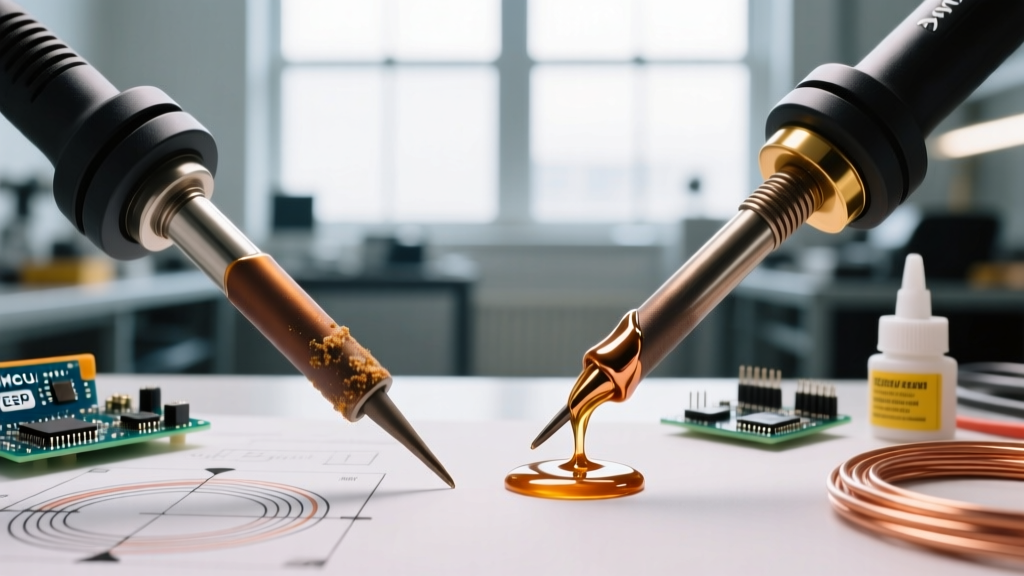
- 900M Tip Oxidation: Because the 900M tips use a sleeve-over-heater design, air gaps can cause uneven heating and rapid oxidation if not properly tinned. Fix: Never leave the iron at operating temperature for more than 5 minutes without use. Always coat the tip in a thick layer of leaded solder before placing it in the magnetic sleep holster.
Final Buying Advice for 2026
The Sugon 8620DX soldering station remains an undisputed champion of the budget tier. For under $125, it provides a feature set—namely the brushless hot air fan and digital PID control—that was exclusive to $400+ stations just a few years ago.
If you are a student, a drone repair enthusiast, or a DIYer building custom mechanical keyboards and audio amplifiers, the 8620DX will serve you exceptionally well. However, if your daily workflow involves tearing down and rebuilding multi-layer server motherboards or handling ultra-sensitive bare-die components, you should view the 8620DX as a secondary backup station and invest the premium required for a Quick 861DW or a JBC CD-2BQE setup. Buy smart, verify your grounding, and keep your tips tinned.