
The Chemistry and Physics of Soldering Tip Degradation
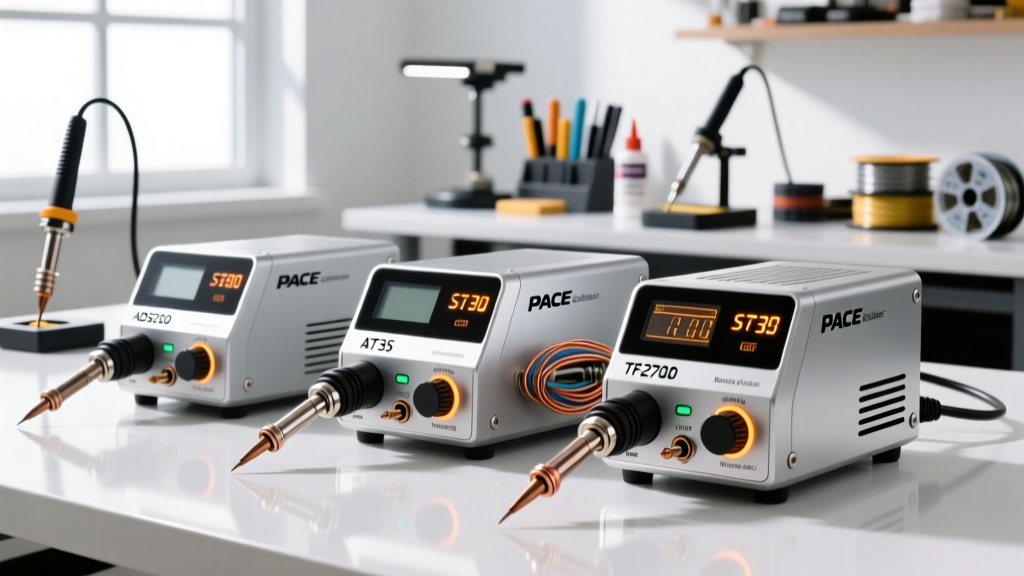
Understanding how to clean tip of soldering iron effectively requires a foundational grasp of what a soldering tip actually is. Modern soldering tips—whether used on a high-end Pace ADS200 or a standard Weller WE1010NA—are not solid copper. They feature a copper core for rapid thermal transfer, plated with a layer of iron (typically 0.1mm to 0.2mm thick) to prevent the molten solder from dissolving the copper. This iron plating is then coated with a microscopic layer of chromium to prevent solder from wetting the non-working areas of the tip.
When the iron plating is exposed to oxygen and flux vapors at operating temperatures (typically 320°C to 380°C), it rapidly forms iron oxide. This oxide layer acts as a severe thermal barrier. According to guidelines published by the IPC (Association Connecting Electronics Industries), oxidized tips fail to transfer heat efficiently, leading to cold solder joints, prolonged dwell times on delicate PCB pads, and ultimately, catastrophic pad lift-off.
The 'Black Tip' Failure Mode
The most common edge case in tip maintenance is 'Black Tip Syndrome' or de-wetting. This occurs when carbonized flux residue and heavy oxidation create a crust that molten solder cannot alloy with. Solder will literally ball up and roll off the tip. Attempting to force a solder joint with a blackened tip will result in excessive pressure on the component leads and irreversible thermal damage to the PCB substrate.
Brass Wire Wool vs. Cellulose Sponges: A Comparison Matrix
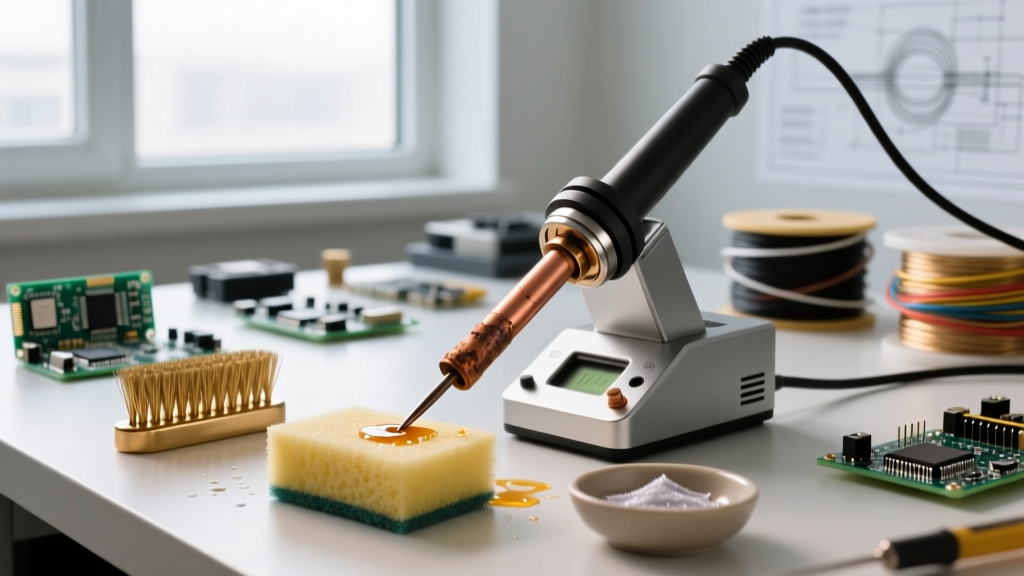
When evaluating how to clean tip of soldering iron, the debate between brass wool and wet cellulose sponges is ongoing. While both have their place in a professional lab, they interact with the tip's metallurgy in vastly different ways.
| Feature | Brass Wire Wool (e.g., Hakko 599B) | Wet Cellulose Sponge (e.g., Edsyn) |
|---|---|---|
| Thermal Shock Risk | Minimal (No temperature drop) | High (Rapid quenching causes micro-fissures in iron plating) |
| Cleaning Aggressiveness | Moderate (Scrapes bulk oxides) | Low to Moderate (Relies on steam and wiping) |
| Best Use Case | Lead-free alloys, high-temp soldering, daily maintenance | Light cleaning, removing excess solder before tinning |
| Moisture Requirement | None (Must be kept dry) | Requires distilled water (tap water minerals cause scaling) |
| Estimated Cost (2026) | $6.00 - $12.00 per replacement coil | $2.00 - $5.00 per sponge |
Expert Verdict: For modern lead-free alloys like SAC305 (Sn96.5/Ag3.0/Cu0.5) which require higher operating temperatures (350°C+), brass wool is the superior choice. The thermal shock of a wet sponge on a 380°C tip accelerates the micro-cracking of the iron plating, allowing molten solder to reach the copper core and hollow out the tip from the inside.
The 4-Step Expert Cleaning Protocol
To maximize the lifespan of genuine tips (which typically cost between $8.00 and $15.00 each, compared to $2.00 for low-quality clones), follow this strict operational protocol.
- Pre-Wipe Assessment: Before touching the iron to a PCB pad, wipe the tip once through the brass wool to remove any residual oxidation from the idle state.
- The 'Melt and Drag' Technique: Apply a small amount of fresh, flux-cored solder (preferably Sn63/Pb37 for cleaning, even if you are using lead-free for the joint) to the tip. The fresh flux will chemically reduce minor oxides. Drag the tip through the brass wool at a 45-degree angle, rotating slightly to ensure all faces of the tip geometry (especially the heel of a chisel tip) make contact with the brass shavings.
- Immediate Re-Tinning: The absolute most critical step. The moment the tip is wiped clean, the bare, hot iron is exposed to ambient oxygen. You have roughly 1.5 seconds before flash-oxidation begins. Immediately apply a generous coat of fresh solder to the working end of the tip.
- The Shutdown Protocol: Never turn off a soldering station with a bare or wiped tip. Before powering down the Weller or Hakko station, melt a large 'blob' of solder over the entire working surface of the tip. This sacrificial layer will oxidize instead of the iron plating while the tool cools down.
Advanced Troubleshooting: Rescuing a Severely Oxidized Tip
CRITICAL WARNING: Never use sandpaper, a Dremel tool, or a metal file to clean a soldering tip. These abrasive methods will instantly strip the 0.1mm iron plating, exposing the copper core. The tip will be destroyed in minutes as the solder dissolves the copper.
If standard wiping fails and the tip exhibits severe 'Black Tip Syndrome,' you must use a chemical reduction method. Products like the Kester Tip Tinner or MG Chemicals 8341 contain a mixture of aggressive phosphoric acid or ammonium chloride flux suspended in solder powder.
Rescue Procedure:
- Set the station temperature to a moderate 300°C.
- Dip the blackened tip directly into the tip tinner compound for 2 to 3 seconds. You will see immediate off-gassing as the acidic flux strips the carbon and iron oxide layers.
- Withdraw the tip and immediately wipe it on a dry paper towel or brass wool to remove the acidic residue.
- Apply standard flux-cored solder to re-tin the surface.
- Note: Tip tinner is highly corrosive. Use it only as a last resort, as repeated use will slowly thin the iron plating over time.
The Role of Flux Chemistry in Tip Degradation
Not all fluxes are created equal when it comes to tip wear. Water-soluble organic acid (OA) fluxes are highly corrosive and will eat through tip plating if left on the iron for more than a few seconds. Conversely, No-Clean (RMA/RA) rosin-based fluxes are far gentler on the iron plating but leave a hard, amber carbonized residue if the tip is held at high temperatures without wiping.
If your manufacturing process requires water-soluble flux, you must implement a strict 'wipe and re-tin' cycle after every single joint. Leaving an OA flux-coated tip resting in a holder for even five minutes can cause irreversible pitting on the tip's working surface.
Preventative Maintenance Schedule for Professional Labs
To maintain compliance with Hakko and IPC workmanship standards, implement the following maintenance matrix in your lab environment.
| Frequency | Maintenance Action | Purpose |
|---|---|---|
| Every Joint | Wipe on brass wool, apply fresh solder. | Prevents carbonized flux buildup and ensures maximum thermal transfer for the next pad. |
| End of Shift | Heavy tinning with Sn63/Pb37 solder before power-off. | Creates a sacrificial oxidation barrier during the cooling phase. |
| Weekly | Inspect tip geometry under a 10x loupe for pitting or hollowing. | Identifies early-stage iron plating failure before it causes cold joints. |
| Monthly | Empty and clean the brass wool receptacle. | Prevents accumulated solder dross and acidic flux residue from wicking back onto the tip. |
Summary
Mastering how to clean tip of soldering iron is less about scrubbing and more about chemical management and thermal awareness. By abandoning wet sponges in favor of brass wool, understanding the flash-oxidation window, and utilizing chemical tip tinner only when absolutely necessary, you can extend the life of your soldering tips from a few weeks to several years, ensuring consistent, IPC-compliant solder joints on every project.