
Introduction: The Brute-Force Legacy of the Weller 8200
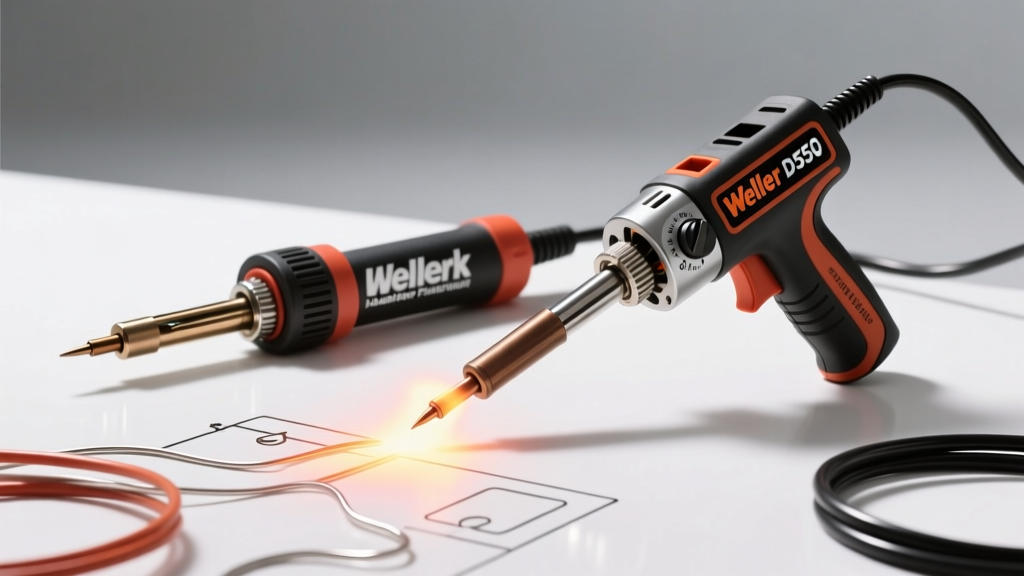
When tackling heavy-gauge wiring, automotive harnesses, or stained glass projects, standard 60W pencil irons simply lack the thermal mass to maintain a stable soldering temperature. The solder acts as a massive heat sink, freezing the joint and resulting in cold, brittle connections. Enter the Weller 8200PK dual heat soldering gun kit, a transformer-based workhorse that has remained a staple in professional and DIY toolboxes for decades. In this 2026 deep dive, we strip away the marketing fluff to examine the exact metallurgy, thermal recovery metrics, and real-world failure modes of the 8200PK. Whether you are an electrician splicing 10 AWG copper or a hobbyist building custom lithium-ion battery packs, understanding the physics and limitations of this specific kit is critical for achieving reliable joints.
Under the Hood: Transformer Physics and Dual-Heat Mechanics
Unlike modern cartridge-based stations (like T12 or NT115 systems) that rely on conductive heating from a ceramic element, the Weller 8200 utilizes a step-down transformer. The primary coil connects to standard 120V AC mains, while the secondary coil consists of a few turns of heavy-gauge copper wire. The soldering tip itself completes the secondary circuit.
When you pull the trigger, the transformer induces a massive current—often exceeding 200 amps—at a very low voltage (typically under 0.5V) directly through the tip. The electrical resistance of the copper-beryllium or iron-plated tip generates rapid I²R (Joule) heating. This is why the 8200 can reach 425°C (800°F) in roughly 6 seconds from a cold start.
The Two-Stage Trigger System
The defining feature of this model is the dual-heat trigger mechanism, rated for 100W on the first stage and 140W on the second.
- Stage 1 (100W): Engaged by a light pull. Ideal for maintaining heat on medium-gauge wires (14-18 AWG) or preventing thermal runaway when working near heat-shrink tubing.
- Stage 2 (140W): Engaged by pulling the trigger fully back. This pushes maximum current through the secondary loop, providing the aggressive thermal recovery needed for thick ground planes, 8-10 AWG battery cables, or heavy brass terminals.
Weller 8200PK Kit Inventory and Tip Metallurgy
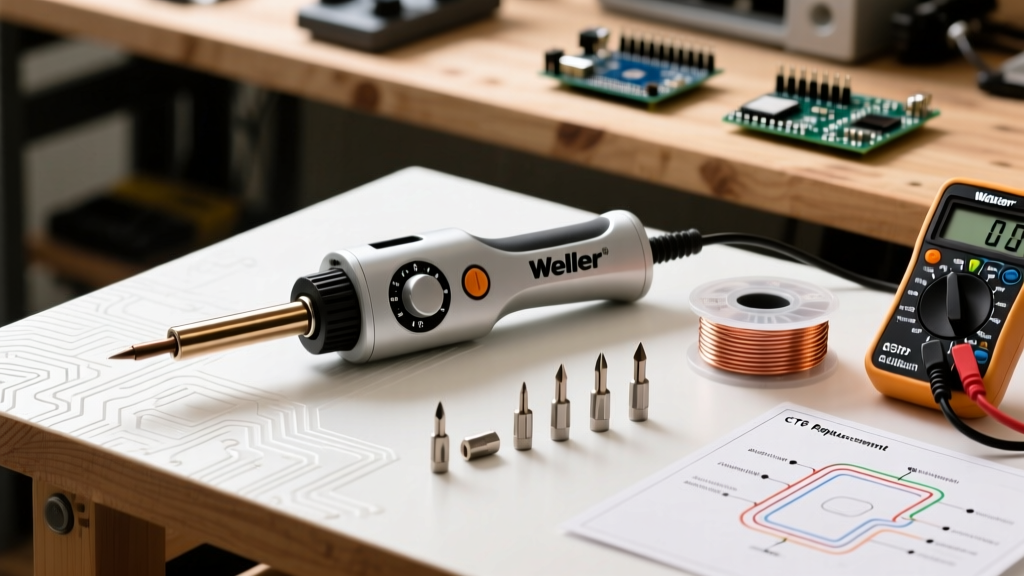
The 'PK' designation indicates this is a comprehensive kit, not just the bare tool. Priced between $52 and $58 USD in the 2026 market, it offers significant value over buying the components individually. Below is the exact inventory and specification breakdown:
| Component | Part Number / Spec | Function & Metallurgy |
|---|---|---|
| Soldering Gun | Weller 8200 (120V/60Hz) | 100W/140W transformer housing with integrated work light. |
| Standard Tip | CT6F7 (1/8 inch) | Screwdriver shape. Iron-plated copper core for general heavy soldering. |
| Cutting Tip | CT6C7 | Shear blade design for cutting copper wire and stripping insulation simultaneously. |
| Smearing Tip | CT6D7 | Flat, wide surface for tinning large areas or stained glass foil work. |
| Accessories | Wrench & Solder | Hex nut wrench for tip changes; 2oz spool of 60/40 rosin-core solder. |
| Storage | Blow-Molded Case | High-density polyethylene (HDPE) case with custom foam inserts. |
Expert Note on Tip Metallurgy: The CT6 series tips feature an iron plating over a high-conductivity copper core. Never use a file or sandpaper to clean these tips. Filing will breach the iron layer, exposing the copper to molten solder, which will rapidly dissolve the core and ruin the tip within minutes. Always use a damp cellulose sponge or brass wire cleaner.
Application Matrix: Where the 8200PK Shines and Fails
Because of its massive thermal output and physical footprint, the 8200PK is a highly specialized tool. It is not a universal replacement for a precision soldering station.
Optimal Use Cases (The Sweet Spot)
- Automotive & Marine Wiring: Splicing 10 to 14 AWG stranded wire where environmental seals and heat shrink require rapid, high-heat application.
- Custom Battery Packs: Soldering heavy nickel strips or 12 AWG silicone wires to XT60/XT90 connectors for RC and EV applications.
- Stained Glass & Jewelry: The CT6D7 smearing tip is excellent for running smooth, continuous beads of 60/40 solder along copper foil tape.
- RC Hobbies: Tinning large brushless motor leads and ESC (Electronic Speed Controller) pads.
Contraindicated Use Cases (Avoid at All Costs)
- Printed Circuit Boards (PCBs): The massive thermal shock can delaminate FR4 fiberglass, lift copper pads, and destroy plated through-holes (PTH).
- SMD Components: Anything smaller than a massive through-hole capacitor is at risk of melting. The gun lacks the fine-point precision required for 0805 or QFP ICs.
- Heat-Sensitive Connectors: The radiant heat from the transformer loop can easily melt standard nylon Molex or JST connector housings if the tip lingers too close.
Known Failure Modes and Edge Cases
After years of field testing and teardown analysis, we have identified three primary failure modes specific to the 8200 series architecture:
- Trigger Switch Arcing: Because the primary side switches 120V AC at high inductive loads, the internal micro-switch is prone to carbon buildup and arcing over time. If your gun begins to intermittently cut out or requires 'wiggling' the trigger to engage, the switch contacts are pitted. Replacement switches are cheap, but require careful disassembly and soldering to fix.
- Tip Pitting and Galvanic Corrosion: If users leave the gun on the 'high' (140W) setting continuously without touching solder, the tip temperature exceeds the oxidation threshold of the iron plating. This results in severe pitting, where the solder simply rolls off the tip in balls. Always drop to the 100W setting or turn the gun off during pauses longer than 15 seconds.
- Housing Stress Fractures: The gun's housing is made of a rigid, heat-resistant thermoset plastic (often Bakelite or high-temp nylon). While heat resistant, it is brittle. Dropping the gun from a workbench onto a concrete floor frequently results in hairline cracks near the cord strain relief or the tip-mounting nuts.
Pro-Tip for Threaded Connections: The copper secondary loop that holds the tip is secured by two slotted brass nuts. Over time, thermal cycling causes these to seize. Apply a microscopic drop of high-temperature anti-seize compound (copper or nickel grade) to the threads during your first tip change to prevent shearing the copper loop studs in the future.
Ergonomics, Safety, and Fume Management
Weighing in at approximately 1.5 lbs (680 grams), the 8200PK is nearly five times heavier than a standard ESD-safe pencil iron. This weight is distributed unevenly, with the bulk of the mass sitting in the transformer core near the rear of the grip. For overhead automotive work, this can lead to rapid wrist fatigue.
Furthermore, the sheer volume of solder and flux this gun can melt in seconds generates significant airborne particulates. According to the Canadian Centre for Occupational Health and Safety (CCOHS), heating rosin-based fluxes produces colophony fumes, which are known respiratory sensitizers and can trigger occupational asthma. When using the 140W setting to tin heavy gauge wires, a localized HEPA/activated carbon fume extractor is not optional—it is a strict requirement for long-term respiratory health.
Additionally, while the IPC J-STD-001 requirements focus heavily on the quality and wetting angles of the solder joint, they also mandate that operators avoid thermal damage to adjacent components. The radiant heat profile of the 8200's loop makes compliance difficult on dense boards, reinforcing its role as a heavy-duty wire and terminal tool rather than a precision electronics instrument.
Final Verdict: Is the 8200PK Worth It in 2026?
The Weller 8200PK dual heat soldering gun kit remains an unmatched tool for its specific niche. At a street price of roughly $55, it provides an incredible amount of thermal energy and versatility for electricians, automotive technicians, and stained-glass artists. The inclusion of the cutting and smearing tips in the PK kit elevates it from a simple soldering tool to a multi-functional wire-prep station.
However, if your primary focus is Arduino prototyping, SMD rework, or delicate PCB assembly, you should look toward a digitally controlled T12 or cartridge-based station. But for melting thick 60/40 solder onto heavy copper lugs and battery terminals with brute-force efficiency, the Weller 8200PK is still the undisputed king of the heavy-duty soldering category.