
The Metallurgical Reality of 'Pure' Copper Tips
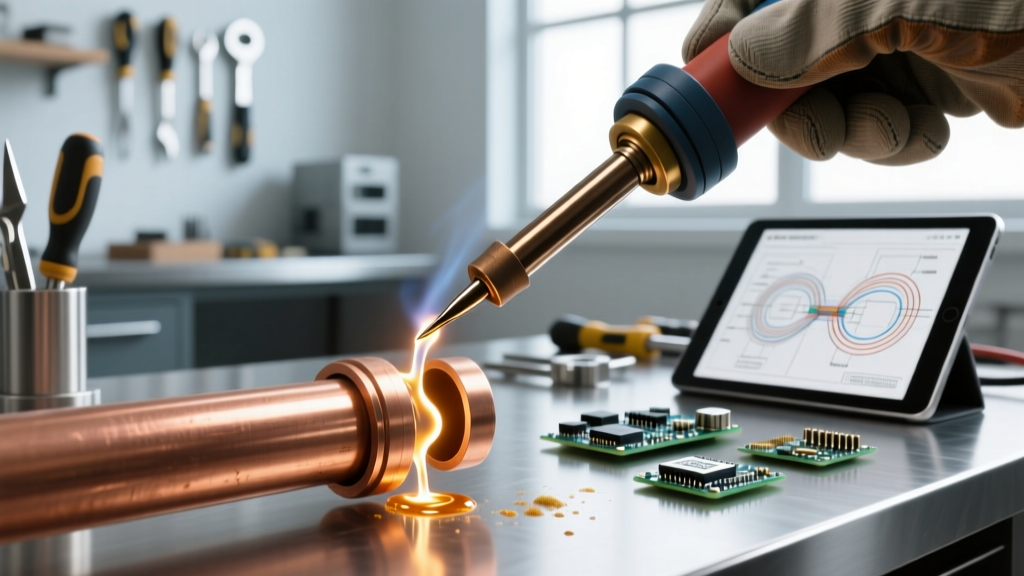
When electronics engineers, plumbers, and DIYers search for the best soldering iron copper tips, they are often chasing a metallurgical ghost. In 2026, finding a 100% solid, uncoated copper soldering tip for precision PCB work is virtually impossible—and for good reason. Pure copper dissolves rapidly when exposed to the aggressive rosin-based and no-clean fluxes used in modern electronics, as well as the high tin content in lead-free alloys like SAC305 (Sn96.5/Ag3.0/Cu0.5). A pure copper tip plunged into a pool of molten lead-free solder will literally dissolve into the solder joint within minutes, creating a pitted, unusable mess.
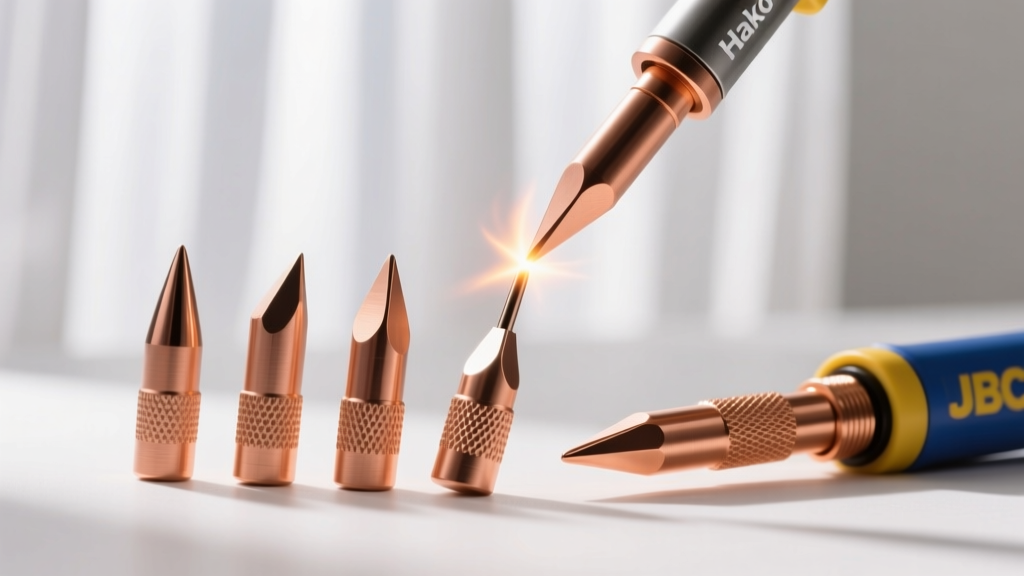
Instead, the modern industry standard—and what manufacturers actually mean when marketing 'copper tips'—is a high-purity oxygen-free copper core wrapped in a micro-thin protective plating of iron, nickel, and chromium. The copper core provides exceptional thermal conductivity (approximately 398 W/m·K), ensuring rapid heat transfer from the ceramic heating element to the joint. The iron plating (which has a much lower thermal conductivity of about 80 W/m·K) acts as a sacrificial shield against solder dissolution and flux corrosion.
In this comprehensive 2026 buying guide, we review the top copper-cored soldering iron tips on the market, breaking down their thermal recovery times, plating thicknesses, and ideal use cases to help you choose the right geometry and brand for your workbench.
Top Copper-Cored Soldering Tip Series Reviewed
1. Hakko T18 Series (Oxygen-Free Copper Core)
The Hakko T18 series remains the gold standard for hobbyists and mid-volume production environments in 2026. Designed primarily for the ubiquitous FX-888D and FX-951 stations, these tips feature a highly refined copper core with a proprietary multi-layer plating process.
- Core Material: High-density oxygen-free copper.
- Plating: Iron (for solder resistance), Nickel (barrier), and Chromium (non-wetting outer layer).
- Price Range: $7.49 – $9.99 per tip.
- Best Geometry: The T18-D24 (2.4mm Chisel) offers the best balance of thermal mass for through-hole components and 0805 SMD pads.
- Verdict: Unbeatable value and consistency. However, the plating is relatively thin, meaning they can be vulnerable to highly acidic water-soluble fluxes if not cleaned immediately.
2. Weller RT & RTW Series (Active Copper Cartridges)
Weller’s RT series represents a leap in thermal management. Rather than a separate tip that slides over a heater, the copper core, the heating element, and the temperature sensor are integrated into a single cartridge. This eliminates the air gap that plagues traditional tips, resulting in near-instantaneous thermal recovery.
- Core Material: Solid copper integrated with a thick-film heater.
- Price Range: $38.00 – $45.00 per cartridge.
- Best Geometry: RT4 (Conical) for fine-pitch QFNs, and RTW2 (Pico blade) for 0201 micro-soldering.
- Verdict: The premium choice for micro-electronics and rework. The high upfront cost is offset by a lifespan that frequently exceeds 100,000 joints under proper maintenance protocols.
3. JBC C245 & C210 Cartridges (Nano-Coated Copper)
JBC has dominated the professional rework space for years, and their 2026 cartridge lineup continues to lead. The C245 series features a massive copper core designed to handle heavy ground planes without dropping below the solder's liquidus temperature. JBC uses an advanced nano-ceramic coating over the iron plating to prevent solder creep up the shaft.
- Core Material: High-mass forged copper.
- Price Range: $48.00 – $58.00 per cartridge.
- Best Geometry: C245-945 (Heavy Duty Chisel) for multilayer PCB ground planes and heavy gauge wiring.
- Verdict: Essential for heavy thermal load applications. The integrated thermocouple sits millimeters from the copper tip apex, providing unmatched temperature stability.
4. KSGER / Quicko T12 Clones (Budget Copper Alternatives)
For makers and repair technicians on a budget, third-party T12 and C245 clone tips offer a copper-cored alternative at a fraction of the OEM price. While the copper purity and plating consistency vary by batch, top-tier clone manufacturers in 2026 have vastly improved their iron-plating thickness.
- Core Material: Standard electrolytic copper.
- Price Range: $3.50 – $6.00 per tip.
- Verdict: Excellent for plumbing, stained glass, and heavy through-hole work where tip degradation is expected. Not recommended for precision micro-BGA rework due to slight dimensional variances.
Comparison Matrix: Copper-Cored Tip Performance
| Brand / Series | Core Thermal Mass | Plating Thickness | Avg. Price (2026) | Thermal Recovery | Ideal Application |
|---|---|---|---|---|---|
| Hakko T18 | Medium | Thin (High transfer) | $8.50 | ~4.5 seconds | General PCB, DIY, Through-hole |
| Weller RT | Low (Integrated) | Medium | $42.00 | < 1.5 seconds | Micro-SMD, 0201, Fine-pitch |
| JBC C245 | High | Thick (Nano-coated) | $52.00 | < 2.0 seconds | Multilayer ground planes, Heavy wire |
| T12 Clones | Medium-High | Thick (Variable) | $4.50 | ~6.0 seconds | Plumbing, Stained glass, Prototyping |
Failure Modes: Why Your Copper Tips Pit and Corrode
Understanding how a copper-cored tip fails is critical to protecting your investment. According to soldering workmanship and reliability standards outlined by IPC, the majority of tip failures are operator-induced rather than manufacturing defects. Here are the primary failure modes:
1. Flux Burn-Through and Copper Dissolution
Modern no-clean and water-soluble fluxes become highly acidic when heated above 300°C. If this flux is allowed to bake onto the iron plating, it creates micro-fissures. Once the flux breaches the iron layer, it exposes the underlying copper core. The molten solder instantly dissolves the exposed copper, creating deep, black pits. Once a tip is pitted to the copper, it cannot be re-tinned and must be discarded.
2. Thermal Shock Cracking
Copper and iron have vastly different coefficients of thermal expansion. When an operator wipes a 400°C tip on a soaking wet cellulose sponge, the rapid temperature drop causes the rigid iron plating to crack while the copper core contracts beneath it. These invisible micro-cracks become highways for flux corrosion. Guidelines from the NASA NEPP program heavily emphasize avoiding extreme thermal shock during tip maintenance to preserve the integrity of the plating.
3. Dry Oxidation (Dewetting)
Leaving a soldering station powered on at 380°C without a protective blob of solder allows the iron plating to oxidize into a hard, blue-black scale. Solder will not wet to iron oxide, resulting in a 'cold' tip that transfers heat poorly, prompting the operator to increase the temperature, which only accelerates the oxidation cycle.
The 2026 Maintenance Protocol for Maximum Lifespan
To ensure your copper-cored tips last for years rather than weeks, implement this strict maintenance protocol. Manufacturers like Hakko USA and JBC universally endorse these practices for preserving the delicate iron plating over the copper core.
- Ditch the Wet Sponge: Replace your damp cellulose sponge with a dry brass wire sponge (curling shavings). Brass is softer than the iron plating and will not scratch it, nor does it induce thermal shock.
- Lower Idle Temperatures: Utilize your station's sleep mode. Set the standby temperature to 180°C. This keeps the solder molten enough to protect the tip from oxidation but low enough to halt aggressive flux burning.
- The 'Solder Blob' Shutdown Rule: Before turning off your station, melt a large, generous blob of thick, rosin-core (63/37) solder directly onto the tip apex. Let it solidify as the station cools. This sacrificial blob takes all the oxidation damage. When you power up the next day, simply wipe the oxidized blob into the brass wool, and you will reveal a perfectly tinned, pristine tip underneath.
- Never Use Abrasives: Never use sandpaper, files, or Dremel tools to clean a pitted tip. You will instantly grind through the micron-thin iron plating and expose the copper core, destroying the tip immediately.
Expert Insight: If your tip becomes heavily oxidized and refuses to wet, do not throw it away immediately. Apply a generous amount of specialized tip tinner (a paste containing phosphoric acid, rosin, and fine solder powder) to the hot tip. The mild acid will strip the iron oxide without damaging the plating, allowing the solder powder to instantly re-tin the surface. Wipe clean on brass wool and apply fresh rosin-core solder immediately.
Final Verdict: Which Copper Tip Should You Buy?
If you are performing general-purpose DIY electronics, Arduino wiring, and standard through-hole soldering, the Hakko T18-D24 remains the undisputed champion of cost-to-performance in 2026. Its oxygen-free copper core delivers more than enough thermal mass for 95% of bench work.
For professional micro-soldering, smartphone repair, and 0201 component placement, invest in the Weller RT series or JBC C210 cartridges. The integrated copper-heater architecture eliminates thermal lag, saving you from heat-damaging sensitive ICs.
Finally, if you are soldering copper plumbing, stained glass, or heavy 10 AWG silicone wire where tip degradation is an accepted cost of doing business, stock up on T12 clone tips. Their thicker, less refined copper cores and heavy iron plating will brute-force through heavy thermal loads without breaking the bank.