
The Physics of a Catastrophic Soldering Slip
Every experienced electronics technician has experienced the 'heart-drop' moment: you are leaning in close to solder a dense 0402 SMD component, and suddenly your tool jerks violently toward your eyes. When a stiff PTFE cord catches on a PCB edge and suddenly releases, the kinetic snap-back can effectively stab you in the face with a soldering iron tip operating at 350°C. This is not a hyperbole; it is a documented ergonomic hazard in high-density electronics manufacturing and DIY workshops.
The phrase 'stab you in the face with a soldering iron' perfectly captures the visceral fear of cord tension, poor grip ergonomics, and lightweight bases tipping over. In 2026, modern soldering stations have evolved to mitigate these exact failure modes through advanced silicone cabling, weighted holsters, and specialized grip materials. This guide compares the best ergonomic soldering irons and stations specifically engineered to prevent dangerous slips, snap-backs, and accidental facial injuries.
Why Do Soldering Irons Slip and Snap?
To choose a safe tool, you must understand the mechanical forces that cause a hot tip to leave the workbench and head toward your face.
- Cord Memory and Snap-Back: Traditional PTFE (Teflon) cords are highly heat-resistant but suffer from severe 'coil memory.' When stretched around a monitor or fume extractor, they store kinetic energy. If the cord slips off the obstruction, it snaps back like a rubber band, yanking the handpiece out of your grip.
- Flux-Degraded Grips: Rosin-based fluxes and isopropyl alcohol (IPA) can break down certain rubberized grips over time, turning them into a slippery, hazardous surface when your hands are warm or slightly sweaty.
- Base Tipping and Holster Drag: If a soldering station base weighs less than 1.5 lbs, the lateral tension from dragging the cord across a desk can pull the entire unit off the edge of the workbench, or yank the iron out of a poorly tensioned holster.
2026 Comparison Matrix: Anti-Slip & Ergonomic Stations
| Station Model | Handpiece Weight | Cord Material | Base Weight | Grip Type | Slip Risk Rating |
|---|---|---|---|---|---|
| Hakko FX-888D | 1.8 oz (50g) | PTFE (High Memory) | 2.2 lbs (1.0 kg) | EVA Foam | Medium (Cord dependent) |
| Weller WE1010NA | 2.4 oz (68g) | Silicone (Zero Memory) | 1.9 lbs (0.86 kg) | Textured Silicone | Low |
| JBC CD-2BQF | 0.5 oz (15g) | Ultra-Flex Silicone | 3.1 lbs (1.4 kg) | Integrated Hose | Extremely Low |
| Pinecil V2 (w/ Heavy Stand) | 1.1 oz (31g) | Braided Silicone | 1.6 lbs (0.72 kg) | Replaceable Silicone | Low |
Deep-Dive Reviews: Engineering for Safety
1. JBC CD-2BQF: The Premium Ergonomic Standard
If your primary concern is a tool that will never snap back and stab you in the face, the JBC CD-2BQF is the undisputed king of workshop safety. JBC utilizes a revolutionary 'hose guide' system. Instead of a traditional heavy cord, the ultra-lightweight T245 handpiece (a mere 15 grams) connects to a highly flexible, low-friction silicone hose that routes through an overhead or desk-mounted guide arm.
- Pros: Zero cord drag; the iron feels virtually weightless. The heavy 3.1 lb base and magnetic holster lock the iron securely in place, requiring a deliberate upward twist to remove.
- Cons: Premium pricing (often exceeding $500) makes it an investment rather than a beginner tool.
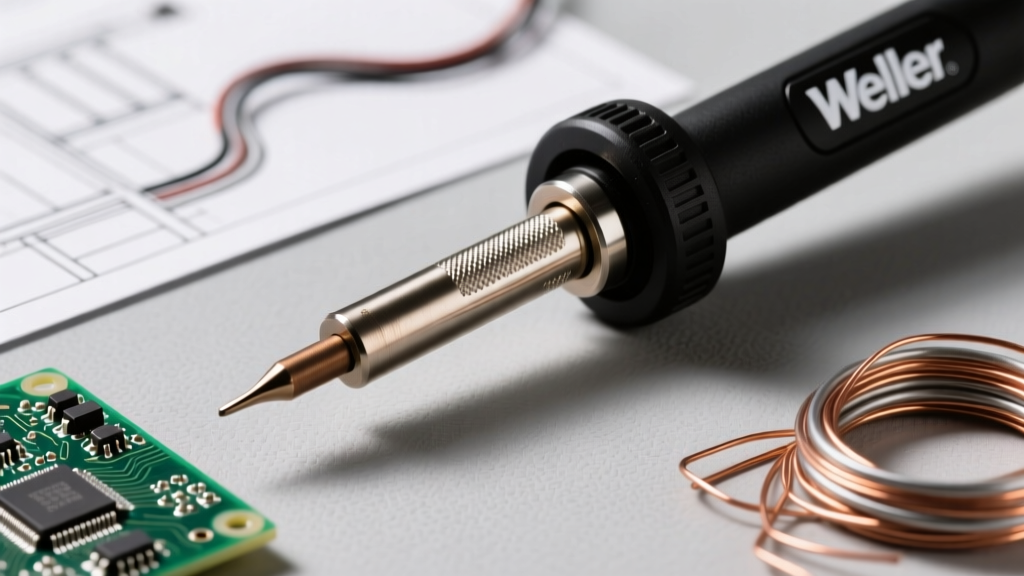
2. Weller WE1010NA: The Silicone Cord Champion
Weller addressed the snap-back hazard by equipping the WE1010NA with a high-grade, burn-resistant silicone cord. Unlike PTFE, silicone has virtually no coil memory. You can route this cord around your NIOSH-recommended fume extraction setup without worrying about stored kinetic energy yanking the iron from your hand.
- Pros: The textured silicone grip resists degradation from aggressive rosin fluxes and IPA cleaning, maintaining a secure hold even during 4-hour prototyping sessions.
- Cons: The handpiece is slightly heavier at 68g, which may cause wrist fatigue during microscopic SMD rework compared to JBC.
3. Hakko FX-888D: The Anchored Workhorse
The Hakko FX-888D remains a staple in 2026 due to its massive, 2.2 lb steel-reinforced base. While its PTFE cord does retain some memory, the sheer weight of the base ensures that the station will not slide across your desk or tip over when cord tension is applied. The EVA foam grip provides excellent tactile feedback and sweat absorption.
- Pros: Unbeatable base stability; the iron stays exactly where you place it. The heavy-duty brass holster physically shields the tip if the unit is bumped.
- Cons: EVA foam can melt or gouge if accidentally touched by the 350°C tip, requiring eventual replacement of the grip sleeve.
Beyond the Tool: Workshop Routing and PPE
Even the most ergonomic soldering iron cannot entirely eliminate the risk of accidental slips if your workspace is poorly configured. According to OSHA Standard 1910.133, appropriate eye and face protection is mandatory when working with tools that pose a puncture, thermal, or flying debris hazard.
Safety Protocol: Never rely on bare prescription glasses for soldering. Flux spatter and accidental tip contact can shatter standard glass or melt polycarbonate. Always wear ANSI Z87.1+ rated safety goggles that provide a sealed, impact-resistant barrier over your eyes.
Proper Cord Routing Techniques
- The Overhead Loop: Use a small binder clip or a dedicated 3D-printed cord guide attached to the top of your monitor or fume extractor. Route the soldering iron cord over this guide to create a slack loop. This absorbs any sudden pulls and prevents the cord from catching on PCB edges.
- The Weighted Sleeve: For irons with high cord memory (like the Hakko), slide a small, heat-resistant weighted sleeve (or a ferrite core) over the cord about 12 inches from the handpiece. This adds just enough downward drag to counteract the upward snap-back tension.
- Clear the Drop Zone: Never position your soldering station holster directly in front of your face or chest. Mount the station to the far right (or left, for left-handed users) so that a slip directs the hot tip toward the empty workbench, not your body.
Frequently Asked Questions
Can a fume extractor arm cause a soldering iron slip?
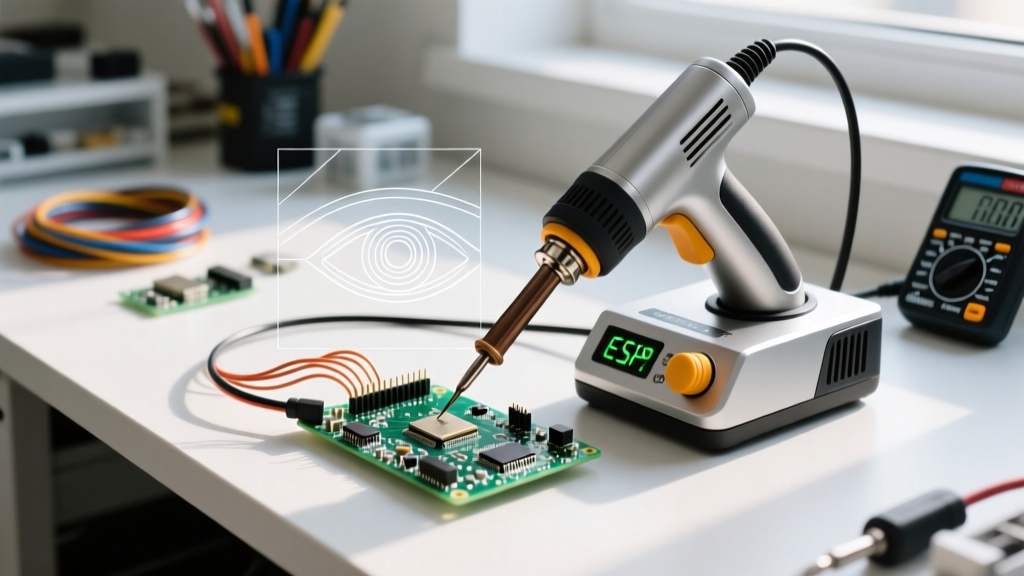
Yes, this is a leading cause of snap-back injuries. If your PTFE cord wraps around the rigid aluminum arm of a fume extractor, leaning back or moving the PCB will create extreme tension. When the cord slips off the metal arm, the release of energy will violently jerk the iron upward. Always route cords over smooth, dedicated guides, never around extractor joints.
Are wireless/butane soldering irons safer for the face?
While butane irons (like the Portasol) eliminate cord snap-back entirely, they introduce severe risks regarding open flames, butane leaks, and a lack of precise temperature control. For precision PCB work where a slip could damage your face or a $200 microcontroller, a corded station with a flexible silicone hose is significantly safer and more predictable.
How often should I replace my silicone grip sleeve?
Inspect your grip sleeve monthly. If you notice the silicone becoming glossy, sticky, or developing micro-tears from flux exposure, replace it immediately. A degraded grip reduces friction coefficients by up to 40%, drastically increasing the likelihood of the iron slipping from your fingers during precision drag-soldering.