
The Metallurgical Challenge: Why Standard Soldering Irons Fail
Soldering aluminum with a standard soldering iron is widely considered impossible by hobbyists, but it is a routine procedure in specialized electronics and aerospace manufacturing when you understand the metallurgy. The primary adversary is not the aluminum itself, but its oxide layer. When exposed to air, aluminum instantly forms a passivation layer of aluminum oxide (Al2O3). While the base aluminum melts at a relatively low 660°C, the Al2O3 layer melts at a staggering 2,072°C. Standard rosin-core solders and typical 40W irons cannot penetrate this ceramic-like barrier, causing the solder to ball up and roll off.
To achieve a true metallurgical bond, you must simultaneously remove the oxide layer, prevent oxygen from reforming it, and use an alloy that exhibits a low contact angle with the aluminum substrate. According to materials data published by The Aluminum Association, aluminum's high thermal conductivity also rapidly draws heat away from the joint, demanding significantly higher thermal mass from your soldering station than standard PCB work.
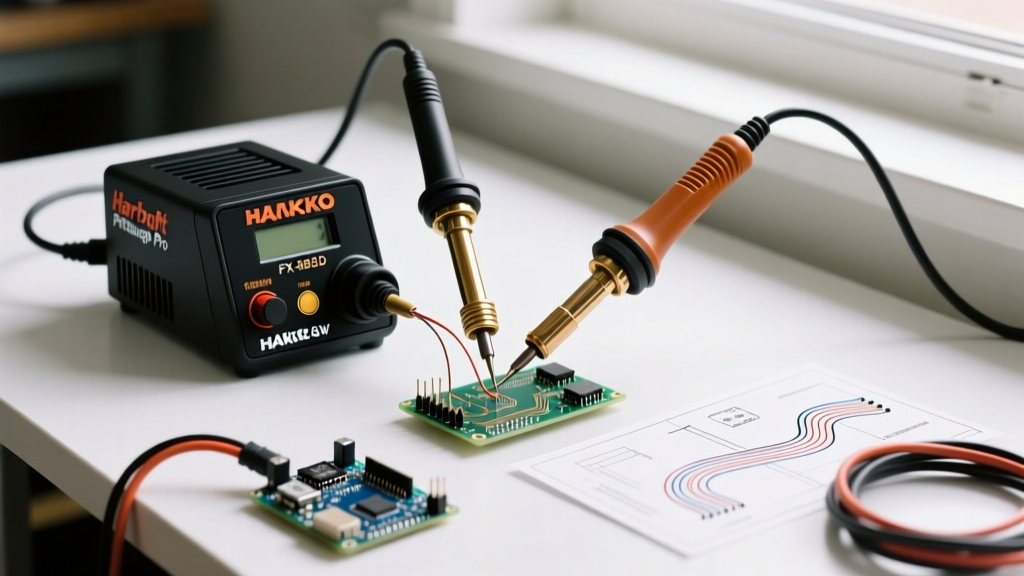
Essential Gear: Selecting the Right Soldering Station
Forget your standard 40W pencil iron. Aluminum requires high thermal recovery and sustained wattage to overcome its heat-sinking properties. You need a station capable of maintaining 350°C to 400°C at the tip without dropping in temperature when it touches the workpiece.
| Material Thickness | Recommended Station / Iron | Wattage | Optimal Tip Geometry |
|---|---|---|---|
| < 1mm (Foil, Thin Wire) | Hakko FX-601 or Weller WES51 | 67W - 50W | Wide Chisel (e.g., Hakko D24) |
| 1mm - 3mm (Sheet, Busbars) | Weller WEP950 or Pace MBT350 | 95W - 120W | Heavy Bevel or Spade |
| > 3mm (Extrusions, Chassis) | Weller WSP150 / High-Capacity Station | 150W+ | Massive Chisel (Custom Copper) |
Expert Warning on Tip Degradation: The fluxes required for aluminum are highly corrosive to the iron plating found on standard modern soldering tips (like Hakko T18 or Weller RT series). The chlorides will rapidly pit and destroy the plating. For dedicated aluminum work, switch to solid copper tips or specialized ceramic-coated tips, and expect to replace them frequently.
The Secret Weapons: Specialized Fluxes and Alloys
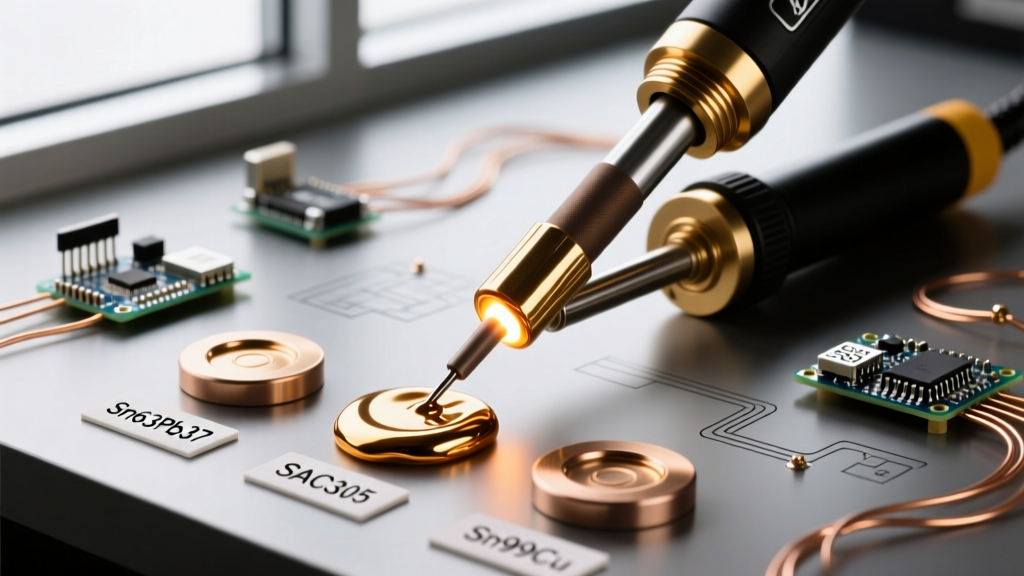
Standard rosin (RMA) flux is completely ineffective on aluminum. You must use aggressive inorganic acids or specialized fluoroaluminates. Furthermore, standard Sn63Pb37 (Tin-Lead) or SAC305 (Lead-Free) solders do not wet aluminum well, leading to brittle intermetallic compounds.
1. The Flux
- Zinc Chloride (ZnCl2) Based: Products like Superior Flux No. 30 or generic liquid aluminum soldering fluxes use zinc chloride. When heated, this flux dissolves the Al2O3 layer and leaves a metallic zinc film that acts as a bridge for the solder.
- Fluoroaluminate Fluxes: Used in high-reliability applications, these are less corrosive post-solder but require higher activation temperatures (around 350°C+).
2. The Solder Alloy
According to alloy phase diagrams provided by Indium Corporation, Tin-Zinc (Sn-Zn) alloys are the premier choice for aluminum. The zinc in the solder matches the aluminum crystal lattice, creating a strong, low-resistance bond.
- Sn91Zn9 (Tin-Zinc Eutectic): Melts at 199°C. Excellent wetting on aluminum but requires a nitrogen atmosphere or heavy liquid flux to prevent the zinc in the molten solder from oxidizing.
- Sn-Ag-Cu with Heavy Flux: If Sn-Zn is unavailable, a standard SAC305 wire heavily cored with a specialized aluminum-compatible organic acid flux can work for mechanical joints, though it is less electrically reliable long-term.
Step-by-Step Expert Technique: The 'Submerged Scrub' Method
The most critical technique in aluminum soldering is mechanical abrasion beneath the flux pool. This prevents oxygen from reaching the bare metal the millisecond the oxide is scraped away.
- Mechanical Prep: Clean the aluminum surface with isopropyl alcohol. Lightly scuff the area with 400-grit sandpaper or a fiberglass scratch pen to remove gross contaminants and heavy oxidation.
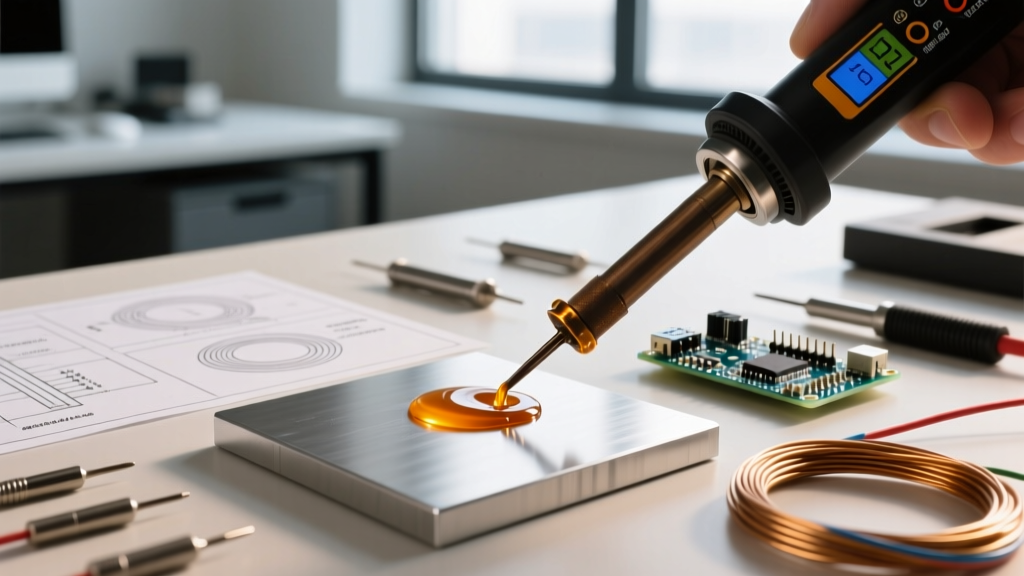
- Flood with Flux: Apply a generous pool of liquid zinc-chloride aluminum flux to the joint area. Do not skimp; the flux must completely encapsulate the work area.
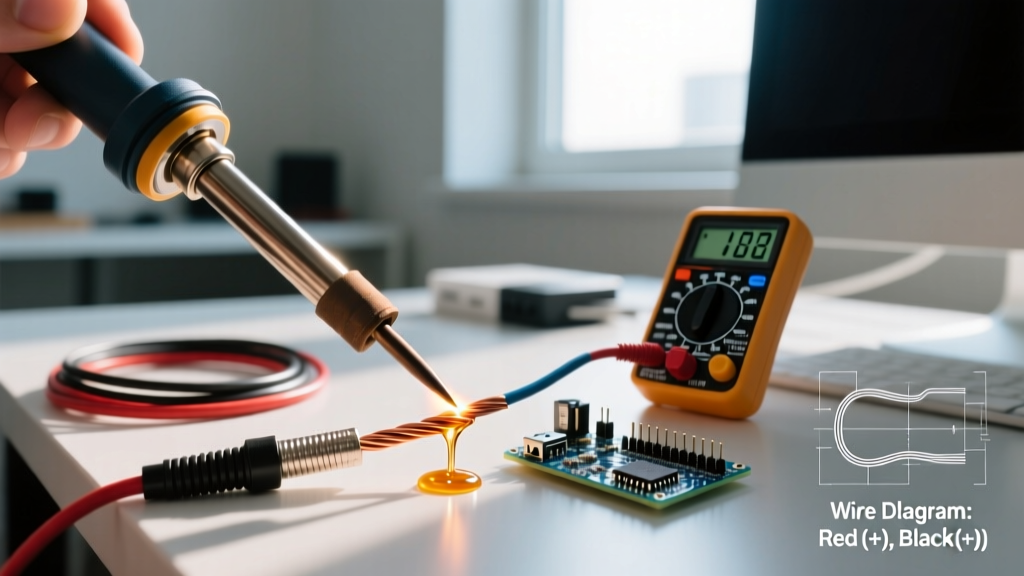
- Heat and Scrub: Apply your pre-tinned, high-wattage soldering iron tip to the flux pool. As the flux boils and activates, use a stainless steel dental pick or a specialized titanium scrubbing tool to aggressively scratch the aluminum surface through the liquid flux. You will feel the tool bite into the bare, oxide-free aluminum.
- Pre-Tinning: While continuing to scrub, feed your Sn-Zn or specialized aluminum solder into the joint. The solder will suddenly 'flash' and wet the surface, creating a shiny, metallic mirror finish. This is your pre-tinned layer.
- Sweat Soldering: Once both aluminum pieces are pre-tinned, clean off the corrosive flux with distilled water and a stiff brush. You can now join the two pre-tinned pieces together using standard rosin-core solder and a normal iron, just like copper.
Pro-Tip: Never attempt to bridge two pieces of bare aluminum directly with solder. Always pre-tin both surfaces individually first, then sweat-solder them together. This guarantees oxide exclusion at the final interface.
Advanced Alternative: Ultrasonic Soldering
If you are doing production-level aluminum soldering or working on sensitive components where mechanical scrubbing is impossible, chemical fluxes must be abandoned in favor of acoustic cavitation. Ultrasonic soldering irons (such as the USM-530 series) emit high-frequency sound waves (typically 20kHz to 60kHz) directly into the molten solder pool. These acoustic waves create microscopic vacuum bubbles that violently implode against the aluminum surface, shattering the Al2O3 layer without any chemical flux. While these stations cost between $2,500 and $4,500, they produce aerospace-grade, flux-free joints that eliminate the need for post-solder cleanup.
Common Failure Modes and Troubleshooting
- Solder Balls Up and Refuses to Wet: The oxide layer was not fully breached. Your flux may have burned off before you scrubbed the metal, or your iron lacks the thermal mass to keep the flux active. Increase wattage and apply fresh flux.
- Joint Crumbles When Cooled: You likely used a high-lead solder or an incompatible alloy that formed a brittle, thick intermetallic layer. Switch to a Tin-Zinc alloy.
- Rapid Tip Pitting: You left the zinc-chloride flux on your iron-plated tip after the joint was complete. Always wipe the tip on a damp brass sponge immediately after aluminum work and re-tin with standard rosin-core solder to protect the plating.
Critical Warning: Galvanic Corrosion
When soldering aluminum to copper (a common scenario in battery pack tabbing or power supply busbars), you are creating a galvanic cell. Aluminum is highly anodic relative to copper. In the presence of ambient humidity, the aluminum will rapidly corrode and dissolve, leading to catastrophic joint failure. If you must join Al to Cu via solder, the completed joint must be hermetically sealed using a high-dielectric conformal coating, marine-grade epoxy, or heat-shrink tubing with an adhesive inner lining to completely exclude moisture.