
The Evolution of the 2-in-1 Soldering Station Heat Gun
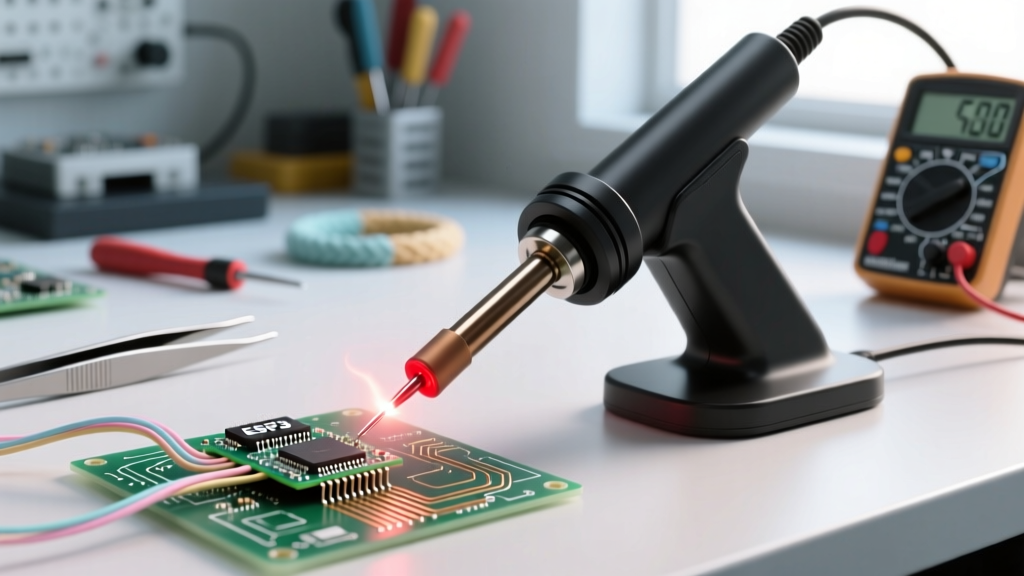
In the modern electronics repair and prototyping landscape, the ability to seamlessly transition between through-hole soldering and surface-mount device (SMD) rework is non-negotiable. The soldering station heat gun combo—often referred to as a 2-in-1 rework station—has become the cornerstone of the professional workbench. As we move through 2026, the market has bifurcated sharply between IoT-enabled professional units and highly capable budget alternatives. Choosing the right setup requires looking past wattage ratings and understanding airflow dynamics, thermal recovery algorithms, and handpiece ergonomics.
Whether you are reballing a 25x25mm BGA chip on a motherboard or simply swapping a 0603 resistor on a custom PCB, your tool's thermal stability dictates your success rate. In this comprehensive comparison, we dissect the top-tier and budget-friendly 2-in-1 stations available today, providing actionable data to help you optimize your rework workflow.
The Anatomy of a Rework Station: Pumps and Heating Elements
Before diving into specific models, it is critical to understand the mechanical differences that separate a $60 hobbyist station from a $600 professional rig. The core differentiator is the air pump mechanism.
Diaphragm vs. Brushless Air Pumps
- Diaphragm Pumps (Budget/Mid-Range): These rely on a vibrating electromagnetic diaphragm to push air. They are inexpensive but generate noticeable vibration and acoustic noise. More importantly, their airflow can pulse slightly at lower RPMs, which can disturb lightweight 0402 components during reflow.
- Brushless Motor Pumps (Professional): Found in high-end stations, these use a turbine-style brushless motor. They provide a perfectly laminar, pulse-free airflow. Because the motor is often housed in the base unit rather than the handpiece, the hot air gun itself remains exceptionally light, reducing wrist fatigue during prolonged micro-soldering sessions.
Thermal Recovery and Zero-Crossing
Adhering to IPC rework standards requires precise thermal profiling to prevent pad delamination or thermal shock to moisture-sensitive components. Premium stations utilize zero-voltage switching and high-frequency induction heating to maintain tip and nozzle temperatures within ±2°C, even when absorbing the massive thermal mass of a multi-layer ground plane.
2026 Tool Comparison Matrix: Top Rework Stations
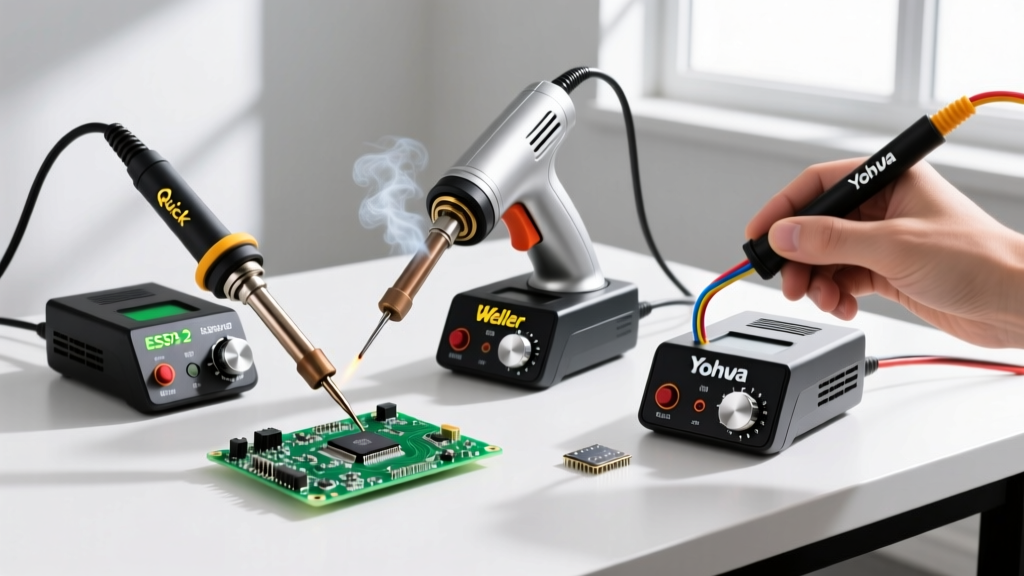
| Feature | Quick 861DW | Weller WXD 2020 | Yihua 8786D |
|---|---|---|---|
| Target Audience | Professional / Advanced | Enterprise / Lab | Hobbyist / Beginner |
| Avg. Price (2026) | $260 - $290 | $550 - $620 | $65 - $80 |
| Hot Air Wattage | 1000W | 200W | 750W |
| Iron Wattage | N/A (Sold separately or as 861DW+FX951) | 150W | 60W |
| Max Airflow | 120 L/min | 15 L/min (Focused) | 120 L/min (Nominal) |
| Pump Type | Brushless (Base) | Brushless (Base) | Diaphragm (Base) |
| Smart Features | Auto-Sleep, 3 Presets | IoT Connect, USB Logging | None |
Deep Dive: Quick 861DW vs. Weller WXD 2020
Airflow Stability and Ergonomics
The Quick 861DW remains the undisputed champion of the mid-to-high-tier professional market in 2026. Its defining feature is the brushless fan housed in the main unit, delivering air through a flexible silicone hose to a remarkably lightweight handpiece. This setup allows for a true 120 L/min airflow without the hand tremor induced by heavier, motor-in-handle designs. The digital interface allows users to store three distinct temperature/airflow profiles, which is invaluable when switching between delicate FPC connectors and heavy power inductors.
The Weller WXD 2020, conversely, is engineered for the enterprise laboratory. While its hot air volume is lower and more focused, its integration with the Weller Connect IoT ecosystem allows lab managers to track usage metrics, enforce temperature lockouts for junior technicians, and log thermal profiles for aerospace or medical device compliance. Furthermore, the WXD 2020's soldering iron utilizes a 150W high-performance heater that achieves a 350°C setpoint from cold in under 9 seconds.
Edge Case: Multi-Layer Ceramic Capacitors (MLCCs)
When reworking large MLCCs (e.g., 1210 or 2220 packages), thermal shock can cause micro-cracking, leading to latent field failures. The Weller WXD 2020 excels here due to its proprietary zero-crossing solid-state relays, which ramp power delivery smoothly rather than in harsh on/off bursts. If you are working on high-reliability automotive or medical PCBs, the Weller's precision justifies its $600 price tag.
The Budget Reality: When to Choose the Yihua 8786D
The Yihua 8786D dominates the entry-level market. For under $80, it provides a functional soldering iron and a hot air gun that can successfully reflow QFPs and SOICs. However, professionals must be aware of its inherent limitations and specific failure modes.
Common Failure Mode Alert: In budget diaphragm stations like the Yihua 8786D, a frequent point of failure occurs when the magnetic reed switch inside the handpiece cradle misaligns. The station fails to register that the gun is holstered, leaving the heating element energized at 350°C with zero airflow. This rapidly melts the internal ceramic core and ruins the heating element. Always manually power off the hot air channel when not in active use on budget units.
Despite this, for hobbyists repairing vintage audio gear or building weekend Arduino projects, the Yihua 8786D offers an unbeatable return on investment. Just ensure you upgrade the stock sponge to a brass wire tip cleaner to prolong the life of the included 900M-series tips.
Critical Edge Cases: BGA Rework and Fine-Pitch SMD
Removing a Ball Grid Array (BGA) component requires a strict thermal profile to avoid warping the silicon die or lifting BGA pads. As highlighted in NASA's electronic workmanship guidelines, localized overheating is a primary cause of catastrophic PCB damage. Here is a proven, actionable BGA removal profile using the Quick 861DW:
- Preheat: Use a dedicated IR PCB preheater to bring the entire board to 130°C. Never rely solely on the hot air gun for bottom-side preheating on boards thicker than 1.6mm.
- Flux Application: Inject a high-tack, no-clean flux (e.g., Amtech NC-559-V2-TF) under the BGA perimeter using a fine-gauge syringe.
- Station Setup: Set the Quick 861DW to 370°C with an airflow of 45 L/min. Attach a square nozzle that matches the BGA footprint within 2mm.
- Execution: Hold the nozzle 15mm above the component. Move in a continuous, tight figure-eight pattern. After 45-60 seconds, gently nudge the corner of the IC with fine titanium tweezers. When the component 'dances' or shifts freely, the solder spheres have fully liquefied. Lift straight up.
Safety, Fume Extraction, and ESD Compliance
A soldering station heat gun combo is only as safe as its environment. Rosin-based and synthetic fluxes release volatile organic compounds (VOCs) and aldehydes when heated. Always pair your station with an active HEPA/Carbon fume extractor. As emphasized by OSHA hazard guidelines, prolonged exposure to soldering fumes can lead to occupational asthma and respiratory sensitization.
Additionally, ensure your chosen station is verified ESD-safe. The Quick 861DW and Weller WXD 2020 feature true earth-grounding through the power cord's third prong, dissipating static charges from the handpiece and air hose. Budget stations often use ungrounded 2-prong plugs, requiring you to manually ground the workpiece via a separate wrist strap and mat setup to prevent electrostatic discharge from destroying sensitive MOSFETs and microcontrollers.
Final Verdict and Purchasing Framework
Selecting the right soldering station heat gun setup depends entirely on your daily throughput and component density. Use this decision framework to finalize your 2026 purchase:
- Choose the Weller WXD 2020 if: You operate in a regulated enterprise environment (aerospace, medical), require IoT usage logging, and frequently work with highly sensitive MLCCs and micro-BGAs.
- Choose the Quick 861DW if: You are a professional repair technician, mobile device refurbisher, or advanced prototyper who needs heavy-duty airflow, rapid thermal recovery, and an ergonomic handpiece without the enterprise price tag.
- Choose the Yihua 8786D if: You are a student, hobbyist, or occasional DIYer working primarily with through-hole components, large SMD passives, and basic SOIC/QFP ICs on a strict budget.
Investing in the correct thermal tools not only accelerates your workflow but fundamentally protects the integrity of the electronic assemblies you build and repair.