
The Short Answer: Thermal Mass vs. Conductivity
When technicians and hobbyists ask, 'can you solder silver with a soldering iron?', the answer requires a strict distinction between hard silver soldering (brazing) and soft silver-bearing soldering. If you are attempting to join sterling silver jewelry using hard silver solder (which melts between 650°C and 800°C), a standard electronics soldering iron will fail completely; you need an oxy-acetylene or butane torch. However, if you are working with silver-plated RF shields, thick silver-wire windings, or electronics requiring silver-bearing soft solders like SAC305 (Sn96.5/Ag3.0/Cu0.5, melting at 217°C), the answer is yes, but only with high-wattage, temperature-controlled stations.
Silver possesses the highest thermal conductivity of any metal, measured at roughly 429 W/(m·K) according to Los Alamos National Laboratory. This means silver pulls heat away from your soldering iron tip significantly faster than copper or brass. If your iron lacks the thermal recovery rate to compensate for this massive heat sink, you will immediately encounter cold joints, flux burn-off, and tip degradation.
Troubleshooting the 3 Most Common Silver Soldering Defects
When attempting to soft-solder silver components in an electronics or DIY context, the failure modes are distinct. Here is how to troubleshoot the most frequent issues encountered on the workbench.
1. The 'Cold Joint' Thermal Sink Effect
The Symptom: The solder balls up on the iron tip and refuses to wet the silver pad or wire, resulting in a dull, gray, lumpy joint that fractures under mild mechanical stress.
The Root Cause: Your iron's wattage and thermal mass are insufficient. A standard 40W or 60W iron drops below the solder's liquidus temperature the moment it touches a thick silver-plated ground plane or 14 AWG silver wire. The flux activates and burns off before the base metal reaches 217°C.
The Fix: Upgrade to a station with a high-thermal-capacity cartridge system. You need a minimum of 70W to 100W of available power with active thermal feedback. Additionally, apply a liquid no-clean or high-activity rosin flux (like Amtech NC-559) directly to the silver before applying heat, and use a chisel tip (minimum 3.2mm width) to maximize surface area contact.
2. Rapid Tip Pitting and Iron Leaching
The Symptom: After just a few sessions of soldering silver-bearing alloys or bare silver wire, the iron-plated working surface of your tip develops micro-craters, turns black, and refuses to accept new solder.
The Root Cause: Silver is highly aggressive toward the tin and lead in solder alloys, and it will actively leach the protective iron plating off standard copper-core tips. Furthermore, silver-bearing solders accelerate this dissolution process at high temperatures. As noted in tip maintenance guidelines by major manufacturers like Weller Tools, leaving aggressive alloys on a tip during standby causes catastrophic oxidation and pitting.
The Fix: Never leave silver-bearing solder on the tip when placing the iron back in its holder. Always 'tin' the tip with a standard, cheap 63/37 leaded solder (if your process allows) or a high-reliability Sn99.3/Cu0.7 alloy before powering down. If pitting has already occurred, the tip is permanently damaged and must be replaced; do not file or sand the tip, as this removes the microscopic iron plating layer.
3. Premature Flux Carbonization
The Symptom: A hard, black, glassy crust forms around the joint, and the solder refuses to flow into the silver joint's capillary gaps.
The Root Cause: Because silver requires prolonged heat application due to its thermal conductivity, standard rosin-based fluxes reach their carbonization point (burning into an inactive, acidic crust) before the silver mass reaches thermal equilibrium.
The Fix: Switch to a high-temperature, high-solids tacky flux designed for jewelry or heavy-duty electronics, or use a two-step process: pre-tin the silver component with a dedicated silver-soldering paste flux (available from specialized suppliers like Rio Grande), wash it, and then perform the final sweat-soldering joint with standard electronics flux.
Equipment Matrix: Matching the Iron to the Silver Task
Not all soldering stations can handle the thermal demands of silver. Below is a 2026 troubleshooting matrix comparing common station architectures for silver-bearing soft soldering.
| Station Type / Model | Wattage & Tech | Thermal Recovery | Estimated Cost (2026) | Verdict for Silver |
|---|---|---|---|---|
| Standard Dial Iron (e.g., Weller WP35) | 35W / Ceramic Heater | Poor (High drop-off) | $35 - $45 | Fail: Will cause cold joints on anything thicker than 22 AWG. |
| Smart PD-C Iron (e.g., Pinecil V2) | 65W-88W / DC-PD Active | Good (Fast sensor loop) | $26 - $35 | Pass (Light Duty): Excellent for silver-plated PCB pads and thin wires. |
| High-End Cartridge (e.g., Hakko FX-951) | 70W / Induction Cartridge | Exceptional (Curie-point) | $260 - $290 | Pass (Heavy Duty): Industry standard for thick silver wire and RF shielding. |
| Micro-Torch (e.g., Bernzomatic TS8000) | N/A / MAPP Gas | Infinite (Bulk heating) | $70 - $90 | Required: For hard silver brazing and heavy sterling silver jewelry. |
The 2026 Maintenance Protocol for Silver Soldering Tips
To maintain your equipment when working with silver and silver-bearing alloys, adopt this strict troubleshooting and maintenance workflow to extend tip life from weeks to months:
- Pre-Tinning is Mandatory: Before the iron touches the silver workpiece, ensure the tip is heavily coated with fresh solder to act as a thermal bridge.
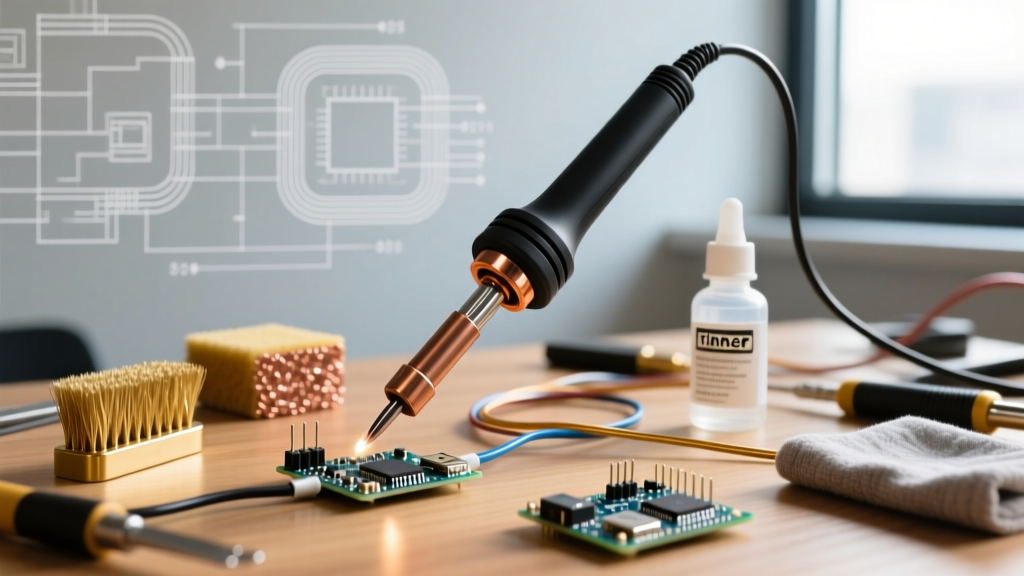
- Use Cellulose Sponges, Not Brass Wool: Brass wool can trap microscopic silver particles and silver-bearing solder dross. When you wipe the tip on brass wool, you may inadvertently scratch the iron plating with trapped silver shards. Use a high-quality, damp cellulose sponge instead.
- The 'Sacrificial Solder' Trick: If you must pause your work for more than 3 minutes, purge the silver-bearing alloy from the tip by melting a large amount of cheap 60/40 or 63/37 tin-lead solder onto the tip, wiping it, and leaving the tin-lead on the tip as a protective sacrificial layer.
- Monitor Tip Temperature: Do not exceed 350°C (662°F) when using SAC305 on silver. Pushing the station to 400°C to compensate for thermal sinking will not heat the silver faster; it will only oxidize the tip and burn the flux instantly. Instead, use a larger tip profile (like a bevel or wide chisel) to transfer more thermal mass.
Frequently Asked Questions
Can I use standard electronics solder on sterling silver jewelry?
You can physically melt standard Sn63/Pb37 or SAC305 electronics solder onto sterling silver, but it is highly discouraged for jewelry. The joint will be structurally weak, visually mismatched, and the lead or copper in the alloy can cause skin discoloration or allergic reactions. Jewelry requires hard silver solder (brazing) applied with a torch.
Why does my soldering iron tip turn black instantly when touching silver wire?
This is rapid oxidation caused by a lack of flux and insufficient thermal transfer. The silver pulls the heat down, the tip temperature drops, the station's sensor panics and overdrives the heater, and the exposed iron plating oxidizes in the ambient air. Always apply a generous amount of liquid or tacky flux to the silver wire before applying the iron.
Is silver solder the same as silver-bearing solder?
No. In electronics, 'silver-bearing solder' refers to soft solders like SAC305 that contain 1% to 5% silver to improve joint strength and prevent silver leaching from component terminations. 'Silver solder' in metalworking refers to hard brazing alloys that melt above 600°C and require a torch.