
The Enduring Legacy of the Hakko FX-888D Soldering Station
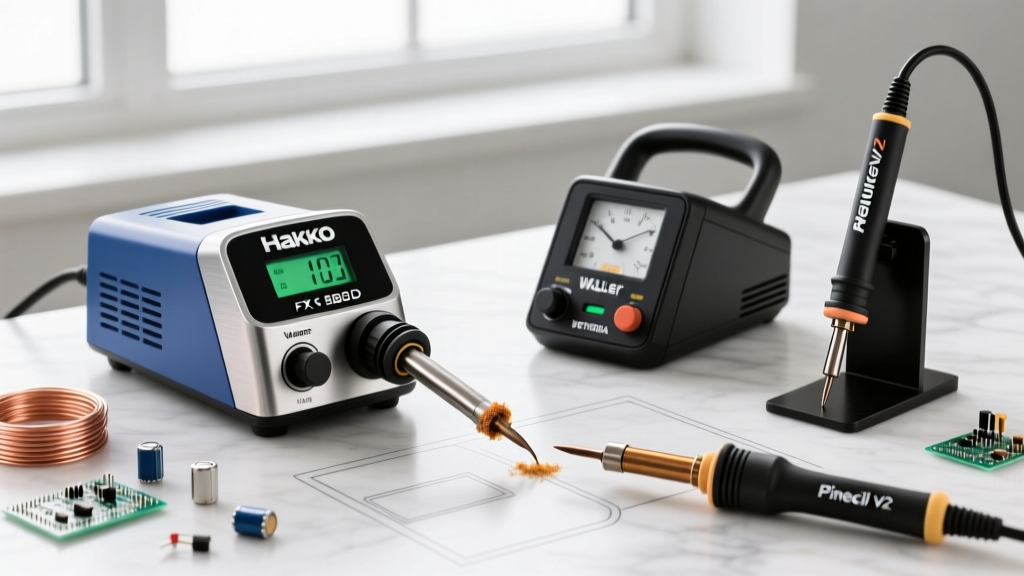
Even as smart, portable soldering irons flood the market in 2026, the Hakko FX-888D soldering station remains a dominant force on professional and hobbyist workbenches. Originally released as the digital successor to the legendary analog FX-888, the FX-888D utilizes a 70-watt ceramic heater and a digital PID temperature controller to deliver rapid thermal recovery. But how does this traditional benchtop unit stack up against modern competitors like the Weller WE1010NA and the RISC-V powered Pinecil V2?
In this comprehensive tool comparison, we dissect the thermal dynamics, tip ecosystems, failure modes, and real-world pricing of these three distinct soldering platforms to help you make an informed purchasing decision.
Spec-by-Spec: Benchtop vs. Smart Portable Matrix
Before diving into the nuances of thermal mass and ground plane handling, let us look at the hard data. The following comparison matrix highlights the core specifications and current 2026 market pricing for each unit.
| Feature | Hakko FX-888D | Weller WE1010NA | Pinecil V2 |
|---|---|---|---|
| Power Output | 70W (Dedicated Transformer) | 70W (Internal PSU) | 65W (Requires USB-C PD/QC) |
| Temperature Range | 200°C - 480°C (390°F - 896°F) | 200°C - 450°C (392°F - 842°F) | Room Temp - 450°C |
| Native Tip Series | Hakko T18 Series | Weller ET Series | Pine64 Short Tips (TS100 compat.) |
| Heat-Up Time (to 350°C) | ~20 Seconds | ~25 Seconds | ~12 Seconds (with 65W PD) |
| Average 2026 Price | $115 - $130 USD | $100 - $115 USD | $28 - $35 USD (Excludes PSU) |
| ESD Safe Design | Yes (with proper grounding) | Yes | No (Floating ground via USB-C) |
Thermal Recovery and Ground Plane Performance
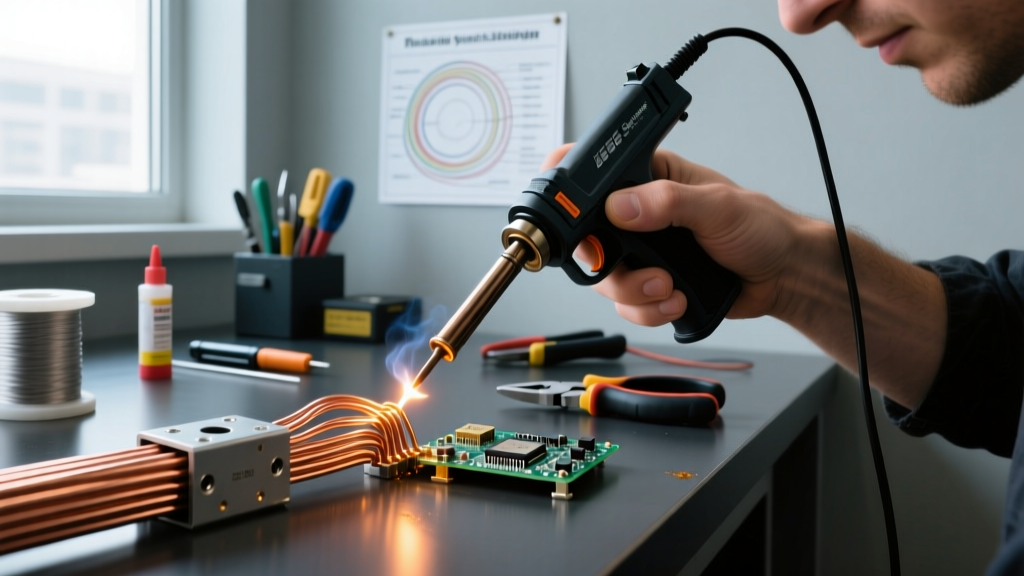
The true test of any soldering station is not how fast it heats up in free air, but how well it maintains temperature when a cold copper mass is introduced. When soldering a 12-gauge wire to a heavy ground plane on a multi-layer PCB, the soldering tip must transfer joules of heat rapidly without the PID controller panicking and overshooting.
The T18 Tip Ecosystem Advantage
The Hakko FX-888D utilizes the T18 tip series. These tips feature a thick copper core with a specialized iron plating. The thermal mass of the T18-D24 (a 2.4mm chisel tip) is significantly higher than the Weller ET series equivalents. When dragging solder across a row of 0805 SMD pads or tackling thick through-hole connectors, the FX-888D's 70W transformer pushes current to the ceramic heater, and the T18 tip's thermal inertia prevents the joint temperature from dropping below the 217°C melting point of SAC305 lead-free solder.
Conversely, the Weller WE1010NA uses ET tips. While ET tips are generally cheaper (averaging $4 to $6 per tip compared to Hakko's $8 to $11), they possess a slightly lower thermal mass. The WE1010NA is phenomenal for delicate micro-soldering and standard through-hole work, but it can stall slightly longer than the Hakko when confronted with massive copper pours.
The Pinecil V2: Speed vs. Sustained Mass
The Pinecil V2 is a marvel of modern engineering, utilizing a RISC-V processor and a direct-drive DC-to-DC buck converter to heat the tip in under 12 seconds. However, because it relies on the tip itself acting as both the heater and the sensor (via resistance calculations), it lacks the heavy thermal mass of a dedicated ceramic heater encased in a copper sleeve. For quick repairs and field work, the Pinecil V2 is unmatched. For continuous production work or heavy plumbing-style electrical connections, the Hakko FX-888D remains the superior choice.
Real-World Failure Modes: Oxidation and Thermal Shock
No soldering station is immune to user error, but the FX-888D has specific edge cases that technicians must manage to ensure longevity.
Pro-Tip: The 'Black Sleeve' Corrosion Issue
The most common failure mode of the Hakko FX-888D is the oxidation of the T18 tip's iron sleeve. If the station is left at 400°C+ for extended periods without fresh solder tinning, the iron plating will oxidize, turn black, and eventually pit. Once pitted, the tip will no longer wet, rendering it useless. Always engage the FX-888D's programmable sleep mode (set to 5 minutes at 200°C) and heavily tin the tip with 63/37 rosin-core solder before powering down.
Another critical failure mode is thermal shock. Many hobbyists use a damp cellulose sponge to clean their tips. Plunging a 380°C T18 tip into a wet sponge causes rapid localized cooling, which can micro-fracture the iron plating over time. In 2026, the industry standard is to use a dry brass wire sponge (like the Hakko 599B), which scrapes away oxidation without dropping the tip's core temperature.
ESD Safety and Workmanship Compliance
When working on sensitive MOSFETs, RF modules, or bare microcontrollers, Electrostatic Discharge (ESD) protection is non-negotiable. The Hakko FX-888D is designed with an ESD-safe architecture, provided the station's grounding lug is properly connected to a verified earth ground. According to the ESD Association fundamentals, ensuring that the soldering iron tip shares the same equipotential ground as the workbench mat and the operator's wrist strap is critical to preventing catastrophic gate oxide breakdown in sensitive ICs.
Furthermore, achieving compliant solder joints requires precise thermal control. The NASA Workmanship Standards dictate specific wetting angles and fillet shapes for high-reliability electronics. The digital PID loop of the FX-888D allows operators to lock in a precise temperature (e.g., 340°C for leaded, 360°C for lead-free) and password-protect the interface, ensuring that junior technicians do not accidentally crank the heat to 450°C and delaminate the PCB pads or violate IPC J-STD-001 workmanship requirements.
Final Verdict for 2026
Choosing the right tool depends entirely on your specific workflow:
- Buy the Hakko FX-888D if: You need a reliable, ESD-safe benchtop workhorse for daily through-hole and SMD work, heavy wire tinning, and you value the massive thermal mass of the T18 tip ecosystem. It is the gold standard for a reason.
- Buy the Weller WE1010NA if: You are on a slightly tighter budget, prefer a simpler single-button interface, and primarily work on standard PCB assemblies where extreme ground-plane thermal recovery is rarely needed.
- Buy the Pinecil V2 if: You are a field technician, a drone repair specialist, or a hobbyist with limited bench space who needs a highly portable, USB-C powered smart iron that can run off a laptop charger or power bank.
Ultimately, the Hakko FX-888D soldering station continues to justify its $115+ price tag in 2026 through sheer durability, tip availability, and uncompromising thermal stability.