
Understanding the Core Distinction: Precision vs. Brute Force
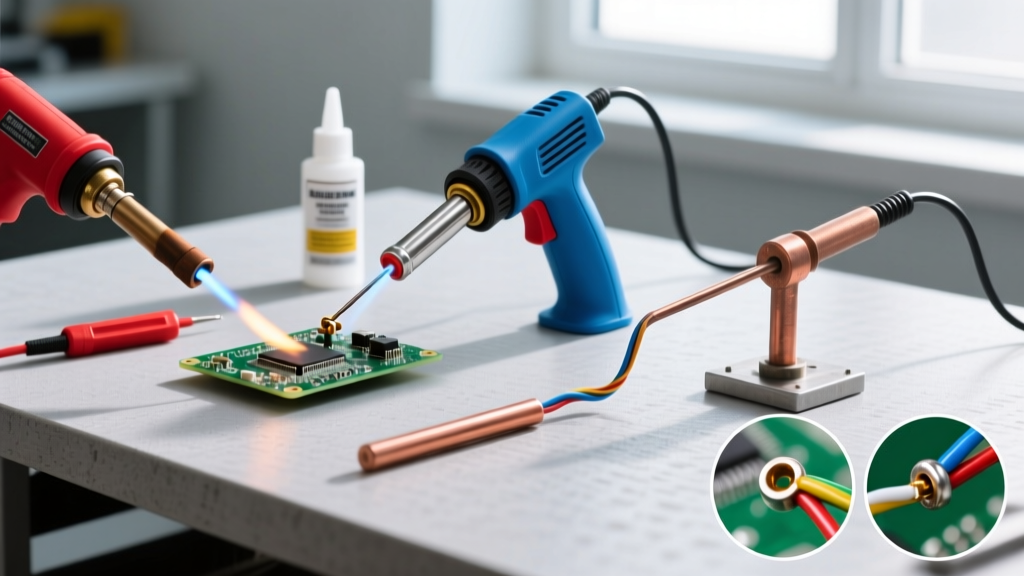
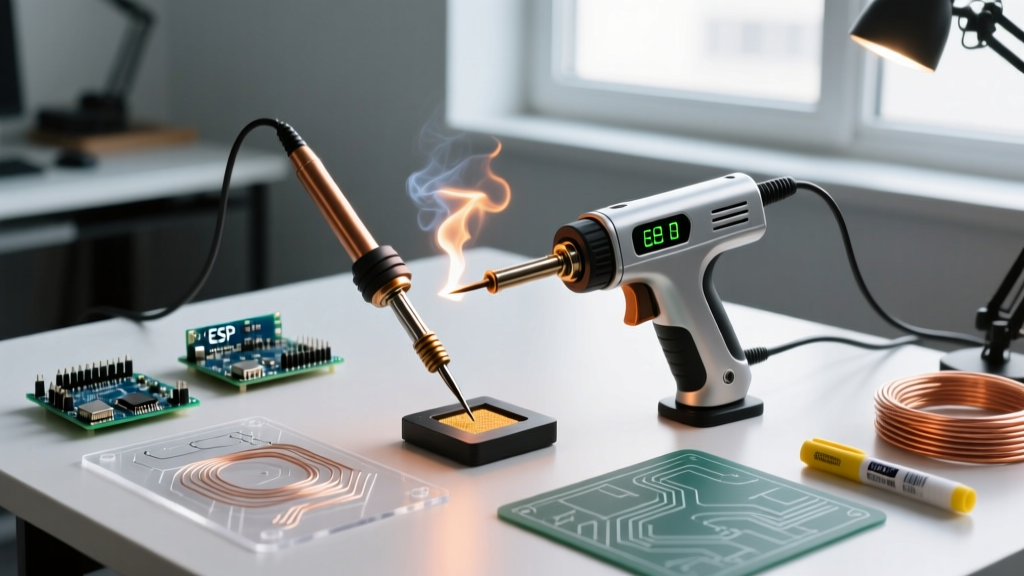
If you have ever stood in the tool aisle or browsed online marketplaces asking, what's the difference between a soldering iron and gun, you are not alone. While both tools melt solder to join metals, their internal engineering, thermal delivery methods, and ideal use cases are fundamentally different. Choosing the wrong tool can result in destroyed printed circuit boards (PCBs), melted wire insulation, or cold solder joints that fail under vibration.
In 2026, the market is more segmented than ever. Smart USB-C irons have revolutionized the hobbyist space, while heavy-duty transformer guns remain the undisputed kings of automotive and stained-glass work. This comprehensive buying guide breaks down the physics, the failure modes, and the specific product recommendations you need to build the right kit for your workbench.
The Soldering Iron: Continuous Heat and Pinpoint Precision
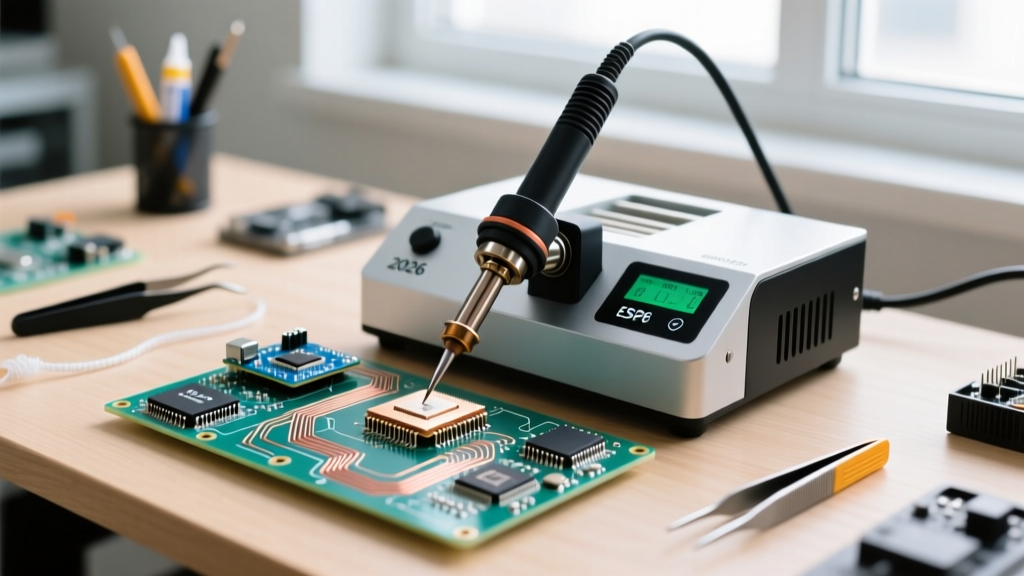
A traditional soldering iron (or soldering station) relies on a resistive heating element. Electricity passes through a ceramic or nichrome core, generating continuous heat that transfers via conduction to a detachable copper or iron-plated tip. The defining characteristic of a soldering iron is its focus on temperature stability and precision.
How Modern Irons Manage Heat
Premium 2026 models utilize closed-loop PID (Proportional-Integral-Derivative) controllers. A thermocouple embedded directly in the tip feeds real-time temperature data back to the station. If the tip touches a ground plane on a PCB and loses heat, the controller instantly spikes the power to compensate, maintaining a strict ±5°F tolerance.
Top 2026 Soldering Iron Recommendations
- Hakko FX-888D (Approx. $115): The undisputed workhorse for professional electronics repair. It uses the T18 tip series and offers rapid thermal recovery. It is ESD (Electrostatic Discharge) safe, which is non-negotiable when working with bare microcontrollers.
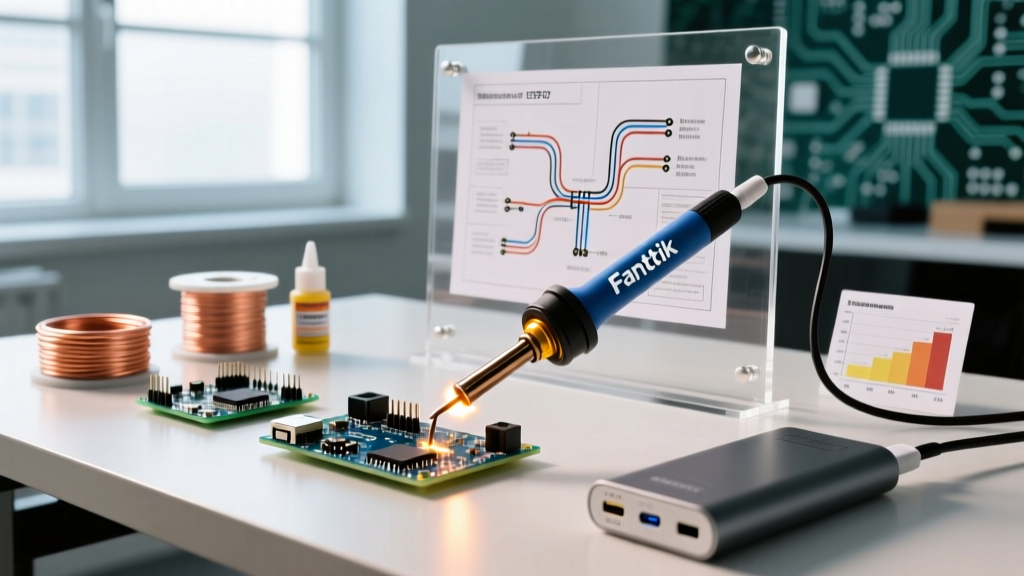
- Pinecil V2 by Pine64 (Approx. $55): A game-changer for mobile technicians. Powered by USB-C PD (up to 65W) or DC barrel jacks, it runs an open-source RISC-V chip with instant heat-up times (under 8 seconds to 320°C).
- Weller WLC100 (Approx. $60): A solid analog entry-level station for hobbyists who need more thermal mass than a cheap wall-wart iron but cannot justify a digital PID station.
Common Failure Modes
The most frequent failure in soldering irons is tip oxidation. Leaving a lead-free iron set to 400°C without applying a protective coat of solder causes the iron plating to pit and corrode, rendering the tip useless. Thermal runaway is another risk in sub-$20 unregulated irons, where the lack of a thermostat allows the tip to exceed 500°C, destroying internal heating elements.
The Soldering Gun: Transformer-Powered Brute Force
When you need to know what's the difference between a soldering iron and gun, the gun's internal architecture is the biggest differentiator. A soldering gun does not use a separate heating element. Instead, it houses a heavy step-down transformer.
The Physics of the Soldering Gun
When you pull the trigger, mains voltage (120V/240V) enters the primary winding of the transformer. The secondary winding consists of a single, thick loop of copper—which is the soldering tip itself. This steps the voltage down to a fraction of a volt while amping the current up to hundreds of amps. The electrical resistance of the copper tip causes it to glow red-hot in seconds. When you release the trigger, the heat stops almost instantly.
Top 2026 Soldering Gun Recommendations
- Weller D550PK (Approx. $130): A legendary 260W/200W dual-trigger gun. It generates massive thermal output capable of soldering 8 AWG battery cables and thick copper roofing flashing without breaking a sweat.
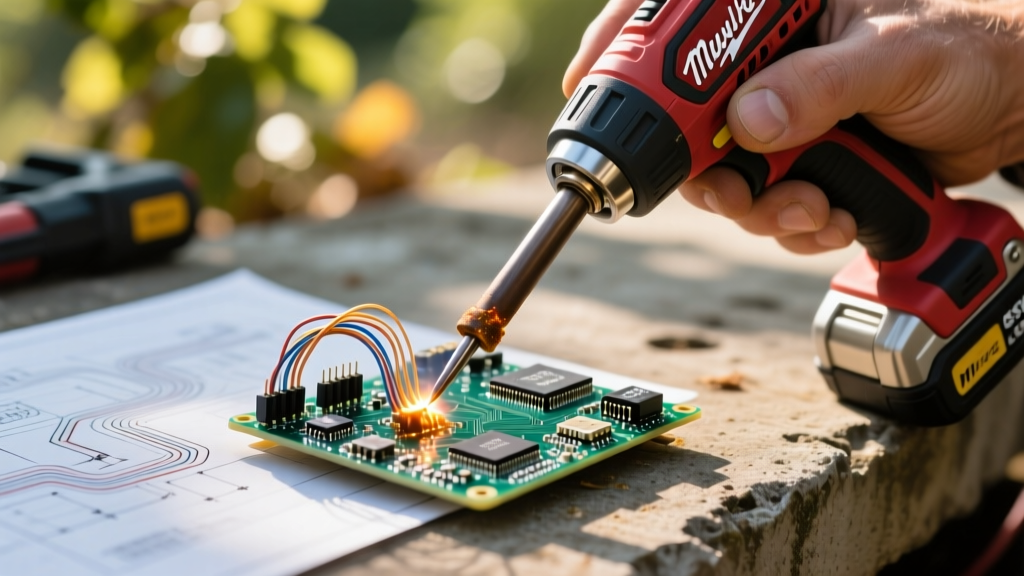
- Milwaukee M18 Cordless Soldering Gun (Approx. $150 bare tool): Ideal for field technicians and automotive electricians who need high thermal mass without being tethered to an extension cord.
The Hidden Danger: Magnetic Interference
Because hundreds of amps surge through the tip loop, a soldering gun generates a massive localized electromagnetic field. You must never use a soldering gun near sensitive Hall-effect sensors, unshielded audio components, or magnetic storage media. The magnetic pulse can instantly erase data or permanently magnetize delicate steel components inside a device.
Head-to-Head Comparison Matrix
| Feature | Soldering Iron (Station) | Soldering Gun |
|---|---|---|
| Heating Mechanism | Resistive element (conduction) | Step-down transformer (induction/resistance) |
| Typical Wattage | 15W to 80W | 100W to 260W+ |
| Heat-Up Time | 15 to 45 seconds | 2 to 5 seconds |
| Weight & Ergonomics | Lightweight (pen-like grip) | Heavy (2-4 lbs, pistol grip) |
| ESD Safety | Yes (grounded tips available) | No (high EMF and stray voltage) |
| Ideal Wire Gauge | 30 AWG to 16 AWG | 14 AWG to 4/0 AWG |
| Primary Use Case | PCBs, micro-soldering, delicate wires | Automotive, plumbing, stained glass, heavy lugs |
The Buying Framework: Which Tool Do You Actually Need?
To make the right purchasing decision, evaluate the thermal mass of your typical projects. Thermal mass dictates how quickly a workpiece draws heat away from your tool.
Scenario A: The Electronics Hobbyist & Repair Tech
If you are soldering 0805 SMD components, repairing drone flight controllers, or wiring 22 AWG silicone leads to a breadboard, buy a soldering iron. Specifically, invest in a PID-controlled station like the Hakko FX-888D. According to the IPC Standards for Electronics Assembly, maintaining precise thermal profiles is critical to preventing thermal shock to ceramic capacitors and lifting delicate copper pads from FR4 fiberglass boards.
Scenario B: The Automotive, Marine, or Stained-Glass Artist
If you are soldering 10 AWG XT90 connectors for an electric skateboard, tinning thick marine battery lugs, or running copper foil beads on a Tiffany-style lamp, buy a soldering gun. A standard 60W iron will suffer from severe thermal droop when touching a heavy copper lug, resulting in a dull, grainy 'cold' solder joint that will eventually crack under mechanical vibration.
Pro-Tip for High-Mass Electronics: If you occasionally need to solder heavy 12 AWG wires but primarily work on PCBs, you do not necessarily need a gun. Modern smart irons like the Pinecil V2 or the TS101, when paired with a high-thermal-mass 'bevel' or 'chisel' tip (like the C4 or D24), can handle 12 AWG wire effectively if you use a high-flux paste and 63/37 leaded solder to lower the melting point.
Safety, Fumes, and Workbench Ergonomics
Regardless of whether you choose an iron or a gun, vaporized flux and microscopic metal particulates are a serious hazard. The American Conference of Governmental Industrial Hygienists (ACGIH) and OSHA's Lead Safety Guidelines strictly warn against inhaling rosin-based flux fumes, which are known respiratory sensitizers that can trigger occupational asthma.
Essential Safety Add-Ons
- Fume Extraction: Never rely on a desk fan to blow fumes into your face. Invest in a localized HEPA and activated-carbon fume extractor (e.g., Hakko FA-400 or a DIY PC-fan carbon filter) positioned 4 inches from the solder joint.
- Tip Grounding: When working on MOSFETs or CMOS logic gates, ensure your soldering iron station is properly grounded to the same earth ground as your ESD mat to prevent potential differences from frying silicon junctions.
- Trigger Fatigue: Soldering guns require a physical trigger pull. For stained-glass artists doing 4-hour continuous soldering sessions, the repetitive strain on the index finger can lead to tendonitis. Many professionals modify their guns with zip-ties or custom 3D-printed locking mechanisms to keep the trigger engaged, though this bypasses the tool's inherent safety switch.
Frequently Asked Questions (FAQ)
Can I use a soldering gun on a circuit board?
It is highly discouraged. The intense, unregulated heat and massive electromagnetic field generated by the tip can delaminate PCB layers, melt plastic connector housings, and induce voltage spikes that destroy sensitive integrated circuits. As noted in SparkFun's Through-Hole Soldering Guide, precision and ESD safety are paramount for electronics, making irons the only viable choice.
Why does my soldering gun tip turn black and stop melting solder?
Soldering gun tips are made of bare copper, unlike iron-plated soldering iron tips. Bare copper dissolves into molten solder (a process called tinning erosion) and oxidizes rapidly in the presence of high heat and flux acids. You must regularly file the tip of a soldering gun with a brass wire brush or a fine metal file to expose fresh copper, then immediately re-tin it to prevent pitting.
Are cordless soldering guns worth the premium?
For field technicians working in tight automotive engine bays or on remote telecom towers, cordless 18V/20V guns (like the Milwaukee M18) are invaluable. However, for bench work, they are unnecessarily heavy due to the battery pack, and the transformer draw depletes standard lithium-ion cells in under 15 minutes of continuous trigger time.
Final Verdict
Ultimately, what's the difference between a soldering iron and gun comes down to the physics of your project. The soldering iron is a scalpel—designed for continuous, regulated, ESD-safe precision on delicate electronics. The soldering gun is a sledgehammer—utilizing raw transformer current to conquer high-thermal-mass joints in automotive, marine, and artistic applications. Assess your wire gauges, respect the magnetic field of the gun, and invest in proper fume extraction to ensure your 2026 workbench is both capable and safe.