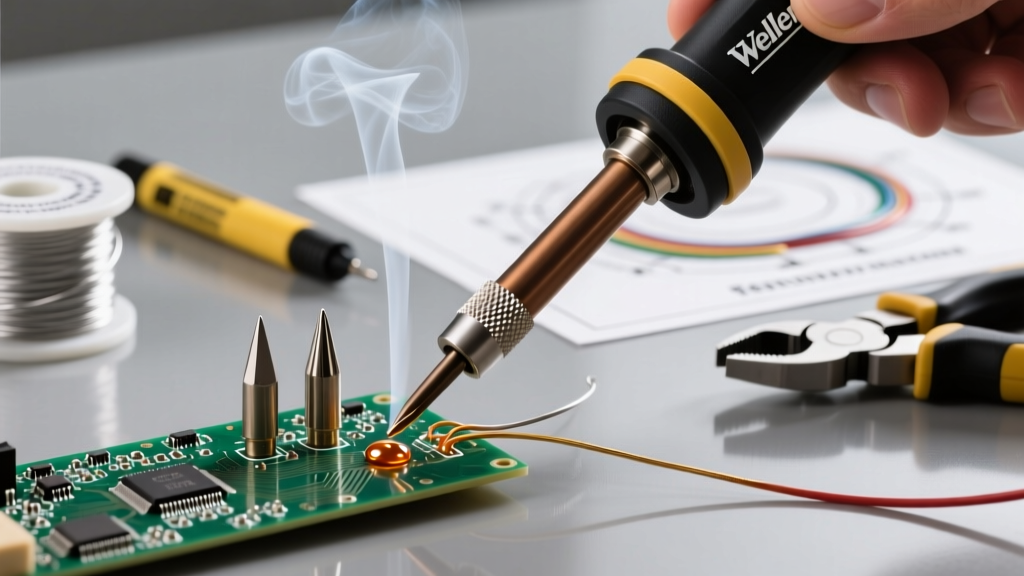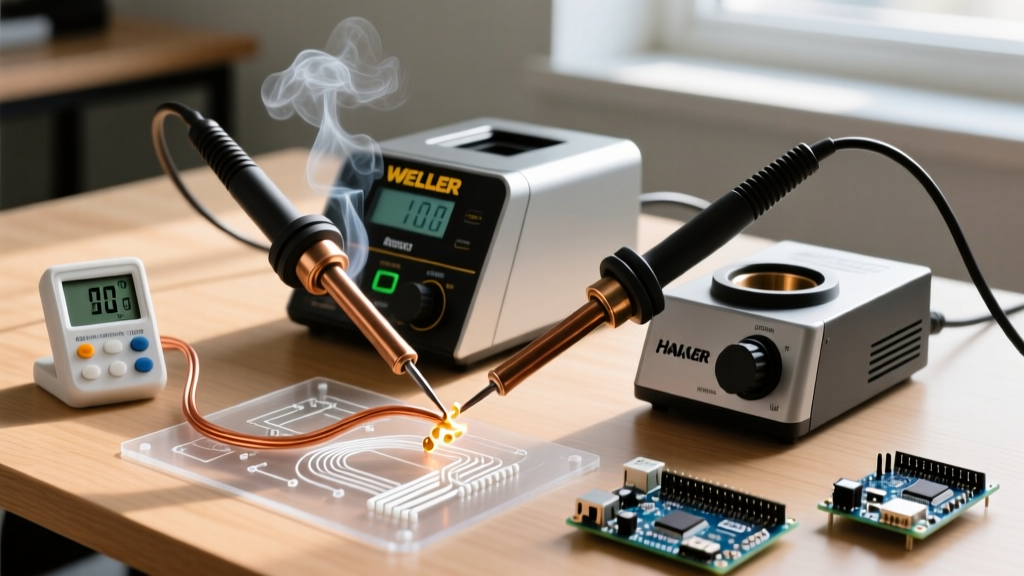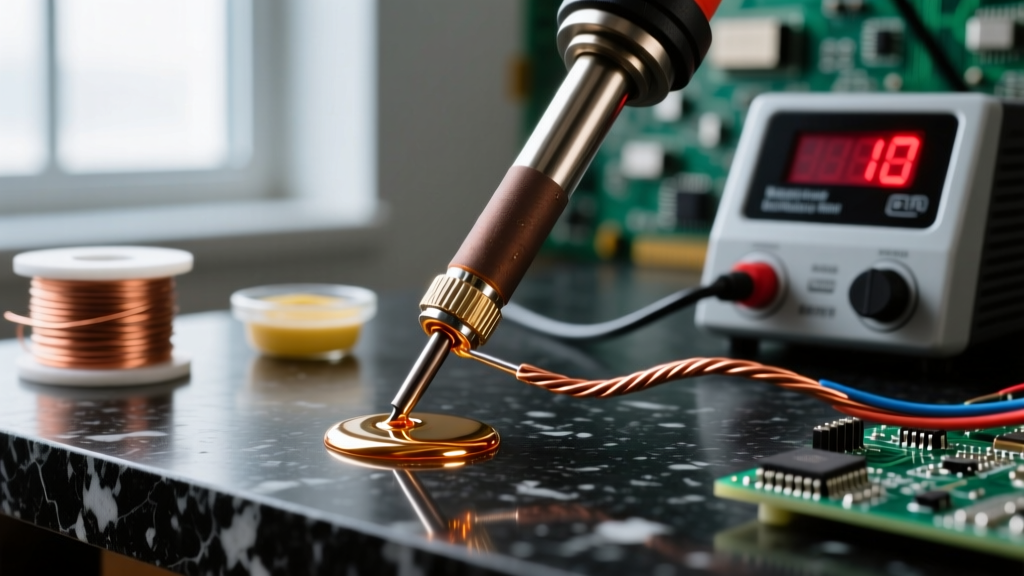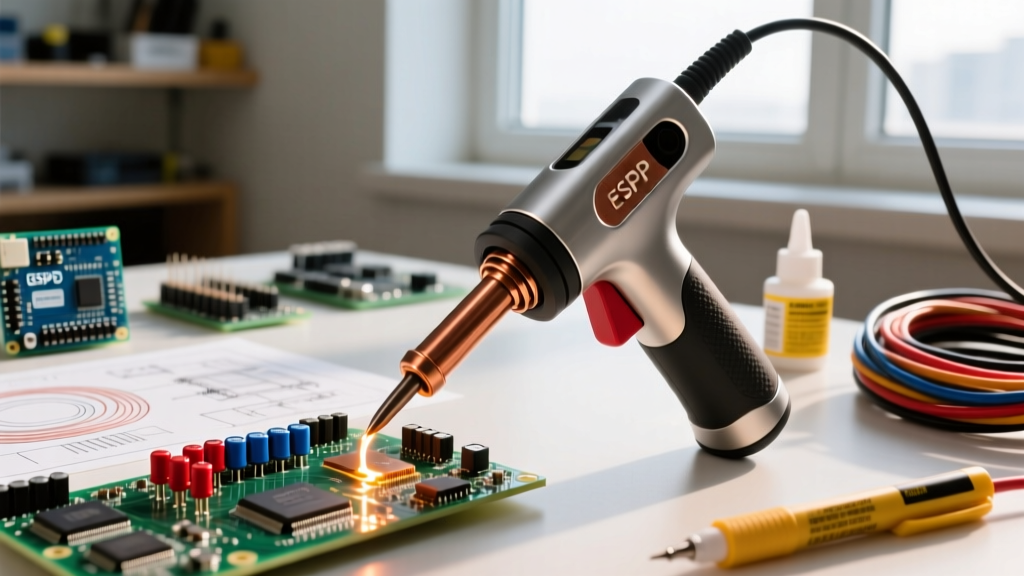

The Core Physics: Why Choose a Soldering Gun?
Before addressing how do you use a soldering gun, it is critical to understand what separates a gun from a standard pencil iron. While modern soldering stations (like the Hakko FX-888D) use PWM-controlled ceramic heating elements to maintain a steady temperature, a traditional soldering gun relies on a step-down transformer. When you pull the trigger, mains voltage is converted into a massive secondary current—often exceeding 250 amps at less than 1 volt. This immense current passes directly through the thick copper tip, heating it to 800°F (426°C) in roughly three seconds via electrical resistance.
This physics profile makes soldering guns the undisputed kings of high-thermal-mass joints. If you are soldering 8 AWG to 2/0 AWG battery cables, automotive harnesses, or heavy-duty solar panel lugs, a 65W pencil iron will simply wick heat away into the copper wire, resulting in a cold, crystallized joint. A 150W+ soldering gun overwhelms the thermal mass, ensuring proper wetting and a reliable metallurgical bond.
Step-by-Step: How Do You Use a Soldering Gun Safely?
Using a transformer-based gun requires a different technique than a temperature-controlled station. The primary rule is trigger discipline. Because the tip heats up continuously while the trigger is depressed, leaving it on for more than 15 seconds will oxidize the copper tip and destroy its tinning.
- Prep the Joint: Strip your heavy-gauge wire and slide on your heat shrink tubing. Crimp the wire into the terminal lug using a proper ratcheting crimper. Solder is not a substitute for a mechanical crimp; it is a sealant and secondary bond.
- Apply Flux: Even if using rosin-core solder, apply a generous amount of tacky flux (like Amtech or Chip Quik) to the crimped lug. For heavy electrical work, always use rosin-based or no-clean flux. Never use plumbing acid flux on electrical connections, as the residual chlorides will cause galvanic corrosion and catastrophic failure over time.
- The 'Heat-and-Feed' Technique: Squeeze the trigger to full power. Press the pre-tinned tip of the gun against the metal lug, not the wire insulation. Count to three. The lug should be hot enough to melt solder instantly.
- Feed the Solder: Touch your 60/40 Sn/Pb or SAC305 lead-free solder wire to the joint, not the tip. Capillary action will draw the molten solder into the wire strands. For a 4 AWG lug, expect to feed 2 to 3 inches of 0.062-inch diameter solder.
- Release and Cool: Release the trigger immediately once the solder flows. Let the joint cool naturally for 10 seconds. Do not blow on it or move the wire, as this causes a disturbed joint (a severe defect under the IPC J-STD-001 standard).
Expert Safety Warning: Soldering generates particulate matter and volatile organic compounds (VOCs) from the flux core. According to CDC NIOSH guidelines, chronic exposure to rosin-based flux fumes can cause occupational asthma. Always use a localized fume extractor with a HEPA and activated carbon filter when working indoors.
2026 Soldering Gun Buying Matrix
The market has bifurcated into two distinct camps: legacy AC transformer guns and modern brushless lithium-ion cordless guns. Here is how the top models stack up for 2026.
| Model | Type | Wattage / Power | Heat-Up Time | Price (2026) | Best Use Case |
|---|---|---|---|---|---|
| Weller D550PK | AC Transformer | 120W / 170W Dual | ~4 Seconds | $79.00 | Shop bench, heavy lugs |
| Milwaukee M12 (2488-20) | Cordless Li-Ion | 90W Equivalent | ~8 Seconds | $149.00 | Field work, automotive |
| Weller 8200PK | AC Transformer | 100W / 140W Dual | ~6 Seconds | $55.00 | Budget DIY, occasional use |
Deep Dive: Top Picks Reviewed
1. Weller D550PK (The Professional Benchmark)
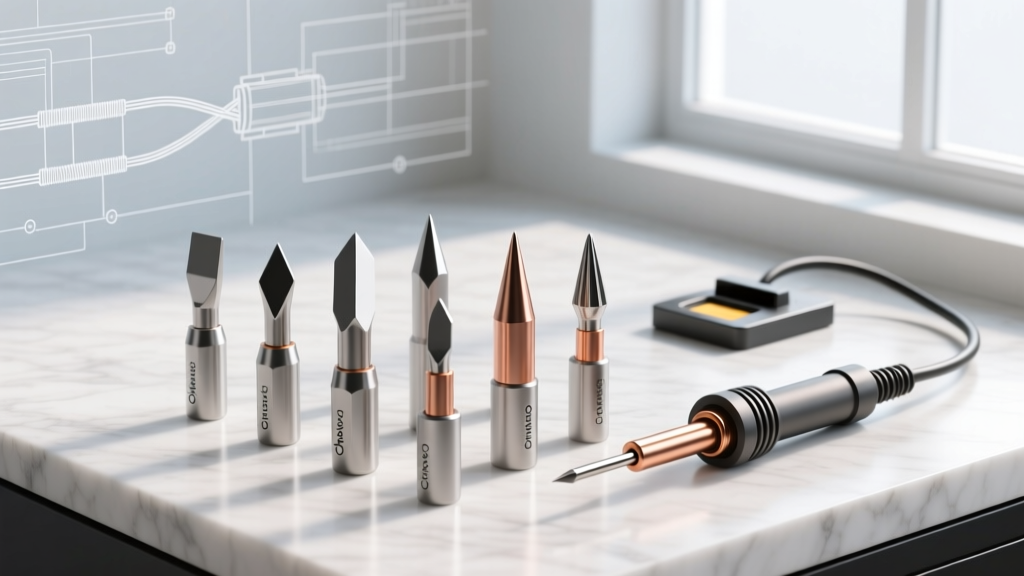
The Weller D550 is a legendary piece of American industrial equipment. Its dual-trigger design allows you to pull halfway for 120W (maintenance heat) and fully for 170W (rapid heating). The replaceable copper tips (such as the CT6F7 screwdriver tip) are incredibly cheap at around $6 each, making long-term maintenance negligible. The built-in LED work lights, powered by a tiny secondary coil, illuminate the joint perfectly. Verdict: The mandatory choice for stationary bench work involving 10 AWG to 2/0 AWG cables.
2. Milwaukee M12 Cordless Soldering Gun (2488-20)
Cordless soldering tools used to be a gimmick, but Milwaukee's M12 platform has solved the power delivery issue. Using a high-discharge lithium cell and an advanced PWM heating element (rather than a heavy transformer), it delivers the thermal punch of a 90W corded gun. It features a digital temperature readout and adjustable heat settings from 400°F to 750°F. Verdict: If you are an automotive technician or solar installer crawling through attics or under dashboards, the $149 price tag (bare tool) is easily justified by the lack of an extension cord.
Critical Edge Cases & Failure Modes
Using a soldering gun incorrectly will destroy your workpiece. Keep these edge cases in mind:
- The Magnetic Field Hazard: Because a transformer gun passes hundreds of amps through a single loop of wire at the tip, it generates a surprisingly strong localized alternating magnetic field. Never use a soldering gun near Hall-effect sensors, unshielded inductors, or sensitive SMD components. The magnetic pulse can wipe data or induce voltage spikes that fry silicon.
- Insulation Melt-Back: The sheer thermal transfer of a 170W gun can melt THHN or XLPE wire insulation deep inside the jacket if dwell time exceeds 8 seconds. Always use a heat sink (like a pair of locking hemostats) clamped between the joint and the wire insulation to absorb excess heat.
- Tip Pitting and Oxidation: Unlike iron-plated pencil tips, gun tips are bare copper. If you leave the trigger depressed without applying solder, the copper will oxidize, turning black and refusing to accept solder. Always 'tin' the tip with a blob of fresh solder immediately before releasing the trigger to protect it from atmospheric oxygen while it cools.
Frequently Asked Questions
Can I use a soldering gun for delicate circuit boards (PCBs)?
Absolutely not. The thermal mass is too high, the magnetic field will damage components, and the lack of precise temperature control will lift copper pads off the FR4 substrate instantly. Use a temperature-controlled micro-pencil iron (like a Weller WE1010 or Pinecil V2) set to 350°C for PCB work.
What is the best solder alloy for heavy-gauge gun soldering?
For automotive and non-aerospace electrical work, 60/40 Tin-Lead (Sn60/Pb40) remains the superior choice due to its lower melting point (370°F) and excellent wetting characteristics. If you must comply with RoHS lead-free mandates, use SAC305 (Tin/Silver/Copper), but be prepared for longer dwell times and a higher risk of cold joints due to its higher melting point (423°F).
Why is my soldering gun tip turning black and rejecting solder?
This is severe oxidation caused by 'dry firing' the gun. Because the tips are pure copper, they oxidize rapidly at high temperatures. To fix it, let the tip cool completely, gently file off the black copper oxide scale with a brass wire brush or fine file until bare copper shines, then immediately power on the gun and melt a large amount of rosin-core solder over the tip to re-tin it.