
The Great Confusion: Silver-Bearing Soft Solder vs. Hard Silver Brazing
When beginners search for a soldering iron for silver solder, they almost immediately hit a wall of contradictory advice. You will find forum posts claiming that standard 60W electronics irons work perfectly, while others insist you need an oxy-acetylene torch. The reason for this confusion stems from a fundamental metallurgical misunderstanding: the term 'silver solder' is incorrectly used to describe two completely different processes.
To choose the right tool, you must first identify which alloy you are actually using:
- Silver-Bearing Soft Solder: These are tin-based alloys doped with a small amount of silver (usually 2% to 5%) to increase joint strength and raise the melting point slightly above standard tin-lead. Examples include SAC305 (96.5% Sn, 3.0% Ag, 0.5% Cu) and Stay-Brite #8 (95% Sn, 5% Ag). They melt between 217°C and 221°C (423°F - 430°F). This is true soldering, and a high-quality soldering iron is the correct tool.
- Hard Silver Solder (Silver Brazing): These are silver-copper-zinc alloys used in jewelry, plumbing, and HVAC. Examples include Harris Stay-Silv 15 (56% Ag). They melt between 600°C and 750°C (1112°F - 1382°F). This is technically brazing, and a standard soldering iron will fail catastrophically.
According to the American Welding Society (AWS), the definitive threshold between soldering and brazing is 450°C (840°F). Anything melting above this temperature requires brazing techniques and localized high-heat tools, not standard conductive irons.
Tool Selection Matrix: Matching the Iron to the Alloy
Choosing the wrong thermal delivery system is the number one cause of cold joints and ruined workpieces. Below is a decision matrix to help you match your tool to your specific silver soldering task in 2026.
| Tool Type | Specific Model Example | Max Temp / Output | Best Application |
|---|---|---|---|
| Standard Digital Station | Hakko FX-951 (70W) | 450°C (842°F) | SAC305 / Stay-Brite (Small PCB & wire joints) |
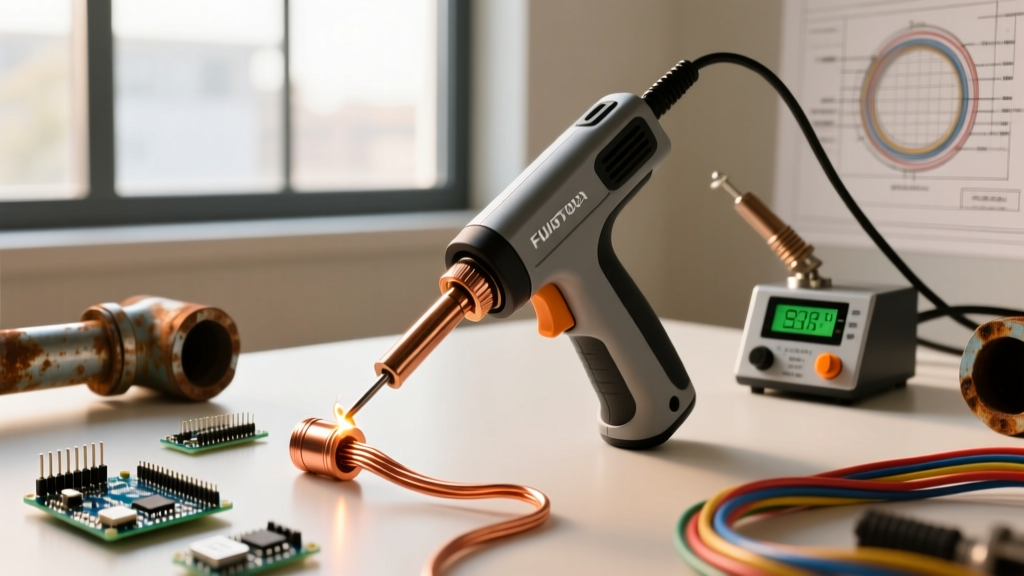
| Heavy-Duty Soldering Gun | Weller D550 (260W) | 500°C+ (932°F+) | Silver-bearing soft solder (Thick gauge wires, lugs) |
| Micro-Torch | Blazer Big Shot GT8000 | 1300°C (2372°F) | Hard silver brazing (Jewelry, small plumbing) |
| Induction Heating System | UltraHeat 1000W | 700°C+ (1292°F+) | Hard silver brazing (Production, heavy copper) |
Mastering Silver-Bearing Soft Solder (SAC305 & Stay-Brite)
If you are working in electronics, RC hobbies, or light automotive wiring, you are likely using a silver-bearing soft solder. These alloys comply with IPC J-STD-006 standards for electronic assemblies and offer superior tensile strength and creep resistance compared to standard Sn63/Pb37.
Why Your 40W Iron is Failing
Silver-bearing soft solders have a higher liquidus temperature and a narrower plastic range than leaded solders. They demand rapid heat transfer. A cheap 40W iron with a thin conical tip will suffer from thermal droop the moment it touches a copper pad, resulting in a dull, grainy 'cold' joint.
The Ideal Setup
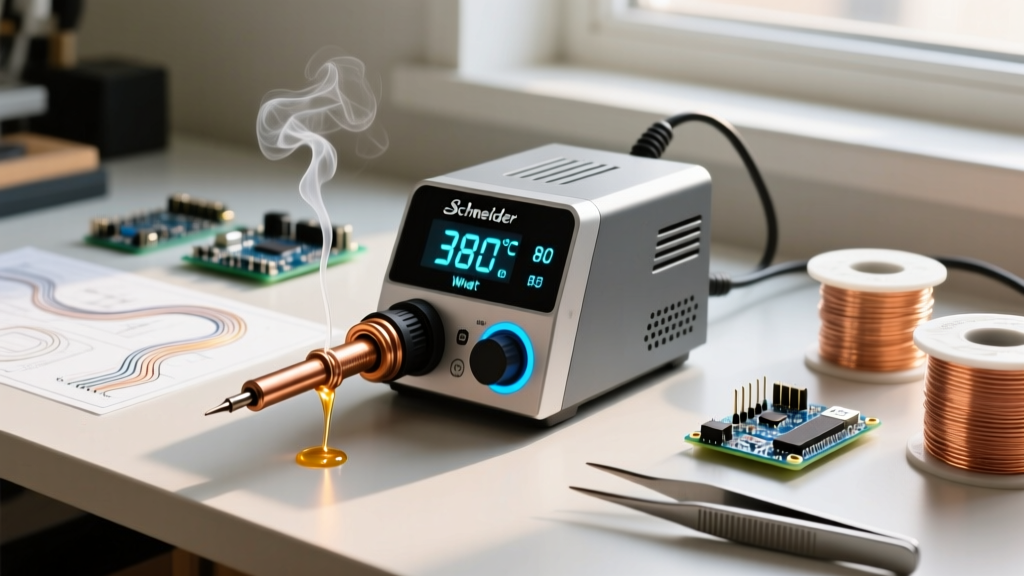
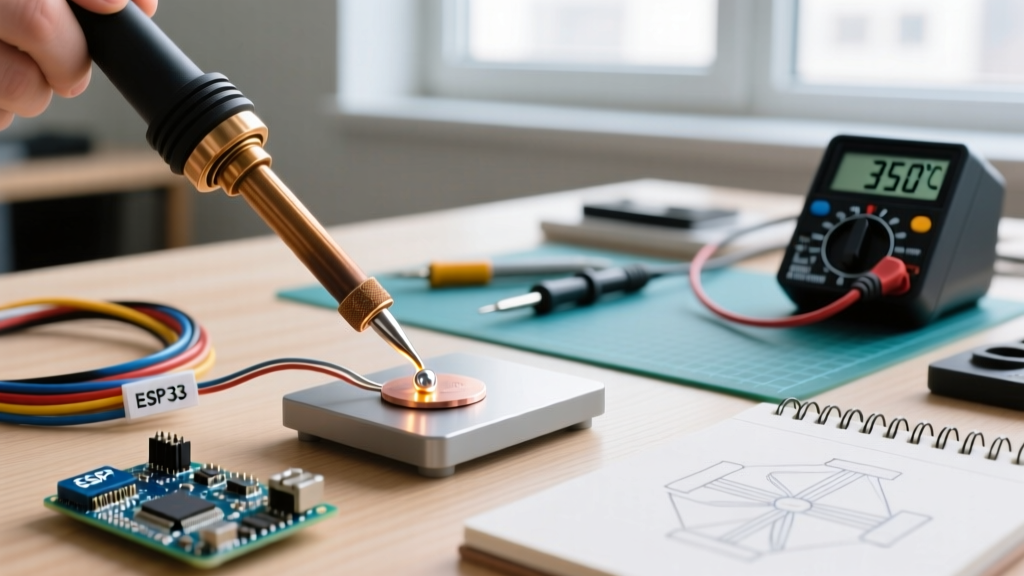
For silver-bearing soft solder, invest in a digitally controlled station like the Weller WE1010NA (70W) or the Hakko FX-951. Crucially, you must pair the station with a high-thermal-mass chisel tip (such as the Weller RT4 or Hakko T18-D24). Set your station to 350°C - 380°C (662°F - 716°F). The goal is to use the mass of the tip to transfer heat instantly, rather than relying on extreme temperatures that will oxidize your tip and degrade the flux.
Pro Tip: When using Stay-Brite #8 for structural wire joints, mechanically secure the wires first (e.g., a Western Union splice). Silver-bearing soft solder is strong, but it should never be relied upon as the sole mechanical bond in high-vibration environments.
Tackling Hard Silver Solder (When Irons Fail)
If you are repairing a silver ring, brazing copper refrigeration lines, or fabricating structural metalwork, you are using hard silver solder. As Lucas-Milhaupt's brazing fundamentals dictate, capillary action in silver brazing requires the entire joint area to be brought to the flow temperature of the alloy simultaneously.
The 'Soldering Iron' Misnomer
There is virtually no such thing as a handheld 'soldering iron' capable of hard silver brazing for beginners. Even massive 500W copper-bit irons used for stained glass or heavy roofing struggle to push enough localized BTUs to flow a 1300°F silver-copper alloy without oxidizing the base metal.
The Solution: You must transition to a micro-torch. The Blazer Big Shot GT8000 (approx. $65) or the Smith Little Torch (approx. $350) are the industry standards. You will use a neutral to slightly carburizing flame, heating the base metal until the flux turns clear and glassy (approx. 1100°F), and then introducing the silver brazing rod to the joint—not the flame—so the heat of the base metal draws the alloy in via capillary action.
Flux Chemistry: The Make-or-Break Variable
Silver alloys are highly susceptible to oxidation when heated. Without the correct flux, the silver will ball up and refuse to wet the base metal. You cannot use standard electronics rosin flux for hard silver brazing, and you cannot use plumbing paste for PCBs.
- For Silver-Bearing Soft Solder: Use a mild organic acid or rosin-based flux. If using Stay-Brite, their proprietary 'Stay-Clean' liquid flux (zinc chloride-based) is mandatory for stainless steel or heavily oxidized copper. For standard electronics, a no-clean or water-soluble rosin flux inside the wire core is sufficient.
- For Hard Silver Brazing: You need a high-temperature fluoride/borax paste flux, such as Harris Stay-Silv White Brazing Flux. This flux becomes active at roughly 1050°F (565°C) and dissolves the refractory copper oxides that form during brazing, protecting the joint up to 1600°F (870°C).
Common Beginner Failure Modes and Fixes
1. The Solder Balls Up and Rolls Off (Poor Wetting)
Cause: The base metal is not hot enough, or the flux has burned off. This happens frequently when beginners use an undersized iron tip for silver-bearing solder, or when they apply the brazing rod directly to the torch flame instead of the metal.
Fix: For soft solder, increase tip mass and lower the temperature slightly to prevent flux burnout. For hard silver, remove the heat, clean the black oxide scale with a brass brush and warm water, re-flux, and heat the base metal more evenly.
2. Pitting and Porosity in the Joint
Cause: Overheating the silver alloy. Silver-bearing soft solders like SAC305 will separate if held at liquidus for too long, causing the tin to oxidize and leave microscopic pits.
Fix: Apply heat only until the solder flashes and flows, then immediately remove the iron. Do not 'cook' the joint to make it look smoother; a smooth joint is a result of proper fluxing and rapid thermal transfer, not extended dwell time.
3. The Tip Turns Black and Solder Won't Stick
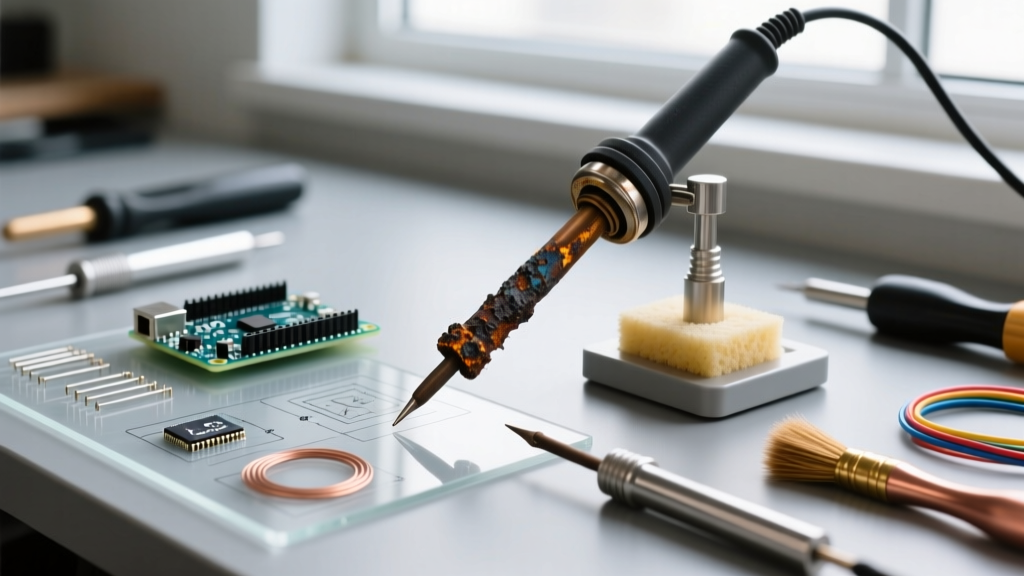
Cause: Running your iron above 400°C (752°F) with lead-free silver-bearing solder. The high heat accelerates tip oxidation and burns the iron plating.
Fix: Never leave your station on when not in use. Use a brass wire sponge (not a wet sponge, which causes thermal shock and micro-fractures in the tip plating) to clean the tip, and always leave a blob of fresh solder on the tip before powering down.
Final Verdict for Beginners
If your project involves electronics, RC cars, or small wire splices, buy a 70W digital station and use SAC305 or Stay-Brite #8. If your project involves jewelry, HVAC lines, or structural metal, put the soldering iron away, buy a micro-torch, and use hard silver brazing alloy with white paste flux. Understanding this distinction will save you hundreds of dollars in ruined materials and countless hours of frustration.