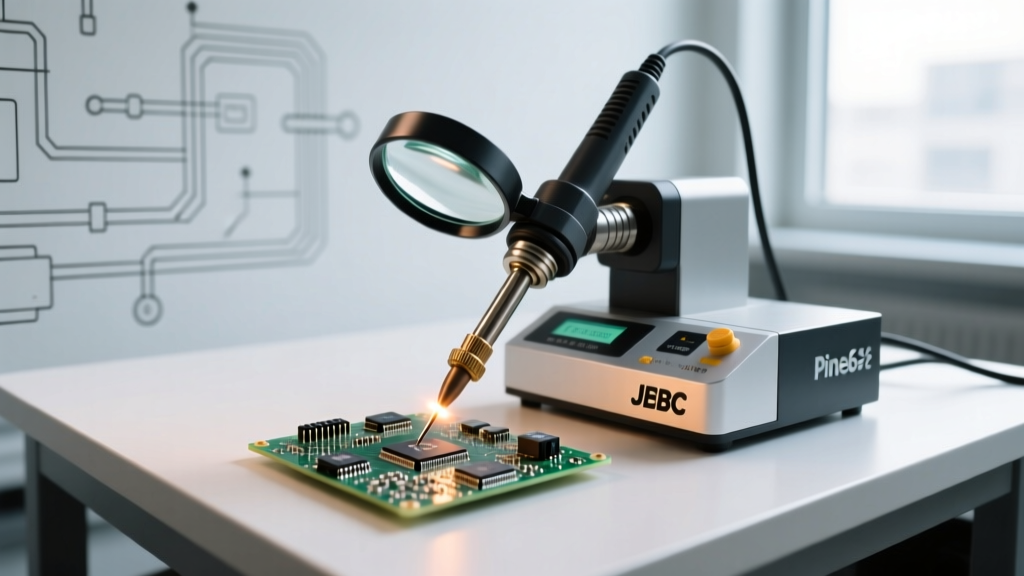

The Core Divide: Why Tool Class Dictates Joint Quality
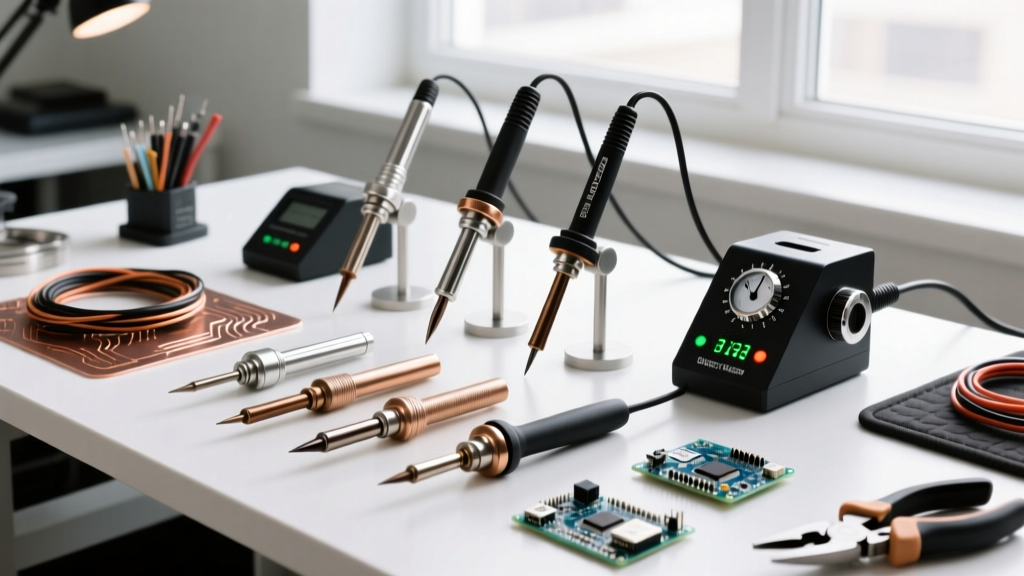
When navigating the diverse types of soldering iron available in 2026, electronics engineers and DIY enthusiasts face a heavily bifurcated market. The gap between a $25 smart iron and a $550 professional cartridge station is no longer just about brand prestige; it is fundamentally about thermal physics, PID controller algorithms, and intermetallic compound (IMC) formation. According to the IPC standards for electronic assemblies, a reliable solder joint requires precise wetting and a specific IMC layer thickness, both of which are directly compromised by thermal lag and temperature overshoot.
In this comprehensive budget versus premium analysis, we dissect the primary types of soldering irons on the market, evaluating exact models, real-world failure modes, and the hidden costs of consumables to help you make an engineered purchasing decision.
1. Smart Mini Irons: The Budget Disruptors
The introduction of open-source, microcontroller-driven irons has completely disrupted the sub-$50 tier. The undisputed leader in 2026 is the Pinecil V2, priced at approximately $26. Powered by a Bouffalo Lab BL706 RISC-V MCU, this iron supports USB-C Power Delivery (PD 3.0) up to 65W and DC barrel inputs from 12V to 24V.
Performance & Thermal Dynamics
Despite its low cost, the Pinecil V2 utilizes a sophisticated PID algorithm that allows it to reach 320°C in roughly 8 seconds. However, its thermal mass is limited. When soldering large ground planes or 10 AWG wire, the 65W ceiling causes severe thermal droop, leading to cold joints if the user does not employ pre-heating techniques.
Real-World Failure Modes
- PD Negotiation Timeout: Using cheap, multi-port GaN chargers often causes the iron to fail PD negotiation, defaulting to 5V/2A (10W). Solution: Use a dedicated, single-port 65W+ USB-C brick or a high-quality 100W E-marked cable.
- Port Wear: Frequent plugging and unplugging degrades the USB-C receptacle. Solution: Solder a DC5521 barrel jack adapter and use a traditional DC power supply for bench use.
2. Traditional Transformer Stations: The Mid-Tier Workhorses
For decades, transformer-based stations with separate ceramic heaters and screw-on tips have been the baseline for serious hobbyists and repair shops. The Hakko FX-888D (approx. $105) remains the benchmark in this category. It delivers 70W of power and uses the ubiquitous T18 tip series.
Performance & Thermal Dynamics
These stations rely on a thermocouple embedded near the tip, feeding data back to an analog or basic digital controller. Heat-up time to 320°C is typically around 20 seconds. The thermal recovery is adequate for through-hole components and basic 0805 SMD work but struggles with heavy copper pours on modern motherboards.
Real-World Failure Modes
- Tip Seizing: Flux vapor creeps down the tip sleeve and carbonizes on the ceramic heater element, permanently fusing the tip to the wand. Solution: Apply a microscopic layer of high-temperature anti-seize compound to the heater shaft during tip changes, and clean tips with brass wool, never a wet sponge (which causes thermal shock and micro-cracking).
- Oxidation Burnout: Leaving the iron at 400°C idle accelerates iron-plating oxidation. Solution: Manually lower the temperature to 250°C during periods of inactivity exceeding 5 minutes.
3. Advanced Cartridge Stations: The Premium Standard
At the premium end ($300 to $600+), the heater and the tip are integrated into a single, disposable cartridge. This eliminates the thermal barrier between the heating element and the solder joint. The JBC CD-2BE (approx. $550) and the Hakko FX-951 (approx. $320) dominate this space.
Performance & Thermal Dynamics
Because the thermocouple is located millimeters from the tip apex, these stations boast 130W+ outputs and achieve 350°C in under 2 seconds. The JBC system features an intelligent "sleeper mode" that instantly drops the cartridge temperature to 180°C when placed in the stand, virtually eliminating tip oxidation and extending cartridge life by up to 500% compared to traditional stations.
Real-World Failure Modes
- Connector Arcing: Swapping cartridges while the station is powered on can cause micro-arcing at the 3-pin connector, eventually pitting the contacts. Solution: Always utilize the integrated cartridge extraction tool and swap only when the system is in standby or powered off.
- Proprietary Lock-in: Cartridges cost between $35 and $50 each. Dropping a cartridge on a concrete floor can easily crack the internal ceramic substrate, rendering it useless.
4. Portable & Butane Irons: The Off-Grid Niche
For field technicians, automotive wiring, and plumbing, cordless butane irons like the Master Appliance Ultratorch ($70) remain relevant. They use a catalytic reaction rather than an open flame to heat the tip.
Performance & Thermal Dynamics
Temperature control is entirely manual, governed by a gas flow valve. This makes them entirely unsuitable for precision PCB work, as the lack of a closed-loop PID controller guarantees temperature fluctuations of ±50°C. However, their massive thermal output (often exceeding 100W equivalent) makes them ideal for heat-shrink tubing and heavy-gauge wire splicing.
Real-World Failure Modes
- Catalytic Mesh Degradation: Using unrefined butane with impurities clogs the catalytic mesh, causing uneven heating and flameouts. Solution: Use only 5x-refined butane and purge the tank with compressed air annually.
Budget vs. Premium: Head-to-Head Performance Matrix
| Iron Type | 2026 Avg Price | Heat-Up (to 320°C) | Thermal Recovery | Consumable Cost | Best Application |
|---|---|---|---|---|---|
| Smart Mini (Pinecil V2) | $26 | ~8 Seconds | Moderate (65W limit) | $2 - $5 / tip | Drones, FPV, basic SMD |
| Traditional (Hakko FX-888D) | $105 | ~20 Seconds | Slow (Thermal lag) | $6 - $9 / tip | Through-hole, general repair |
| Cartridge (JBC CD-2BE) | $550 | < 2 Seconds | Instantaneous (130W) | $35 - $50 / cart | Multi-layer PCBs, micro-BGA |
| Butane (Ultratorch) | $70 | ~30 Seconds | Manual / Unregulated | $15 / tip | Automotive, field wiring |
Hidden Costs: Tip Longevity and Thermal Degradation
When analyzing the different types of soldering iron, the initial purchase price is often deceptive. A traditional $100 station might seem economical until you factor in the cost of replacing T18 tips every few months due to oxidation and pitting. Conversely, while a JBC cartridge costs $45, the intelligent sleep stand ensures a single cartridge can easily survive 15,000+ solder joints in a professional environment, lowering the cost-per-joint to fractions of a cent.
Expert Insight: "The leading cause of premature tip failure across all price tiers is dry-heating. Leaving a tinned tip exposed to ambient oxygen at 380°C for more than 60 seconds initiates rapid iron-plating oxidation. Always apply a thick blob of 63/37 rosin-core solder to the tip immediately before powering down or placing it in a stand."
Actionable Buying Framework for 2026
Do not buy based on brand loyalty; buy based on your specific thermal requirements.
Choose the Budget Smart Iron (Pinecil V2) If:
- You are a hobbyist building FPV drones, Arduino projects, or repairing consumer electronics.
- You have limited bench space and need a highly portable solution.
- You are comfortable flashing custom firmware (like IronOS) to tweak PID parameters and calibrate the thermocouple.
Choose the Mid-Tier Traditional Station (Hakko FX-888D) If:
- You run a community makerspace or school lab where tools are shared and frequently abused.
- Your work consists of 90% through-hole components and basic wire harnessing.
- You need a rugged, easily repairable tool with widely available, cheap aftermarket clone tips.
Choose the Premium Cartridge Station (JBC / Hakko FX-951) If:
- You are doing professional SMD rework, soldering 0402 components, or working on 6+ layer PCBs with massive thermal dissipation.
- Your hourly labor rate justifies the $500+ capital expenditure to eliminate cold joints and rework time.
- You require micro-pencil tips (e.g., JBC C115 series) for under-microscope soldering, which require the instant thermal response only cartridge systems can provide.
Final Verdict
The landscape of soldering tools has never been more competitive. While premium cartridge stations remain the undisputed kings of thermal recovery and precision micro-soldering, the rise of RISC-V powered smart irons has made high-quality, temperature-controlled soldering accessible to everyone. By matching the specific thermal dynamics of your workload to the correct tool class, you ensure IPC-compliant joints, minimize consumable waste, and drastically reduce operator fatigue.