
The Short Answer: Yes, But Not With Standard Electronics Gear
When hobbyists and technicians ask, 'can you solder aluminum with a soldering iron,' the immediate answer from traditional electronics forums is often a resounding 'no.' However, from a metallurgical and advanced setup perspective, the answer is yes—provided you completely abandon standard rosin-core tin/lead (Sn/Pb) or lead-free (SAC305) workflows. Soldering aluminum requires a specialized thermal setup, zinc-based filler metals, and aggressive chemical fluxes designed to combat aluminum's instantaneous oxide regeneration.
The Metallurgical Barrier: Aluminum Oxide (Al2O3)
To understand why your standard 60W iron fails on aluminum, you must understand the enemy: aluminum oxide. When bare aluminum is exposed to atmospheric oxygen, it instantly forms a microscopic layer of Al2O3. While pure aluminum melts at roughly 660°C (1220°F), this oxide shell melts at an astonishing 2072°C (3762°F). Standard soldering irons peak around 400°C to 450°C. Therefore, the solder simply balls up and rolls off the oxide shell, never making metallurgical contact with the base metal.
To achieve a true solder joint, your setup must accomplish two things simultaneously: melt a specialized high-temperature solder alloy, and chemically or mechanically exclude oxygen from the bare aluminum surface long enough for the solder to wet the metal.
Required Equipment & Material Specifications
Attempting this with a cheap plug-in iron will result in thermal collapse. Aluminum has a high thermal conductivity (approx. 237 W/m·K), meaning it pulls heat away from the iron's tip faster than a standard heating element can replenish it.
| Material / Tool | Specification / Model | Purpose & Notes |
|---|---|---|
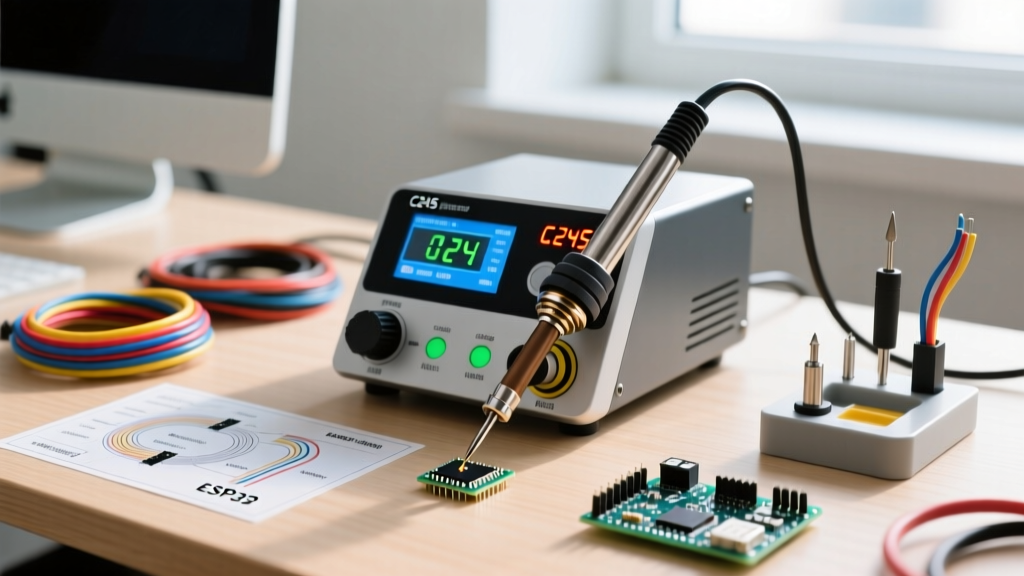
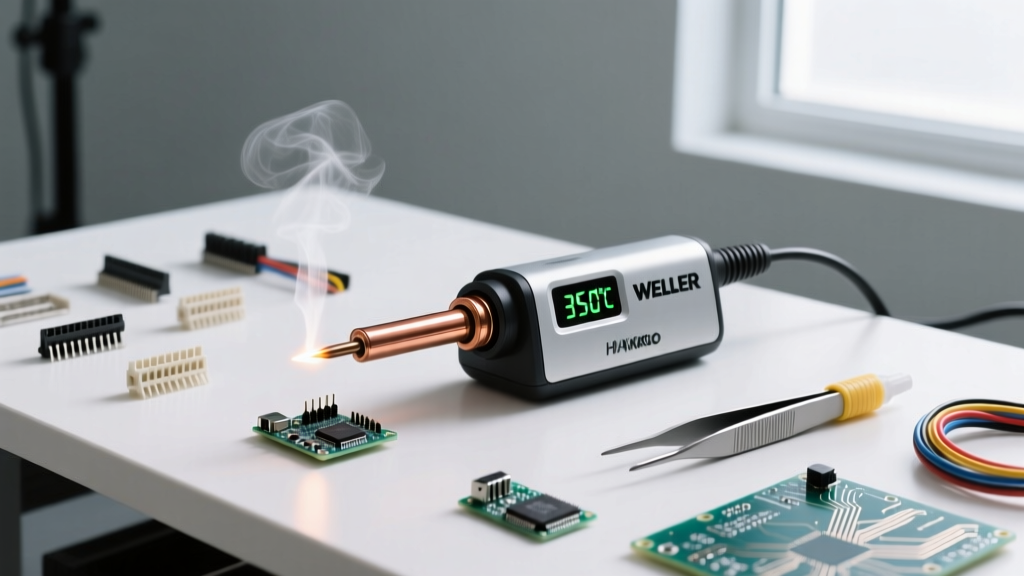
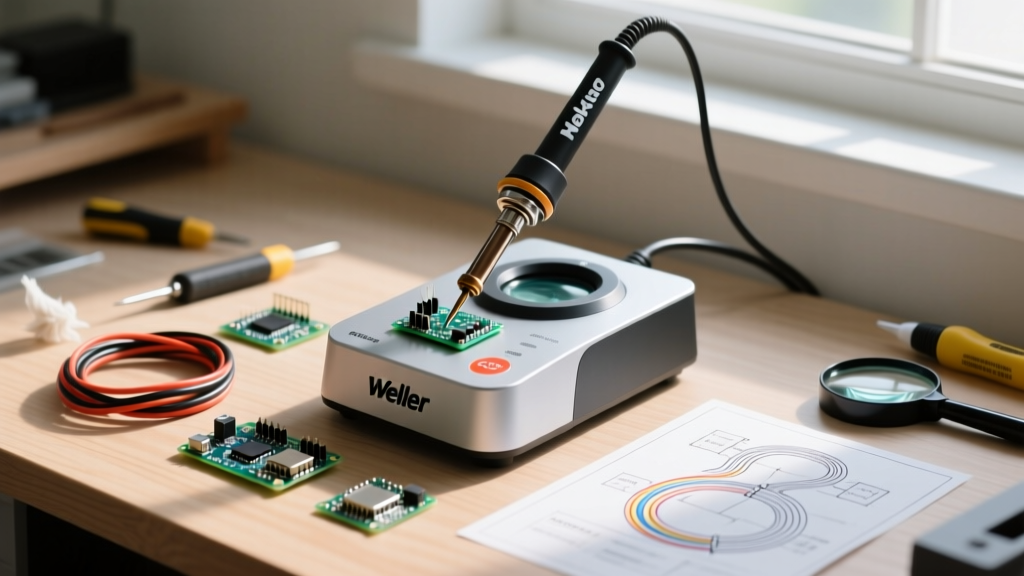
| Soldering Station | Hakko FX-951 or Weller WE1010NA (70W+) | High thermal recovery rate is mandatory to prevent tip temperature drop. |
| Tip Geometry | Heavy Chisel (e.g., Hakko T18-D24 or Weller ETA) | Maximizes surface area contact. Conical tips will fail due to low thermal mass. |
| Solder Alloy | Zn95/Al5 or Zn98/Al2 (e.g., Alusol) | Melts at ~380°C (716°F). Zinc bonds metallurgically with aluminum. |
| Flux | Superior Flux 5314 or La-Co 13110 | Specialized organic/fluoride blends that etch Al2O3 at high temperatures. |
| Mechanical Tool | Stainless steel scratch brush or fiberglass pen | Used to physically break the oxide layer beneath the molten solder pool. |
Station Calibration & Thermal Setup
Because zinc-aluminum solders require higher working temperatures (typically 380°C to 420°C), precise calibration is critical. If your station's dial reads 400°C, the actual tip temperature might be 360°C due to thermal loss when touching a large aluminum chassis.
- Baseline Calibration: Use a tip thermometer (such as the Hakko FG-100B) to verify your station's sensor accuracy. Adjust the station's internal calibration potentiometer or digital offset until the physical tip reads exactly 390°C (734°F) in ambient air.
- Pre-heat the Workpiece: If you are soldering a thick aluminum bracket or heat sink, use a hot air rework station or a dedicated pre-heater to bring the base metal up to 150°C before applying the iron. This reduces the thermal shock and prevents the iron from stalling.
- Tip Tinning (The Sacrificial Layer): Before touching the aluminum, tin your heavy chisel tip with standard SAC305 or Sn60Pb40 solder. This protects the iron plating from immediate degradation when you introduce the aggressive aluminum flux.
The 'Scratch' Technique: Breaking the Oxide Layer
Chemical flux alone is rarely enough to clear heavy aluminum oxidation. The industry-standard method for hand-soldering aluminum involves mechanical abrasion underneath a protective blanket of molten solder and flux.
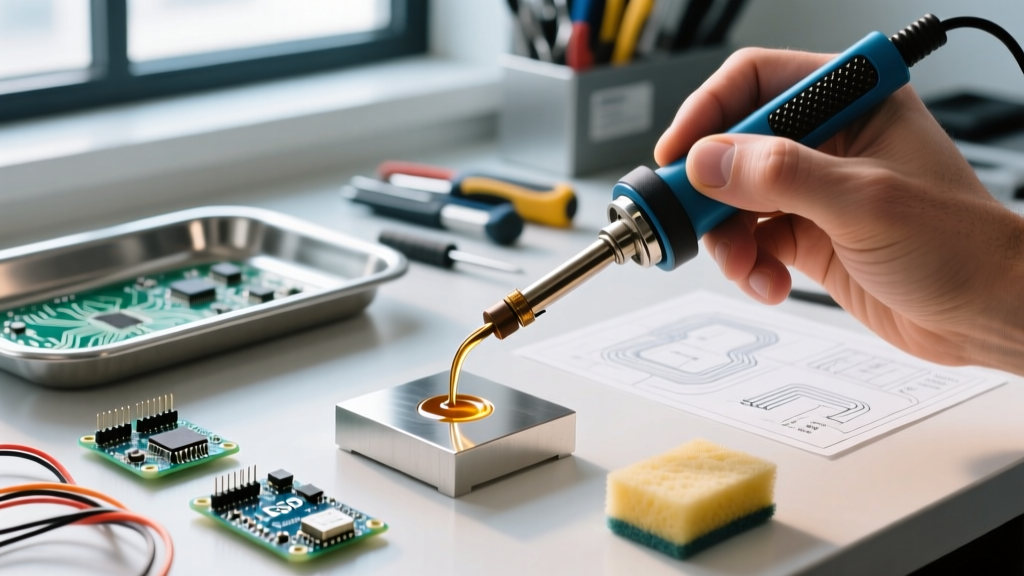
Expert Insight: Never scratch bare aluminum in the open air. The oxide layer reforms in milliseconds. You must pool the specialized flux and zinc solder onto the iron tip, transfer it to the aluminum, and then scratch through the molten pool with a stainless steel brush. The molten solder acts as a liquid shield, blocking atmospheric oxygen while the brush physically wipes the Al2O3 off the base metal, allowing the zinc to wet the surface.
Step-by-Step Execution
- Apply a generous amount of specialized aluminum flux to the joint area.
- Load your pre-heated chisel tip with the zinc-aluminum solder wire.
- Press the tip firmly against the aluminum workpiece to transfer heat. Hold for 3 to 5 seconds to allow the flux to activate and bubble.
- While maintaining downward pressure and heat, use your stainless steel brush to scrub the aluminum surface through the molten solder puddle.
- Once the solder 'grabs' and stops balling up, you have achieved metallurgical wetting. Add more solder wire as needed to fill the joint.
- Remove the heat and allow the joint to cool naturally. Do not blow on it, as zinc alloys are prone to crystallization and cold joints if disturbed during the phase change.
Critical Warning: Tip Degradation and Intermetallic Compounds
One of the primary reasons manufacturers advise against soldering aluminum with standard irons is the destructive effect aluminum has on iron (Fe) plating. When molten zinc and aluminum come into contact with the iron-plated copper tip of your soldering iron, they rapidly dissolve the iron, forming brittle FeAl3 intermetallic compounds. This will pit and destroy a standard soldering tip in a matter of minutes.
To mitigate this, you must practice rigorous tip maintenance. Immediately after completing the aluminum solder joint, wipe the tip on a damp brass sponge, and heavily re-tin it with standard electronics solder (Sn/Pb or SAC). This seals the iron plating and halts the galvanic dissolution process. For high-volume aluminum soldering, consider dedicating a specific, inexpensive solid-copper tip (unplated) solely to this task, replacing it as it erodes.
Troubleshooting Matrix
| Symptom | Root Cause | Corrective Action |
|---|---|---|
| Solder balls up and rolls off | Oxide layer intact; insufficient flux or mechanical abrasion. | Increase flux volume; scrub aggressively through the molten pool. |
| Iron tip temperature drops rapidly | Thermal mass of aluminum exceeds iron's recovery wattage. | Pre-heat workpiece; upgrade to a 70W+ station; use a wider chisel tip. |
| Joint looks grainy or crumbles | Disturbance during cooling; zinc crystallization. | Hold workpiece completely still until the solder drops below 300°C. |
| Black, crusty residue on tip | Flux carbonization due to excessive dwell time. | Clean with brass sponge; reduce tip temp to 380°C; re-tin immediately. |
Industry Standards and Safety Considerations
When executing these setups, it is vital to adhere to safety and quality standards. The aggressive fluxes required for aluminum often contain fluoride compounds or strong organic acids that release toxic fumes when heated to 400°C. Always use a high-quality fume extractor equipped with both HEPA and activated carbon filters. Furthermore, while organizations like IPC (Association Connecting Electronics Industries) provide exhaustive guidelines for standard PCB assembly, joining highly oxidizing metals or dissimilar structural metals often falls under specialized mechanical or aerospace welding standards rather than consumer electronics guidelines.
For specific flux chemistry and alloy behaviors, consulting metallurgical data sheets from specialized manufacturers like Superior Flux & Technology is highly recommended before attempting structural joints. Finally, ensuring your thermal calibration tools are up to date, as outlined by equipment manufacturers like Hakko, guarantees that your station is delivering the precise thermal energy required to overcome aluminum's unique thermal properties.
By respecting the metallurgy, upgrading your thermal delivery system, and mastering the sub-surface scratch technique, you can reliably solder aluminum with a soldering iron for custom enclosures, battery tab connections, and specialized heat-sink modifications.