
The Misnomer: Why the WESD51 is a Station, Not Just an Iron
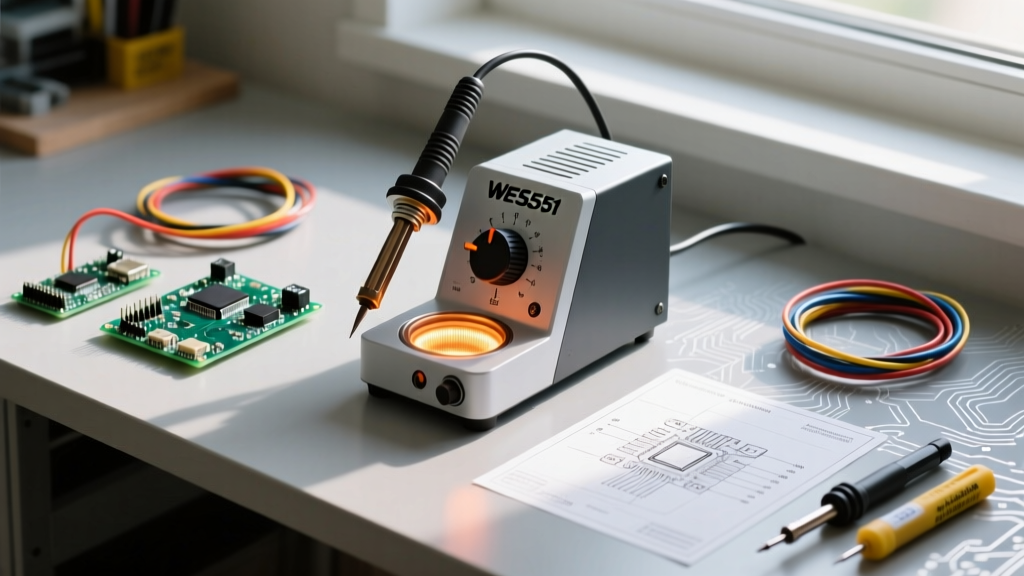
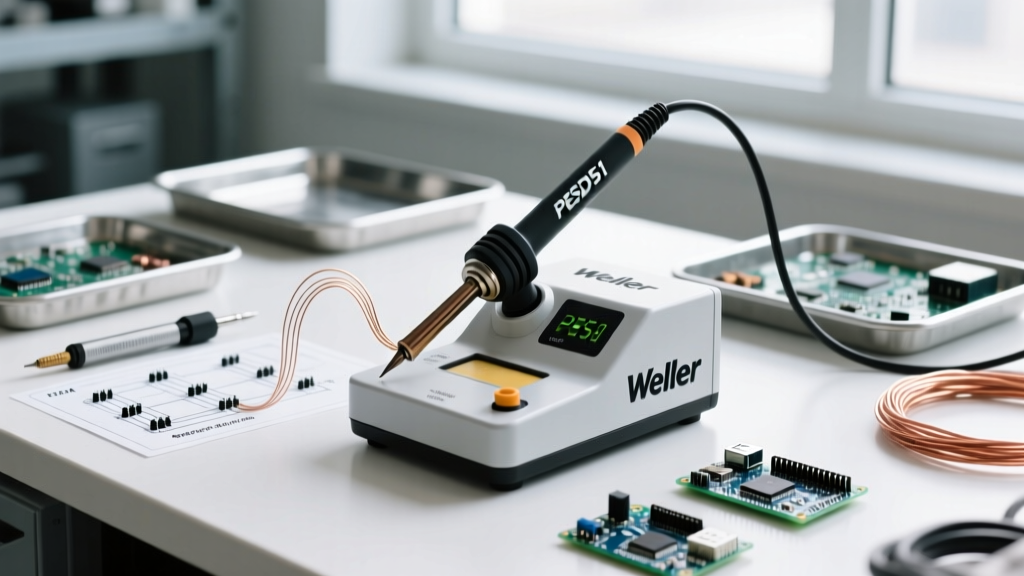
When technicians, makers, and repair specialists search for the WESD51 soldering iron, they are technically referring to a complete digital soldering station. The Weller WESD51 is not a standalone wand; it is a precision thermal management system comprising the WESD51 digital power unit, the PES51 soldering pencil, and the WDH10 safety rest with a dry-cell sponge. First introduced as a digital upgrade to the legendary analog WES51, the WESD51 has spent over a decade as the undisputed workhorse of electronics repair benches and manufacturing floors alike.
As we navigate the electronics landscape in 2026, the market has seen an influx of budget USB-C irons and high-frequency induction stations. Yet, the WESD51 remains a benchmark for analog-to-digital crossover reliability. This deep dive dissects the engineering, thermal physics, and real-world failure modes of the WESD51, providing actionable insights for both legacy users and those acquiring new-old-stock units in today's market.
WESD51 Quick Specifications (2026 Benchmark)
- Power Output: 50 Watts (Zero-crossing solid-state switching)
- Temperature Range: 350°F to 850°F (177°C to 454°C)
- Pencil Model: PES51 (Approx. 56g / 2 oz)
- Compatible Tips: ETA Series (Crucial distinction from analog ET series)
- ESD Compliance: ANSI/ESD S20.20 certified
Core Architecture: The PES51 Pencil and Thermal Recovery
The true heart of the WESD51 system is the PES51 soldering pencil. Unlike cheap ceramic-core irons that rely on a crude thermocouple jammed against the heating element, the PES51 utilizes a proprietary integrated sensor. The heating element and the temperature sensor are wound together within a specialized alumina ceramic tube. This co-located design minimizes the thermal gradient between the heat source and the sensor, allowing the WESD51 power unit to sample the tip temperature multiple times per second.
Zero-Crossing Power Delivery
The WESD51 power unit does not simply chop the AC waveform using a basic TRIAC dimmer circuit. Instead, it employs a zero-crossing solid-state relay. This means the 50W heater is pulsed only at the zero-voltage crossing points of the AC sine wave. This engineering choice drastically reduces electromagnetic interference (EMI) and radio frequency interference (RFI). For technicians working on sensitive RF modules, audio DACs, or microcontroller ADC circuits, this zero-crossing delivery prevents the soldering station from injecting noise into the device under test (DUT).
Digital Interface and the Hardware Lockout Feature
The front panel of the WESD51 features a dual-digit (Fahrenheit) or triple-digit (Celsius) LED display, flanked by tactile up and down push-buttons. While digital displays are common today, the WESD51 includes a critical feature often overlooked by casual users: the hardware temperature lockout.
Located just below the LED display is a microscopic pinhole. By inserting a 1/16-inch precision flathead screwdriver or a bent paperclip into this hole, technicians can engage a physical logic lock. Once engaged, the up and down buttons are disabled. In a busy repair shop or a university lab, this prevents unauthorized users from cranking the temperature to 850°F, which would instantly oxidize the tip and potentially delaminate PCB pads. This physical lockout is a hallmark of industrial-grade equipment, prioritizing process control over user convenience.
Market Context: WESD51 vs. Modern Successors
While the WESD51 is a legacy model, understanding how it stacks up against Weller's modern 2026 lineup is essential for procurement decisions. Below is a comparative matrix of the WESD51 against its direct successors.
| Feature | Weller WESD51 (Legacy) | Weller WE1010 (Entry-Digital) | Weller WT1010 (Pro-Digital) |
|---|---|---|---|
| Power | 50W | 65W | 95W |
| Display | Simple LED | Large LCD | High-Res LCD |
| Temp Range | 350°F - 850°F | 200°F - 850°F | 120°F - 850°F |
| Pencil | PES51 | WEP70 | WSP80 |
| 2026 Market Status | Secondary/NOS ($140-$170) | Current Production ($115) | Current Production ($250+) |
Tip Ecosystem: The Critical ETA vs. ET Distinction
The most common mistake made by new WESD51 owners is purchasing the wrong replacement tips. The physical dimensions of the Weller ET series (used on the analog WES51) and the Weller ETA series (used on the digital WESD51) are identical. Both will slide perfectly onto the PES51 heater.
However, they are not thermally interchangeable.
The ETA series tips feature a specific thermal mass and sensor-coupling profile calibrated for the WESD51's digital algorithm. If you install an analog ET tip on a WESD51 station, the digital display will show a temperature, but it will be wildly inaccurate—often deviating by 50°F to 100°F from the actual tip surface temperature. This leads to cold solder joints or burned flux. Always verify that your tip box explicitly reads ETA (e.g., ETA, ETB, ETC) when servicing the WESD51.
Real-World Failure Modes and Troubleshooting
Despite its robust build, the WESD51 is subject to specific failure modes after years of bench use. Recognizing these edge cases saves hours of diagnostic frustration.
1. The Blinking Red LED (Heater Open Circuit)
If the power button LED blinks red, the station has detected an open circuit in the heater. This is almost always caused by a fractured alumina ceramic core inside the PES51 pencil. Root Cause: Dropping the pencil onto a hard floor. The internal ceramic tube shatters, breaking the heater wire. Solution: Replace the B50 heating element.
2. The Blinking Green LED (Sensor Failure)
A blinking green LED indicates the station cannot read the thermocouple sensor. Root Cause: Corrosion on the 5-pin DIN connector, or a severed sensor wire near the pencil's strain relief. Solution: Clean the DIN pins with isopropyl alcohol and a fiberglass scratch pen. If the issue persists, the PES51 pencil must be replaced.
3. Sluggish Thermal Recovery
If the station struggles to recover heat when touching a large ground plane, users often blame the 50W power limit. Root Cause: Micro-oxidation between the heater barrel and the inside of the ETA tip. Solution: Remove the tip, let the heater cool, and gently polish the outside of the ceramic/metal heater barrel with a brass wire brush. Apply a microscopic layer of fresh solder to the barrel before re-inserting the tip to ensure optimal thermal transfer.
Step-by-Step: Replacing the PES51 Heating Element
Replacing the heater element (Weller Part #B50) is a delicate procedure. Follow these steps to avoid damaging the new component:
- Power Down and Cool: Unplug the station and allow the PES51 pencil to reach room temperature.
- Remove the Tip and Nut: Unscrew the aluminum retaining nut and slide off the ETA tip and the aluminum sleeve.
- Extract the Element: Gently pull the heating element assembly straight out of the stainless steel handle. Do not twist or bend the wires.
- Disconnect the Wires: Note the wire routing. Carefully desolder or disconnect the two heater wires and the two thinner sensor wires from the internal terminal block.
- Install the New B50 Element: Feed the new wires through the handle. Ensure the ceramic tube does not scrape against the metal handle interior.
- Reconnect and Test: Reattach the wires to the terminal block. Before reassembling the sleeve, use a multimeter to verify the heater resistance (should read approximately 14-16 ohms) and the sensor continuity.
ESD Safety and IPC Compliance
In professional environments, soldering equipment must adhere to strict electrostatic discharge and workmanship standards. The WESD51 is fully compliant with the ANSI/ESD S20.20 standard for the protection of electrical and electronic parts. The PES51 pencil handle is molded from a specialized static-dissipative material, and the station's grounding lug ensures that any static charge on the operator is safely bled to earth ground before it can reach a sensitive CMOS component.
Furthermore, maintaining precise thermal control is a prerequisite for achieving IPC-A-610 Class 2 and Class 3 solder joints. Class 3 requirements (common in aerospace and medical devices) demand perfect wetting and specific fillet geometries. The WESD51's rapid thermal response allows technicians to apply heat quickly and remove it before the flux is entirely depleted, preventing the formation of disturbed or cold solder joints that would fail an IPC optical inspection.
Final Verdict: Is the WESD51 Still Relevant?
The WESD51 soldering iron station occupies a unique space in 2026. While it lacks the rapid heat-up times of modern 95W induction stations or the menu-driven profiles of the Weller WX series, its 50W zero-crossing heater and ESD-safe architecture remain incredibly reliable. For technicians who can source a well-maintained unit, or those already running a fleet of PES51 pencils, the WESD51 continues to deliver the precise, noise-free thermal control required for high-stakes PCB rework. Just remember to stock up on ETA tips, respect the ceramic heater, and utilize the hardware lockout to protect your bench processes.