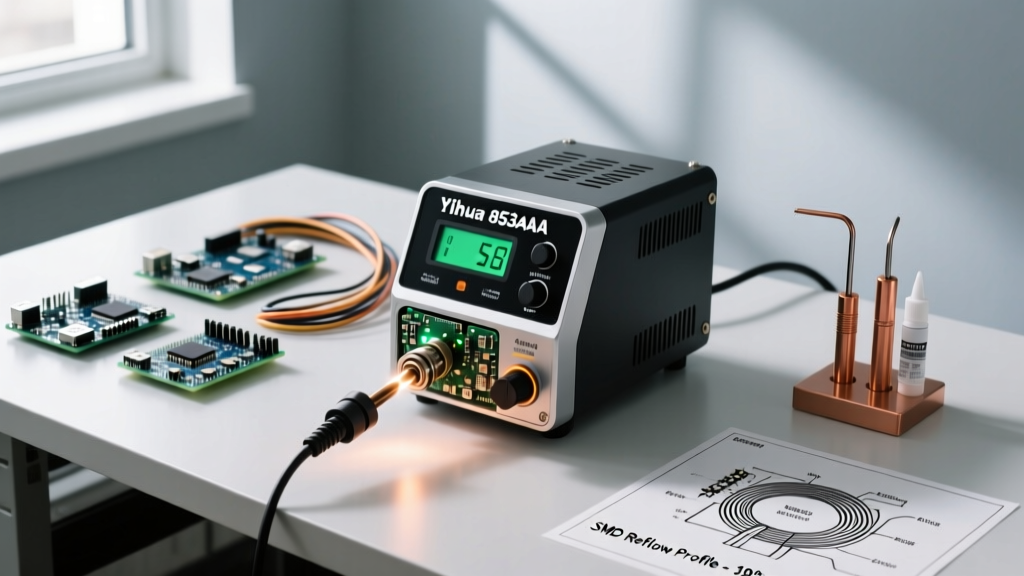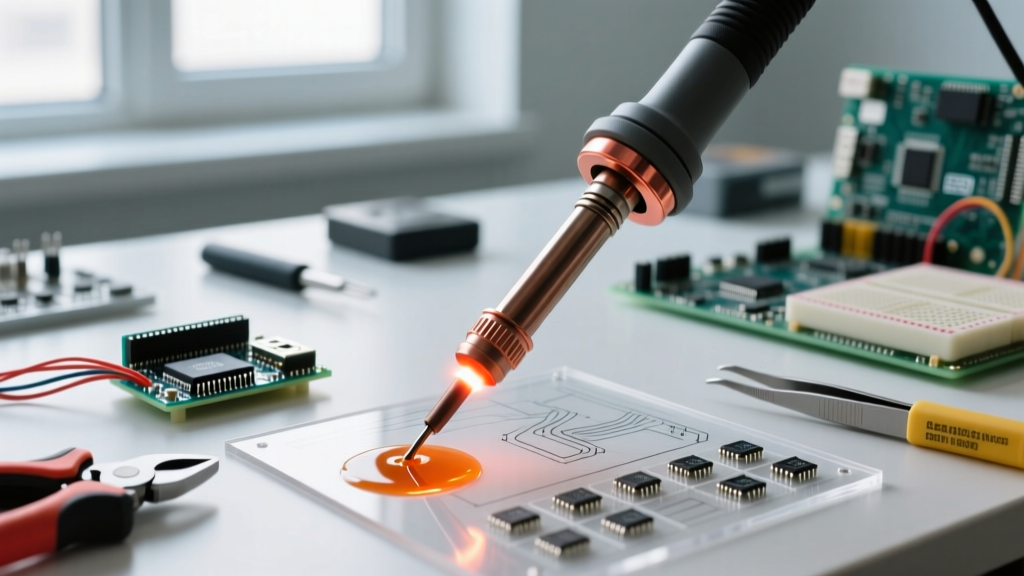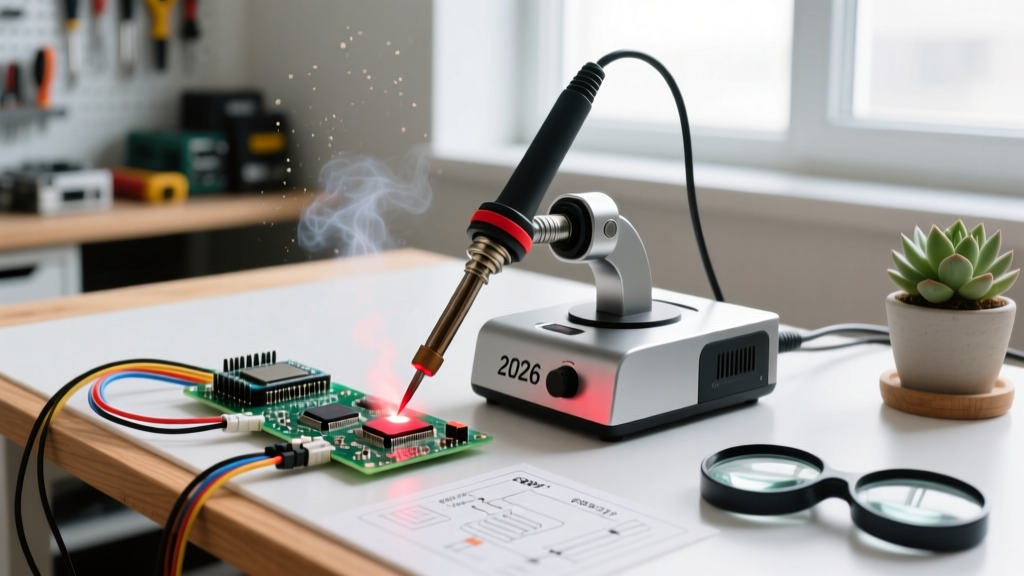

The Viral Danger: Why Soldering Iron Fails Are No Joke
Internet culture is full of hyperbolic memes, and searching for a 'stab you in the face with a soldering iron gif' usually yields cartoonish slapstick or exaggerated forum reactions. However, for professional engineers and DIYers in 2026, the underlying hazard—a 400°C thermal probe becoming an uncontrolled projectile—is a severe, life-altering reality. Thermal burns to the face, corneal damage from flux splatter, and cord-snag catastrophes are entirely preventable with the right equipment and bench setup.
In this comprehensive safety and buying guide, we dissect the mechanical failures that lead to soldering iron accidents. We then review the top three safety-engineered soldering stations of 2026 designed to keep your face, eyes, and workbench intact, ensuring your lab never becomes the next viral fail compilation.
Anatomy of a Soldering Iron Fail: How Accidents Happen
To prevent a catastrophic bench accident, we must understand the physics of how irons become airborne. Most facial, lap, and hand injuries stem from three specific mechanical failures:
1. The Cord Snag Catapult
Traditional PVC power cords stiffen over time, especially when exposed to ambient heat, UV light, and flux vapors. When you reach across your bench, a stiff cord can catch on the iron's handle, a component tray, or your own elbow. This tension acts as a slingshot, yanking the 400°C tip directly toward your body or face.
2. Base Tipping and Rollover
Budget soldering stations often feature lightweight, hollow plastic bases to cut shipping costs. If the holster is bumped, or if the iron is dropped into the rest at an awkward angle, the entire unit can flip. This launches the iron out of the stand and onto your lap or workspace.
3. Tip Ejection on Impact
If an iron falls off the bench and hits the floor, the kinetic shock can loosen the grub screw or retaining nut. This causes the superheated tip or ceramic heater to eject upon impact, creating a secondary burn or fire hazard as the bare heating element touches carpet or anti-static matting.
2026 Safety-First Soldering Station Reviews
Pine64 Pinecil V2: The Motion-Sensing Smart Iron
Price: $26 - $32 (Station only)
Best For: Cord management and auto-sleep safety
The Pinecil V2 has revolutionized portable and benchtop safety through its integrated Bouffalo Lab BL706 RISC-V microcontroller. The critical safety feature here is the built-in 3-axis accelerometer. If you set the iron down and walk away, it detects the lack of motion, dropping the temperature to 150°C after 3 minutes, and shutting off completely after 10 minutes. Furthermore, it uses a high-flex, high-temperature silicone power cord that eliminates the 'cord snag catapult' effect entirely. In 2026, the updated IronOS firmware allows you to map custom sleep curves via BLE, ensuring the iron is cold before you even realize you left it unattended.
- Pros: Ultra-flexible silicone cord, programmable auto-sleep, lightweight, USB-C PD 3.1 compatible.
- Cons: Requires a separate 65W+ USB-C PD power supply for maximum thermal mass performance.
Weller WE1010NA: The Anti-Rollover Heavyweight
Price: $105 - $115
Best For: Heavy-duty bench stability and secure holstering
Weller engineered the WE1010NA with a low center of gravity and a heavily weighted base (weighing in at a solid 1.2 kg) that makes accidental rollovers nearly impossible. The safety rest features a high-density, flame-retardant foam insert that securely grips the iron's shaft, preventing it from sliding out if the bench is bumped. The 70W ceramic heating element ensures rapid thermal recovery, meaning you spend less time waving the iron around trying to heat large ground planes, reducing fatigue-induced slips.
- Pros: Extremely stable weighted base, secure foam-grip holster, fast heat-up, ESD-safe handle.
- Cons: Stiffer PVC cord compared to silicone alternatives; higher upfront cost.
Hakko FX-888D: The Tip-Retention Standard
Price: $110 - $120
Best For: Impact resistance and tip ejection prevention
The Hakko FX-888D remains a staple in professional labs because of its robust mechanical design. The T18 tip series uses a twist-lock bayonet sleeve rather than a simple set screw. In the event of a drop or severe impact, the tip is far less likely to eject from the ceramic heater. The base is wide, flat, and heavy, and the iron rests deep within the rolled-steel safety holster, keeping the hot tip fully enclosed and away from passing hands.
- Pros: Superior tip retention mechanism, heavy low-profile base, digital temp lock (requires PIN to change).
- Cons: Two-button interface is less intuitive than modern OLED touchscreens.
Safety Feature Comparison Matrix
| Model | Base Weight | Cord Material | Auto-Sleep | Tip Retention | Est. Price (2026) |
|---|---|---|---|---|---|
| Pinecil V2 | N/A (Handheld) | High-Flex Silicone | Yes (Accelerometer) | Set Screw | $28 |
| Weller WE1010NA | 1.2 kg | Standard PVC | Yes (Configurable) | Threaded Nut | $110 |
| Hakko FX-888D | 1.05 kg | Standard PVC | No (Manual) | Twist-Lock Bayonet | $115 |
Essential PPE: Protecting Your Eyes and Face
Even with the safest station, soldering involves molten metal and boiling flux. When moisture is trapped under a component pad, the sudden heat turns it to steam, exploding molten solder droplets at velocities exceeding 2 m/s. According to the American National Standards Institute (ANSI) Z87.1 standard, standard prescription glasses are insufficient for impact and thermal splash protection. You must use wrap-around safety goggles rated for high-impact and chemical splash.
Safety Warning: The CDC and NIOSH strongly recommend local exhaust ventilation to remove colophony (rosin) fumes. Prolonged exposure to flux vapors can cause severe respiratory sensitization and occupational asthma. Always pair your safety glasses with a HEPA/Carbon fume extractor positioned 6 inches from the solder joint.
For professional environments adhering to IPC J-STD-001 requirements, operators must also utilize ESD-safe smocks and heat-resistant finger guards when handling large thermal mass components.
Best Practices for Iron Handling and Cord Management
Equipment is only half the battle. Implementing these bench rules will drastically reduce your risk of an accident:
- Use a Silicone Bench Mat: A thick silicone mat (rated to 500°C) prevents a dropped iron from bouncing or rolling off the edge of the desk. It also insulates the desk surface from thermal transfer.
- Implement Overhead Cord Routing: Use a weighted cord holder or an overhead boom arm to suspend the soldering iron cord. This keeps the cord away from your hands and prevents snags on PCBs or vises.
- Never Leave an Iron Unplugged but Hot: If your station lacks auto-sleep, make it a physical habit: if your hand leaves the iron handle, your other hand turns the station off.
- Inspect the Grub Screw Weekly: Thermal expansion and contraction cause tip retaining screws to loosen over time. Check them weekly with the appropriate hex key or coin to prevent tip ejection.
Frequently Asked Questions
Can a soldering iron cause permanent eye damage?
Yes. Flux splatter and molten solder can cause severe corneal burns. Rosin-based flux is also a chemical irritant. Always wear ANSI Z87.1+ rated safety glasses with side shields when soldering.
Are silicone cords really safer than PVC?
Absolutely. Silicone remains highly flexible even after years of heat exposure, whereas PVC becomes brittle and rigid. A flexible cord drapes over obstacles rather than catching and pulling the iron off the stand.
What should I do if I get burned by a soldering iron?
Immediately run cool (not ice-cold) water over the burn for 10 to 15 minutes. Do not apply ice, butter, or ointments, as these trap heat and can cause infection. Seek medical attention for burns larger than a coin or those on the face and hands.
By investing in a station with proper weight distribution, flexible cabling, and smart sleep features, you ensure that your soldering sessions remain productive, precise, and entirely meme-free.