
The True Cost of Soldering Guns: Beyond the Sticker Price
When professionals and advanced hobbyists ask, how much is a soldering gun, the answer requires a critical distinction: a soldering gun is not a soldering iron. While pencil-style irons rely on continuous ceramic heating elements for delicate PCB work, traditional soldering guns utilize a step-down transformer to push massive electrical current through a thick copper tip. This design delivers instant, high-wattage heat (typically 100W to 300W) ideal for heavy-gauge wiring, plumbing, stained glass, and automotive connectors.
In 2026, the market has bifurcated into traditional corded transformer guns and modern lithium-ion cordless heavy-duty tools. If you are budgeting for a new setup, expect to spend anywhere from $25 for a basic corded transformer model to $250+ for a premium cordless ecosystem tool. However, the initial purchase price is only half the equation. This guide breaks down the budget versus premium tiers, analyzing thermal recovery, tip metallurgy, and the hidden maintenance costs that dictate long-term value.
2026 Soldering Gun Pricing Matrix: Budget vs. Premium
| Category | Price Range (2026) | Typical Wattage | Heat-Up Time | Primary Use Case | Example Model |
|---|---|---|---|---|---|
| Budget Corded | $25 – $50 | 100W – 200W | 3 – 6 seconds | Occasional DIY, basic wire splicing | Generic 150W Pistols |
| Mid-Tier Pro | $55 – $95 | 200W – 300W | 2 – 4 seconds | Daily electrical work, stained glass | Weller D550PK / D650PK |
| Premium Cordless | $130 – $280 | 90W – 150W (Peak) | 8 – 15 seconds | Field service, automotive, off-grid | Milwaukee M18 Soldering Iron |
Budget Tier ($25–$50): The Transformer Workhorses
The budget category is dominated by traditional 120V AC transformer guns. The undisputed king of this tier is the Weller D550PK (typically priced around $45), which features a dual-trigger mechanism allowing you to toggle between 200W and 260W. Cheaper generic alternatives from overseas manufacturers flood the $20–$30 range, often boasting inflated '300W' claims that rarely hold up under thermal load.
The Engineering Trade-offs of Budget Guns
At the $30 price point, you are accepting specific engineering compromises. Traditional soldering guns use a thick loop of bare copper wire as both the heating element and the soldering tip. Because the tip is bare copper, it is highly susceptible to solder leaching (dissolution). When exposed to molten tin, the copper slowly dissolves into the solder pool, causing the tip to pit, thin out, and eventually snap. While replacement copper loops are cheap (usually $5 to $8 for a multi-pack), the downtime and constant reshaping required reduce workflow efficiency.
Furthermore, budget transformer guns suffer from 120Hz magnetic vibration. The alternating current creates a physical hum and slight vibration in the tip, which can be fatiguing during long stained-glass sessions and may disturb sensitive mechanical components if the tip accidentally brushes against them.
Premium Tier ($130–$280): Cordless Freedom and Thermal Mass
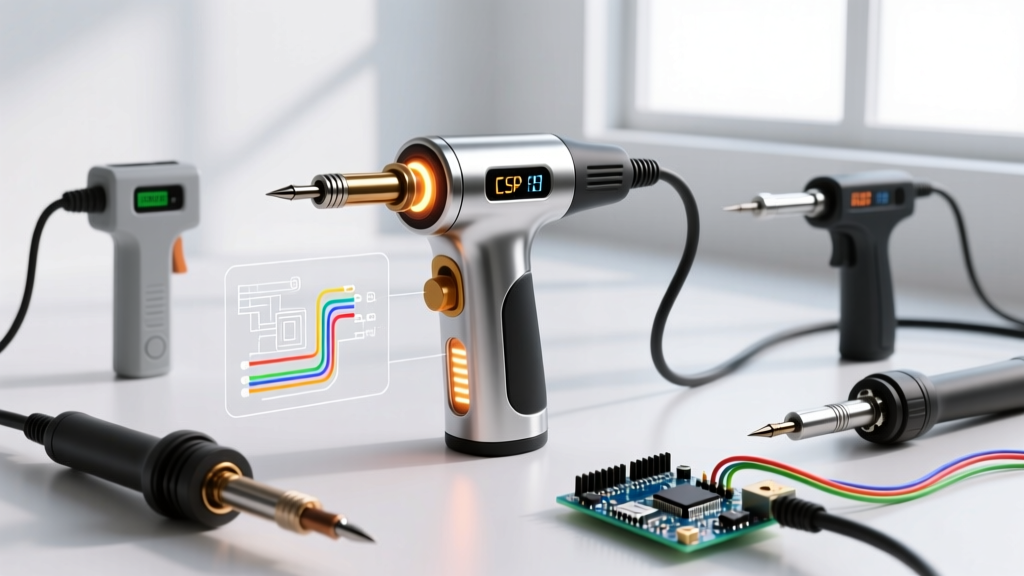
The premium tier in 2026 has largely shifted away from heavy, wall-tethered transformers toward high-density lithium-ion cordless tools. While technically classified as 'heavy-duty irons' due to their heating method, tools like the Milwaukee M18 Cordless Soldering Iron (48-22-6800) (priced around $130 bare tool) serve the exact same field applications as traditional guns, often replacing them entirely for automotive and field-service technicians.
Why Premium Costs More: Metallurgy and Thermal Recovery
Premium tools abandon the bare-copper loop in favor of iron-plated copper tips or thick-film ceramic heaters. Iron plating prevents solder leaching, extending tip life from a few weeks to several years, even under heavy daily use. According to the IPC J-STD-001 standards for soldered electrical assemblies, maintaining consistent thermal profiles is critical for joint reliability; premium tools utilize active microprocessor temperature control to prevent the massive heat spikes and subsequent cold-joint risks associated with unregulated transformer guns.
Additionally, premium cordless units eliminate the 120V AC hum and the physical restriction of a power cord, a massive safety and ergonomic upgrade when working inside cramped automotive dashboards or on rooftop HVAC control boards.
Hidden Costs: Consumables, Flux, and Safety Gear
When calculating how much a soldering gun setup truly costs, you must factor in the operational consumables. High-wattage guns vaporize flux aggressively. If you are using budget rosin-core solder, the high thermal mass of a 260W gun will instantly carbonize the flux, leaving a corrosive residue that can degrade wire strands over time.
- Replacement Tips: Budget bare-copper loops cost ~$6 for a 3-pack. Premium iron-plated tips cost $12–$18 each, but last 50x longer.
- High-Temp Flux: You must use high-temperature, slow-burning paste flux (like Nokorode or specific stained-glass fluxes) when using 200W+ guns to prevent instant carbonization. Budget: $8 per tin.
- Fume Extraction: High-wattage guns generate massive amounts of colophony smoke. As noted by Cornell University Environmental Health and Safety, soldering fumes contain volatile organic compounds and particulate matter that require proper ventilation. A basic desktop HEPA/Carbon fume extractor (e.g., Hakko FA-400) will add $50–$70 to your initial budget.
Expert Insight: Never use a high-wattage soldering gun on printed circuit boards (PCBs). The massive thermal shock and electromagnetic pulse (EMP) generated by the transformer's inductive spike when the trigger is released can instantly destroy sensitive MOSFETs, microcontrollers, and ICs. Reserve guns strictly for heavy wire, chassis grounding, and glass work.
Decision Framework: Which Tier Should You Buy?
Use this diagnostic checklist to determine where your money is best spent in 2026:
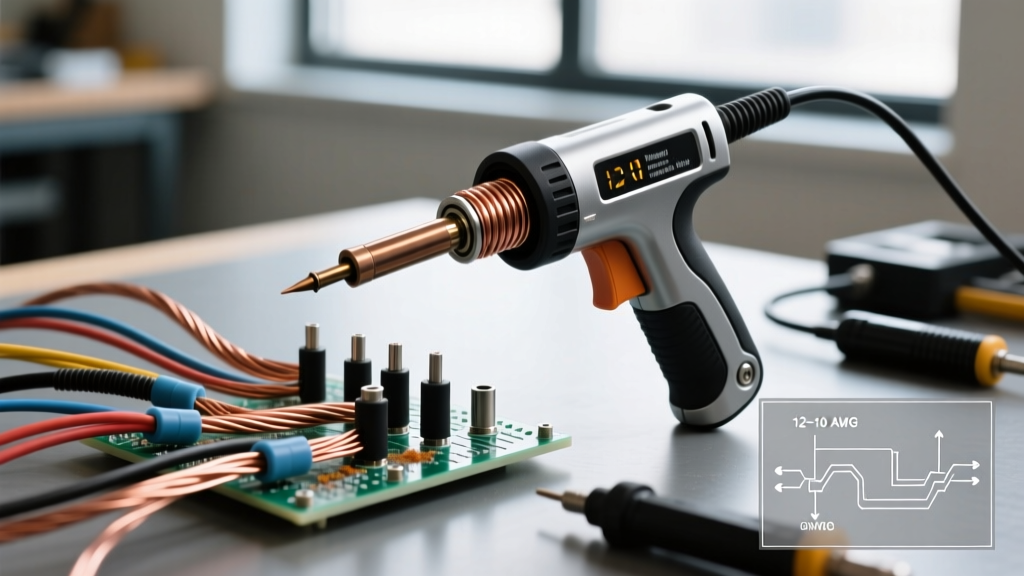
- Choose the Budget Tier ($25–$50) if: You are a homeowner or hobbyist splicing 12AWG to 8AWG copper wire less than once a month. The Weller D550 is practically indestructible for this use case, and the copper tip leaching won't matter at this frequency.
- Choose the Mid-Tier ($55–$95) if: You are a stained-glass artist or an electrician doing daily terminations. Look for the Weller D650PK (300W). The extra thermal mass is required to solder to thick brass foils or heavy grounding lugs without the gun bogging down and losing heat.
- Choose the Premium Tier ($130+) if: You are an automotive technician, HVAC specialist, or field-service engineer. The Milwaukee M18 or similar premium cordless setups pay for themselves by eliminating the need to run extension cords across job sites and by providing precise thermal regulation that prevents burning expensive automotive wire insulation.
Frequently Asked Questions
Why is my soldering gun tip turning black and refusing to accept solder?
This is called oxidation. Because soldering guns do not have closed-loop temperature control, leaving the trigger engaged for more than 15 seconds without applying solder will cause the copper tip to exceed 400°C, rapidly forming a layer of copper oxide. To fix it, let the gun cool, gently file the black layer off with a brass wire brush, and immediately apply a heavy coat of flux-core solder the moment you turn it back on.
Can I use lead-free solder with a budget transformer gun?
It is highly discouraged. Lead-free alloys (like SAC305) require higher melting points (around 217°C to 227°C) and have poor wetting characteristics. Budget guns struggle to maintain the necessary thermal recovery when applied to thick wires using lead-free solder, resulting in cold, crystalline joints. If you must use lead-free solder in heavy-duty applications, upgrade to a premium temperature-controlled station or a high-wattage ceramic iron.
How much does it cost to run a 260W soldering gun in electricity?
The electrical cost is negligible. A 260W gun uses 0.26 kWh per hour of continuous use. At the 2026 US average electricity rate of roughly $0.17 per kWh, running the gun continuously for an hour costs less than 5 cents. The real cost is always in the consumables (solder and flux) and replacement tips.