
The Core Question: What Is Soldering Flux For?
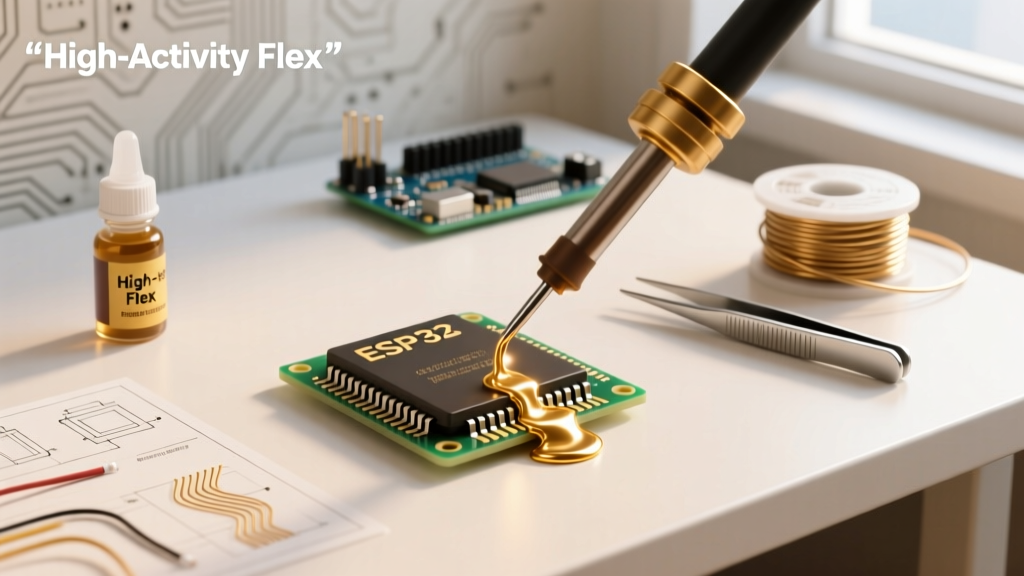
Ask any junior technician what soldering flux is for, and they will likely tell you it "helps the solder stick." While technically true, this simplistic view obscures the complex chemical reality and the massive financial implications of ignoring it. From a purely chemical standpoint, flux is a reducing agent designed to strip away cuprous and cupric oxides from copper pads and component leads, lower the surface tension of the molten alloy, and prevent re-oxidation during the thermal excursion.
But from a cost analysis perspective, flux is an insurance policy against catastrophic rework expenses. In 2026, with the widespread adoption of high-density interconnect (HDI) boards and micro-BGA components, the margin for error in hand soldering and prototyping has effectively vanished. Skipping flux, or using the wrong chemistry for your specific alloy, does not save money; it merely shifts the cost from the consumables budget to the labor and scrap budgets.
The Economics of Oxidation: Pennies vs. Dollars
To understand the true financial impact of flux, we must quantify the cost of a solder joint. A standard 500g spool of Sn63/Pb37 eutectic wire with a 2% rosin core costs approximately $38. This yields roughly 6,000 through-hole joints. The flux cost per joint is a fraction of a cent. However, when a technician attempts to solder a heavily oxidized pad without supplemental liquid or tacky flux, the iron must dwell on the pad longer to achieve wetting.
The Golden Rule of Soldering Economics: Every additional second an iron dwells on a PCB pad to compensate for a lack of flux increases the risk of pad delamination by an exponential factor. A $0.05 drop of flux prevents a $150 board scrap.
According to the IPC-A-610 Acceptability of Electronic Assemblies standard, a compliant solder joint must exhibit proper wetting and a smooth, concave fillet. Oxidized joints result in cold, disturbed, or non-wetting connections, which are classified as defects requiring immediate rework.
Cost Analysis Matrix: Flux Types and Rework Risk
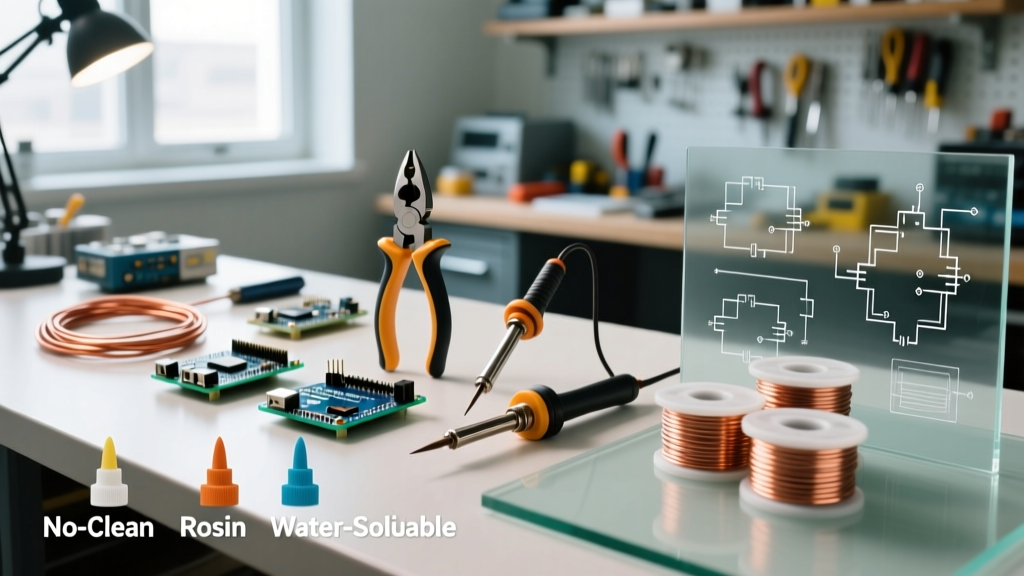
Not all fluxes are created equal, and their costs extend far beyond the initial purchase price. Below is a cost-benefit matrix comparing the three primary flux chemistries used in modern electronics assembly.
| Flux Chemistry | Avg. Cost (per 10g/ml) | Post-Solder Cleaning Cost | Rework & Failure Risk | Best ROI Application |
|---|---|---|---|---|
| Rosin (RMA) | $8.00 - $12.00 | Moderate (Requires IPA or saponifier) | Low (Excellent thermal stability) | General through-hole, hobbyist, low-density SMT |
| Water-Soluble (OA) | $14.00 - $18.00 | High (Requires heated DI water rinse) | High (Corrosive if left uncleaned) | Heavily oxidized legacy boards, automated wave |
| No-Clean (Tacky) | $28.00 - $35.00 | None (Leaves benign residue) | Very Low (Superior wetting, safe residue) | BGA rework, 0402/0201 passives, HDI prototyping |
Real-World Failure Modes and Their Financial Toll
When technicians ask "what is soldering flux for?" they are often reacting to a specific failure mode they are trying to diagnose. Here is how the absence of proper flux chemistry translates directly to financial losses in a production or prototyping environment.
1. Pad Delamination and Lift
Copper oxidizes rapidly when exposed to the 350°C+ tip temperatures required for lead-free SAC305 alloys (which melt at 217°C-220°C). Without the aggressive reducing agents found in supplemental tacky flux, the solder will ball up and refuse to wet. The technician, frustrated, applies downward pressure and holds the iron on the pad for 8 to 10 seconds. The FR-4 substrate's glass transition temperature (Tg) is exceeded, the adhesive bonding the copper foil degrades, and the pad lifts off the board. Cost impact: Total loss of the PCB and the pre-populated components. On a 6-layer impedance-controlled board, this is a $120+ mistake.
2. Cold Joints and Field Returns
A cold joint occurs when the solder cools before properly alloying with the base metals, often due to oxide barriers preventing metallurgical bonding. Visually, it appears grainy and dull. While it may pass a basic continuity test on the bench, thermal cycling in the field will cause the joint to crack. Cost impact: Field returns, warranty claims, and diagnostic labor. A single field failure on an industrial IoT sensor node can cost the manufacturer upwards of $500 in logistics, replacement, and brand damage.
3. Tombstoning in SMT Assembly
In surface mount technology, uneven wetting forces on a passive component can cause one end to lift off the pad, standing the component upright like a tombstone. This is frequently caused by inconsistent flux activation across the component's terminations. Cost impact: Microscopic rework. A technician must use a hot air station or micro-iron to reflow the 0402 capacitor, consuming 10 minutes of highly skilled labor ($8-$15 in overhead) to fix a $0.02 part.
Product Spotlight: Calculating the True Cost of Premium Fluxes
To maximize ROI, professionals must select the right consumable for the job. Here is a 2026 cost breakdown of three industry-standard fluxes and their specific financial use-cases:
- Amtech NC-559-V2-TF (Tacky No-Clean): Priced at approximately $32 for a 10g syringe ($3.20/gram). While the upfront cost is high, its exceptional wetting capability and benign, clear residue eliminate the need for post-solder cleaning. For BGA rework, where cleaning under the component is nearly impossible without specialized ultrasonic equipment, this flux is mandatory. The ROI is realized in zero-clean labor and zero rework.
- MG Chemicals 8341 (Rosin Paste): Priced around $9 for a 7g jar ($1.28/gram). Excellent for heavy-duty through-hole wiring and tinning large gauge wires (10 AWG to 4 AWG). The high-viscosity rosin base clings to vertical surfaces, but it requires isopropyl alcohol (IPA) cleanup to prevent sticky residue that attracts dust. Best ROI in power electronics and chassis wiring.
- Kester 245 (No-Clean Liquid Flux): Priced at roughly $45 per liter. Used primarily in selective soldering and wave soldering pallets. The cost per board is measured in fractions of a milliliter. It provides consistent activation across mixed-alloy environments but requires strict VOC management and fume extraction, adding a hidden facility overhead cost.
The "No-Clean" Fallacy: Hidden Long-Term Costs
A common misconception in cost-cutting is that "no-clean" flux universally eliminates post-assembly expenses. While it eliminates the immediate labor of washing the board, no-clean fluxes leave behind organic acids and rosin residues. In high-impedance analog circuits or high-humidity operating environments, these residues can absorb moisture and facilitate Electrochemical Migration (ECM).
ECM leads to dendritic growth—microscopic metallic trees that grow between adjacent traces, eventually causing short circuits. According to reliability studies referenced by Indium Corporation's flux technologies guidelines, failing to clean no-clean residue in harsh environments can result in latent field failures that manifest 6 to 18 months after deployment. Therefore, the "cost savings" of skipping the cleaning step can result in catastrophic warranty liabilities. For medical, aerospace, or automotive assemblies, cleaning no-clean flux is a mandatory, non-negotiable expense.
Fume Extraction: The Invisible Consumable Cost
When analyzing the cost of flux, we must also account for the safety infrastructure required to use it. Vaporized flux contains colophony (rosin) fumes and volatile organic compounds (VOCs), which are known respiratory sensitizers. Compliance with the OSHA Hazard Communication Standard and local occupational health regulations requires localized fume extraction systems.
- Benchtop Extractors: Units like the Hakko FA-400 or Weller WFE-2D cost between $400 and $1,200 upfront.
- Filter Replacements: HEPA and activated carbon filters must be replaced every 3 to 6 months depending on flux volume, costing $80 to $150 per swap.
- Labor Impact: Proper ventilation reduces technician fatigue and sick days, providing a secondary, often overlooked ROI on flux safety management.
Final ROI Verdict: Never Solder Naked
So, what is soldering flux for? It is the chemical bridge that ensures metallurgical integrity, and financially, it is the most cost-effective insurance policy in electronics manufacturing. The math is undeniable: spending $0.15 per joint on premium Amtech or Kester flux yields a 100x return on investment by preventing pad lift, eliminating cold joints, and reducing microscopic rework time. In an era where PCBs are denser and components are smaller, treating flux as an optional, skippable expense is a fundamental miscalculation of assembly economics. Buy the good flux, use it liberally, and watch your rework scrap bins empty out.