
Understanding the Soldering Paster: Beyond the Solder Wire
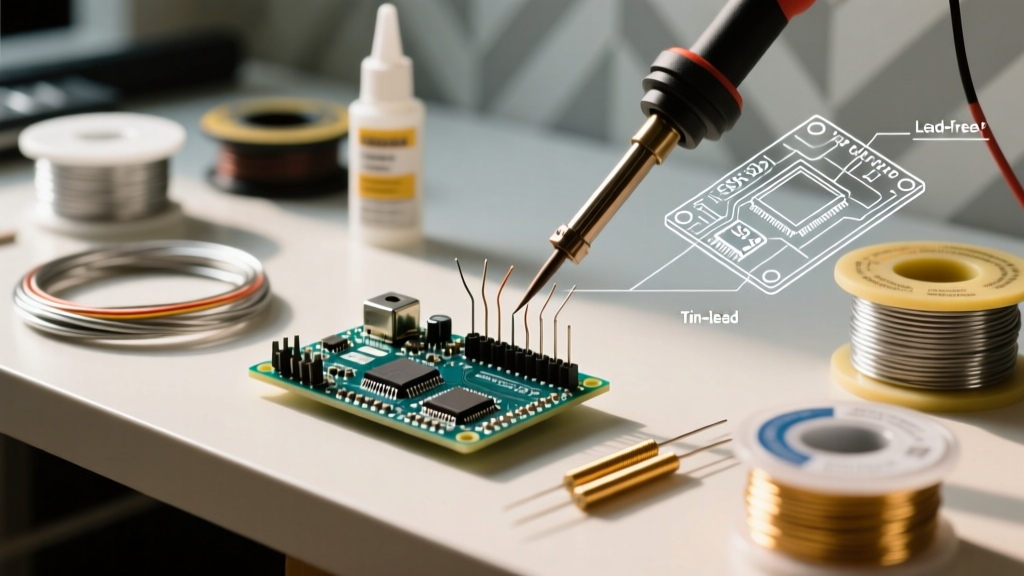
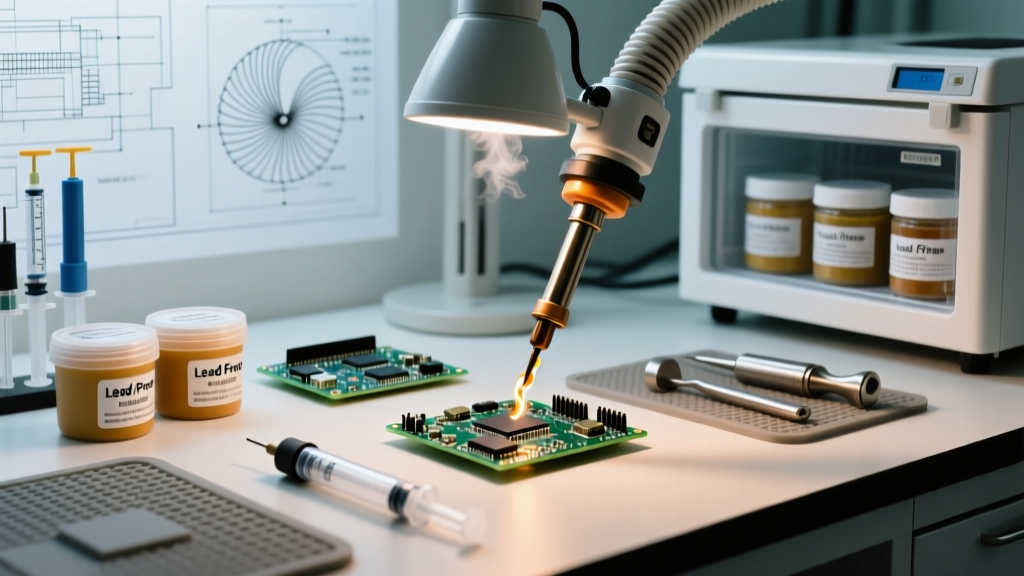
While industry professionals typically use the term "solder paste," the term soldering paster is frequently used in global supply chains, regional markets, and DIY communities to describe the integrated paste-and-syringe applicator systems used for precision surface-mount device (SMD) rework and prototyping. Unlike traditional solder wire, a soldering paster relies on a complex suspension of microscopic alloy spheres (Type 3 to Type 6 mesh sizes) held together by a tacky, chemically active flux vehicle.
As the electronics manufacturing industry has aggressively transitioned toward lead-free alloys like SAC305 (Sn96.5/Ag3.0/Cu0.5) and low-temperature Bismuth-based pastes, the safety profile of these consumables has changed. Lead-free fluxes require higher reflow temperatures (240°C–260°C), which dramatically increases the volatilization of flux activators and the generation of hazardous sub-micron particulate fumes. This guide outlines the critical safety and best practice protocols for handling, storing, and applying modern soldering paster systems in 2026.
Chemical Hazards in Modern Flux Vehicles
The primary safety risk when using a soldering paster is not the metal alloy itself (assuming lead-free), but the flux chemistry. Under the IPC J-STD-004B classification system, most high-reliability no-clean pasters utilize ROL0 or ROL1 (Rosin, Low activity, 0% or <2% halides) fluxes.
The Colophony and Activator Threat
When heated, the rosin (colophony) base and amine activators decompose into airborne aliphatic aldehydes and acidic gases. According to occupational health guidelines published by the UK Health and Safety Executive (HSE), inhalation of colophony fumes is a leading cause of occupational asthma and severe respiratory sensitization. Furthermore, direct skin contact with uncured paste can cause contact dermatitis, as the flux vehicle acts as a mild solvent and skin penetrant.
⚠️ CRITICAL SAFETY CALLOUT: Never use a heat gun or compressed air to blow off excess uncured soldering paster from a PCB. This atomizes the flux and heavy metal microspheres, creating an inhalable aerosol that bypasses standard benchtop fume extractors.
Cold Storage and the "Popcorning" Effect
Proper storage of a soldering paster is both a quality control and a safety issue. The chemical activity of the flux and the oxidation rate of the alloy spheres dictate that pasters must be refrigerated between 2°C and 10°C (35°F–50°F).
The Acclimatization Protocol
When removing a syringe or jar from cold storage, you must allow it to acclimatize to room temperature (20°C–25°C) before opening. Skipping this step introduces a severe safety and quality hazard:
- Condensation Ingress: Opening a cold syringe causes ambient moisture to condense inside the barrel.
- Moisture Trapping: This water becomes trapped in the flux vehicle.
- The Popcorning Effect: During reflow, the trapped water instantly vaporizes at 100°C, causing the molten solder to violently splatter ("solder balling" or "popcorning"). This ejects micro-droplets of 250°C molten alloy and acidic flux onto the operator's skin and eyes.
Best Practice: Always allow a 500g jar to acclimate for 4 hours, and a 30cc/50cc syringe for at least 2 hours. Keep the cap sealed during this period.
Safe Dispensing and Application Techniques
Manual dispensing of a soldering paster via syringe requires precise pneumatic or mechanical control. Applying excessive manual thumb pressure to a syringe plunger not only causes repetitive strain injury (RSI) but can lead to sudden pressure releases, splattering uncured paste onto the workbench.
Needle Gauge Selection Matrix
Selecting the correct dispensing needle prevents clogging (which leads to pressure buildup and sudden bursts) and ensures precise deposition. Use the following matrix for standard SMD components:
| Component Package | Recommended Needle Gauge | Inner Diameter (mm) | Paste Type (Mesh) |
|---|---|---|---|
| 1206 / 0805 | 20G - 22G | 0.60 - 0.41 | Type 3 or 4 |
| 0603 / 0402 | 25G - 27G | 0.26 - 0.21 | Type 4 or 5 |
| QFN / BGA Stenciling | 30G+ or Tapered Tip | 0.15 or wider orifice | Type 5 or 6 |
Pro Tip: For high-volume prototyping, invest in a pneumatic dispenser (e.g., EFD Ultimus series) set to 15-30 PSI. This eliminates manual pressure variables and reduces paste waste by up to 40%.
Fume Extraction and PPE Requirements
Because soldering paster is often applied using hot air rework stations or localized micro-torches, the thermal degradation of the flux is rapid and concentrated. Standard desk fans are entirely inadequate and actually dangerous, as they disperse heavy metal particulates and VOCs across the room.
- Fume Extraction: Use a benchtop extractor with a dual-stage filtration system (HEPA for particulates + Activated Carbon for VOCs). Models like the BOFA AD Oracle iQ or the Hakko FA-400 must be positioned within 15 cm (6 inches) of the reflow zone to achieve the necessary capture velocity of 0.5 m/s.
- Hand Protection: Standard 3-mil medical gloves are too thin and can be permeated by flux solvents. Use 5-mil to 6-mil nitrile gloves (e.g., MicroFlex Black Dragon). Change gloves immediately if you feel any warmth or detect chemical odors, as this indicates breakthrough.
- Eye Protection: ANSI Z87.1 rated safety glasses are mandatory during hot air reflow to protect against flux popcorning and solder splatter.
Alloy Safety and Environmental Disposal
Not all soldering paster alloys carry the same environmental and health burdens. While lead-free is the standard, specific applications still require leaded or exotic alloys. The Occupational Safety and Health Administration (OSHA) maintains strict permissible exposure limits (PEL) for lead, making the handling of Sn63/Pb37 pasters heavily regulated.
Spill Response Protocol
If a soldering paster syringe leaks or drops onto the workbench:
- Do not wipe it with a dry rag, as this smears the heavy metals and pushes them into the porous surface of the bench mat.
- Apply a specialized PCB saponifier or high-purity (99%) Isopropyl Alcohol (IPA) to a lint-free wipe.
- Wipe the area in a single direction, folding the wipe inward to trap the alloy spheres.
- Dispose of the contaminated wipe in a designated heavy-metal/chemical waste bin, never in standard municipal trash.
Frequently Asked Questions (FAQ)
Can I freeze a soldering paster to extend its shelf life beyond 6 months?
No. Freezing (below 0°C) can cause the flux vehicle and the alloy spheres to separate permanently (phase separation). The resin matrix may crystallize, ruining the rheology and tackiness of the paste. Stick to the manufacturer-recommended 2°C to 10°C range.
Is "no-clean" soldering paster completely safe to touch after reflow?
While the flux residues of a true ROL0 no-clean paste are generally inert and non-conductive after proper high-temperature reflow, handling the board with bare hands can introduce skin oils that compromise long-term reliability. Furthermore, if the reflow profile was too cool, the flux may not have fully polymerized, leaving active, corrosive residues. Always handle assembled PCBs with nitrile gloves or ESD-safe finger cots.
Why does my lead-free SAC305 paster look gray and crusty on the syringe tip?
This is surface oxidation caused by leaving the dispensing needle exposed to ambient air. Always cap the syringe with a blind plug or a specialized needle cap immediately after use. If the tip is crusted, do not attempt to force the plunger; simply discard the $2-$5 needle and attach a fresh one to prevent syringe barrel rupture.