
The Fundamental Chemistry: What Is Soldering Flux Really?
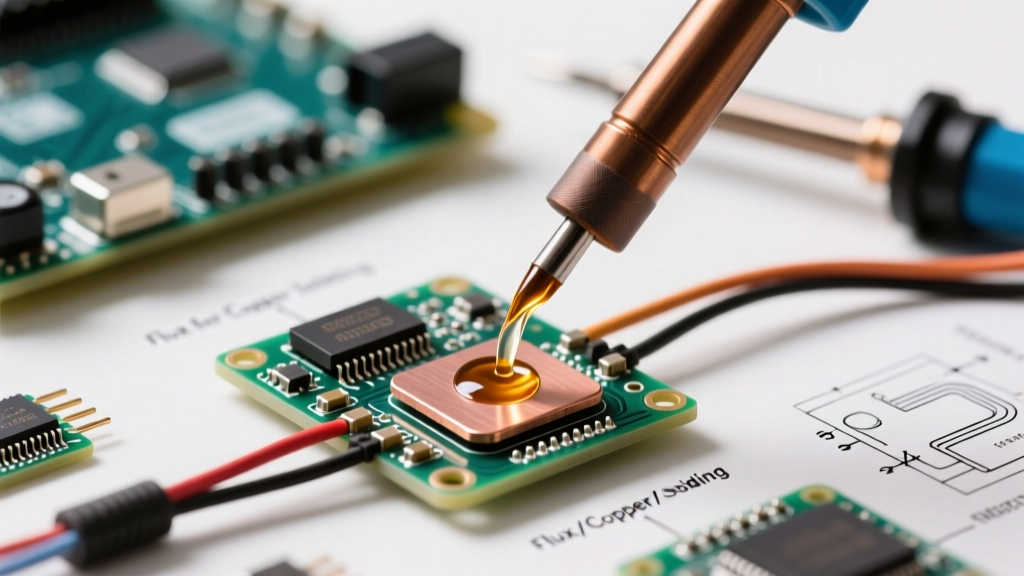
When electronics engineers and hobbyists ask, what is soldering flux, they are inquiring about a vital chemical reducing agent. At a molecular level, copper surfaces exposed to ambient air rapidly form copper oxide (CuO and Cu2O) layers. Molten solder simply will not wet or bond to oxidized copper; it will ball up and roll off, resulting in a cold, high-resistance joint. Flux is the chemical bridge that makes metallurgical bonding possible.
Traditional rosin-based fluxes rely on abietic acid, a naturally occurring organic compound derived from pine tree sap. When heated to its activation temperature (typically between 150°C and 180°C), abietic acid becomes highly reactive. It chemically reduces the copper oxide layer, stripping it away and forming copper abietate, which dissolves harmlessly into the molten solder alloy. Simultaneously, the liquid flux blankets the joint, displacing oxygen and preventing re-oxidation during the critical cooling phase.
Understanding this chemical mechanism is crucial for selecting the right consumable. If your soldering iron tip temperature is too low, the flux will not fully activate, leaving oxides intact. If the temperature is too high (exceeding 350°C for prolonged periods), the flux will burn off, carbonize, and lose its protective properties before the solder can wet the pad.
Decoding the IPC Classifications
The electronics manufacturing industry relies on the IPC J-STD-004B standard to classify fluxes based on their base chemistry and activation levels. This standard ensures reliability in everything from consumer toys to aerospace avionics.
- RO (Rosin): Derived from natural pine sap. Excellent thermal stability and low corrosion risk.
- RE (Resin): Synthetic or highly purified natural resins. Offers better consistency than raw rosin.
- OR (Organic): Water-soluble organic acids (like citric or lactic acid). Highly active but requires strict cleaning.
- IN (Inorganic): Mineral acids (hydrochloric, zinc chloride). Used strictly for heavy industrial plumbing, never for PCBs.
These base types are further modified by activity levels: L (Low), M (Moderate), and H (High). For example, an ROM1 flux is a Rosin-based, Moderately activated flux with halide content. Choosing the right activity level depends entirely on the oxidization state of your components and your post-solder cleaning capabilities.
The Three Main Flux Categories for Modern Workbenches
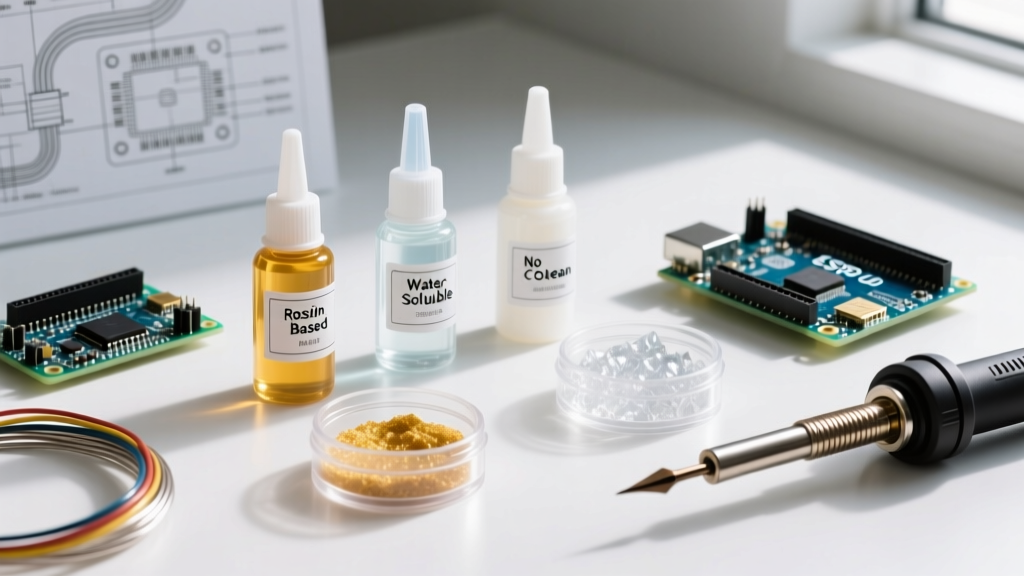
1. Rosin-Based Flux (R, RMA, RA)
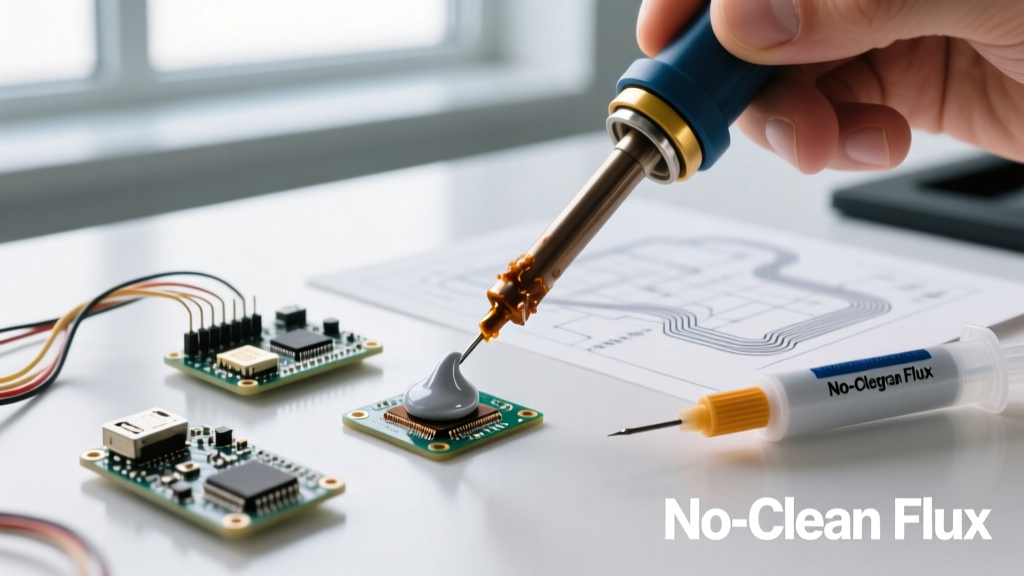
Rosin flux is the historical workhorse of electronics assembly. Rosin (R) is unactivated and very mild, suitable only for pristine, newly manufactured boards. Rosin Mildly Activated (RMA) contains slight chemical activators to tackle minor tarnishing and is the standard for most general-purpose solder wires (like Kester 44). Rosin Activated (RA) contains aggressive halide activators designed for heavily oxidized boards or difficult-to-solder alloys like nickel. While RA flux provides brilliant, shiny joints, its, the residue is benign and possesses high Surface Insulation Resistance (SIR). No-clean fluxes (like Kester 245 or Chip Quik SMD291AX tacky flux) are engineered to volatilize completely or leave a hard, glass-like residue that traps any remaining active ions.
Best for: High-density SMD rework, BGA stenciling, and environments where washing is impossible.
The Catch: The residue can be sticky and may interfere with optical automated inspection (AOI) or bed-of-nails testing. Furthermore, if subjected to high heat repeatedly without cleaning, the residue can carbonize and become conductive.
Application-to-Flux Selection Matrix
Selecting the correct flux requires matching the chemistry to your specific assembly scenario. The following matrix provides actionable guidance for 2026 workbench setups.
| Application Scenario | Recommended Flux Type | Specific Product Example (2026) | Approx. Cost | Cleaning Protocol |
|---|---|---|---|---|
| General Through-Hole & Prototyping | RMA (Rosin Mildly Activated) | Kester 44 (63/37 Wire Core) | $35 / 1lb spool | Wipe with IPA; optional |
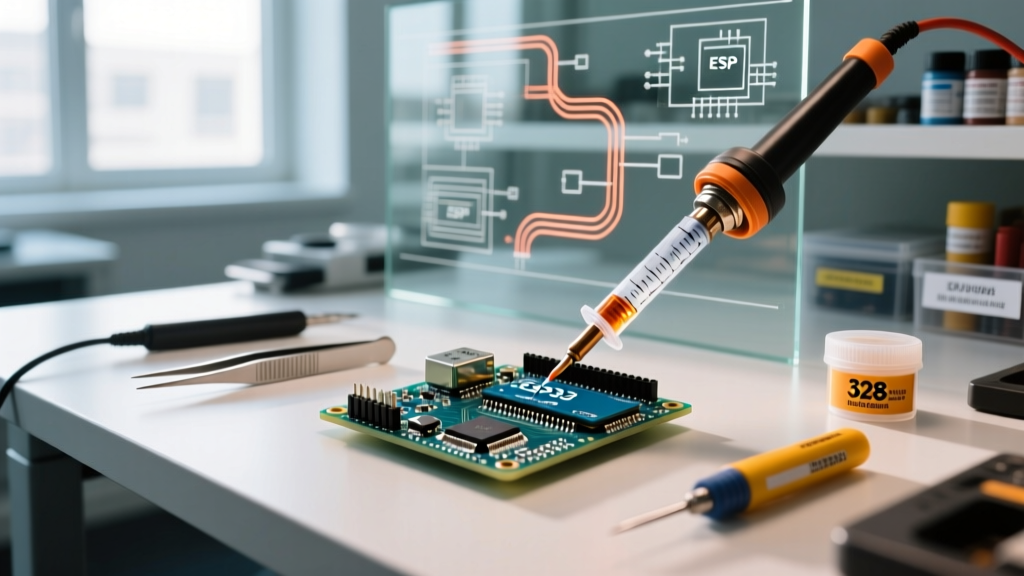
| SMD Rework & Drag Soldering | No-Clean Tacky (Gel) | Chip Quik SMD291AX10 | $22 / 10g syringe | None required (benign) |
| Automotive & High-Reliability | Water-Soluble (OA) | MG Chemicals 8341 Liquid | $14 / 100ml bottle | Mandatory DI water wash |
| Heavy Oxidation / Vintage Repair | RA (Rosin Activated) | Kester 186 Liquid Flux | $25 / 118ml can | Mandatory IPA/Flux-Off |
Real-World Failure Modes: When Flux Goes Wrong
Even the best flux will cause catastrophic board failure if misapplied. According to NASA's electronic assembly guidelines, flux-related defects account for a significant percentage of field returns in high-reliability electronics. Here are the most common failure modes:
Dendritic Growth and Electrochemical Migration (ECM)
If water-soluble (OR) flux is left on a board, or if no-clean flux is exposed to continuous high humidity without proper conformal coating, the residual acids can combine with moisture to form an electrolytic cell. Under DC bias, metal ions migrate between adjacent traces, growing microscopic metallic 'trees' called dendrites. These dendrites eventually bridge the gap, causing a short circuit. This is why aerospace and medical devices strictly mandate cleaning or the use of high-SIR no-clean chemistries.
Tombstoning in Micro-SMD Components
0402 or 0201 resistors.Outgassing and BGA Voiding
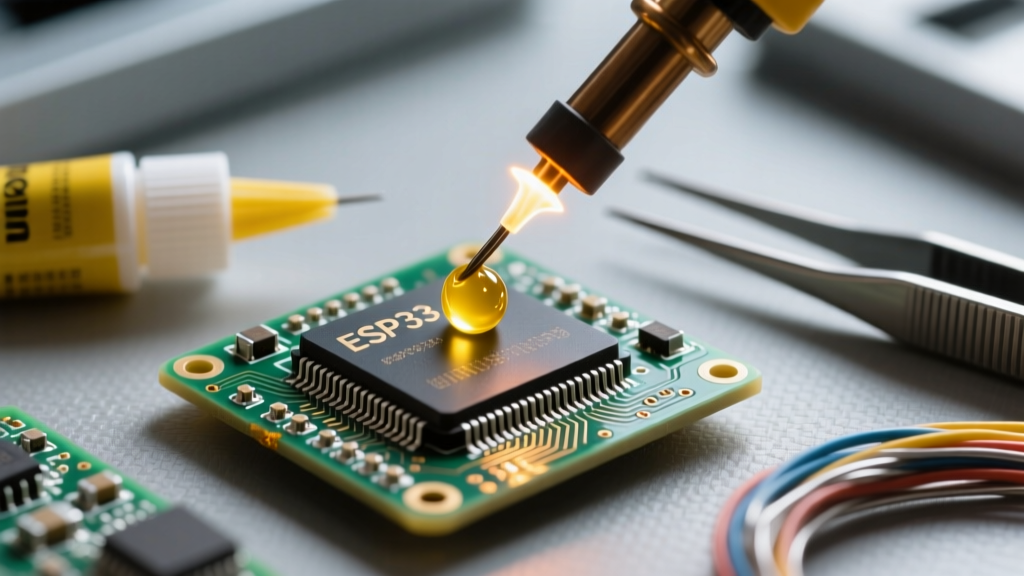
During BGA (Ball Grid Array) rework, excessive application of liquid flux can lead to rapid boiling. The vapor gets trapped under the component body, creating large voids in the solder spheres. If voiding exceeds 25% of the solder joint area (as viewed via X-ray), the joint's mechanical and thermal fatigue life is severely compromised. For BGA work, always use low-outgassing tacky flux applied in a micro-thin layer.
Expert Tips for Storage and Shelf Life
Flux is a reactive chemical; it degrades over time. Liquid rosin fluxes typically have a shelf life of 24 months when stored at room temperature (20°C - 25°C). However, solder paste (which suspends microscopic solder spheres in a flux vehicle) is highly sensitive.
Pro-Tip: Never store opened solder paste syringes in standard food refrigerators alongside consumables, and never freeze them. Store them in a dedicated laboratory fridge at 0°C to 5°C. Before use, allow the syringe to acclimate to room temperature for at least 2 hours to prevent moisture condensation inside the paste, which causes severe spattering during reflow.
Frequently Asked Questions (FAQ)
Can I use plumbing flux for electronics?
Absolute rule: Never use plumbing flux on a PCB. Plumbing fluxes (like Oatey No. 95) are typically inorganic acid (IA) or highly aggressive zinc chloride bases. They will eat through delicate copper traces within hours and cause immediate, irreversible short circuits. Always use IPC J-STD-004B compliant electronics flux.
Is 99% Isopropyl Alcohol (IPA) sufficient for cleaning?
For RMA and No-Clean fluxes, 99% IPA applied with a lint-free swab or ESD-safe brush is highly effective. However, IPA is largely ineffective at dissolving water-soluble (OA) flux residues; those require heated Deionized (DI) water. Furthermore, using 70% IPA (which contains 30% water) can actually smear rosin residue across the board rather than lifting it, worsening the contamination.
How do I know if my flux pen is dried out?
Standard flux pens contain a volatile solvent carrier (often ethanol or isopropanol) that evaporates if the cap is left loose or the internal valve degrades. If the pen leaves a thick, gummy streak instead of a thin, rapidly drying liquid layer, the solvent has evaporated, concentrating the solids. While it will still work in a pinch, the lack of solvent reduces capillary action, making it difficult to apply the flux precisely under tight-pitch QFP leads. Replace pens annually for optimal results.