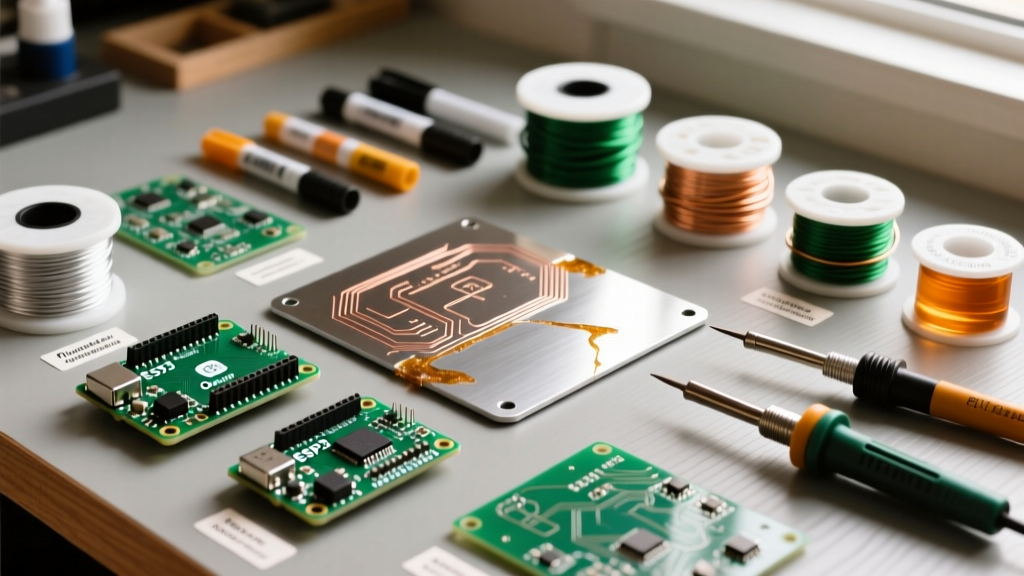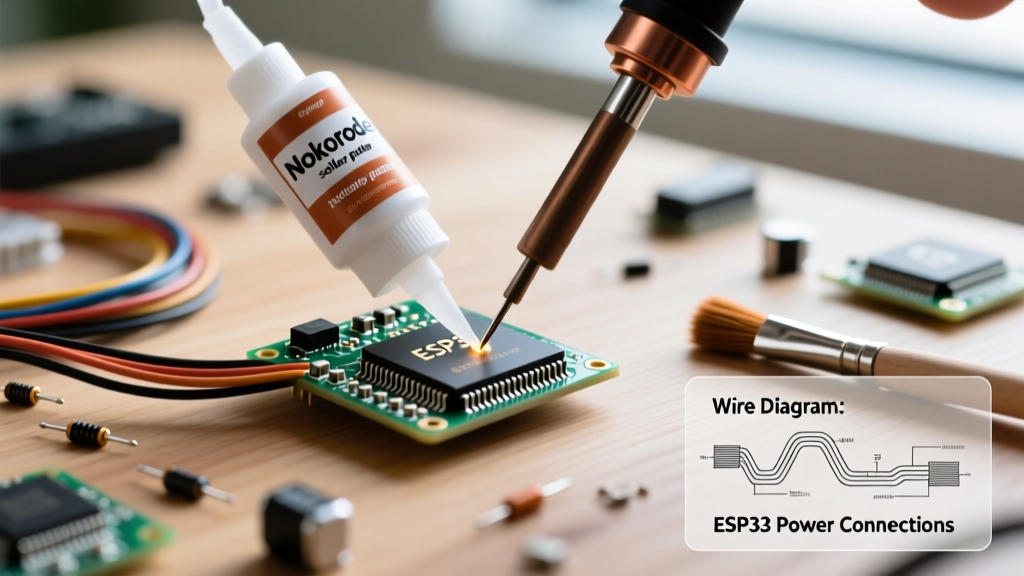

The Hardware Store Trap: What is Nokorode Soldering Paste?
For beginners stepping into the world of DIY soldering, a trip to the local hardware store can be a confusing experience. Amidst the aisles of copper fittings, blowtorches, and wire strippers, you will inevitably spot a distinctive tub labeled Nokorode Soldering Paste (often branded as Nokorode Super Flux). Because it is marketed simply as a 'soldering flux,' many novice electronics hobbyists mistakenly purchase it, assuming it is a universal aid for all soldering tasks. This is a critical error that can permanently destroy your projects.
Nokorode is a legendary, heavy-duty flux paste primarily formulated for plumbing, roofing, and heavy mechanical metalwork. It is an aggressive, acid-based chemical compound designed to strip severe oxidation from thick copper pipes and brass fittings in seconds. While it is an absolute powerhouse for joining 15mm copper water lines or sweating heavy-gauge battery lugs, it has absolutely no place on a printed circuit board (PCB). In this comprehensive beginner's guide, we will break down the exact chemistry of Nokorode paste, outline its proper applications, and explain the metallurgical reasons why you must keep it far away from your Arduino or Raspberry Pi projects.
⚠️ CRITICAL BEGINNER WARNING: Never use Nokorode soldering paste, or any plumbing-grade acid flux, on electronic components, PCBs, or thin-gauge hook-up wire. The corrosive residues will cause galvanic corrosion, dissolve microscopic copper traces, and create conductive dendrites that will short-circuit and kill your electronics within days or weeks.
Chemical Breakdown: Why It Melts Oxide But Destroys PCBs
To understand why Nokorode paste behaves the way it does, we have to look at its active chemical ingredients. Unlike electronics fluxes, which rely on mild rosin (derived from pine sap) or synthetic no-clean resins, traditional Nokorode plumbing pastes rely on zinc chloride (ZnCl2) and ammonium chloride suspended in a petroleum or heavy organic carrier.
The Zinc Chloride Mechanism
When zinc chloride is heated to soldering temperatures (typically above 350°F / 175°C), it undergoes a violent chemical reaction with moisture and metal oxides. It essentially forms a localized, highly concentrated hydrochloric acid bath on the surface of the metal. This acid aggressively dissolves the tough, black copper oxide layers that form on plumbing pipes, exposing raw, shiny copper so the molten solder can alloy with it.
According to the NIOSH Pocket Guide to Chemical Hazards, zinc chloride is highly corrosive and poses significant risks to both bare metals and human tissue if not handled correctly. When this chemical residue is left on a delicate PCB, it continues to eat through the thin 1-ounce (35µm) copper traces long after the joint has cooled, eventually turning the copper into a green, non-conductive copper chloride sludge.
Nokorode vs. Electronic Fluxes: A Metallurgical Comparison
The electronics industry strictly regulates flux corrosivity under the IPC J-STD-004 standard, which classifies fluxes based on their material type and activity level. Nokorode fails the 'copper mirror test' required for electronics because it completely strips the thin copper film from the glass substrate. Below is a comparison matrix to help beginners choose the right chemistry for their specific application.
| Flux Category | Brand / Example | Base Chemistry | Primary Application | Corrosivity & Cleanup |
|---|---|---|---|---|
| Acid / Plumbing Paste | Nokorode Super Flux | Zinc Chloride / Petroleum | Copper pipes, brass, heavy lugs | Highly Corrosive. Mandatory neutralization and washing. |
| Rosin Mildly Activated (RMA) | Kester 186 / Chip Quik | Pine Rosin / Mild Activators | General electronics, DIY PCBs | Low Corrosivity. Clean with 99% IPA for best results. |
| No-Clean Synthetic | Amtech NC-559 (Paste) | Synthetic Resins / Adipic Acid | SMD reflow, fine-pitch ICs | Non-Corrosive. Residue is safe to leave on the board. |
Step-by-Step: Soldering Copper Pipes with Nokorode Paste
Where Nokorode truly shines is in plumbing. If you are repairing a residential water line or building a custom liquid-cooling loop using rigid copper tubing, this paste is the industry standard. A 50g tub typically costs between $6 and $9 in 2026, making it an incredibly economical choice for metalwork. Follow these professional steps for a leak-proof joint:
- Mechanical Preparation: Flux cannot penetrate heavy grime. Use 120-grit emery cloth or a dedicated copper wire brush to polish the outside of the pipe and the inside of the fitting until the copper gleams.
- Paste Application: Using a dedicated acid brush (never use your fingers), apply a thin, even 0.5mm film of Nokorode paste to the outside of the pipe. Do not apply it inside the fitting, as excess paste will get pushed into your water supply.
- Assembly and Heat: Push the fitting onto the pipe. Apply the flame from your propane or MAPP gas torch to the fitting, not the pipe. The goal is to heat the heavy brass or copper fitting to roughly 400°F (204°C) so it draws the solder in via capillary action.
- Feed the Solder: Touch your lead-free plumbing solder (typically 95/5 Tin/Antimony) to the joint opposite the flame. If the flux has done its job, the solder will instantly melt and get sucked deep into the joint.
- Wipe and Cool: While the joint is still hot, wipe away the excess molten solder and burnt flux residue with a thick, damp cotton rag. This leaves a smooth, professional fillet.
Heavy-Duty Electrical Lugs: The Exception to the Rule
There is one specific electrical scenario where veteran electricians and automotive builders occasionally reach for an acid-based paste like Nokorode: soldering massive 2/0 AWG to 4/0 AWG battery lugs for high-current DC applications (like solar banks or EV conversions). The thick strands of heavy-gauge wire are notoriously difficult to tin with standard rosin flux, especially if the copper has oxidized from sitting in a garage.
Post-Solder Neutralization Protocol
If you must use Nokorode paste for heavy electrical lugs, you must neutralize the acid immediately after the joint cools. Failure to do so will result in the acid creeping up the wire strands under the insulation via capillary action, eventually corroding the copper strands and creating a high-resistance fire hazard.
- Step 1: Scrub the hot (but not molten) joint with a stiff nylon brush and hot soapy water.
- Step 2: Create a neutralizing slurry using baking soda (sodium bicarbonate) and water. Apply it to the joint; it will fizz aggressively as it neutralizes the zinc chloride.
- Step 3: Rinse thoroughly with distilled water, followed by a heavy dousing of 99% isopropyl alcohol to displace the moisture and prevent flash rusting.
- Step 4: Seal the joint immediately with adhesive-lined heat shrink tubing.
Safety, PPE, and Fume Management
Soldering with acid fluxes generates harsh, acrid smoke. When zinc chloride is vaporized by a blowtorch, it forms a dense white smoke that is severely irritating to the respiratory tract. According to guidelines documented in the Home Depot's professional plumbing soldering guide, proper ventilation is non-negotiable when working with chemical pastes.
Always wear ANSI-rated safety glasses to prevent flux splatters from reaching your eyes, as zinc chloride can cause severe chemical burns to the cornea. Use nitrile gloves when handling the paste, and ensure you are working in a space with active cross-ventilation or a dedicated fume extraction system. Never use a standard electronics desktop fan to blow Nokorode smoke around your room; vent it directly outside.
Frequently Asked Questions (FAQ)
Can I clean Nokorode flux off my PCB with isopropyl alcohol?
No. Isopropyl alcohol (IPA) will not neutralize zinc chloride. If you accidentally get Nokorode on a PCB, you must immediately wash the board in a baking soda and water solution to neutralize the acid, followed by an ultrasonic bath in distilled water, and finally an IPA rinse. Even then, the trace damage may already be done.
Does Nokorode paste expire?
Nokorode paste has an exceptionally long shelf life due to its petroleum base. If stored in a cool, dry place with the lid tightly sealed, a tub can easily last 5 to 10 years. If the paste separates and a layer of oil forms on top, simply stir it vigorously with a wooden stick to re-emulsify the chemicals.
Is Nokorode safe for soldering stained glass?
While some hobbyists use it for heavy copper foil work, most stained glass artisans prefer liquid gel fluxes (like Novacan) because they are easier to apply to vertical glass seams and leave less messy residue to clean out of the intricate crevices of a glass mosaic.