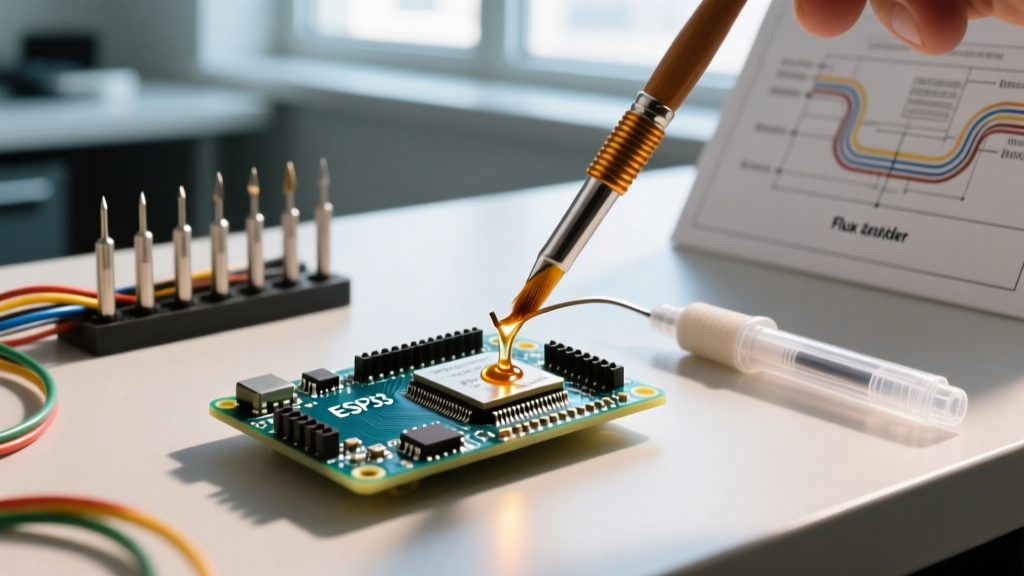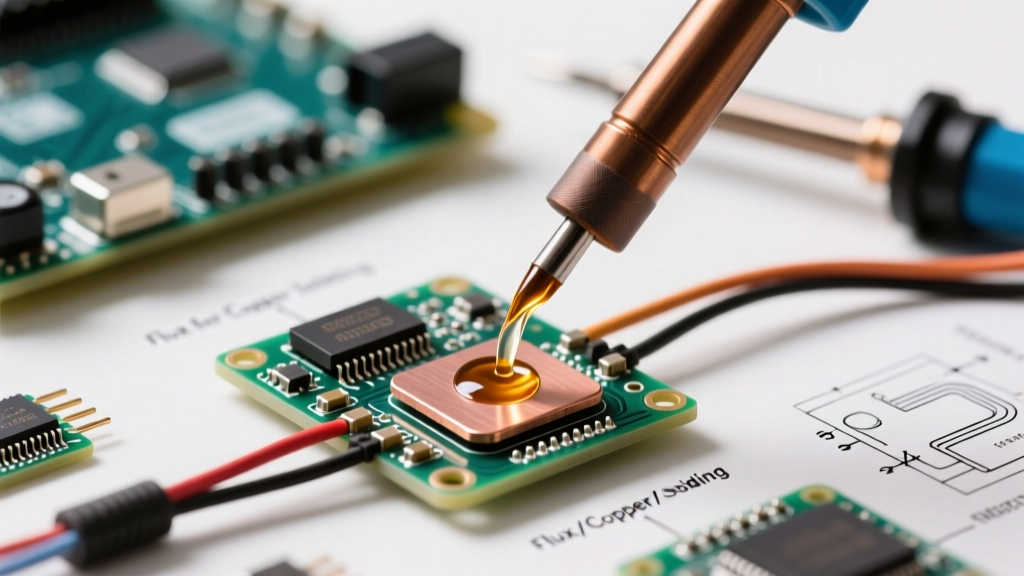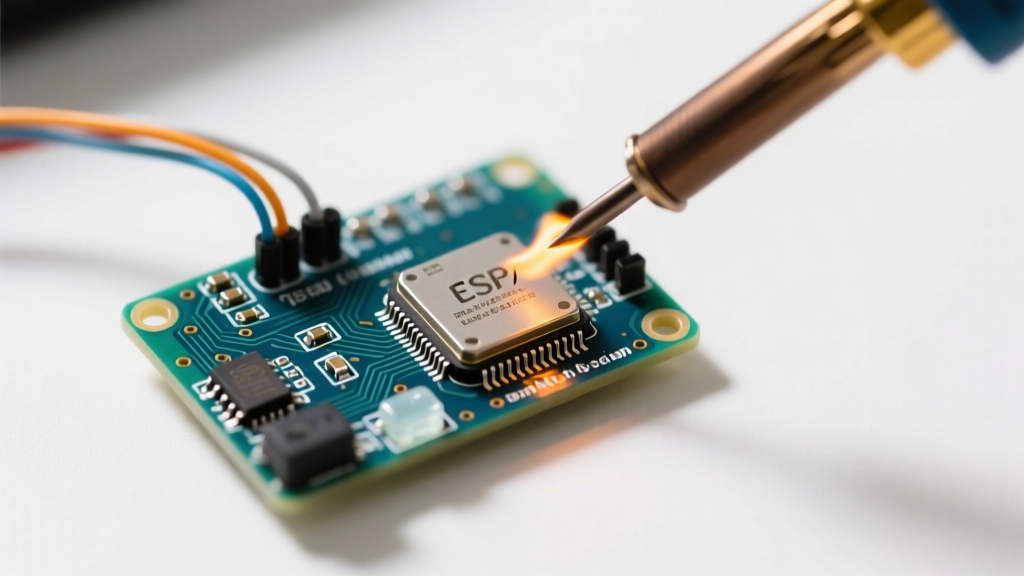

The Core Question: When Soldering, Why Should Flux Be Used?
Every electronics engineer and DIY enthusiast eventually asks: when soldering why should flux be used? The answer lies at the intersection of metallurgy and chemistry. While solder wire provides the mechanical and electrical bridge between components, flux is the chemical catalyst that makes the bond possible. Without flux, molten solder will bead up, roll off copper pads, and create catastrophic high-resistance joints. This guide breaks down the exact chemical mechanisms of flux, explores the latest 2026 formulations, and provides a definitive selection matrix for your workbench.
The Chemistry of Failure: Oxidation and Surface Tension
To understand why flux is mandatory, you must understand what happens to metals at high temperatures. When you apply a 350°C (662°F) soldering iron tip to a copper pad, the copper instantly reacts with oxygen in the air to form copper oxide (CuO and Cu2O).
- Eutectic Sn63/Pb37 melts at 183°C (361°F) but oxidizes rapidly above 200°C.
- Lead-Free SAC305 (Sn96.5/Ag3.0/Cu0.5) melts at 217°C (423°F) and requires tip temperatures up to 380°C, accelerating oxidation exponentially.
Solder will not wet (adhere to) oxidized metal. Furthermore, molten solder has high surface tension. Flux solves both problems simultaneously. It contains weak organic acids (like abietic acid in rosin) that dissolve metal oxides, and surfactants that lower the surface tension of the molten solder, allowing it to flow via capillary action into through-holes and under SMD leads.
The Three Stages of Flux Activation
According to the IPC J-STD-004B standard, flux does not work at room temperature. It requires a thermal profile to activate:
- Preheat / Solvent Evaporation (100°C - 150°C): The carrier solvents (alcohols or water) boil off, leaving the active flux solids on the joint.
- Activation / Oxide Removal (150°C - 200°C): The acidic activators become chemically reactive, aggressively stripping copper oxide and exposing bare, pristine metal.
- Soldering / Wetting (200°C+): The molten solder flows over the cleaned metal. The flux floats to the surface, forming a protective barrier that prevents re-oxidation during the liquid phase.
Flux Selection Matrix: Rosin vs. Water-Soluble vs. No-Clean
Choosing the wrong flux can lead to corroded traces or short circuits. Below is a comparison of the three primary flux chemistries used in modern PCB assembly.
| Flux Type | Base Chemistry | Activation Temp | Cleaning Required? | Best Use Case | Example Product (2026 Pricing) |
|---|---|---|---|---|---|
| Rosin (RA/RMA) | Natural pine resin + Halide activators | 150°C - 180°C | Yes (Isopropyl Alcohol) | General through-hole, heavy oxidation, hobbyist repair | Kester 44 Liquid (~$28.50 / 2oz) |
| Water-Soluble (OA) | Organic Acids (Lactic/Citric) + Water base | 120°C - 160°C | Yes (DI Water wash) | High-reliability aerospace, heavily oxidized legacy boards | MG Chemicals 8350 (~$18.99 / 10ml) |
| No-Clean | Synthetic resins + Mild activators | 160°C - 200°C | No (Residue is inert) | SMD rework, BGA stenciling, high-volume production | Chip Quik NC191 (~$16.95 / 10cc) |
Catastrophic Failure Modes When Skipping Flux
What happens if you try to solder without flux, or if your flux-cored wire has degraded? The results are immediate and destructive to the circuit's longevity.
1. The "Cold" or "Dry" Joint
Without flux to lower surface tension and remove oxides, the solder forms a convex, grainy ball that sits on top of the pad rather than forming a concave fillet. While it may pass a casual visual inspection, a dry joint has massive internal micro-cracks. Under thermal cycling, these joints will exhibit intermittent high resistance, leading to mysterious device reboots and signal degradation.
2. Tombstoning in SMD Assembly
When reflowing 0402 or 0603 surface-mount components, uneven flux activation causes one pad to wet faster than the other. The surface tension of the molten solder on the active pad will literally pull the component upright, standing it on its end like a tombstone. Using a high-quality tack flux like Indium CW-810 ensures both pads wet simultaneously.
3. Electromigration and Dendrite Growth
If you use a highly active water-soluble flux and fail to clean it, the ionic residue left behind acts as an electrolyte. When voltage is applied, metal ions migrate across the PCB substrate, growing microscopic metallic "trees" (dendrites) that eventually bridge adjacent traces, causing dead shorts.
Expert Insight: As detailed in the Adafruit Guide to Excellent Soldering, relying solely on the flux core inside your solder wire is rarely enough for repair work. The core flux burns off within 1.5 seconds of touching a hot iron. Always apply supplemental liquid or gel flux to the pad before introducing the iron.Application-Specific Selection Guide
To optimize your workflow, match the flux to the specific mechanical and thermal demands of your project.
- Through-Hole Prototyping: Use Rosin Activated (RA) flux. The halide activators easily cut through the oxidation on standard DIP IC legs and breadboard-torn copper pads. Clean with 99% IPA afterward.
- QFN and BGA Rework: Use No-Clean Tack Flux in a syringe. The high viscosity holds the BGA sphere in place during reflow, and the synthetic resin encapsulates the activators upon cooling, preventing leakage currents under the chip where cleaning is impossible.
- RF and High-Frequency PCBs: Use Water-Soluble Flux followed by a rigorous deionized water and ultrasonic cleaning cycle. No-clean residues can alter the dielectric constant of the board, causing signal loss at GHz frequencies.
Expert Troubleshooting: Flux Residue and Cleaning
A common complaint among technicians is sticky, brown residue left after soldering. This is typical of rosin-based fluxes. While the residue is generally non-conductive, it can interfere with conformal coating adhesion and trap moisture in humid environments.
The 2026 Cleaning Protocol: Do not use standard 70% rubbing alcohol from the pharmacy; the 30% water content will smear the flux and cause white, crusty streaks. Use 99.9% Isopropyl Alcohol (IPA) and a stiff hog-bristle brush. Apply the IPA, scrub the joint to dissolve the rosin, and immediately blot with a lint-free Kimwipe before the alcohol evaporates and redeposits the flux.
Frequently Asked Questions
Does lead-free solder require more flux?
Yes. Lead-free alloys like SAC305 require higher soldering temperatures (typically 350°C to 380°C at the tip). These extreme temperatures burn through standard rosin flux cores in under a second. Industry experts at SparkFun Electronics recommend using solder wire with a 3% to 4% flux core weight (compared to the standard 2% for leaded) and applying supplemental liquid flux to compensate for the rapid thermal degradation.
Can I use plumbing flux for electronics?
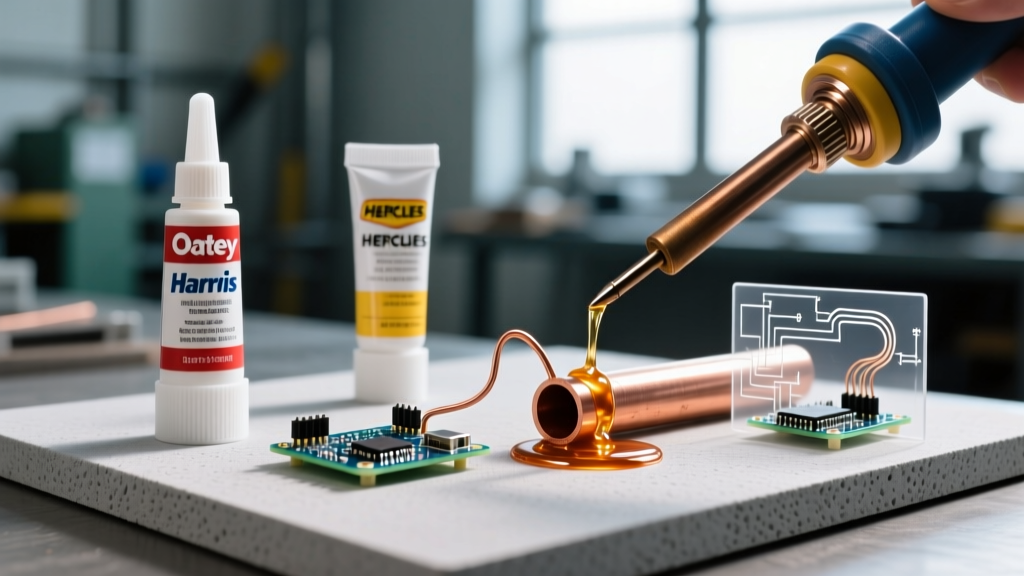
Absolutely not. Plumbing fluxes (like Oatey No. 95) are based on zinc chloride and hydrochloric acid. These are highly corrosive, inorganic acids designed to etch thick copper pipes. If used on a PCB, the acid will eat through the thin copper traces, destroy component leads, and create highly conductive, corrosive salts that will ruin the board within days. Always use fluxes certified to IPC J-STD-004.
Why does my flux splatter and pop when I touch the iron?
Splattering occurs when the solvent carrier in the flux boils too violently. This is common with liquid fluxes applied too heavily or with cheap solder wires that use water-based carriers instead of alcohol-based ones. To minimize splatter, apply liquid flux and let it sit for 10-15 seconds to allow the primary solvents to flash off before applying thermal energy.