
Understanding Flux Chemistry and the IPC J-STD-004B Standard
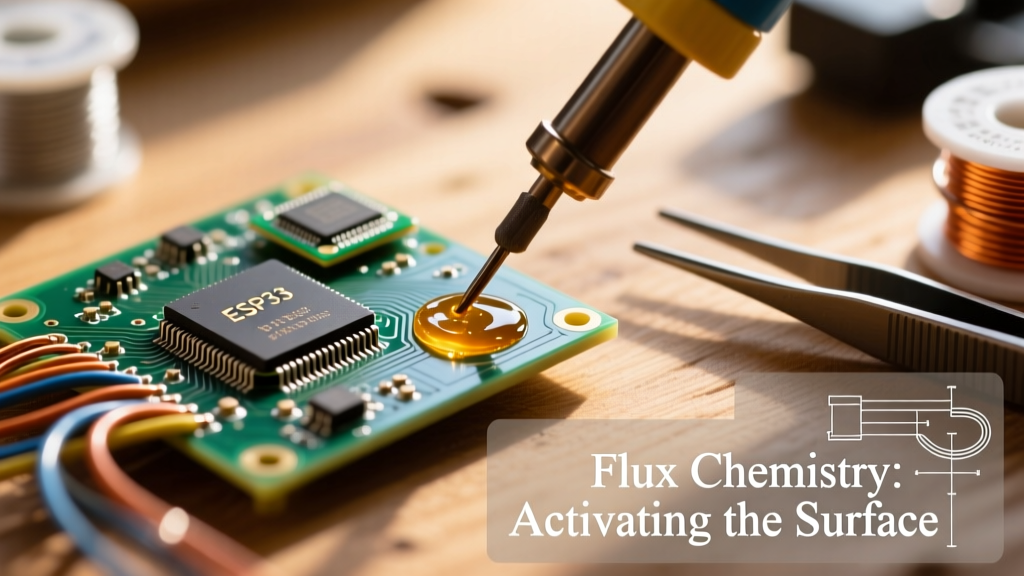
Soldering flux is the chemical catalyst that makes reliable electrical connections possible. While the solder alloy provides the mechanical and electrical bond, the flux removes metallic oxides, prevents re-oxidation during heating, and reduces the surface tension of the molten solder to promote proper wetting. In 2026, selecting the correct soldering flux is no longer a matter of simply grabbing a generic paste; it requires matching the chemical activity level, residue profile, and thermal stability to your specific application.
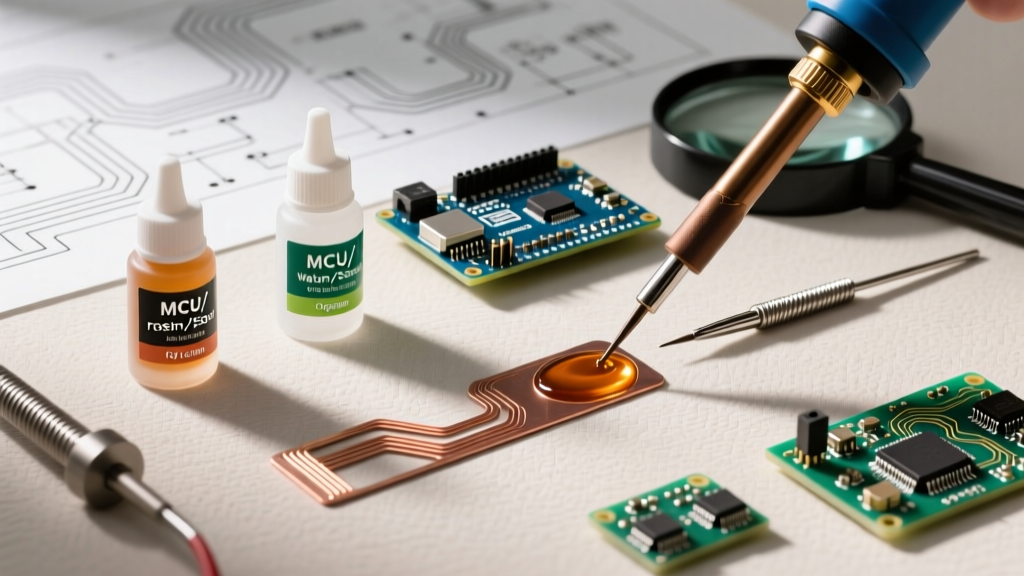
The industry benchmark for flux classification is the IPC J-STD-004B standard. This standard categorizes fluxes based on their base material (Rosin, Resin, Organic Acid, or Inorganic Acid) and their activity level (Low, Moderate, or High), along with the presence or absence of halides. Understanding this matrix is critical for preventing long-term field failures such as electrochemical migration (ECM) and surface insulation resistance (SIR) degradation.
The Activity Matrix Decoded
- L0 / L1 (Low Activity): Typically no-clean rosin or resin-based fluxes. L0 contains zero halides, while L1 contains trace amounts. Ideal for consumer electronics where post-assembly cleaning is economically unfeasible.
- M0 / M1 (Moderate Activity): Features stronger organic acid activators. Used for slightly oxidized boards or components with poor solderability. Residues may require cleaning in high-humidity environments.
- H0 / H1 (High Activity): Highly aggressive water-soluble (OA) or inorganic acid fluxes. Capable of soldering heavily oxidized surfaces and difficult alloys, but the residues are highly corrosive and conductive. Mandatory cleaning is required immediately after soldering.
Application-Specific Flux Recommendations
To eliminate the guesswork, we have mapped specific electronic manufacturing and repair scenarios to their optimal flux chemistries, complete with industry-standard product recommendations and current market pricing.
| Application Scenario | Recommended Flux Type | Specific Product Model | Est. Cost (2026) | Cleaning Required? |
|---|---|---|---|---|
| General THT & Hobbyist Repair | Rosin Mildly Activated (RMA) | Kester 44 (Liquid/Paste) | $12 - $18 | Optional |
| Fine-Pitch SMD & BGA Rework | Tacky No-Clean (Thixotropic) | Chip Quik SMD291AX10 | $22 - $28 | No |
| Aerospace, Medical & Automotive | Water-Soluble (Organic Acid) | Kester 824 | $35 - $45 | Yes (DI Water) |
| Lead-Free Wave Soldering | VOC-Free No-Clean | Senju ECO Solder Flux | $85+ / Liter | No |
Deep Dive: Scenario-Specific Selection
1. Fine-Pitch SMD and BGA Rework
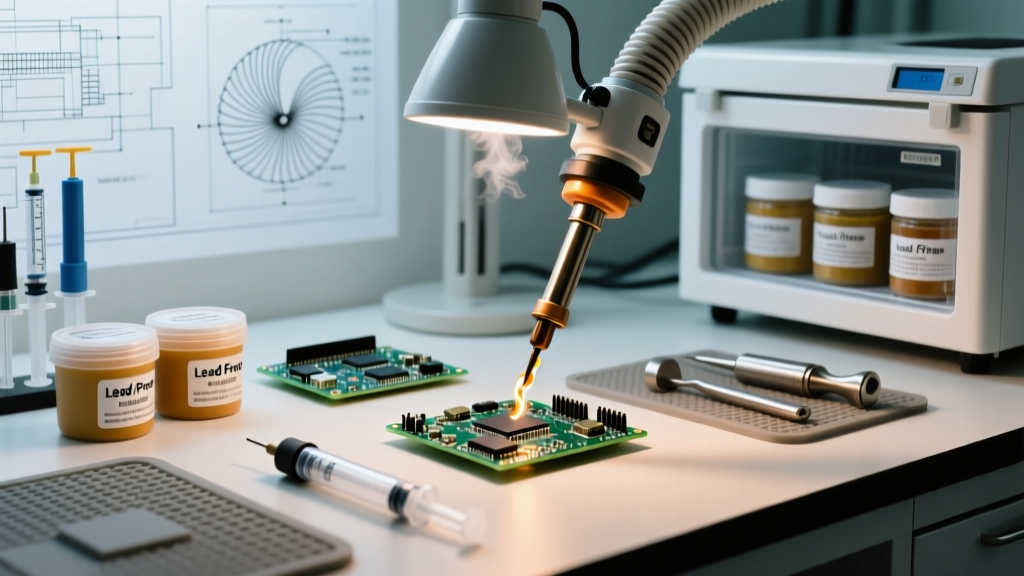
When reworking 0402 passive components, QFNs, or BGA chips, standard liquid fluxes will boil off or wick away before the solder joints reach reflow temperatures. For these applications, you must use a tacky no-clean flux. Tacky fluxes contain thixotropic agents that give them a viscous, glue-like consistency at room temperature. This viscosity physically holds the SMD component in place on the pads while the flux activates and the solder melts.
The Chip Quik SMD291AX10 is a premier choice for this scenario. Housed in a 10cc syringe, it is designed for precision dispensing via needle tips. It features a wide activation temperature range, making it compatible with both standard Sn63/Pb37 and higher-temperature SAC305 lead-free profiles (withstanding peak temperatures of 260°C for up to 60 seconds without charring). Because it is a true no-clean flux (meeting IPC SIR requirements), the transparent residue left behind is non-conductive and non-corrosive, allowing you to power on the device immediately after reflow.
2. High-Reliability (Aerospace, Medical, Automotive)
In mission-critical environments, a single micro-fracture or dendrite-induced short circuit can result in catastrophic failure. Here, the priority shifts from convenience to absolute joint integrity. You must use a water-soluble (OA) flux like Kester 824. Water-soluble fluxes contain aggressive organic acid activators that strip away heavy oxidation and guarantee perfect wetting, even on challenging finishes like ENIG or bare copper.
However, the trade-off is severe: the residues left behind are highly hygroscopic and acidic. If left on the board, they will rapidly cause electrochemical migration (dendrite growth) between closely spaced traces when exposed to ambient humidity.
Expert Cleaning Protocol: According to the stringent requirements outlined in NASA-STD-8739.3 for high-reliability soldered connections, water-soluble flux residues must be removed within 2 to 4 hours of soldering. Cleaning requires a saponified deionized (DI) water bath heated to 60°C (140°F), followed by a high-pressure DI water rinse and a thorough bake-out to eliminate trapped moisture under low-clearance components.
Diagnosing Flux-Related Soldering Failures
Even with the correct alloy, the wrong flux application technique or mismatched thermal profile will yield defective joints. Below are common failure modes and their flux-specific root causes:
- Solder Balling and Splatter: If you are using a liquid or paste flux and notice microscopic solder balls scattering around the joint, the flux is boiling too rapidly. This occurs when the iron temperature is too high or when the board lacks a proper preheat phase. The solvents in the flux vaporize explosively, ejecting molten solder. Solution: Lower iron temp to 350°C and apply flux to the pad before the iron makes contact.
- Tombstoning (Drawbridging): Common in 0402 and 0201 components, tombstoning happens when one side of the component wets faster than the other, pulling the part upright. This is often caused by uneven flux application or using a flux with an overly aggressive activation curve that exhausts its wetting power on one pad before the other reaches reflow temperature. Solution: Use a low-activity, slow-drying tacky flux applied uniformly via stencil or precision syringe.
- Dendritic Growth (Shorts): If a 'no-clean' flux is subjected to extreme heat (e.g., prolonged rework sessions), the rosin base can char and the activators can break down into ionic residues. When exposed to moisture, these residues form conductive pathways. Solution: Avoid re-heating no-clean flux residues multiple times. If rework is necessary, clean the area with 99% isopropyl alcohol and apply fresh flux.
- Cold Joints / Poor Wetting: Characterized by a dull, grainy appearance and a high contact angle. This indicates the flux failed to clear the oxidation layer. This is common when attempting to solder oxidized through-hole components with a low-activity (L0) flux. Solution: Switch to an M1 or H1 flux, or mechanically clean the leads with a fiberglass scratch pen before applying an RMA flux.
Frequently Asked Questions
Can I mix different flux types on the same board?
Mixing flux chemistries is strongly discouraged. For example, applying a water-soluble flux over a no-clean rosin flux can cause a chemical reaction that renders both fluxes ineffective and creates a gummy, impossible-to-clean residue. Always strip the board with an appropriate solvent (like isopropyl alcohol for rosin, or DI water for OA) before introducing a new flux chemistry.
Does 'No-Clean' mean I never have to clean the board?
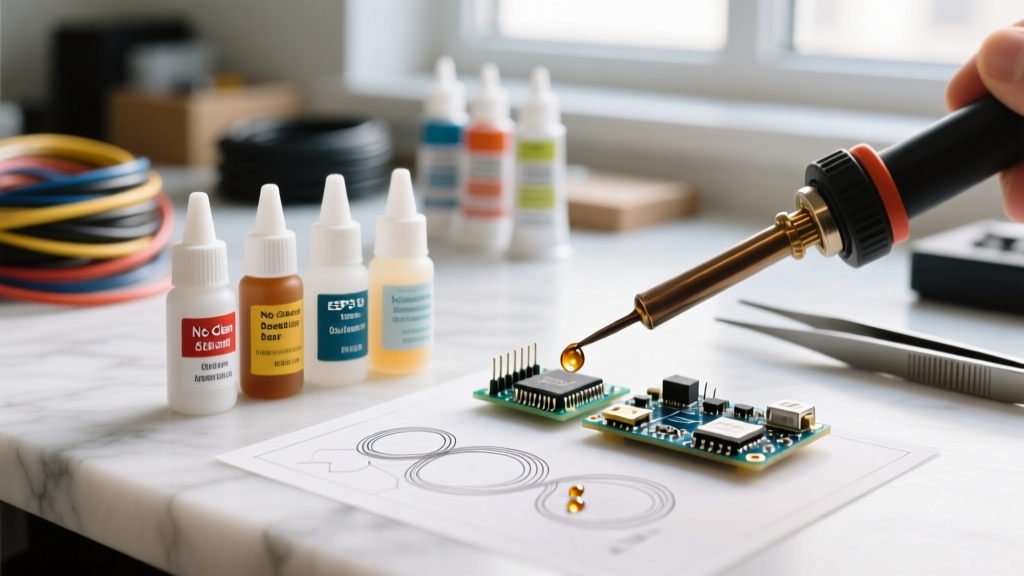
'No-clean' means the residue is chemically inert and safe to leave on the board under normal operating conditions. However, if the board will be conformal coated, operated in high-humidity environments, or if aesthetic cleanliness is required for optical inspection, you should still clean the no-clean residue using a specialized flux remover or high-purity isopropyl alcohol.
How long does liquid flux last before expiring?
Most commercial liquid and tacky fluxes have a shelf life of 12 to 24 months when stored in a cool, dark environment (ideally between 10°C and 25°C). Over time, the solvents evaporate, increasing the viscosity and altering the activation temperature. If your tacky flux has become stiff or stringy, it has expired and should be replaced to prevent SMD rework failures.