
The Core Definition: What Is Rosin for Soldering?
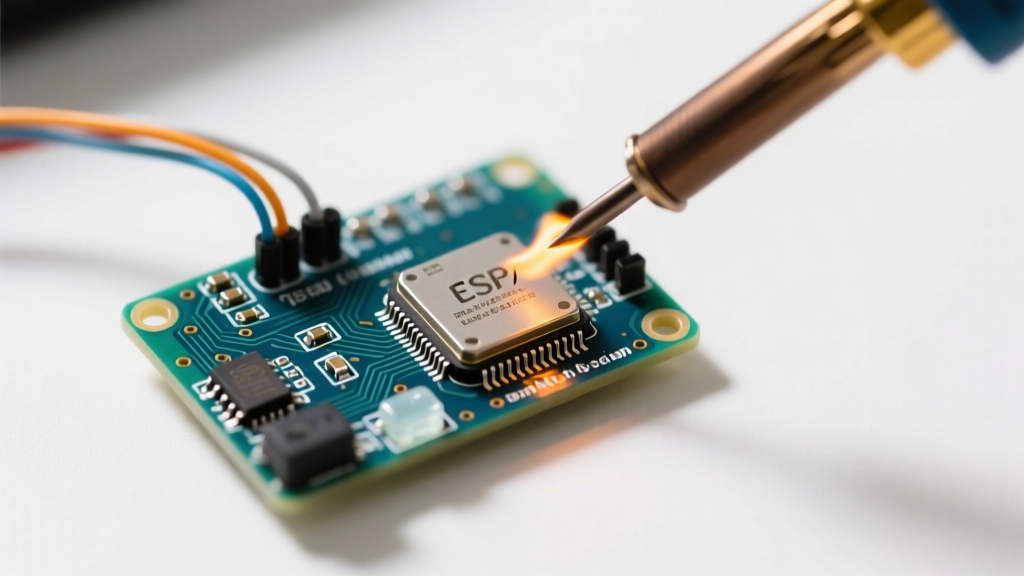
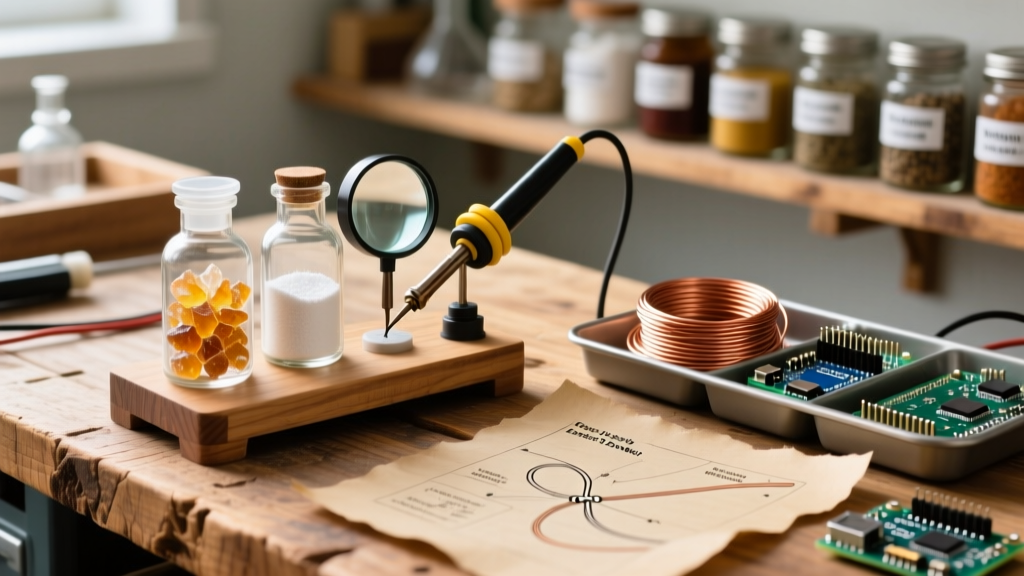
If you have ever touched a soldering iron to a copper pad and watched the molten solder ball up and roll away, you have experienced oxidation. The solution to this problem is rosin. But what is rosin for soldering exactly? In the context of electronics, rosin is a purified, solid form of resin derived primarily from pine trees. When heated, it acts as a chemical flux—a cleaning and deoxidizing agent that prepares metal surfaces for a permanent metallurgical bond.
At a molecular level, natural rosin consists largely of abietic acid. In its solid state at room temperature, abietic acid is completely inert and non-corrosive. However, when your soldering iron heats it past its melting point (typically around 170°C to 180°C), it becomes highly active. It dissolves metal oxides, excludes atmospheric oxygen from the joint, and reduces the surface tension of the molten solder, allowing it to 'wet' the copper pad and component lead seamlessly.
The Chemistry of Oxidation and Wetting
To understand why rosin is mandatory for reliable PCB assembly, you must understand the enemy: copper oxide. When copper is exposed to air, it forms a microscopic layer of copper oxide. Solder will not bond to copper oxide; it will only bond to pure copper.
According to fundamental metallurgical flux principles, the rosin flux must melt before the solder alloy. As the flux liquefies, the abietic acid reacts with the copper oxide to form copper abietate, a compound that easily dissolves into the molten rosin layer. This exposes the pure copper underneath. When the solder alloy (such as Sn63Pb37 or SAC305) subsequently melts, it is protected from the surrounding air by a blanket of liquid rosin, ensuring a pristine intermetallic compound (IMC) layer forms between the solder and the pad.
The IPC Classification System: R, RMA, and RA
Not all rosin is created equal. The IPC (Association Connecting Electronics Industries) categorizes rosin fluxes based on the level of chemical 'activators' added to the base pine resin. These activators (usually organic acids or halides) boost the flux's ability to clean heavily oxidized boards. The IPC J-STD-004 standards define these categories clearly:
| Flux Type | Full Name | Activator Level | Corrosivity | Cleaning Required? | Best Application |
|---|---|---|---|---|---|
| R | Pure Rosin | None (0%) | Non-corrosive | No | High-reliability aerospace/medical where cleaning is impossible. |
| RMA | Rosin Mildly Activated | Low (1-5%) | Very low | Recommended | Standard DIY electronics, general PCB assembly, and hand soldering. |
| RA | Rosin Activated | High (5-15%) | Moderate | Mandatory | Heavily oxidized boards, older vintage electronics repair, and thick wires. |
Expert Tip: For 95% of beginner and intermediate DIY electronics projects, RMA (Rosin Mildly Activated) is the gold standard. It provides enough chemical bite to clean standard FR-4 PCB pads without leaving behind highly corrosive residues that could eat through fine traces over time.
Rosin Core vs. External Liquid Flux
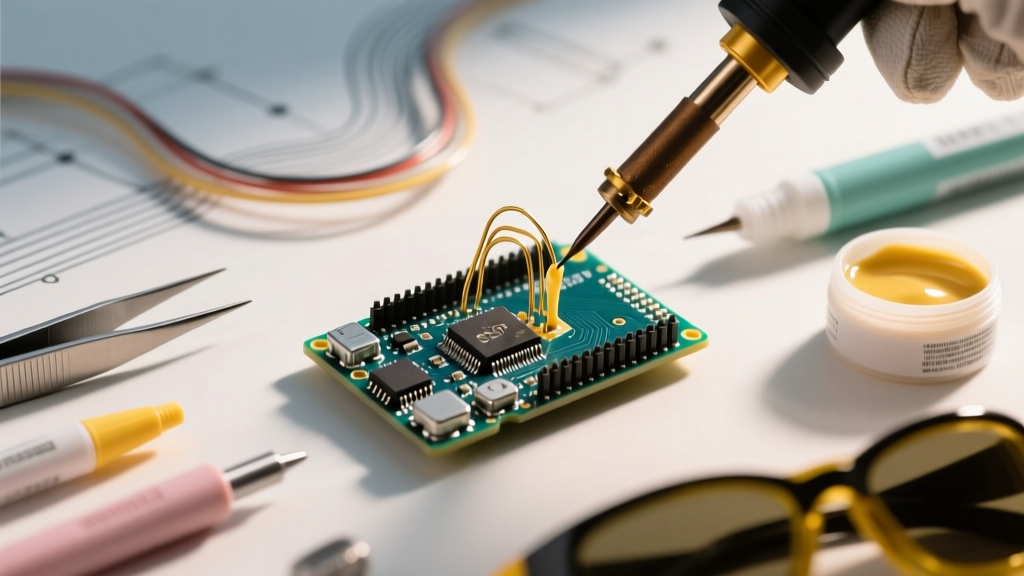
When purchasing solder wire, you will often see 'Rosin Core' advertised. This means the solder wire is extruded as a hollow tube and filled with a continuous strand of solid RMA or RA flux.
- Rosin Core Wire (e.g., Kester 44): The industry standard. A 1lb spool of Kester 44 (63/37 Sn/Pb with RA flux core) costs approximately $38 to $45 in 2026. It is perfect for through-hole components and basic wire tinning because the flux is automatically dispensed exactly where the heat is applied.
- External Liquid/Paste Flux (e.g., MG Chemicals 8351 or Kester 186): Rosin core wire is insufficient for SMD (Surface Mount Device) rework, drag soldering, or desoldering. In these cases, you must apply an external RMA liquid or tacky paste flux. A 100ml bottle of MG Chemicals 8351 RMA liquid flux costs around $18 and is essential for SMD kits.
Step-by-Step: How to Apply Rosin Flux Correctly
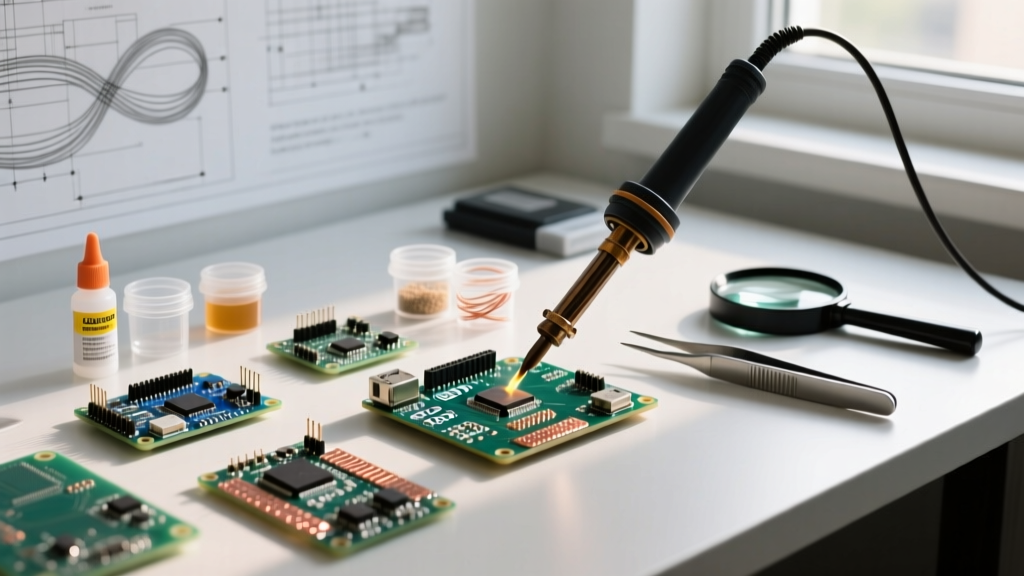
Applying flux is not just about slapping it on the board. Proper technique ensures optimal wetting and prevents thermal damage to components.
- Pre-tin the Iron: Always apply a small amount of fresh rosin-core solder to your iron tip before touching the joint. This creates a thermal bridge.
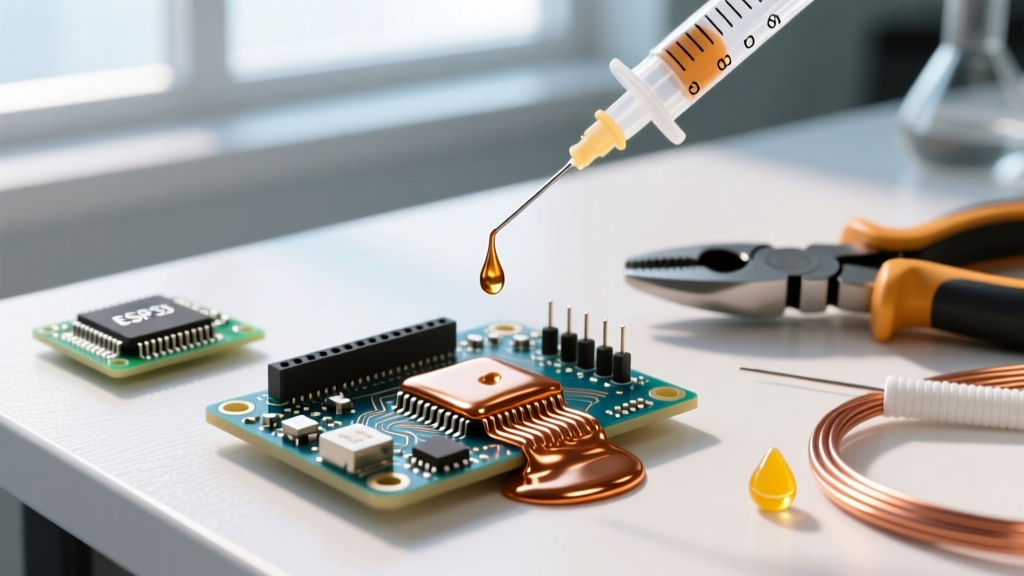
- Apply External Flux (If needed): For SMD pads or desoldering, use a fine brush or syringe to apply a thin, even layer of liquid/paste rosin over the pads. Do not flood the board; a thin film is all that is required.
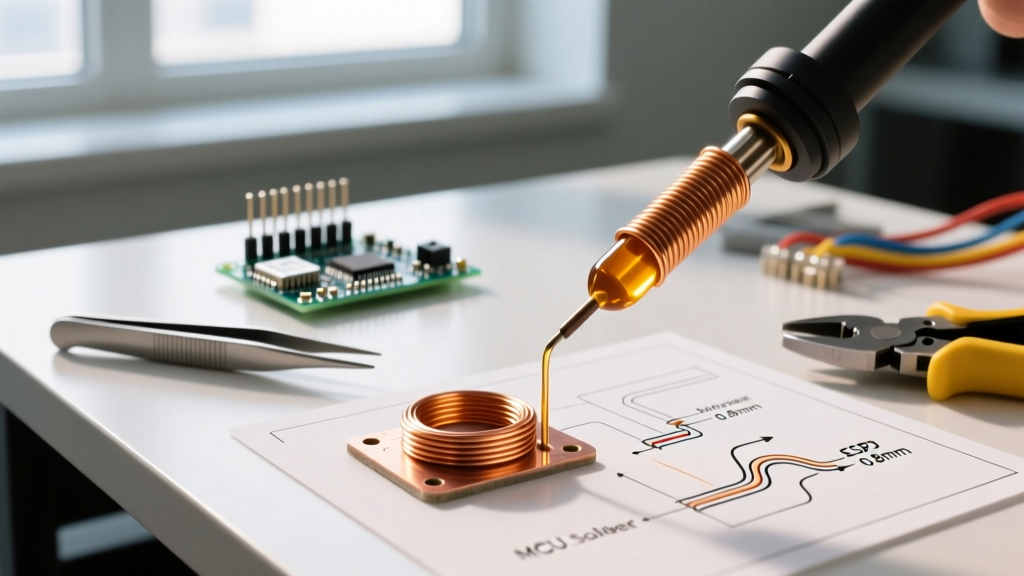
- Heat the Joint, Not the Solder: Place the iron tip so it touches both the PCB pad and the component lead simultaneously. Hold for 1 to 2 seconds.
- Feed the Solder: Introduce your rosin-core solder wire to the joint, not the iron tip. You should see the flux boil and bubble slightly as it activates.
- Remove and Inspect: Remove the solder wire first, then the iron. The resulting joint should be shiny and concave (for leaded solder) or dull and smooth (for lead-free SAC305).
The Cleaning Protocol: Why 99% IPA is Mandatory
While pure R (Rosin) is non-corrosive, RMA and RA fluxes contain acidic activators that must be cleaned off your PCB after soldering to prevent long-term dendritic growth (microscopic metallic spikes that cause short circuits).
The Golden Rule: Only use 99% (or higher) Isopropyl Alcohol (IPA) for cleaning rosin flux.
Beginners often make the fatal mistake of using 70% or 91% 'rubbing alcohol' from the pharmacy. These lower concentrations contain up to 30% water. When you scrub the board with 70% IPA, the alcohol evaporates quickly, but the water remains, trapping the acidic flux activators against the copper traces and accelerating corrosion. A gallon of 99% IPA from a hardware store costs about $25 and will last a hobbyist years. Use a stiff-bristled ESD-safe brush (like the Techspray 2034) to agitate the IPA and dissolve the rosin residue, then wipe with a lint-free Kimwipe.
Common Beginner Mistakes and Failure Modes
1. Using Plumbing Flux on Electronics
Plumbing solder uses an aggressive, highly acidic water-soluble flux (often containing zinc chloride or hydrochloric acid) designed to eat through heavy oxidation on copper pipes. If you use plumbing solder on a PCB, the acid will rapidly destroy the delicate copper traces and vias. Always verify your solder is labeled specifically for 'Electronics' and contains Rosin.
2. Carbonizing the Rosin (Burning the Flux)
Rosin has a thermal limit. If your soldering iron is set too high (e.g., above 380°C for standard leaded work), the rosin will instantly carbonize, turning into a hard, black, crusty carbon deposit. Once carbonized, the flux loses all chemical efficacy and actually acts as an insulator, leading to cold solder joints. If you see black crust on your tip or pad, stop immediately, clean the tip with a damp brass sponge, lower your iron temperature to 320°C-340°C, and apply fresh flux.
3. Insufficient Heat Transfer
If the pad and lead are not hot enough to melt the solder within 3 seconds, the flux will boil away and evaporate before the solder can flow. This leaves a dry, oxidized joint. The solution is not to add more flux endlessly, but to use a wider iron tip (like a chisel tip instead of a fine conical tip) to increase the thermal mass and surface area contacting the joint.
Frequently Asked Questions
Can I use rosin flux for lead-free soldering?
Yes, but lead-free alloys (like SAC305) require higher temperatures (217°C melting point, typically iron set to 350°C+). Standard rosin flux can burn off quickly at these temperatures. For lead-free work, look for 'High-Temp' or 'No-Clean' synthetic fluxes specifically formulated to withstand the thermal profile of lead-free soldering without carbonizing.
What is the difference between rosin and no-clean flux?
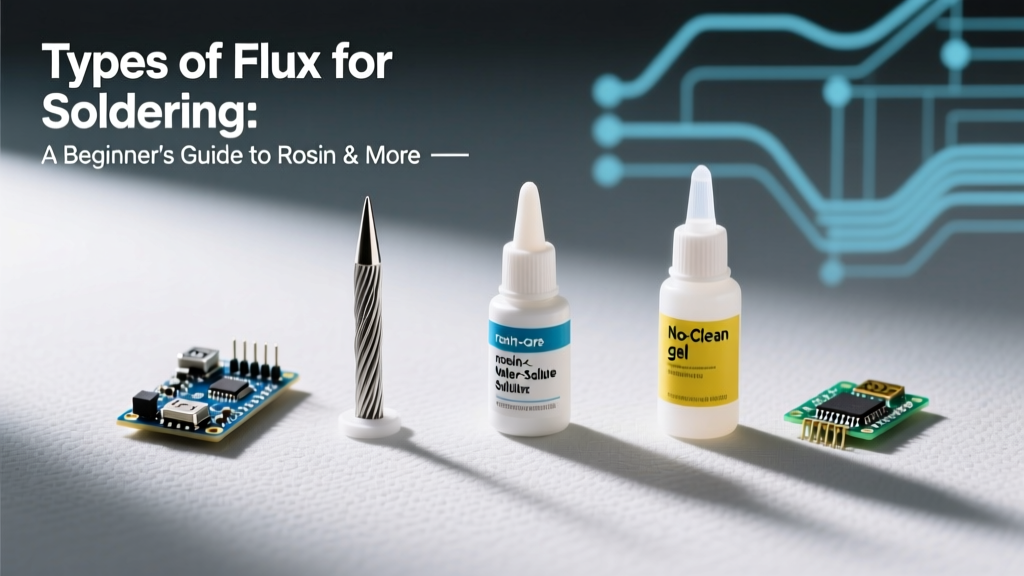
Rosin is derived from natural pine resin. 'No-clean' fluxes are typically synthetic, resin-based, or organic acid (OA) formulations engineered so that their residue is entirely inert, non-conductive, and safe to leave on the PCB without washing. While no-clean is popular in high-volume manufacturing, natural rosin (RMA) remains highly favored by hobbyists and repair technicians because it provides superior wetting action and is easily cleaned with IPA.