
Beyond the Bottle: The True Economics of Soldering Flux
Most hobbyists and mid-tier assembly houses view flux as a negligible line item—a $15 bottle that sits on the bench for months. However, in professional PCBA (Printed Circuit Board Assembly), the use of flux in soldering dictates the entire post-reflow budget. While the direct material cost of flux is measured in fractions of a cent per joint, the secondary costs—cleaning, rework, equipment degradation, and field failures—can eclipse the initial purchase price by a factor of 100.
As of 2026, with tightening environmental regulations on VOCs (Volatile Organic Compounds) and the rising cost of electronic scrap, performing a rigorous cost analysis on your flux chemistry is no longer optional. This guide breaks down the total cost of ownership (TCO) across the three primary flux categories: Rosin (RMA), Water-Soluble (OA), and No-Clean, revealing where assembly budgets actually bleed.
Direct Material Costs: Price Per Gram Across Flux Types
The upfront cost of flux varies wildly depending on the chemistry, packaging, and brand. Below is a 2026 market snapshot of direct material costs for common formulations.
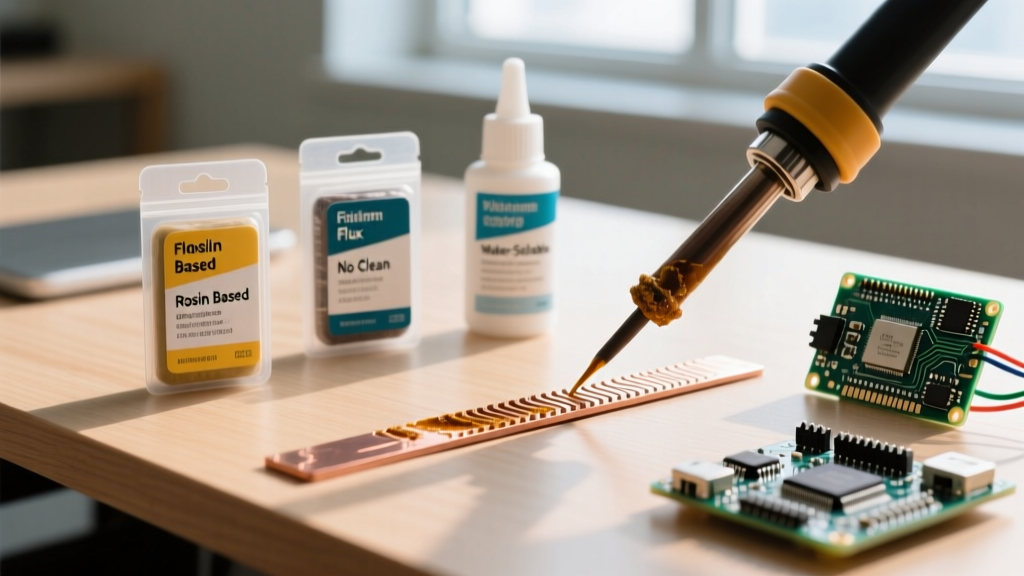
1. Rosin Mildly Activated (RMA)
- Examples: Kester 186, MG Chemicals 8341
- Average Cost: $0.35 to $0.55 per gram (liquid); $0.20 per gram (core wire)
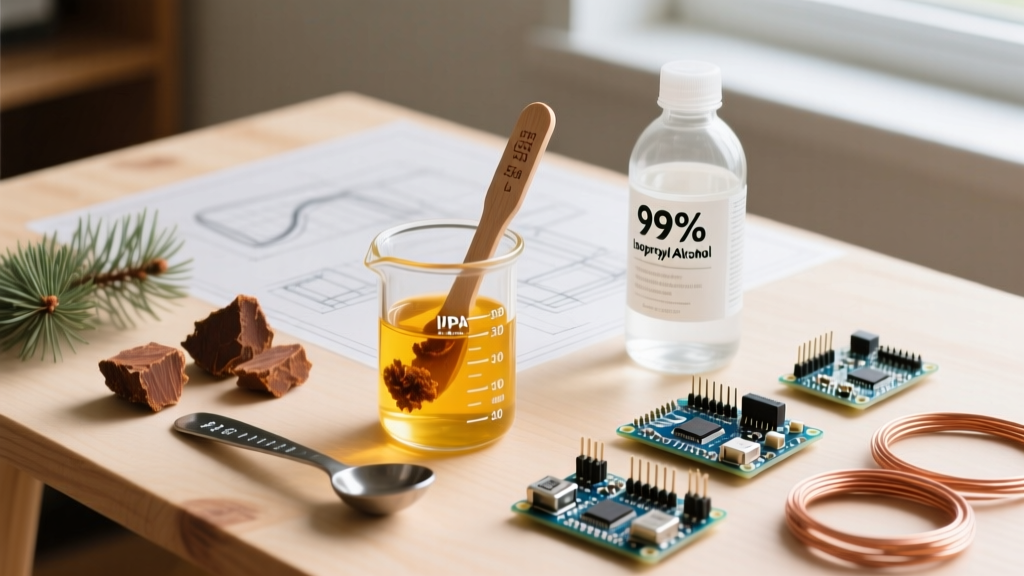
- Cost Profile: RMA remains the cheapest upfront option. The base chemistry relies on naturally derived pine rosin (abietic acid) mixed with mild halide or organic acid activators. However, global supply chain fluctuations in natural rosin harvesting have caused a 12% price variance over the last three years.
2. Water-Soluble (Organic Acid / OA)
- Examples: Kester 2331-ZX, Indium #31
- Average Cost: $0.60 to $0.95 per gram
- Cost Profile: Water-soluble fluxes use aggressive organic acids (like glutaric acid) and higher halide content to strip heavy oxides quickly. While the liquid itself is moderately priced, it is almost never sold as a flux-cored wire due to its highly corrosive nature at room temperature, forcing assemblers to buy separate liquid/paste and solder wire, increasing inventory costs.
3. No-Clean (Synthetic Resin)
- Examples: Alpha OM-338 (Paste), Kester 951 (Liquid), Chip Quik SMD291AX (Tacky)
- Average Cost: $0.80 to $1.40 per gram (paste); up to $2.50 per gram for precision syringe dispensing
- Cost Profile: No-clean fluxes rely on expensive synthetic resins and carefully balanced, low-solids activators that encapsulate residues after reflow. The R&D cost for these formulations makes them the most expensive per gram, but they eliminate the need for post-solder washing.
The Hidden Expenses: Cleaning, Solvents, and Labor
The most common mistake in PCBA cost accounting is looking at the flux price in a vacuum. If your process requires cleaning, the flux is merely the trigger for a massive operational expense.
Industry Insight: According to data from electronics cleaning experts at Zestron, the cost of the cleaning agent and the equipment depreciation often accounts for 85% of the total post-solder washing budget, while labor and water/solvent disposal make up the rest.
The Water-Soluble Cleaning Tax
If you use water-soluble flux, you must clean the board. Leaving OA residues will guarantee field failure. This requires:
- Equipment: An inline aqueous batch cleaner costs between $45,000 and $120,000.
- Consumables: Deionized (DI) water generation, saponifiers (alkaline cleaning agents), and wastewater treatment. Discharging flux-laden water into municipal systems violates EPA regulations in most jurisdictions, requiring expensive closed-loop filtration systems.
- Labor & Time: Adding a wash, rinse, and dry cycle adds 15 to 45 minutes to your production lead time.
The No-Clean Conformal Coating Trap
No-clean flux is designed to be left on the board. But if your end-product requires conformal coating (e.g., automotive or outdoor IoT devices), you cannot coat over no-clean residues without risking delamination. Therefore, assemblers often buy premium no-clean flux, and then still pay to clean it using expensive solvent vapors or specialized saponifiers just to ensure coating adhesion. This results in paying a premium for the flux, and a premium for the cleaning.
Reliability and Scrap: The Cost of Electrochemical Migration
Under the IPC J-STD-004 standard, fluxes are classified by their activity level and halide content (e.g., ROL0, REL1, ORH1). When the wrong flux is used for the environment, the financial impact of scrap and warranty claims is catastrophic.
The Dendritic Growth Failure Mode
If mildly active residues from a cheap RMA flux, or aggressive halides from an improperly cleaned water-soluble flux, remain on a board operating in a humid environment, they facilitate Electrochemical Migration (ECM). Metal ions dissolve in the moisture film and plate out as dendrites (microscopic metallic trees) between fine-pitch component pads.
- The Result: A short circuit that may not appear until the product is in the customer's hands.
- The Cost: Scrapping a $500 motherboard because the assembly house tried to save $0.03 per board by using an unapproved, high-halide ROL1 flux instead of a validated ROL0 no-clean formulation. Surface Insulation Resistance (SIR) testing failures during prototyping can also delay product launches by months.
Tooling and Consumable Degradation
The use of flux in soldering directly impacts the lifespan of your capital equipment. Active fluxes, particularly water-soluble varieties with high halide content, are highly corrosive to soldering iron tips.
- Tip Corrosion: Halides attack the iron plating on soldering tips. A standard Hakko T18 tip ($8) might last 40 hours when used with aggressive OA flux, compared to 200+ hours with a mild no-clean flux. For high-end micro-soldering stations using Weller RTW032 tips ($35 each), tip replacement costs can easily exceed $1,000 annually per workstation.
- Dispensing Equipment: In automated selective soldering or syringe dispensing, acidic fluxes crystallize and clog micro-valves and needles. Replacing a precision Nordson dispensing valve costs upwards of $2,500, not including the machine downtime.
Total Cost of Ownership (TCO) Matrix
To visualize the true financial impact, we must map the direct and indirect costs across a hypothetical 10,000-unit production run of a mid-complexity IoT control board.
| Cost Factor | RMA (Rosin) | Water-Soluble (OA) | No-Clean (Synthetic) |
|---|---|---|---|
| Direct Flux Material | $450 | $750 | $1,100 |
| Post-Solder Cleaning | $1,200 (Solvent wash) | $3,500 (Aqueous inline) | $0 (Left on board) |
| Tip/Tooling Wear | $150 | $450 | $50 |
| Rework/Scrap Risk | Moderate (Tacky residues) | High (If cleaning fails) | Low (If SIR validated) |
| Estimated Total Cost | $1,800+ | $4,700+ | $1,150 |
Decision Framework: Matching Flux to Your Production Scale
Choosing the right flux is an exercise in risk management and volume scaling. Use this framework to align your chemistry with your business model.
1. The Prototyping & Rework Bench
Recommendation: Tacky No-Clean Flux (e.g., Chip Quik SMD291AX or Amtech NC-559-V2-TF).
Cost Logic: At the prototype stage, material cost per gram is irrelevant because you are using less than 50 grams a year. The priority is reworkability and avoiding the need to wash a single prototype board in a kitchen sink. High-viscosity tacky fluxes hold BGA components in place and leave safe, clear residues.
2. Mid-Volume Consumer Electronics (10k - 50k units)
Recommendation: Low-Solids No-Clean Liquid/Paste (e.g., Alpha OM-338 or Kester 951).
Cost Logic: You cannot afford the capital expenditure of an inline aqueous cleaner, nor the labor of manual wiping. No-clean formulations allow boards to move directly from the reflow oven or wave solder machine to testing and packaging. Ensure your thermal profile fully activates the flux to encapsulate the residues, preventing cosmetic complaints from end-users.
3. High-Reliability & Aerospace (Medical, Avionics, Automotive)
Recommendation: Water-Soluble (OA) followed by rigorous DI Water Cleaning, OR heavily validated ROL0 No-Clean with mandatory plasma cleaning before conformal coating.
Cost Logic: In high-reliability sectors governed by Alpha Assembly and IPC-A-610 Class 3 standards, the cost of a field failure is measured in millions (lawsuits, recalls). The high upfront cost of water-soluble flux and automated cleaning equipment is easily justified by the guarantee of zero ionic contamination on the bare PCB.
Final Thoughts on Flux Economics
The use of flux in soldering is the ultimate example of 'stepping over dollars to pick up dimes.' Saving a few cents per ounce on a generic, unbranded flux from an online marketplace will inevitably cost you hundreds of dollars in ruined soldering tips, failed conformal coating adhesion, and mysterious short circuits. By auditing your entire process—from the syringe to the cleaning bath to the end-user environment—you can select a flux chemistry that optimizes your true total cost of ownership, rather than just your initial purchase order.