
The Anatomy of a Precision Chemical Delivery System
When you uncap a soldering flux pen, you are not just holding a marker; you are interacting with a precision chemical delivery system engineered at the molecular level. For electronics manufacturing and advanced DIY prototyping, the flux pen is the critical bridge between a cold, oxidized copper pad and a pristine, intermetallic solder joint. While many hobbyists view flux as a simple 'sticky liquid,' material scientists and metallurgists understand it as a complex, multi-phase reactive medium. In 2026, with the industry's aggressive shift toward ultra-fine-pitch components and lead-free high-temperature alloys, understanding the material science inside your soldering flux pen is no longer optional—it is a prerequisite for reliability.
Solvent Systems and Evaporation Kinetics
The base of any flux formulation is the carrier solvent. The solvent's primary role is to keep the solid activators and rosin resins in a stable liquid suspension at room temperature while delivering them to the PCB surface. However, the solvent must also exhibit precise evaporation kinetics. If it evaporates too quickly, the flux dries before the soldering iron transfers enough heat to activate the chemical reduction. If it evaporates too slowly, it causes excessive splattering (spitting) and leaves a massive, difficult-to-clean residue.
Modern flux pens utilize a carefully balanced blend of volatile and semi-volatile solvents. Isopropanol (IPA) is common for its rapid wetting, but it is almost always blended with glycol ethers to extend the active window.
| Solvent Compound | Boiling Point | Vapor Pressure (20°C) | Material Science Function |
|---|---|---|---|
| Isopropanol (IPA) | 82.5°C | 4.3 kPa | Initial wetting and rapid surface tension reduction. |
| Propylene Glycol Monomethyl Ether | 120.0°C | 1.1 kPa | Extends the thermal window; prevents premature dry-out. |
| Ethylene Glycol Monobutyl Ether | 171.0°C | 0.08 kPa | High-temperature carrier for heavy rosin pastes. |
Capillary Action and Nib Metallurgy
The delivery mechanism of a soldering flux pen relies on capillary pressure. The reservoir typically contains a compressed polyester or polyurethane foam core that holds the fluid via surface tension. When the nib touches the PCB, the fluid is drawn out. The nib material itself is a crucial material science choice. Cheaper pens use acrylic felt, which degrades when exposed to aggressive water-soluble (organic acid) fluxes, shedding micro-fibers onto the board. Premium pens, such as those used in aerospace rework, utilize sintered polyacetal (POM) or high-density polyethylene (HDPE) nibs. These semi-crystalline polymers resist chemical attack from halide activators and maintain their microporous structure over thousands of actuations.
Activator Chemistry: Breaking the Oxide Layer
The true magic of the soldering flux pen lies in its activators. Bare copper exposed to ambient air develops a copper oxide (CuO) and copper(I) oxide (Cu2O) layer ranging from 50 to 100 Angstroms thick. Solder cannot wet this oxide layer; the surface tension is simply too high. Activators are chemical compounds designed to reduce these metal oxides back to pure, reactive metal at soldering temperatures (typically 220°C to 260°C).
The Redox Reaction: In a traditional rosin flux, the primary activator is abietic acid (C20H30O2), a carboxylic acid derived from pine rosin. When heated above 170°C, abietic acid reacts with copper oxide to form copper abietate, a soluble metal salt that is easily displaced by the molten solder alloy, exposing pure copper for the formation of the Cu6Sn5 intermetallic compound.
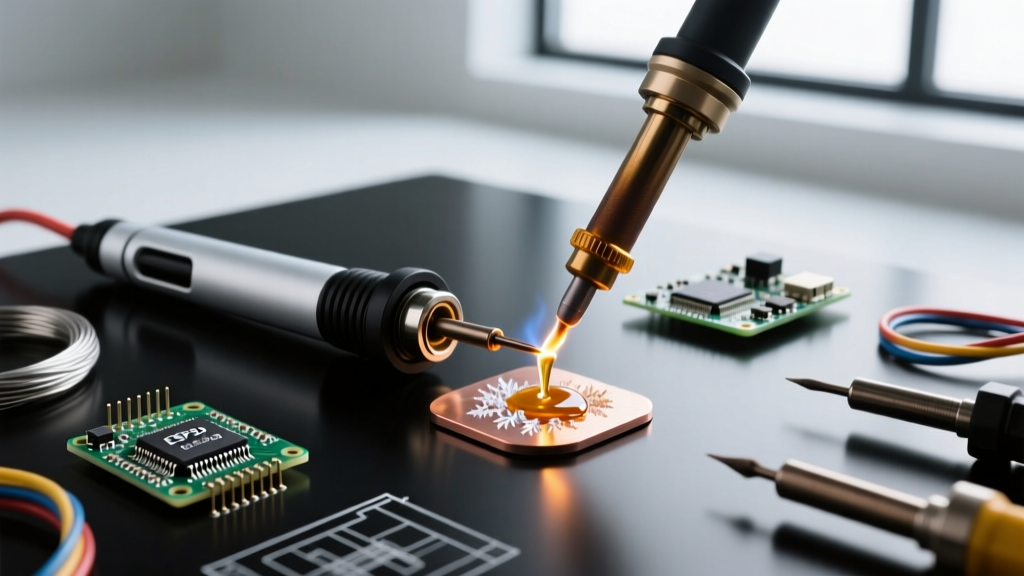
For more demanding applications, such as heavily oxidized through-hole leads or nickel-palladium-gold (NiPdAu) surface finishes, chemists introduce synthetic organic acids (like adipic or succinic acid) or, in highly regulated industrial settings, halide salts (chlorides and bromides). Halides are incredibly aggressive and can strip thick oxides in milliseconds, but they leave behind ionic residues that can cause electrochemical migration (dendritic growth) if not perfectly cleaned.
Thermal Degradation and the Pyrolysis Phase
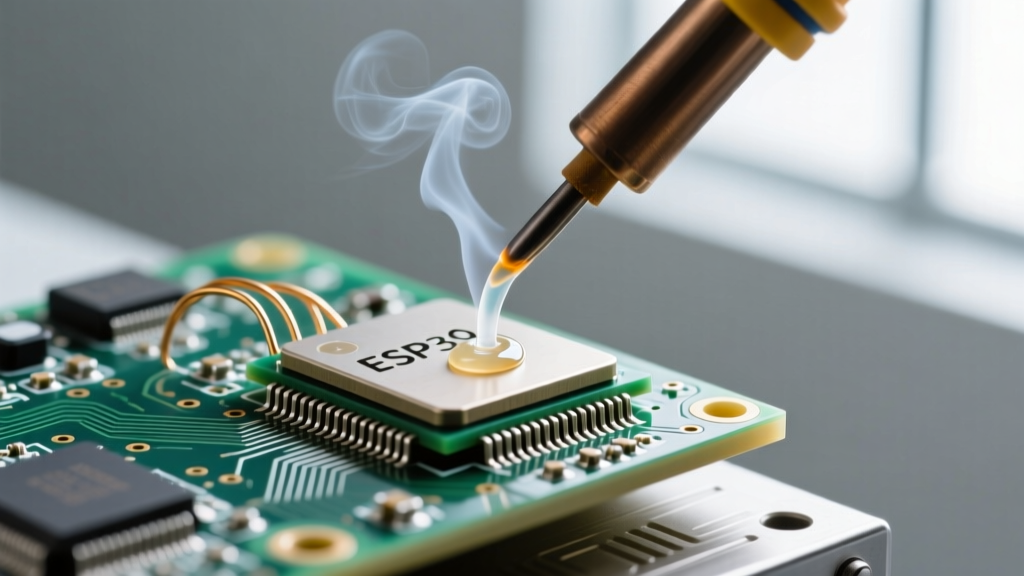
A common misconception is that flux simply 'melts' and flows. In reality, the rosin matrix undergoes pyrolysis. As the soldering iron tip (often sitting at 350°C for lead-free SAC305 alloys) contacts the flux, the solvent flashes off, and the rosin begins to thermally degrade. This degradation forms a protective, glassy char layer over the molten solder pool. This char is vital: it acts as a physical barrier against atmospheric oxygen, preventing the molten solder from re-oxidizing while it is in its liquid state. Once the joint cools, this char solidifies into the hard, amber-colored residue characteristic of RMA (Rosin Mildly Activated) fluxes.
2026 Market Matrix: Matching Chemistry to the PCB
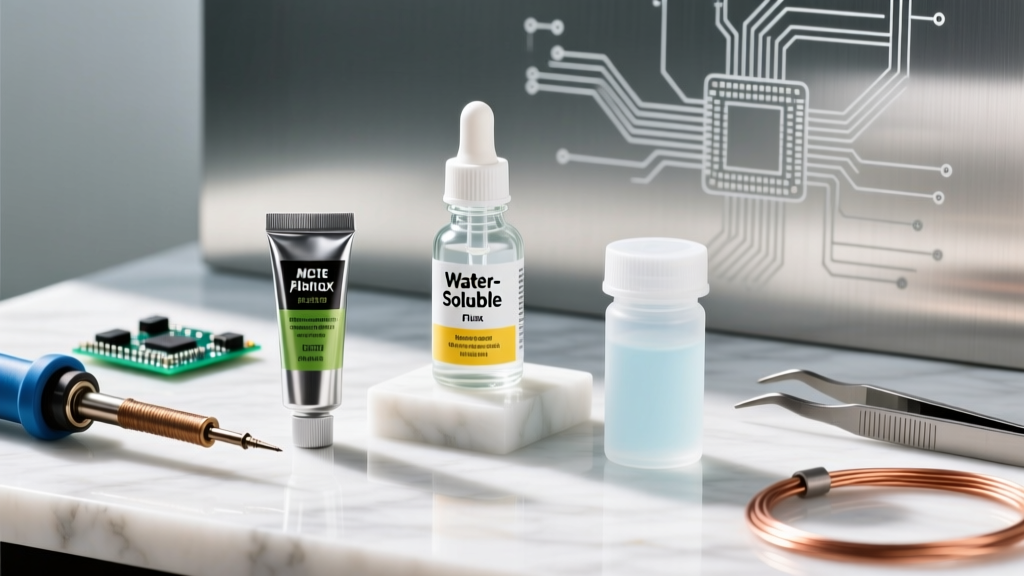
Selecting the right soldering flux pen requires matching the chemical formulation to your specific thermal profile and cleaning capabilities. Below is a breakdown of the dominant chemistries available on the market today.
| Product / Model | Chemistry Type | Activator System | Residue & Cleaning | Avg. Price (2026) |
|---|---|---|---|---|
| Kester 245 No-Clean Pen | No-Clean | Synthetic Organic Acids | Clear, hard, non-conductive. Do not clean. | $9.50 |
| MG Chemicals 8341 Pen | Water-Soluble (OA) | Adipic / Succinic Acids | Highly active, corrosive. Must wash with DI water. | $14.00 |
| Chip Quik NC191 Pen | No-Clean | Low-Solids Resin | Tacky, minimal residue. Safe for BGA rework. | $9.00 |
| Amtech TacFlux 020-B | Rosin (RMA) | Abietic Acid + Halides | Heavy amber char. Requires IPA or saponifier. | $12.50 |
Failure Modes: When the Chemistry Fails
Even the best-engineered soldering flux pen will fail if the material science is ignored during storage and application. Understanding these edge cases will save you from catastrophic cold joints and latent field failures.
- Solvent Separation and Nib Starvation: If a flux pen is stored horizontally or exposed to UV light, the heavy rosin solids can precipitate out of the solvent suspension. This clogs the microporous nib. Solution: Always store pens vertically (nib down) and agitate them vigorously for 10 seconds before use to re-suspend the activators.
- Activator Exhaustion: Flux pens have a finite shelf life (typically 12 to 18 months). Over time, trace moisture in the barrel can cause the organic acid activators to prematurely react with the metallic ions present in the fluid, neutralizing them before they ever touch a PCB. If your flux is wetting the board but the solder is still 'balling up' and refusing to flow, the activators have expired.
- Thermal Shock Splattering: Applying a high-volatile IPA-based flux pen directly to a pad and immediately hitting it with a 400°C iron causes rapid volumetric expansion of the solvent vapor. This results in micro-splatters of liquid flux landing on adjacent SMD components, potentially causing leakage currents in high-impedance analog circuits. Solution: Apply the flux, wait 3 to 5 seconds for the primary volatile solvents to flash off, and then apply the iron.
References and Industry Standards
The formulation and testing of fluxes are strictly governed by international standards to ensure reliability in mission-critical electronics. For deep dives into flux classification, halide limits, and copper mirror testing protocols, refer to the IPC J-STD-004 Standard for Fluxes. Additionally, manufacturers like Kester and MG Chemicals provide extensive technical data sheets (TDS) and safety data sheets (SDS) that detail the exact rheological and thermal properties of their specific pen formulations.