
The Chemistry of Copper Oxidation and Why Flux Matters
Copper is the undisputed champion of electrical conductivity and thermal transfer in both electronics and plumbing. However, when exposed to the 250°C to 350°C temperatures required for tin-lead and lead-free soldering, copper rapidly forms cuprous oxide (Cu2O) and cupric oxide (CuO). This microscopic oxidized scale acts as a physical barrier, preventing the molten solder alloy from wetting the base metal. According to the Copper Development Association, effective soldering requires a chemical reducing agent to strip these oxides milliseconds before the solder flows. Choosing the correct copper soldering flux is not just about making the solder stick; it is about ensuring long-term structural integrity, electrical conductivity, and corrosion resistance.
⚠️ THE GOLDEN RULE OF COPPER FLUX: Never use plumbing acid flux on electrical wiring or printed circuit boards. The ionic residues will cause rapid galvanic corrosion and dendritic growth, leading to catastrophic short circuits. Conversely, mild rosin flux will instantly burn off and fail to clean heavily oxidized copper pipes.Expert Recommendations by Application (2026 Market)
The market is flooded with generic flux pastes, but professional fabricators and engineers rely on specific chemical formulations. Below are our top expert picks for copper soldering flux, categorized by their intended use case.
1. Electronics & PCB Work: Kester 186 RMA Flux
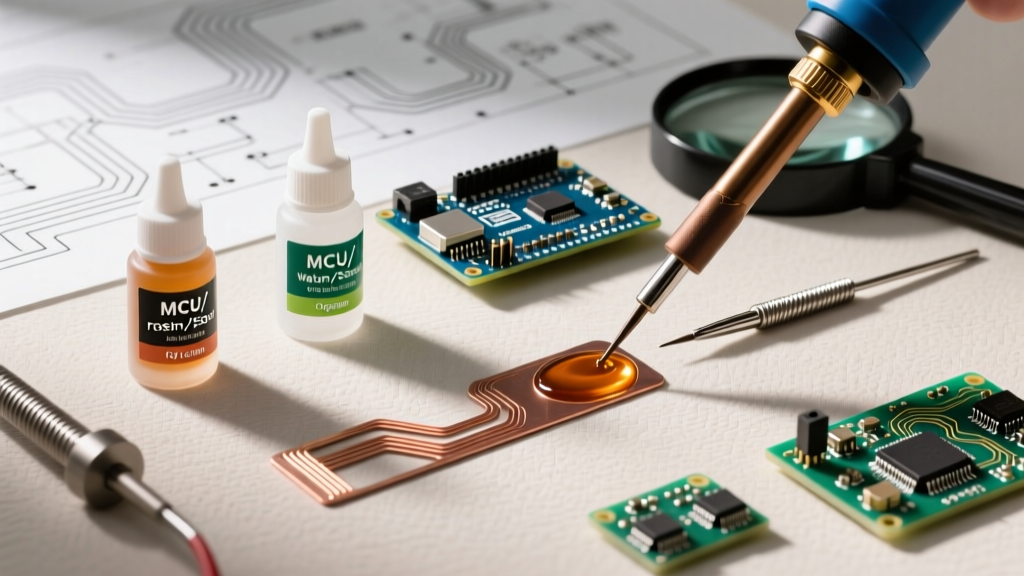
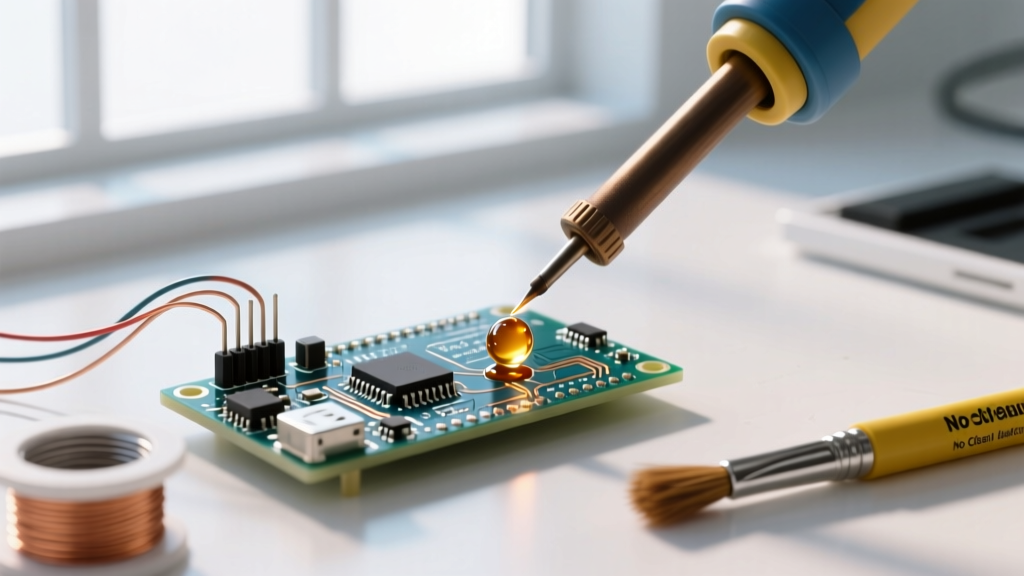
For tinning bare copper wire, soldering surface-mount components, and general PCB repair, Kester 186 Mildly Activated (RMA) Rosin Flux remains the industry benchmark. Formulated with high-grade abietic acid and mild halide activators, it easily dissolves light copper oxidation without damaging sensitive traces.
- Active Chemistry: Rosin (Colophony) with mild organic activators.
- Residue: Non-conductive and non-corrosive. Can be left on the board or cleaned with isopropyl alcohol (IPA) for aesthetic purposes.
- Expert Tip: Apply using a natural bristle brush or a flux pen. Avoid synthetic brushes, as the 350°C iron tip will melt synthetic fibers into your joint.
- Pricing: $14 - $18 per 2 oz bottle (2026 retail average).
2. Heavy-Duty Electrical & Stained Glass: Superior Flux #30
When soldering thick copper busbars, heavy-gauge battery cables, or copper foil for stained glass, rosin flux lacks the thermal stability and chemical aggression needed. Superior Flux #30 Water-Soluble Paste is an organic acid (OA) flux that provides a longer active window at high temperatures.
- Active Chemistry: Water-soluble organic acids and surfactants.
- Residue: Highly conductive and corrosive if left untreated. Must be cleaned with warm deionized water (minimum 60°C) immediately after soldering.
- Expert Tip: Because it is water-soluble, do not use this in high-humidity environments without immediate post-solder cleaning, as ambient moisture will activate the residue.
- Pricing: $25 - $32 per 1 lb jar.
3. Copper Plumbing & HVAC: Oatey Safe Flo & Harris Stay-Clean
Plumbing requires fluxes that can cut through heavy environmental oxidation and withstand the high thermal mass of copper pipes. Oatey Safe Flo (lead-free compatible) and Harris Stay-Clean (zinc chloride-based) are the standard for capillary joints in water lines.
- Active Chemistry: Zinc chloride, ammonium chloride, and petroleum bases.
- Residue: Highly corrosive. In plumbing, the interior residue is flushed by water flow, but exterior residue must be wiped with a damp rag to prevent green verdigris corrosion.
- Compliance: Both meet ASTM B813 standards and are NSF-certified for potable water lines.
- Pricing: $7 - $12 per 8 oz tub.
Comparison Matrix: Flux Types for Copper Applications
| Flux Category | Active Ingredients | Best Copper Application | Cleanup Required? | IPC Standard |
|---|---|---|---|---|
| Rosin (R / RMA / RA) | Abietic acid, mild halides | PCBs, delicate wiring | No (Optional for aesthetics) | Type ROL0 / ROL1 |
| Water-Soluble (OA) | Organic acids, glycols | Heavy wire, busbars, glass | Yes (Mandatory DI water) | Type ORH0 / ORH1 |
| Inorganic Acid (IA) | Zinc/Ammonium chloride | Plumbing, HVAC, roofing | Yes (Wipe & flush) | Type INH1 |
Note: The IPC J-STD-004 standard classifies fluxes by material type, activity level, and halide content. Always verify the IPC designation when sourcing flux for aerospace or medical electronics.
Step-by-Step: Prepping and Fluxing Bare Copper Wire
Even the best copper soldering flux will fail if the mechanical preparation is skipped. Follow this expert workflow for tinning heavy-gauge copper wire (e.g., 10 AWG to 4 AWG silicone or PVC insulated wire):
- Mechanical Abrasion: Strip the insulation. Use a fiberglass scratch pen or 400-grit sandpaper to lightly scuff the copper strands until they appear bright and shiny. Do not touch the bare copper with your fingers afterward; skin oils inhibit wetting.
- Flux Application: Apply a generous bead of RMA or Water-Soluble flux, ensuring it wicks into the strands via capillary action, not just coating the outside.
- Thermal Transfer: Set your soldering iron to 350°C (for lead-free) or 320°C (for 63/37 Sn/Pb). Use a chisel tip for maximum surface contact. Touch the iron to the bottom of the wire, and feed the solder wire into the top of the wire. The flux will boil, draw the heat in, and pull the molten solder through the strands.
- Inspection & Cleanup: A properly tinned wire will look smooth, shiny, and reveal the outline of the strands. If using OA flux, immediately submerge and agitate in a 60°C DI water bath.
Troubleshooting Common Flux Failures on Copper
'A cold joint on copper is rarely a failure of the solder alloy; it is almost always a failure of flux management and thermal timing.' — Master IPC Certified Trainer
Failure Mode 1: Flux Burn-Off (Dry Joints)
Symptom: The solder balls up and rolls off the copper, leaving a dull, grainy texture. Cause: The iron was left on the flux too long before applying solder. The activators boiled away, allowing the copper to instantly re-oxidize. Solution: Remove the iron, clean the tip, reapply fresh flux, and introduce the solder within 1.5 seconds of iron contact.
Failure Mode 2: Green Verdigris Corrosion
Symptom: A crusty green powder forms around the solder joint weeks after assembly. Cause: Acid flux (zinc chloride) was used on electrical copper and not neutralized, or rosin flux was exposed to high ambient humidity and voltage bias. Solution: Scrub the joint with a brass wire brush and anhydrous isopropyl alcohol. For severe acid corrosion, neutralize with a mild baking soda/water solution, rinse with DI water, and bake at 80°C to drive out moisture.
Failure Mode 3: Solder Wicking Under Insulation
Symptom: The wire becomes stiff under the PVC/Silicone jacket, leading to a stress fracture point. Cause: Liquid flux was applied too heavily and wicked under the insulation jacket via capillary action before heating. Solution: Use a high-viscosity flux paste or gel (like Amtech or Chip Quik tacky flux) which stays localized to the tinned area.
Safety and Ventilation Protocols
Soldering flux produces volatile organic compounds (VOCs) and particulate smoke. When working with rosin-based copper soldering flux, the smoke contains abietic acid derivatives, which are known respiratory sensitizers and can cause occupational asthma. According to safety guidelines published via osha.gov, local exhaust ventilation (LEV) is mandatory. A standard desktop fume extractor with a HEPA and activated carbon filter (such as the Hakko FA-400 or Metcal MX-AIR) must be positioned within 6 inches of the soldering plume to effectively capture the flux off-gassing before it reaches the operator's breathing zone.