
The Critical Distinction: Paste Flux vs. Solder Paste
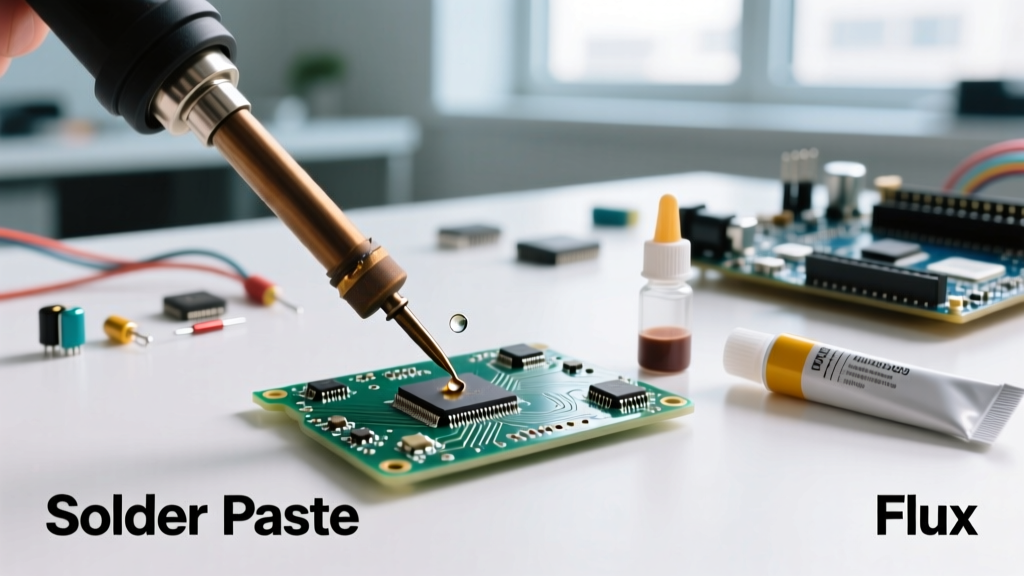
Before diving into compatibility matrices, we must establish a fundamental industry distinction that trips up even intermediate DIYers and junior engineers. Paste flux (frequently referred to as tacky flux) is a highly viscous, gel-like chemical medium devoid of solder alloy powder. It is engineered specifically for component retention, oxide reduction during rework, and BGA reballing. Solder paste, conversely, is a suspension of microscopic solder spheres (like SAC305 or Sn63/Pb37) within a flux vehicle, used primarily for SMT stencil printing. This guide focuses exclusively on paste flux for soldering—the pure chemical activator and tackifier used in manual rework, drag soldering, and micro-SMD assembly.
Choosing the correct paste flux for soldering is not a one-size-fits-all decision. The wrong chemical pairing will result in catastrophic failure modes ranging from electrochemical migration (dendritic growth) to severe pad dewetting. According to reliability data published by the NASA Electronic Parts and Packaging (NEPP) Program, flux residue incompatibility remains a leading cause of latent field failures in high-reliability aerospace and medical electronics.
Decoding IPC J-STD-004B Flux Classifications
To match paste flux to your specific PCB and alloy, you must read the IPC classification code printed on the syringe or jar. The IPC (Association Connecting Electronics Industries) standard J-STD-004B categorizes flux by material, activity level, and halide content.
- Material Type: RO (Rosin), RE (Resin), OR (Organic), IN (Inorganic).
- Activity Level: L (Low), M (Moderate), H (High).
- Halide Content: 0 (Zero halides / halogen-free), 1 (Contains halides).
Expert Insight: For 90% of modern consumer and IoT electronics rework, an ROL0 (Rosin, Low activity, Zero halides) no-clean paste flux is the optimal baseline. It provides sufficient tackiness for 01005 component placement while leaving a benign, non-conductive residue that does not require washing.
Compatibility Matrix: Paste Flux vs. PCB Surface Finishes
The surface finish of your PCB dictates the required activation strength of your paste flux. Organic finishes require aggressive activators to burn through the protective layer, while noble metal finishes require mild fluxes to prevent underlying pad corrosion.
| PCB Surface Finish | Recommended IPC Type | Activity Level | Chemical Rationale & Edge Cases |
|---|---|---|---|
| ENIG (Electroless Nickel Immersion Gold) | ROL0 or REL0 (No-Clean) | Low | Gold dissolves instantly into molten solder. Flux only needs to prevent nickel oxidation. High-activity fluxes can trap corrosive salts under BGA modules. |
| OSP (Organic Solderability Preservative) | REM1 or ROH1 (Water-Soluble / Mild Rosin) | Moderate to High | OSP is a thin organic coating that requires higher thermal mass and stronger activators to break down. Low-activity no-clean fluxes often result in cold joints on OSP. |
| HASL (Hot Air Solder Leveling) | ROL0 (No-Clean) | Low | Already pre-tinned with solder. Oxidation is minimal. Mild rosin paste flux is perfect for drag-soldering QFPs on HASL boards. |
| Immersion Silver (ImAg) | ROL0 (No-Clean) | Low | Silver is highly susceptible to sulfur and halide-induced tarnishing. Never use halide-containing (L1/M1) paste flux on ImAg boards. |
Alloy Thermal Matching: Leaded vs. Lead-Free
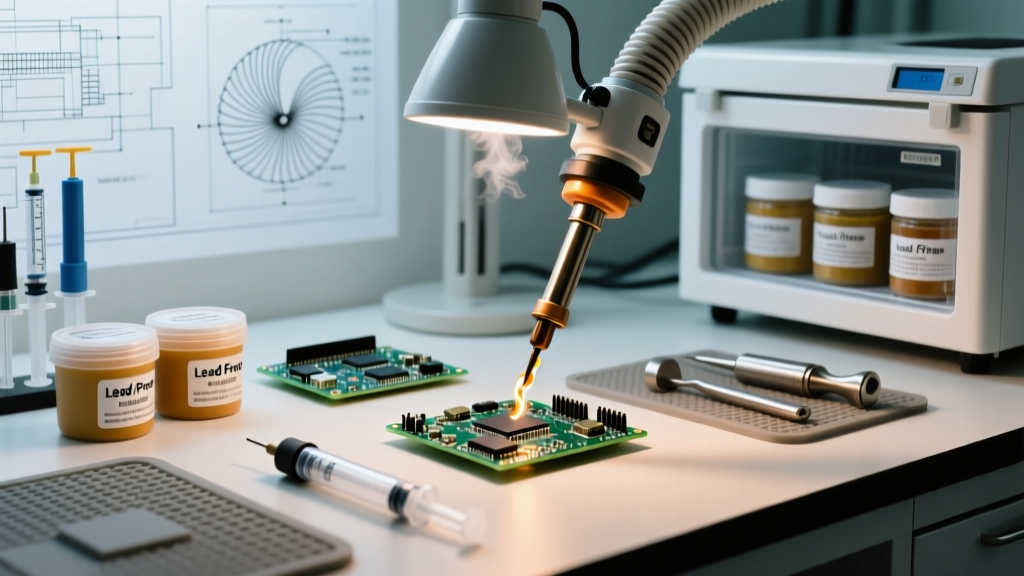
The liquidus temperature of your solder wire or preforms dictates the thermal activation window required from your paste flux. A flux designed for leaded solder will burn off completely (leaving charred, inactive residue) before lead-free alloys even melt.
Sn63/Pb37 (Leaded Eutectic)
Melting at 183°C, leaded alloys require a lower thermal activation profile. Standard mild rosin pastes activate between 150°C and 170°C, perfectly prepping the pad right before the solder flashes into a liquid state. Pricing context: Generic ROL0 tacky fluxes for leaded work cost between $12 and $18 for a 10cc syringe in 2026.
SAC305 and Sn99.3/Cu0.7 (Lead-Free)
Lead-free alloys like SAC305 melt at 217°C to 227°C, with peak reflow temperatures often reaching 245°C. You must use a paste flux formulated with high-temperature synthetic resins and robust organic acid activators (often classified as REL1 or ORM1 for demanding rework). If you use a standard 183°C flux on SAC305, the flux vehicle will vaporize at 200°C, leaving the component leads exposed to rapid re-oxidation during the final 45 seconds of the heating ramp.
2026 Market Formulations: Top Paste Flux Models
Based on current market availability and laboratory reliability testing, here are the top-tier paste flux formulations for specific compatibility scenarios:
- Kester 959T (Tacky Flux): The industry standard for BGA reballing and SMD rework. Classified as ROL0. It offers exceptional tack time (up to 12 hours) and leaves a clear, hard residue. Cost: ~$38 for a 10cc syringe.
- Indium TACFlux 020B: Engineered specifically for lead-free SAC alloys and ultra-fine pitch (0.3mm) CSPs. Halogen-free and designed to prevent head-in-pillow (HiP) defects during reflow. Cost: ~$45 for a 10cc syringe. For deeper technical specifications on their halogen-free lineup, refer to the Indium Corporation Flux Guide.
- Chip Quik TACKYFLUX10: A highly accessible, budget-friendly ROL0 paste flux ideal for hobbyists and general-purpose HASL/ENIG drag soldering. Cost: ~$18 for a 10g jar.
- MG Chemicals 8341 (Rosin Paste): A traditional, high-tack rosin paste. Excellent for through-hole desoldering and heavy-gauge wire tinning, but requires isopropyl alcohol (IPA) cleaning for high-impedance circuits.
Step-by-Step Protocol: BGA Rework with Paste Flux
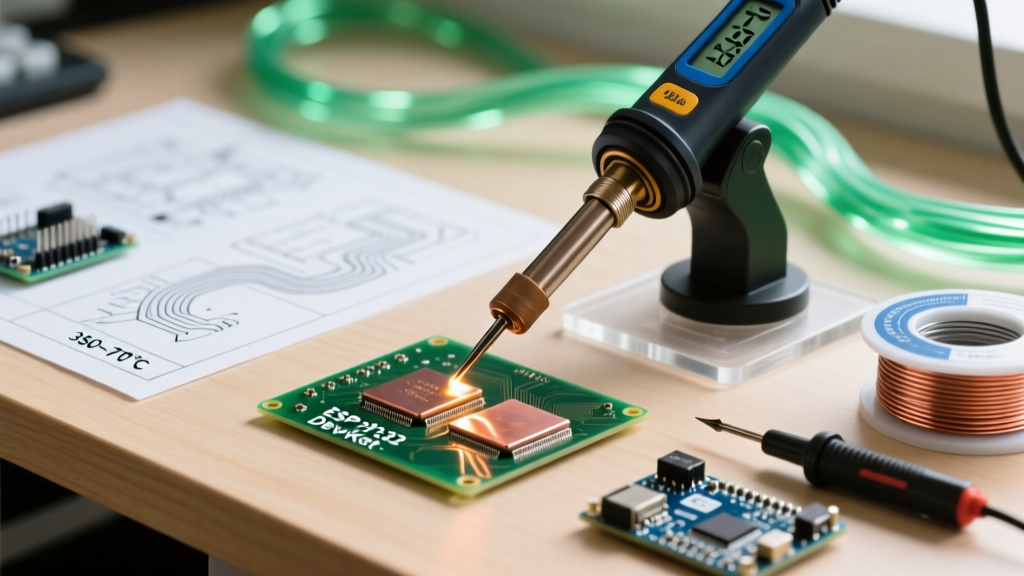
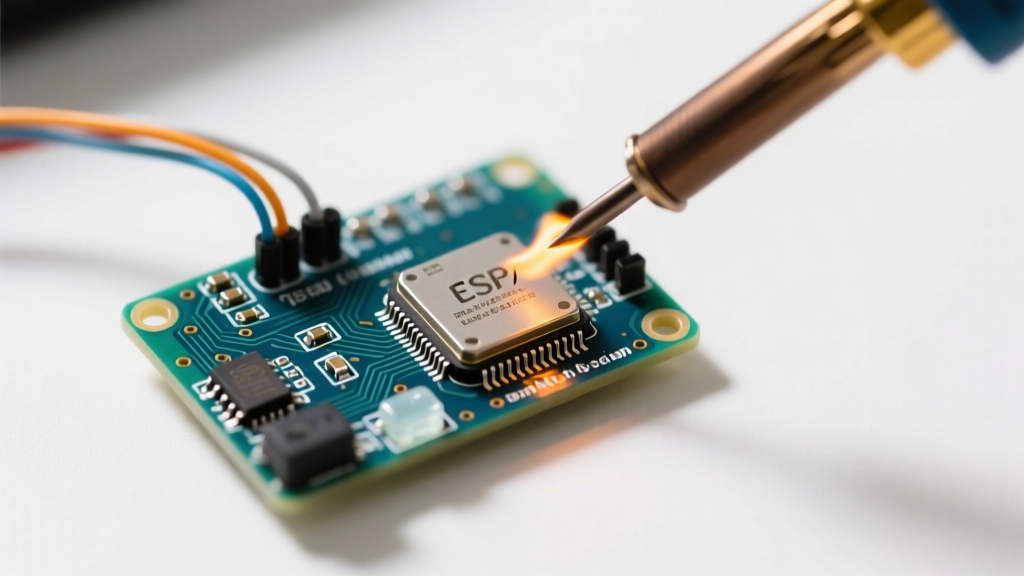
When replacing a 0.8mm pitch BGA (like an ESP32-S3 or a modern FPGA), the paste flux acts as both a chemical cleaner and a mechanical adhesive. Follow this exact sequence to prevent tombstoning and bridging:
- Pad Preparation: Remove old solder using 0.1mm desoldering wick. Clean the bare pads with 99.9% IPA and a lint-free swab.
- Flux Application: Using a 30-gauge dispensing needle, apply a micro-dot (approx. 2mg) of ROL0 paste flux to the center of the BGA footprint. Spread it evenly with a flux brush to a thickness of roughly 15 microns.
- Component Placement: Use a vacuum pickup pen. The tackiness of the paste flux will grip the BGA substrate. Align the fiducials under a stereo microscope.
- Reflow Profile: Apply heat. The flux will bubble slightly as solvents evaporate (120°C-150°C), then go completely clear and liquid as activators engage (180°C+). Surface tension will self-align the BGA spheres to the pads.
Failure Modes: When Compatibility Breaks Down
Ignoring flux compatibility leads to distinct, diagnosable failure modes on the workbench:
- Dendritic Growth (Electrochemical Migration): Caused by using a water-soluble (ORH1) paste flux on a high-voltage or RF board and failing to clean it. The organic acid residues absorb ambient moisture, creating a conductive path that eventually shorts adjacent 0201 pads.
- Dewetting / Beading: Occurs when a low-activity (L0) no-clean flux is used on heavily oxidized OSP boards. The flux lacks the chemical strength to strip the copper oxide, causing the molten solder to pull back from the pad edges like water on a waxed car.
- Head-in-Pillow (HiP): Common in lead-free BGA rework when the paste flux oxidizes prematurely before the solder sphere melts, leaving a brittle, non-fused mechanical joint between the BGA sphere and the pad paste.
Cleaning Protocols Based on Residue Chemistry
The decision to clean or leave the flux residue depends entirely on the IPC classification and the operating environment of the final PCB.
No-Clean (ROL0 / REL0): Designed to be left on the board. The residue is non-conductive and non-corrosive. Exception: If the board operates in high-humidity environments (>85% RH) or features high-impedance analog sensors (e.g., pH probes, piezo amplifiers), clean the ROL0 residue using an engineered solvent like HFE-7100 or a specialized saponifier.
Water-Soluble (ORH0 / ORH1): MUST be cleaned. These highly active pastes are fantastic for soldering difficult alloys like pure nickel or heavily oxidized RF shields, but their residues are aggressively hygroscopic. Clean within 4 hours of reflow using heated deionized (DI) water (minimum 60°C) combined with a saponifier (like Kyzen E5611), followed by a high-pressure DI water rinse and a 105°C bake-out to eliminate trapped moisture under low-clearance QFNs.
Final Takeaway
Mastering paste flux for soldering is about respecting the chemical triad: the PCB finish, the alloy liquidus temperature, and the post-assembly environment. By matching an ROL0 no-clean tacky flux to ENIG/HASL boards for standard rework, and stepping up to an REL1 or ORM1 formulation for stubborn OSP and lead-free thermal mass challenges, you will eliminate cold joints and ensure long-term electromigration reliability.