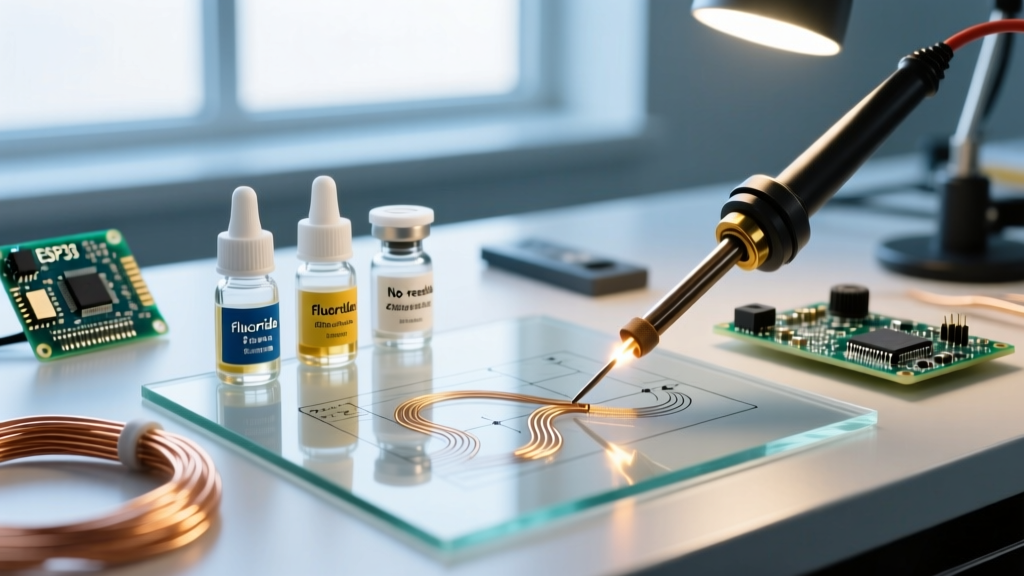

The Metallurgical Barrier: Why Standard Flux Fails on Aluminum
Soldering aluminum is fundamentally different from soldering copper, brass, or standard PCB traces. The primary obstacle is not the melting point of the base metal, but the instantaneous formation of aluminum oxide (Al2O3) upon exposure to atmospheric oxygen. While pure aluminum melts at a relatively low 660°C (1,220°F), the aluminum oxide layer that encapsulates it has a melting point of roughly 2,072°C (3,762°F). Standard rosin-based fluxes (RMA, RA) and mild organic acids (OA) used in everyday electronics work are chemically incapable of dissolving this refractory oxide layer at typical soft-soldering temperatures (200°C to 350°C).
To achieve a true metallurgical bond, you must deploy a specialized aluminium soldering flux designed to chemically reduce or mechanically displace the oxide layer, allowing the molten solder alloy to wet the bare aluminum substrate. Selecting the wrong flux will result in catastrophic dewetting, where the solder beads up and rolls off the joint, leaving a cold, high-resistance connection. In 2026, the market offers several highly engineered chemical formulations tailored for everything from micro-electronics to heavy-duty automotive and HVAC aluminum wiring.
Core Chemistries of Aluminium Soldering Flux
Unlike standard electronics fluxes that rely on mild activators like adipic or glutaric acid, aluminum fluxes require aggressive inorganic salts or specialized fluoride compounds. Understanding these chemistries is critical for selecting the right consumable for your specific application.
1. Zinc Chloride and Ammonium Chloride Blends (Inorganic Acid)
Zinc chloride (ZnCl2) is the workhorse of heavy-duty aluminum soldering. When heated above 220°C, zinc chloride reacts with the aluminum oxide layer to form complex oxychlorides, effectively stripping the oxide and exposing the bare aluminum. These fluxes are often fortified with ammonium chloride to lower the activation temperature and improve wetting. Warning: These fluxes are highly corrosive and release toxic hydrochloric acid fumes when heated. They are strictly prohibited in closed-loop electronics and mandate rigorous post-solder cleaning with hot deionized water and a stiff brush.
2. Fluoride-Based Fluxes (Fluoroaluminates)
For applications requiring lower temperature activation or where zinc contamination is a concern, fluoride-based fluxes (often utilizing ammonium bifluoride) are the industry standard. Fluoride ions are small and highly electronegative, allowing them to penetrate micro-fissures in the oxide layer and form soluble fluoroaluminate complexes. These are commonly found in premium paste fluxes used for HVAC refrigeration lines and automotive heat exchangers. According to technical guidelines published by the American Welding Society (AWS), fluoride fluxes provide superior capillary action in tight lap joints compared to heavy zinc-chloride pastes.
3. Specialty Organic/Inorganic Hybrids (Low-Residue)
Recent advancements in materials science have yielded hybrid fluxes that combine mild organic carriers with micro-encapsulated inorganic activators. These are designed for the electrical and automotive sectors where post-solder cleaning is difficult. While they leave a less corrosive residue than pure inorganic acids, they still require localized cleaning with isopropyl alcohol (IPA) or specialized saponifiers to prevent long-term galvanic corrosion, especially when joining aluminum to copper.
Comparative Matrix: Flux Chemistries & Applications
| Flux Chemistry | Activation Temp | Corrosivity | Post-Cleaning | Best Application |
|---|---|---|---|---|
| Zinc Chloride (Liquid/Paste) | 220°C - 280°C | Extreme | Mandatory (Hot Water) | Heavy wiring, structural tabs |
| Fluoride-Based Paste | 180°C - 250°C | High | Mandatory (Solvent/Water) | HVAC tubing, heat sinks, lap joints |
| Hybrid OA/Inorganic | 150°C - 220°C | Moderate | Recommended (IPA) | Automotive sensors, PCB pads |
| No-Clean Aluminum Flux | 200°C - 250°C | Low | Optional (Visual check) | Consumer electronics, low-stress |
Top Commercial Formulations for 2026
When sourcing an aluminium soldering flux, relying on established metallurgical brands ensures consistent activator concentrations and shelf stability. Here are the top-tier products currently dominating the professional market.
Superior Flux & Technology #30 and #30G
Superior #30 is a legendary zinc-chloride-based liquid flux specifically engineered for aluminum and its alloys. It is exceptionally aggressive and works brilliantly with tin-zinc (Sn-Zn) solder wires. The #30G variant is a gel/paste formulation that clings to vertical surfaces, making it ideal for automotive battery terminal repairs and overhead HVAC joints. Pricing typically ranges from $22 to $28 for a 4oz jar. As noted in the technical data sheets from Superior Flux & Technology, this product requires immediate neutralization and washing post-solder to prevent the base metal from pitting.
Castolin 190 and 192 Flux Pastes
Castolin 190 is a premium, heavy-duty paste flux containing specialized chlorides and fluorides. It is designed to be used in conjunction with low-temperature aluminum brazing and soldering rods (like Castolin 192). It activates around 200°C and provides a visual cue—turning clear and fluid when the base metal has reached the optimal soldering temperature. It is a staple in industrial maintenance and costs approximately $35 to $45 for a 50g jar.
Indium Corporation Indalloy Flux #2
For high-reliability electronics and specialized aerospace applications, Indium Corporation offers Indalloy Flux #2. This is a highly active, water-soluble flux formulated specifically for soldering aluminum, beryllium copper, and other difficult-to-wet alloys using Indium-based or Tin-Zinc solders. It is favored in semiconductor packaging and cryogenic applications where joint integrity at extreme temperatures is non-negotiable. Expect to pay upwards of $50 for specialized syringe dispensers.
Step-by-Step Application Protocol for High-Reliability Joints
Even the most aggressive aluminium soldering flux will fail if the mechanical and thermal preparation is inadequate. Follow this exact protocol for optimal wetting and joint tensile strength.
- Mechanical Abrasion (The Scratch Method): Before applying flux, use a stainless steel wire brush or 220-grit silicon carbide sandpaper to score the aluminum surface. Crucial: Apply a thick layer of flux over the area before you begin brushing, or brush under a pool of liquid flux. This prevents atmospheric oxygen from instantly reforming the oxide layer on the freshly abraded metal.
- Flux Application: Apply a generous bead of your chosen paste or liquid flux. Ensure it covers the joint area and extends 2mm beyond the intended solder fillet.
- Thermal Pre-Heating: Aluminum is an exceptional heat sink. Use a high-wattage soldering station (minimum 80W to 120W, such as a Weller WE1010 or Hakko FX-951) with a heavy chisel tip. Apply the tip to the base metal, not the flux. Allow the thermal mass to rise to 250°C - 280°C. You will know the flux has activated when it boils, bubbles, and turns translucent.
- Solder Introduction: Introduce a specialized aluminum-compatible solder wire (e.g., 91Sn/9Zn or a dedicated Al-Sn alloy). Do not use standard 63/37 Sn-Pb or SAC305, as they lack the zinc or indium necessary to alloy with the aluminum substrate. Feed the solder into the joint, allowing the flux to draw it via capillary action.
- Ultrasonic Agitation (Optional but Recommended): If the solder refuses to wet, use an ultrasonic soldering iron tip or physically scratch the joint with a titanium pick while the solder and flux are molten. This mechanically shatters the oxide layer beneath the flux blanket.
- Mandatory Cleaning: Once the joint cools below 50°C, scrub the area with hot deionized water (for zinc-chloride fluxes) or 99% IPA (for organic hybrids). Inspect under 10x magnification to ensure no white, crusty salt residues remain, as these will cause rapid galvanic corrosion.
Ultrasonic Soldering vs. Chemical Fluxing
It is worth noting that in high-volume manufacturing, many engineers bypass chemical aluminium soldering flux entirely in favor of ultrasonic soldering. Ultrasonic soldering irons operate at frequencies between 20kHz and 60kHz, creating microscopic cavitation bubbles in the molten solder. The implosion of these bubbles generates localized shockwaves that physically shatter the aluminum oxide layer, allowing standard SAC305 or Sn-Pb solders to wet the bare aluminum without any chemical flux. While the upfront cost of an ultrasonic station ($1,500 to $4,000) is high, it eliminates the need for hazardous chemical handling and post-solder cleaning, making it the preferred method for modern EV battery tab welding and solar ribbon interconnects.
Troubleshooting Common Failure Modes
- Solder Beading (Dewetting): The solder forms perfect spheres and rolls off the aluminum. Cause: The flux did not reach its activation temperature, or the oxide layer was too thick for the flux chemistry to penetrate. Fix: Increase iron wattage, pre-heat the workpiece with a hot air gun to 150°C, and switch to a more aggressive fluoride-based paste.
- Grey Sludge Formation: A thick, grey, paste-like sludge forms at the joint interface instead of a shiny fillet. Cause: Overheating the flux. Zinc chloride and fluoride fluxes carbonize and lose their chemical efficacy if subjected to temperatures exceeding 350°C for more than 15 seconds. Fix: Remove the heat, clean the area entirely with a brass brush and solvent, reapply fresh flux, and solder with a lower temperature profile.
- Post-Solder White Crusting: A white, powdery substance appears on the joint 24 to 48 hours after soldering. Cause: Incomplete removal of hygroscopic flux residues. Zinc chloride absorbs moisture from the air, creating a highly conductive and corrosive hydrochloric acid micro-environment. Fix: Neutralize the joint with a mild baking soda solution, scrub with a nylon brush, rinse with DI water, and bake at 80°C for 30 minutes to drive out trapped moisture.
Pro-Tip for Galvanic Corrosion: When using aluminium soldering flux to join aluminum wire to copper terminals, the flux residue is only half the battle. The dissimilar metals will create a galvanic cell in the presence of ambient humidity. Always encapsulate Al-to-Cu solder joints in a marine-grade heat shrink tube with an inner layer of polyamide adhesive lining to completely exclude moisture and prevent catastrophic joint failure.