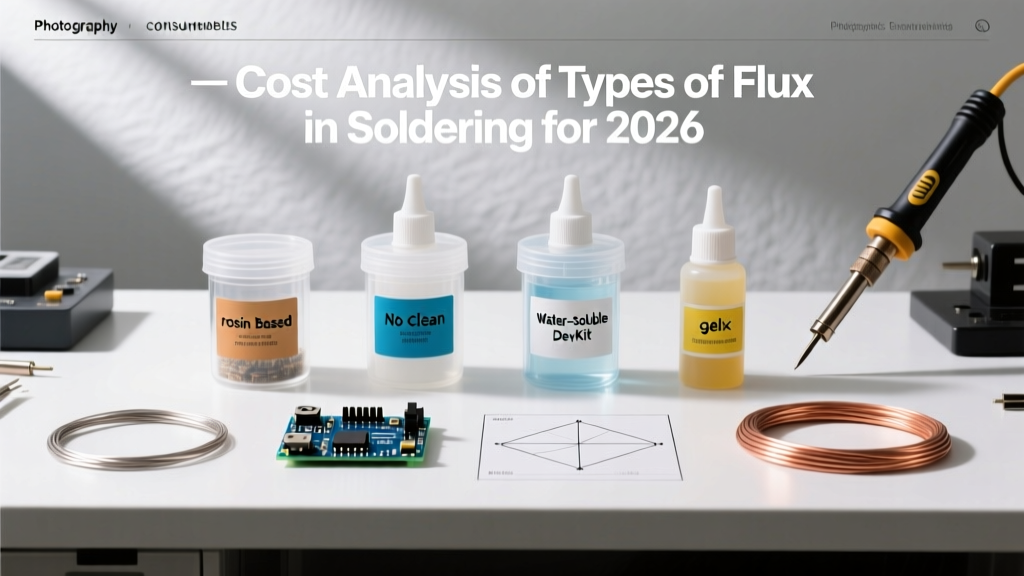

Defining the Terminology: Tacky Flux vs. Rosin-Based Solder Paste
When electronics engineers and technicians discuss rosin flux soldering paste, a critical ambiguity often derails material selection. In the surface mount and rework industry, this term refers to two distinct consumables:
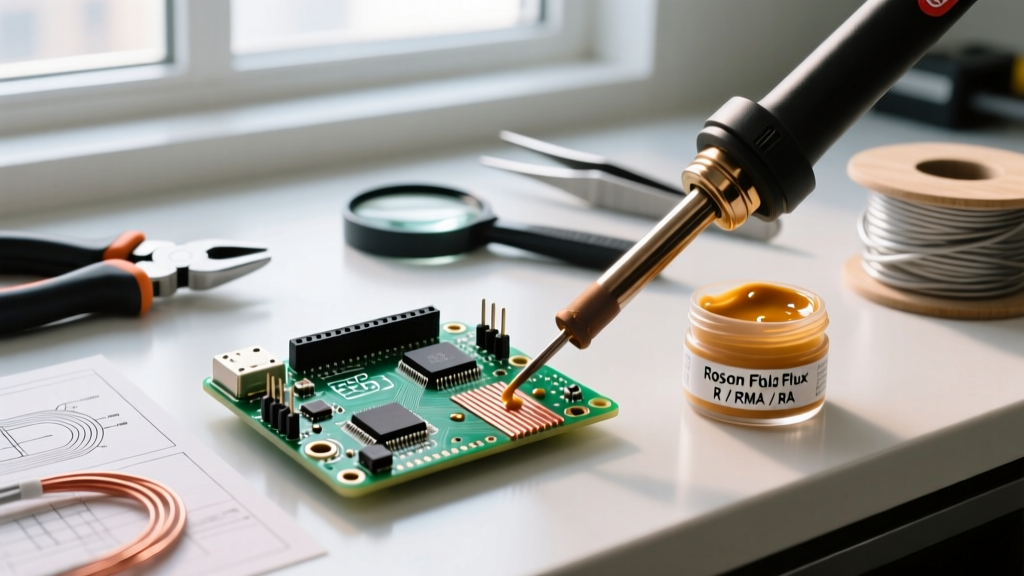
- Tacky Rosin Flux Paste (Tack Flux): A thick, gel-like flux devoid of metal particles. It is dispensed via syringe to hold BGA/SMD components in place before reflow and to deoxidize pads during hot air rework.
- Rosin-Vehicle Solder Paste: A homogenous mixture of microscopic solder alloy spheres (e.g., SAC305 or Sn63/Pb37) suspended in a rosin-based flux vehicle. This is used for stencil printing or precision syringe dispensing prior to reflow oven processing.
Understanding this distinction is the first step in ensuring material compatibility. As of 2026, while no-clean chemistries dominate high-volume SMT lines, rosin-based pastes remain the gold standard for aerospace, military, and high-reliability prototyping due to their superior wetting action and verifiable post-cleaning ionic purity.
The Chemistry of Rosin: Abietic Acid and Activators
The foundation of any rosin flux soldering paste is purified colophony, derived primarily from pine tree sap. The active weak acid in rosin is abietic acid, which becomes mildly corrosive and dissolves copper oxide only when heated above its activation threshold (typically 150°C to 170°C). At room temperature, it is completely inert and non-conductive.
To address heavily oxidized boards or nickel-plated surfaces, manufacturers add chemical activators. This creates the three primary classifications defined by the IPC J-STD-004 standard:
- Type R (Rosin): Pure rosin with zero added activators. Extremely safe but lacks the wetting power for anything beyond pristine, freshly manufactured PCBs.
- Type RMA (Rosin Mildly Activated): Contains mild organic acids. The industry workhorse for high-reliability through-hole and SMD rework. Kester 186 is the most famous RMA formulation, widely available in 2oz bottles (~$14) and 500g jars (~$48).
- Type RA (Rosin Activated): Contains aggressive halide or strong organic acid activators (like adipic or glutaric acid). Designed for severely oxidized surfaces. RA pastes must be aggressively cleaned post-soldering to prevent electrochemical migration (dendrite growth).
Expert Insight: Never use RA (Rosin Activated) tack flux or solder paste on fine-pitch QFN or BGA components where post-assembly cleaning is physically impossible. The trapped halide residues will absorb atmospheric moisture and cause latent short circuits.
Material Compatibility Matrix
Not all metals and substrates react favorably to rosin flux vehicles. Below is a compatibility matrix for standard rosin flux soldering paste applications in 2026.
| Material / Substrate | Compatibility | Technical Notes & Edge Cases |
|---|---|---|
| Copper (Bare & HASL) | Excellent | RMA and RA pastes wet bare copper rapidly. R paste may struggle if oxidation is present. |
| ENIG (Gold/Nickel) | Good to Excellent | Rosins prevent the brittle "gold embrittlement" seen in some water-soluble fluxes by promoting rapid dissolution of the flash gold layer. |
| Immersion Silver | Fair | Silver tarnishes rapidly. RA pastes are recommended, but aggressive cleaning is mandatory to prevent silver migration. |
| Stainless Steel | Poor | Standard rosin fluxes cannot break down chromium oxide. Requires specialized organic acid or inorganic acid fluxes. |
| Aluminum | Incompatible | Rosin flux is entirely ineffective on aluminum's tenacious oxide layer. Ultrasonic soldering or specialized fluoride fluxes are required. |
| FR-4 & Polyimide | Excellent | Standard Tg substrates tolerate the 150°C activation and 240°C peak reflow temperatures of rosin vehicles without delamination. |
Solder Alloy Pairings: Viscosity and Thermal Matching
When selecting a rosin flux soldering paste (specifically solder paste with a rosin vehicle), the flux's thermal activation profile must align with the solder alloy's liquidus temperature.
Leaded Alloys (Sn63/Pb37 and Sn60/Pb40)
With a eutectic melting point of 183°C, leaded alloys require a flux vehicle that activates around 150°C and remains stable up to 210°C. Standard RMA tacky fluxes (like MG Chemicals 8341, ~$18 for a 10cc syringe) are perfectly matched to leaded profiles. The rosin vehicle prevents the solder spheres from oxidizing during the prolonged 60-second soak phase typical of manual hot-air rework.
Lead-Free Alloys (SAC305 and SAC405)
Lead-free alloys require peak reflow temperatures between 235°C and 250°C. Standard rosin fluxes will char, carbonize, and lose their protective envelope at these temperatures if not specifically formulated for lead-free profiles. When sourcing SAC305 solder paste, ensure the datasheet specifies a "high-thermal-mass rosin vehicle" or synthetic rosin substitute designed to withstand 260°C excursions without spattering or creating excessive voiding.
Thermal Profiles and Application Techniques
Proper application of rosin flux soldering paste dictates joint reliability. Follow this step-by-step framework for BGA and QFN rework:
- Preparation: Clean the PCB pads with 99% Isopropyl Alcohol (IPA) to remove finger oils. Dry with lint-free wipes.
- Dispensing: If using tacky rosin flux, apply a microscopically thin, uniform layer to the pads. More flux does not equal better wetting; excess flux causes outgassing, leading to solder balling and component tombstoning.
- Placement: Seat the component. The tackiness of the rosin paste will hold the component in place, eliminating the need for adhesives.
- Preheat: Ramp the board to 150°C over 60 seconds. This activates the abietic acid, allowing it to strip oxides from the pads and component leads.
- Reflow: Apply localized heat (hot air or IR) to reach the alloy's liquidus temperature. The flux will temporarily liquefy, reducing surface tension and allowing capillary action to draw the solder under the component.
Cleaning Protocols and Reliability Standards
According to data published by Kester Flux Technologies, the post-reflow residue of RMA and RA rosin fluxes is non-conductive but can be hygroscopic (moisture-absorbing) in high-humidity environments. For IPC Class 3 high-reliability assemblies, removal is mandatory.
Because rosin is a non-polar organic compound, it does not dissolve easily in water. Cleaning requires:
- Polar Solvents: 99% IPA or specialized aerosol cleaners (e.g., Techspray Ecoline Rosin Flux Remover). Mechanical agitation with a hog-hair brush is required to lift the dissolved residue from under low-clearance components.
- Saponifiers: For ultrasonic or batch washing, a saponifier must be added to water to emulsify the rosin residue, followed by a thorough deionized (DI) water rinse.
Verify cleanliness using a Rohs/Resistivity of Solvent Extract (ROSE) tester or Ion Chromatography (IC) to ensure ionic contaminants remain below the IPC-A-610 threshold of 6.45 µg NaCl equivalent per square centimeter.
Troubleshooting Common Failure Modes
Even with the correct rosin flux soldering paste, process deviations lead to distinct failure modes. Consult this diagnostic guide:
1. Solder Balling and Spattering
Cause: Moisture absorption in the flux paste or an excessively rapid preheat ramp. Solution: Store tacky rosin flux syringes in a desiccator or climate-controlled cabinet. Ensure your reflow profile includes a 60-to-90-second soak at 150°C to gently boil off solvents and moisture before the flux reaches peak activation.
2. Charred, Black Residue
Cause: Peak temperature exceeded the thermal degradation limit of the rosin vehicle (common when using standard RMA flux with SAC305 lead-free alloys at 250°C). Solution: Switch to a synthetic rosin or high-temp no-clean flux specifically rated for lead-free profiles, as recommended in modern Indium Corporation soldering guidelines.
3. Dewetting on ENIG Pads
Cause: The rosin flux lacked sufficient activators to penetrate the micro-porous nickel layer beneath the immersion gold, often caused by "black pad" syndrome. Solution: The issue is with the PCB fabrication, not the flux. Reject the batch. However, temporarily switching to an RA (Activated) rosin paste can sometimes force a wetting bond, though at the cost of requiring aggressive post-assembly cleaning.
Frequently Asked Questions
Can I mix liquid rosin flux with solder paste?
No. Adding liquid rosin flux to a pre-mixed solder paste alters the carefully engineered rheology (viscosity) and metal-to-flux ratio. This will cause severe slumping, bridging, and excessive voiding during reflow. Always use the paste as formulated, or use liquid flux only for secondary touch-up operations.
Does rosin flux paste expire?
Yes. Unopened, refrigerated solder paste with a rosin vehicle typically has a 6-month shelf life. Once opened, tacky rosin flux syringes should be used within 3 to 6 months. The volatile solvents evaporate over time, causing the paste to dry out and lose its tackiness and wetting capability.