
The Capillary Advantage: Why Choose Liquid Flux?
In the ecosystem of soldering consumables, flux selection is often reduced to a simple choice between paste and gel. However, as of 2026, the industry's aggressive shift toward miniaturized 01005 and 008004 SMD components, alongside high-density BGA (Ball Grid Array) packages, has made liquid flux for soldering an indispensable tool for professional rework and specialized assembly. Unlike high-viscosity gels that remain localized, liquid flux leverages capillary action to wick into microscopic crevices, under component bodies, and deep into stranded wire bundles.
The primary advantage of liquid flux is its low surface tension and high solvent mobility. When applied, it immediately flows across the substrate, ensuring uniform oxide removal exactly where the solder will flow. However, this mobility is a double-edged sword; improper selection or application can lead to catastrophic failure modes like electromigration, dendritic growth, and solvent spattering. This guide breaks down the exact applications where liquid flux outperforms alternatives, complete with specific product recommendations and industry-standard protocols.
Chemistry Breakdown: Matching Liquid Flux to Your Project
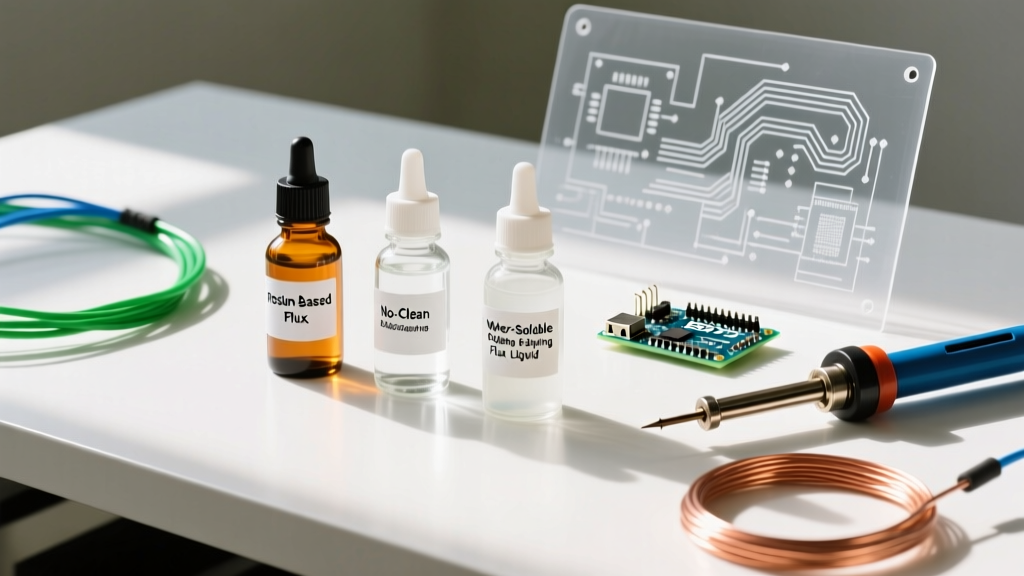
Liquid fluxes are broadly categorized by their chemical activators and solvent bases, governed by the IPC J-STD-004 standard. Understanding these categories is critical before picking up a bottle.
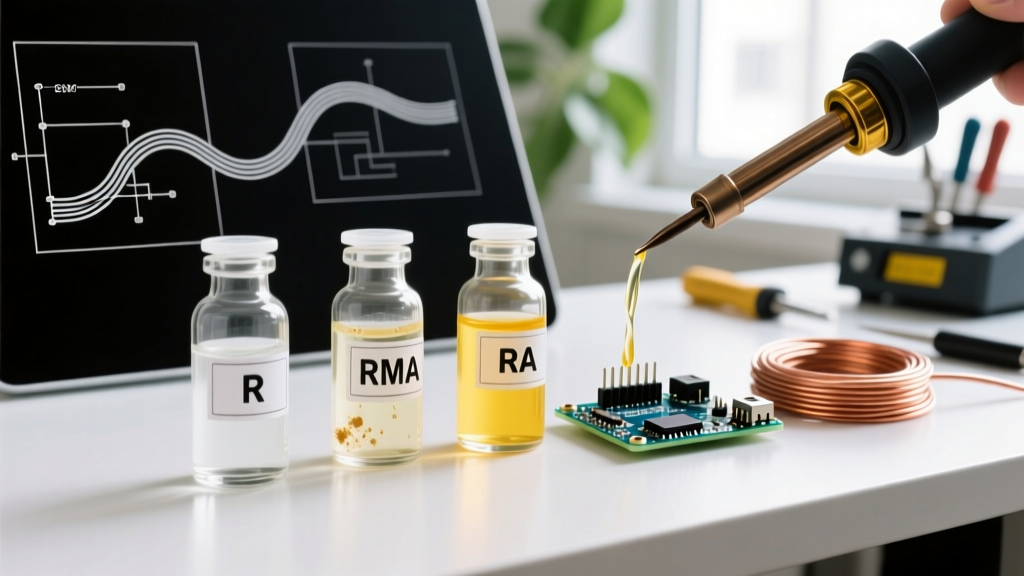
- No-Clean (NC): Formulated with synthetic resins and mild activators. Leaves a minimal, non-conductive, and non-corrosive residue. Ideal for SMD rework and dense PCBs where cleaning is impractical.
- Rosin Activated (RA) / Mildly Activated (RMA): Uses natural rosin dissolved in isopropanol (IPA) with halide or organic acid activators. Excellent for heavily oxidized through-hole components and thick wires. Requires post-solder cleaning with a dedicated solvent.
- Water-Soluble (Organic Acid - OA): Highly aggressive activators designed for rapid wetting on difficult surfaces (e.g., nickel-plated pads). Must be cleaned with deionized (DI) water immediately after soldering to prevent severe corrosion.
Application-Specific Recommendations
The decision to use liquid flux should be driven by the physical geometry of the joint and the thermal mass of the components involved.
Scenario A: BGA and Fine-Pitch SMD Rework
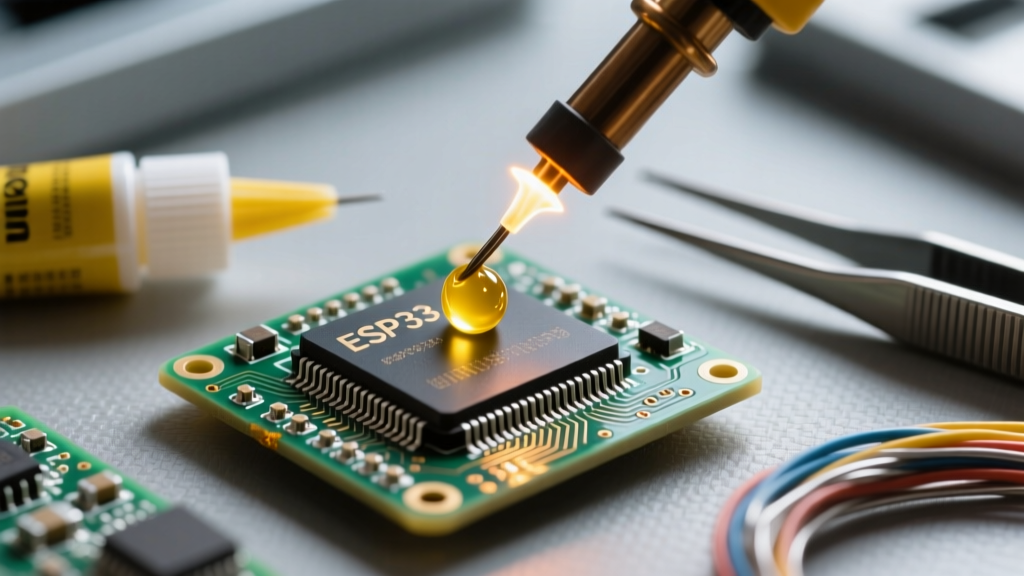
When reballing or reflowing a BGA chip, gel flux is often too viscous to penetrate the tight 0.4mm or 0.5mm pitch gaps between the solder spheres and the PCB pads. Liquid no-clean flux wicks entirely under the component via capillary action, ensuring every joint is deoxidized simultaneously.
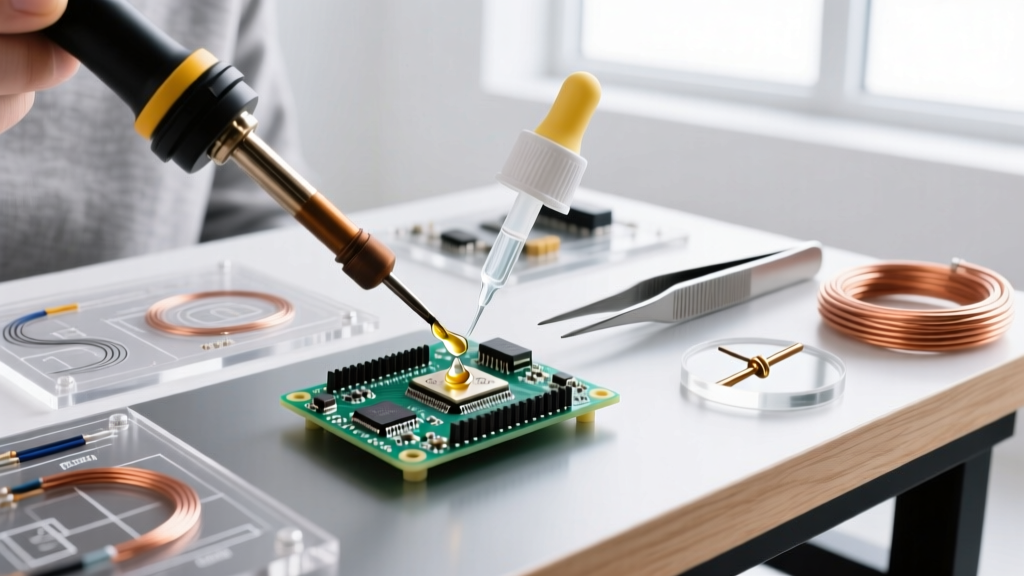
Expert Specification: Use Kester 952-S (approx. $28–$32 per 100mL). Apply using a 22-gauge blunt-tip syringe needle. Dispense a small puddle adjacent to the BGA edge and allow capillary action to pull it underneath. Wait exactly 10–15 seconds for the IPA solvent to flash off before applying hot air; otherwise, the boiling solvent will physically shift the BGA off its alignment pads.
Scenario B: Stranded Wire and Large Ground Planes
Tinning 12 AWG or thicker stranded wire requires flux to penetrate the inner strands. Paste flux often coats only the outer layer, leading to dry joints inside the wire bundle. Similarly, soldering to massive copper ground planes requires rapid thermal transfer and aggressive oxide removal.
For wire termination in high-reliability environments, the NASA-HDBK-8739.3 Soldering Handbook strictly dictates flux activity levels and residue management. A liquid RMA flux like Kester 186 ($25 per 100mL) is optimal here. Dip the stripped wire directly into a shallow pool of the liquid flux before tinning. The low viscosity ensures 100% strand coverage.
Scenario C: High-Oxidation Nickel and RF Shielding
Soldering to RF shielding cans or ENIG (Electroless Nickel Immersion Gold) pads that have suffered from pad cratering or heavy oxidation requires aggressive chemistry. Water-soluble liquid fluxes, such as MG Chemicals 8341 ($18 per 100mL), provide the necessary activation energy to break through nickel oxides at standard lead-free temperatures (350°C–380°C).
Comparative Matrix: Top Liquid Flux Models for 2026 Workbenches
| Application Scenario | Recommended Type | Specific Product Example | Solvent Base | Cleaning Required? | Approx. Cost (100mL) |
|---|---|---|---|---|---|
| BGA / Fine-Pitch SMD | No-Clean (NC) | Kester 952-S | Isopropanol / Glycol Ether | No (Optional for aesthetics) | $28 - $32 |
| Heavy Stranded Wire / THT | Rosin Mildly Activated (RMA) | Kester 186 | Isopropanol | Yes (IPA or dedicated cleaner) | $24 - $28 |
| RF Shields / Stubborn Oxides | Water-Soluble (OA) | MG Chemicals 8341 | Water / Glycol | Yes (Mandatory DI Water wash) | $16 - $20 |
| General Purpose PCB Repair | Rosin Activated (RA) | Chip Quik SMD291AX10 | Isopropanol | Yes | $15 - $18 |
Application Techniques and Failure Mode Prevention
Liquid flux introduces unique physical hazards during the soldering process. Recognizing and mitigating these failure modes separates novice technicians from advanced engineers.
1. The Spatter Effect (Boiling Solvents)
Liquid fluxes rely on volatile solvents (like IPA, which boils at 82.5°C) to maintain their low viscosity. If a 350°C soldering iron tip contacts a wet puddle of liquid flux, the solvent vaporizes instantaneously. This rapid phase change causes microscopic explosions, spattering semi-boiled flux and molten solder across adjacent pads, potentially causing shorts in fine-pitch ICs.
The Fix: Always employ the "Apply-Flash-Solder" sequence. Apply the liquid flux, wait 8 to 12 seconds for the solvent to evaporate (the flux will turn slightly tacky), and then introduce the heat source.
2. Electromigration and Dendritic Growth
While no-clean liquid fluxes are designed to be left on the board, applying them in excessive quantities can lead to issues in high-humidity, high-voltage environments. If a thick layer of no-clean residue traps moisture, it can facilitate electromigration—the gradual movement of metal ions across the PCB substrate, eventually forming conductive dendrites that short the circuit.
The Fix: Limit liquid flux application to a micro-drop per joint. If working on high-impedance analog circuits or RF antenna traces, clean even "no-clean" liquid flux residues using a high-purity (99.9%) isopropanol wash and a soft-bristle ESD-safe brush.
3. Water-Soluble Residue Corrosion
Water-soluble liquid fluxes contain aggressive organic acids. If left on the PCB, these acids will actively eat through copper traces and component leads within 24 to 48 hours, especially in humid environments.
The Fix: Establish a strict cleaning protocol. Submerge or scrub the PCB with heated (60°C) deionized (DI) water within 45 minutes of soldering. Tap water must never be used, as its mineral content will react with the flux and leave conductive salt deposits.
Frequently Asked Questions (FAQ)
Can I thin out thick flux paste with IPA to make my own liquid flux?
While technically possible, this is highly discouraged for critical electronics. Commercial liquid fluxes use precise ratios of synthetic resins, activators, and co-solvents to ensure the activators do not precipitate out of the solution. Thinning a paste with generic IPA disrupts the chemical equilibrium, leading to uneven activation, poor wetting, and highly corrosive localized residues.
Is liquid flux suitable for selective wave soldering?
Yes, liquid flux is the industry standard for selective wave soldering and automated PCB assembly lines. It is typically applied via precision micro-drop jet valves or ultrasonic spray nozzles, ensuring exact volumetric control (often measured in micrograms per square centimeter) before the board passes over the solder wave.
How long does liquid flux last once opened?
Due to the high volatility of its solvents, an opened bottle of liquid flux will gradually thicken as the IPA evaporates. If stored tightly sealed at room temperature (20°C–25°C), a 100mL bottle will maintain its optimal viscosity for 12 to 18 months. If it becomes syrupy, it should be replaced rather than thinned, as the activator concentration will have become dangerously high relative to the remaining solvent.