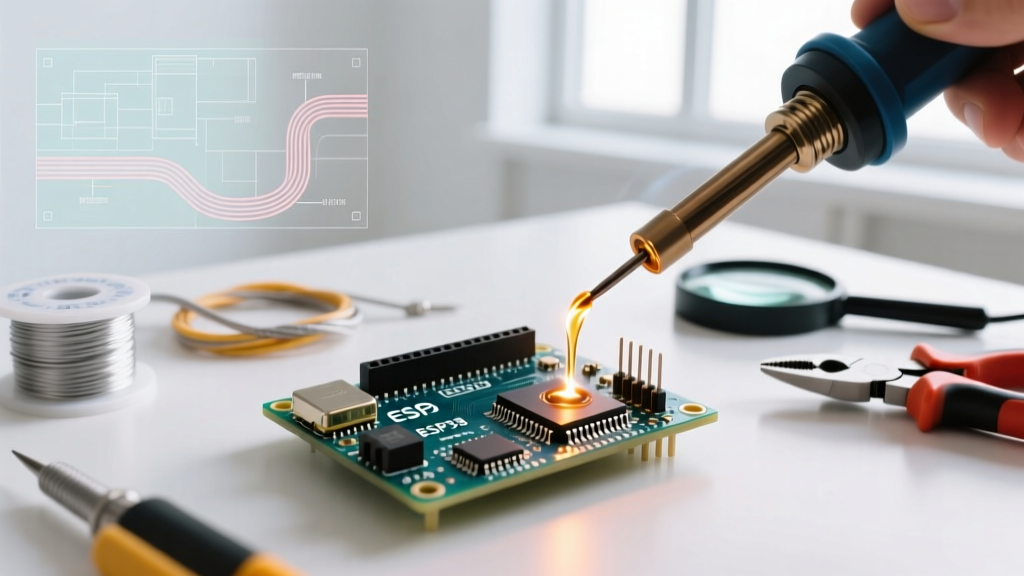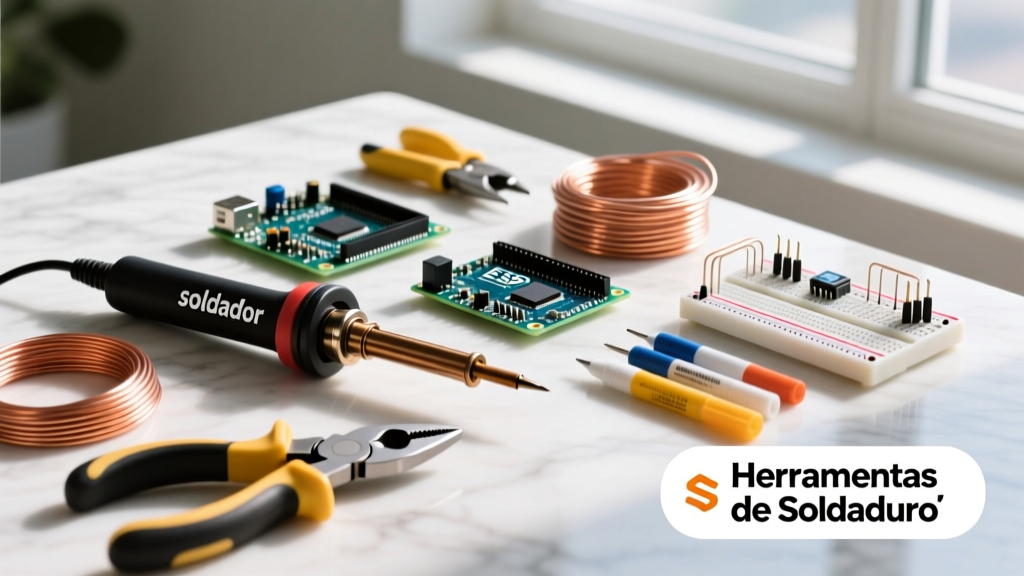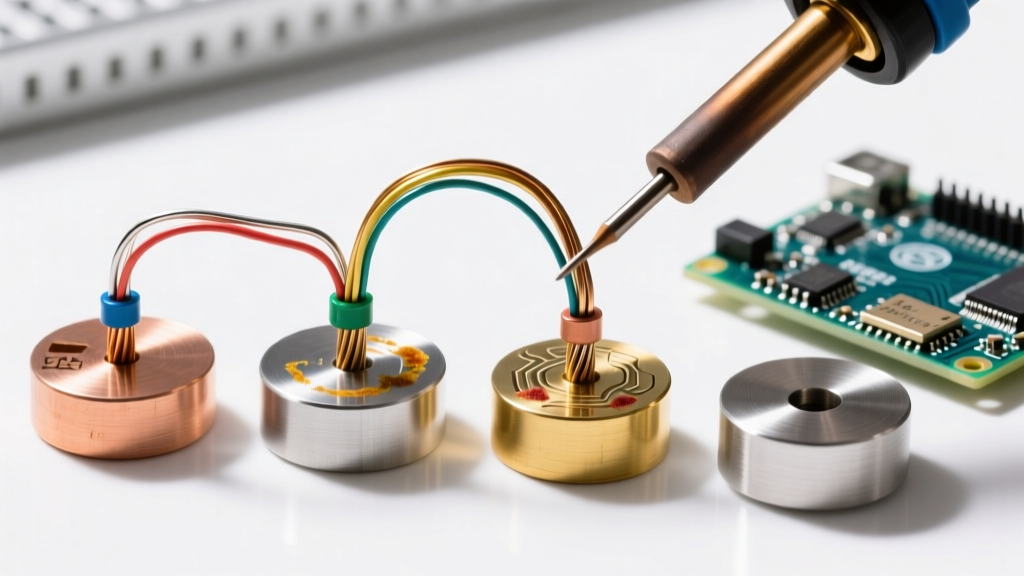

The Core Question: What Soldering Materials Match Your Base Metal?
When engineers, technicians, and advanced DIYers ask what soldering materials are required for a specific joint, the answer is never one-size-fits-all. Soldering is not merely about melting metal; it is a complex metallurgical process where a filler metal (the alloy) forms an intermetallic compound (IMC) with the base metal. If you choose the wrong alloy or flux combination, the joint will fail mechanically or electrically, regardless of your iron's temperature or your technical skill.
This material compatibility guide cuts through the marketing fluff to provide exact alloy compositions, flux classifications, and thermal profiles for the most common—and most challenging—base metals you will encounter in electronics, robotics, and structural fabrication.
Material Compatibility Matrix
Before diving into the metallurgy, use this quick-reference matrix to determine what soldering consumables you need for your specific project. Note that melting ranges dictate your iron or hot-air station setpoints, which should typically be 50°C to 100°C above the alloy's liquidus temperature for optimal wetting.
| Base Metal | Recommended Alloy (Composition) | Required Flux Type | Solidus / Liquidus (°C) | Wetting Difficulty |
|---|---|---|---|---|
| Copper (Bare) | SAC305 (96.5Sn/3.0Ag/0.5Cu) or Sn63/Pb37 | ROM0 / ROM1 (Rosin) | 217-220 / 183 (Eutectic) | Very Easy |
| Brass / Bronze | Sn60/Pb40 or SAC305 | ROM1 / ORM1 (Mild Organic) | 183-190 / 217-220 | Easy |
| Nickel / Silver | Sn96.5/Ag3.0/Cu0.5 or Sn62/Pb36/Ag2 | ORM1 / ORH1 (Activated) | 217-220 / 179-189 | Moderate |
| Stainless Steel | Sn63/Pb37 or Sn96.5/Ag3.5 | ORH1 (Highly Active Acid/Zinc) | 183 / 221 | Difficult |
| Aluminum | Zn-based (e.g., 95Sn/5Zn) or Indalloy 121 | Specialized Al-Flux or Ultrasonic | 198-200 / 118-121 | Extreme |
Copper and Brass: The Baseline Conductors
Copper is the gold standard for solderability. Its high surface energy allows molten tin to easily dissolve a micro-layer of the copper, forming a strong Cu6Sn5 intermetallic layer. However, determining what soldering wire to use depends heavily on the application environment.
Electronics vs. Plumbing Applications
For printed circuit boards (PCBs) and delicate electronics, SAC305 (Tin-Silver-Copper) is the modern lead-free industry standard. It offers excellent tensile strength and resistance to thermal fatigue. If you are working on legacy hardware, aerospace, or high-reliability audio equipment where lead is permitted, Sn63/Pb37 remains unmatched. Because it is a true eutectic alloy, it transitions from solid to liquid at exactly 183°C with no plastic (mushy) phase, eliminating cold joints caused by micro-movements during cooling.
Brass, an alloy of copper and zinc, is slightly more challenging. The zinc content can oxidize rapidly under heat, creating a barrier. When soldering brass terminals or RC model components, use a mildly activated rosin flux (ROM1) to strip the zinc oxide without leaving corrosive residues that could cause galvanic corrosion later.
Stainless Steel: Overcoming the Chromium Oxide Barrier
Stainless steel owes its corrosion resistance to a passive, invisible layer of chromium oxide. This same layer is what makes standard soldering nearly impossible. If you attempt to use standard electronics rosin flux (RMA) on stainless steel, the solder will bead up and roll off like water on a waxed car.
Expert Insight: To solder stainless steel, you must use a highly active (HA) flux, typically classified under IPC J-STD-004B as ORH1 (Organic, High Activity). These fluxes contain zinc chloride or hydrochloric acid derivatives capable of dissolving the chromium oxide layer at soldering temperatures.
Once the oxide is stripped, standard Sn63/Pb37 or a lead-free Sn/Ag alloy will wet the surface. However, post-solder cleaning is mandatory. The acidic residues left behind by ORH1 fluxes are highly corrosive and will rapidly eat through the stainless steel and the solder joint if not neutralized and washed with a specialized saponifier or high-purity isopropyl alcohol.
Aluminum: The Ultimate Wetting Challenge
When makers ask what soldering techniques work for aluminum, the honest answer is that standard soft soldering usually fails. Aluminum instantly forms a tough layer of aluminum oxide (Al2O3) when exposed to air. This oxide layer melts at over 2,000°C, while the aluminum base metal melts at just 660°C.
Specialized Alloys and Mechanical Abrasion
To solder aluminum, you must use a zinc-bearing solder alloy, such as 95Sn/5Zn or specialized proprietary wires like Indium Corporation's Indalloy 121. Zinc is one of the few elements that can alloy with aluminum and prevent the formation of brittle intermetallics.
Even with the right alloy, chemical fluxes alone often struggle. The most reliable DIY and bench-level method is mechanical abrasion under the flux pool. You must apply a specialized aluminum flux, melt the zinc-based solder over the joint, and then use a stainless steel brush or fiberglass scratch pen to physically scrape the aluminum oxide layer away while it is submerged under the molten solder. This prevents oxygen from reaching the bare aluminum, allowing the tin-zinc alloy to wet the surface.
For high-volume or structural aluminum soldering, ultrasonic soldering systems are used. These irons vibrate at ultrasonic frequencies (typically 20-60 kHz), creating microscopic cavitation bubbles in the molten solder that violently blast away the aluminum oxide layer without the need for chemical fluxes.
Decoding Flux Classifications (IPC J-STD-004B)
Knowing what soldering flux to buy requires understanding the IPC classification system. The IPC J-STD-004B standard categorizes fluxes by composition and activity level. Ignoring these codes is the leading cause of field failures in custom electronics.
- RO (Rosin): Derived from pine trees. Excellent for general electronics. RO (No-clean), ROM (Mildly activated), ROH (Highly activated).
- OR (Organic): Water-soluble synthetic acids. Highly active, excellent for oxidized boards or difficult metals like brass and nickel. Must be washed off.
- IN (Inorganic): Strong acids (Zinc Chloride, Ammonium Chloride). Used strictly for plumbing, sheet metal, and stainless steel. Never use on PCBs.
- RE (Synthetic Resin): Similar to rosin but synthetically engineered for better thermal stability and clearer residues.
The number following the letter (0, 1, or 2) indicates the halide content (0 = none, 1 = low, 2 = high). High halide content increases wetting power but drastically increases the risk of electrochemical migration (dendrite growth) if left uncleaned on a humid PCB.
Real-World Failure Modes: Non-Wetting vs. Dewetting
When a joint fails, diagnosing the exact metallurgical failure mode tells you what you did wrong. The NASA workmanship standards (NASA-STD-8739.3) strictly define these two common issues:
1. Non-Wetting
Visual Cue: The solder forms a tight ball and sits on top of the pad or wire, resembling a water droplet on a lotus leaf. The contact angle is greater than 90 degrees.
Cause: The base metal was heavily oxidized, or the wrong flux was used. The solder never actually dissolved into the base metal; it merely rested against it. No intermetallic compound was formed.
2. Dewetting
Visual Cue: The solder initially melts and spreads out (wets), but as it reaches peak temperature, it pulls back and recoils into islands, leaving a thin, dull film of solder behind.
Cause: The base metal was contaminated with silicone, oil, or a heavy layer of nickel oxidation. Alternatively, the iron was left on the joint too long, causing the flux to burn off completely (defluxing) and allowing secondary oxides to form in real-time.
Frequently Asked Questions
Can I use plumbing solder for electronics?
No. Plumbing solder typically uses an acid-core flux (inorganic) designed to eat through heavy copper oxidation and mineral deposits. If used on a PCB, the acid residue will rapidly corrode the delicate copper traces and cause short circuits via dendrite growth. Always use rosin-core (RO) or no-clean flux for electronics.
What soldering iron temperature is best for SAC305 lead-free wire?
While SAC305 melts at 217°C, your iron tip should be set between 320°C and 350°C for through-hole components, and 300°C to 320°C for fine-pitch SMD work. The higher setpoint compensates for the thermal mass of the joint, ensuring the solder reaches its liquidus state within 2 to 3 seconds. Prolonged heating degrades the flux and damages PCB laminates.
Why does my solder joint look dull and grainy?
A dull, grainy, or frosty appearance is a classic sign of a disturbed joint. This occurs when the components move while the solder is in its "plastic" (semi-solid) phase during cooling. In non-eutectic lead-free alloys like SAC305, the plastic phase is wider than in Sn63/Pb37. Hold the component perfectly still until the solder completely solidifies and loses its liquid shine.